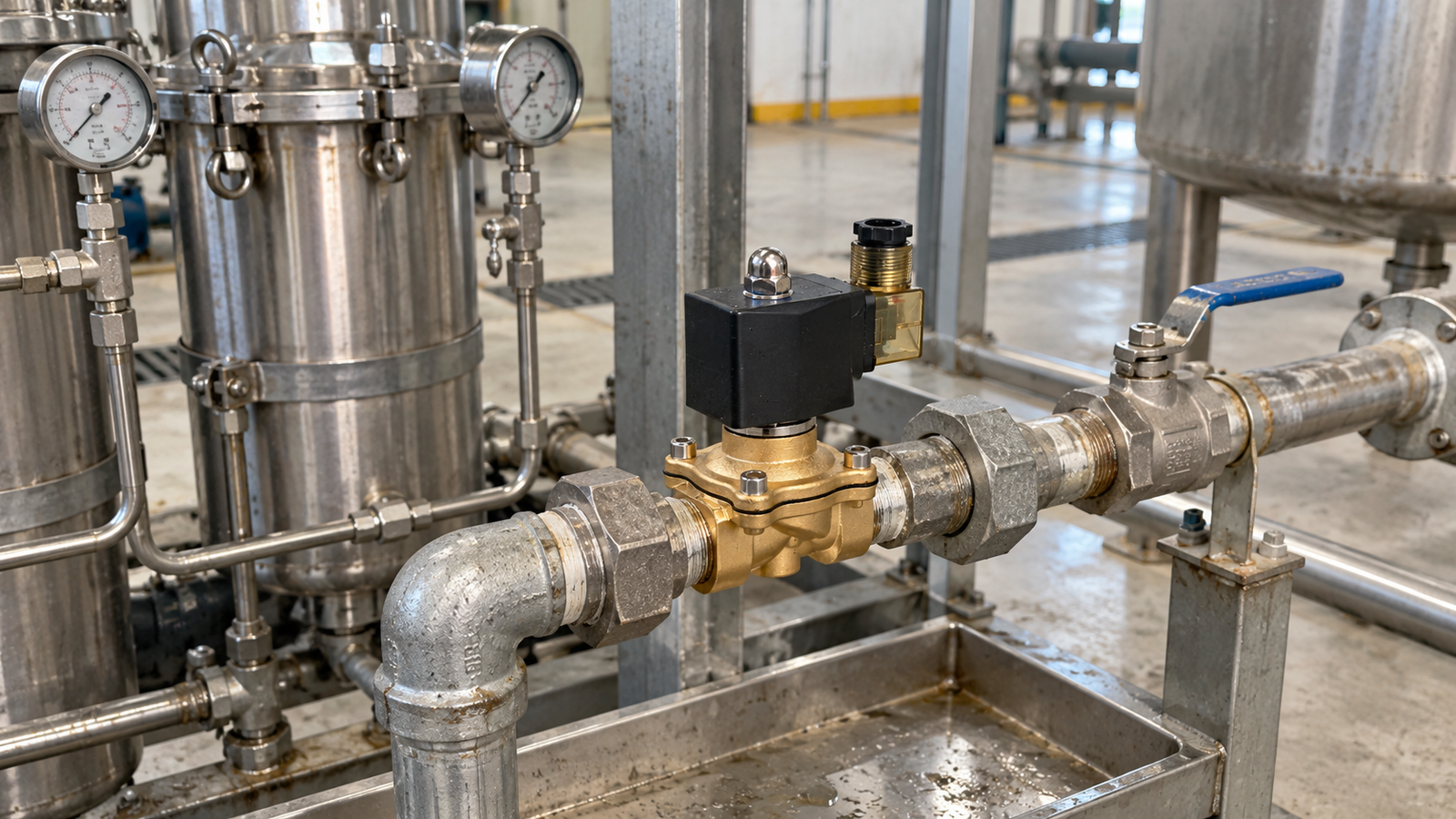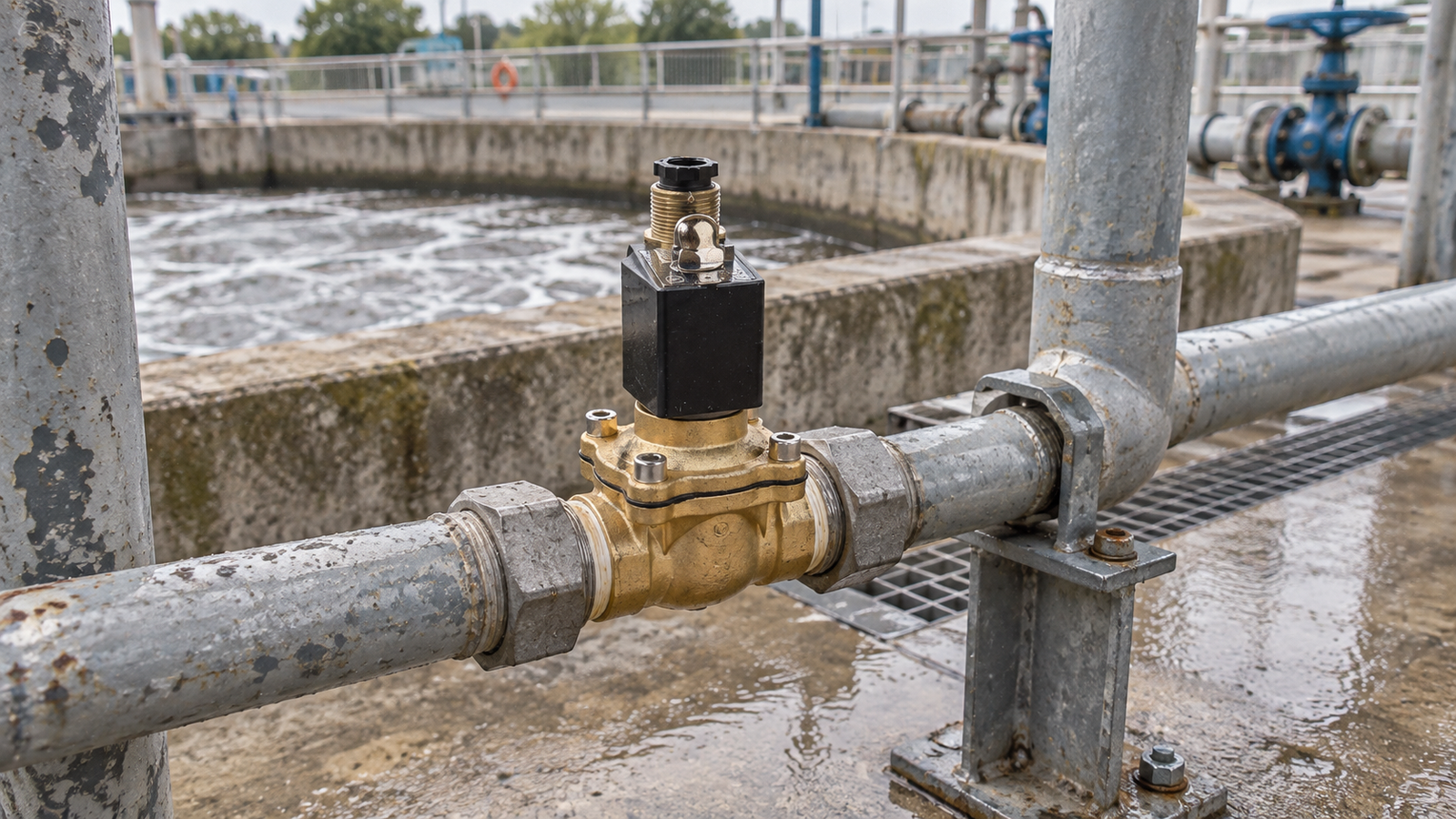
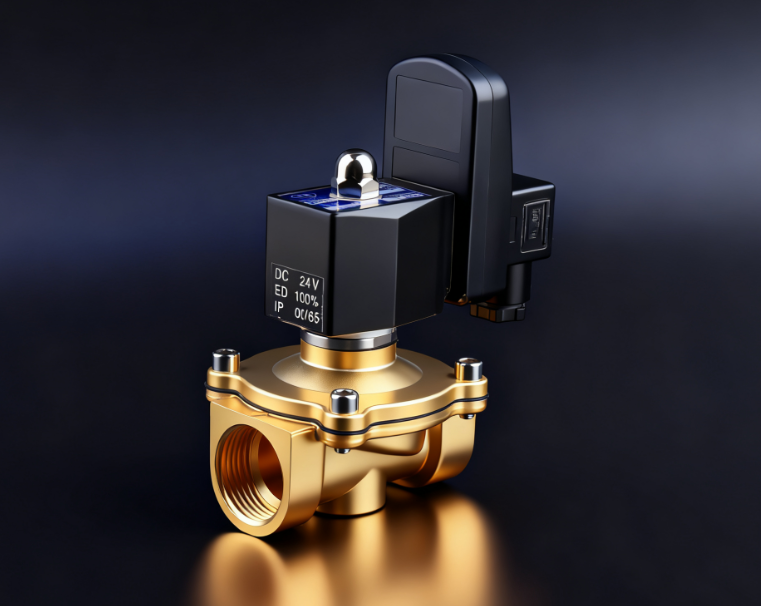
Solenoid valves are small parts, but they play a big role in many industrial systems. If your equipment uses air, water, oil, or gas, there is a good chance a solenoid valve is controlling the flow.
In this article, we will explain in simple words:
- What a solenoid valve is
- How it works
- The key parts inside
- Common applications in industry
This helps engineers, buyers, and maintenance teams choose the right valve faster.
1. What Is a Solenoid Valve?
A solenoid valve is an electromagnetic on/off valve. It uses an electric coil (the solenoid) to move a metal plunger and open or close the flow of a fluid.
You can think of it as a switch for liquids or gases:
- Electric signal ON → valve opens or closes
- Electric signal OFF → valve returns to its normal position
Because it is controlled by electricity, a solenoid valve is easy to connect to PLCs, sensors, and automation systems.
2. Main Components of a Solenoid Valve
A typical solenoid valve has these key parts:
- Coil
The coil is a copper wire winding. When power is applied, it creates a magnetic field. - Plunger (core)
The plunger is a movable iron or stainless steel rod inside the coil. The magnetic field pulls it up or down. - Spring
The spring pushes the plunger back to its original (normal) position when power is off. - Valve body
The body is usually made of brass, stainless steel, or plastic. It contains the flow paths and sealing areas. - Seal
The seal (often made of NBR, FKM, EPDM, or PTFE) ensures tight shutoff and prevents leakage.
Each of these parts affects the valve’s pressure rating, temperature range, and chemical compatibility.
3. How Does a Solenoid Valve Work?
Let’s look at a simple 2-way, normally closed solenoid valve:
- Normally closed (NC) means:
When there is no power, the valve is closed and fluid cannot pass.
Step-by-step working principle
- Power OFF (valve closed)
- The spring presses the plunger onto the seat
- The seal blocks the flow path
- Medium cannot pass through the valve
- Power ON (valve open)
- Voltage is applied to the coil (for example 24 VDC or 220 VAC)
- The coil generates a magnetic field
- The magnetic force lifts the plunger against the spring
- The flow path opens and fluid can pass
- Power OFF again
- Magnetic field disappears
- Spring pushes the plunger back
- Seal closes the orifice and stops flow
This action is very fast, usually in milliseconds, which is why solenoid valves are ideal for automatic and frequent switching.
4. Common Types of Solenoid Valves
Solenoid valves can be divided in many ways. Two basic dimensions are:
4.1 By function
- Normally closed (NC)
Default state = closed. Opens when energized.
→ The most common type in industrial applications. - Normally open (NO)
Default state = open. Closes when energized.
→ Used when you want flow in case of power failure. - Bi-stable (latching)
Uses a pulse to change position and stays there without continuous power.
→ Good for energy-saving applications.
4.2 By number of ports/ways
- 2-way solenoid valve
One inlet, one outlet – usually for simple on/off control. - 3-way solenoid valve
Three ports – commonly used to control actuators, cylinders, or to switch between two circuits.
More complex systems may use 4-way or 5-way valves, especially in pneumatic control of cylinders.
5. Typical Applications in Industry
Solenoid valves are used in many fields. Some common examples:
- Water treatment
Auto control of inlet/outlet water, dosing, and backwashing. - HVAC systems
Control of chilled water, hot water, and refrigerants in air conditioning. - Compressed air systems
On/off control of air lines, cylinders, and pneumatic tools. - Oil and gas
Control of fuel oil, natural gas, and other media (with special materials and explosion-proof coils). - Food and beverage
Dosing of liquids like water, syrup, and cleaning agents (requires food-grade materials). - Medical and laboratory equipment
Precise control of small flows in analyzers and instruments.
In all these applications, solenoid valves help improve automation level, process safety, and energy efficiency.
6. How to Choose the Right Solenoid Valve
When selecting a solenoid valve, you should at least consider:
- Medium
Water, air, oil, steam, gas, chemical?
→ This decides body and seal material. - Pressure and temperature
What is the working pressure range and maximum temperature?
→ This affects valve structure and coil power. - Pipe size and connection
Thread (G, NPT), flange, or push-in?
→ Match the valve to your piping system. - Voltage
12V, 24V, 110V, 220V? AC or DC?
→ Check compatibility with your control system. - Function
Normally open or normally closed? 2-way or 3-way?
→ Depends on your process safety and control logic. - Certification and environment
Need explosion-proof? IP65 or higher?
→ Important for outdoor and hazardous areas.
If you are not sure, you can always share your medium, pressure, temperature, and pipe size with us, and we can recommend a suitable model.
7. Conclusion
A solenoid valve is a simple but powerful component in modern automation. By using an electric signal to control the flow of liquids and gases, it connects your physical system with your electronic control system.
- Easy to control
- Fast response
- Compact design
- Wide application range
In future articles, we will talk about direct-acting vs pilot-operated solenoid valves, common failure reasons, and how to extend valve lifetime.