Selecting the correct solenoid valve material is one of the most important decisions in any industrial project. The body material affects:
- Corrosion resistance
- Service life
- Safety
- Compatibility with the medium
- Overall cost
Choosing the wrong material can cause leakage, valve failure, or contamination of your system.
This guide explains the differences between brass, stainless steel, and plastic solenoid valves in simple, practical terms so you can pick the right one for your application.
1. Brass Solenoid Valves
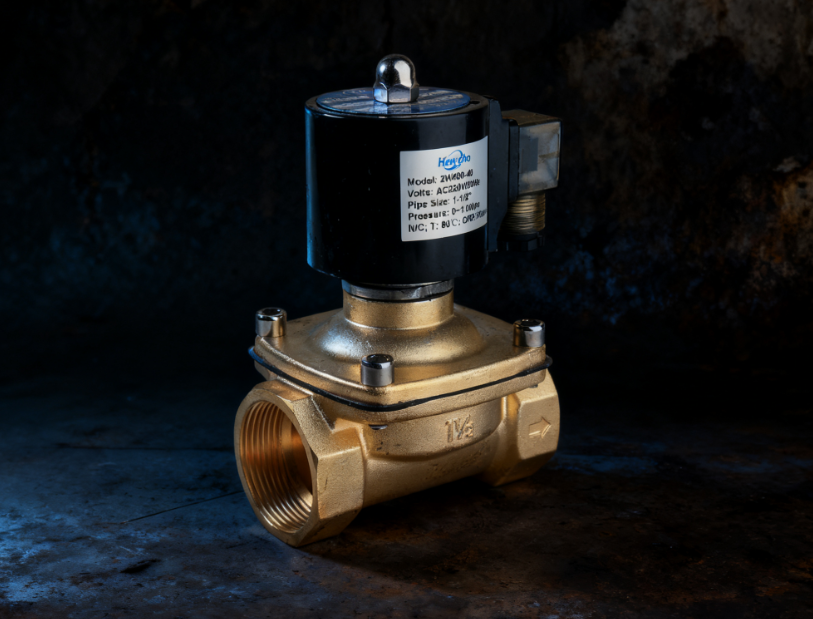
Brass is the most commonly used material for general-purpose solenoid valves.
Key advantages
- Good mechanical strength
- Suitable for water, air, oil, and non-aggressive gases
- Affordable and widely available
- Good thermal conductivity (helps coil cooling)
- Long-lasting in clean environments
Limitations
- Not suitable for highly corrosive fluids
- Not ideal for acids, strong chemicals, or seawater
- Risk of dezincification in certain water conditions
Best applications
- Water supply systems
- General industrial automation
- HVAC systems
- Air compressors
- Light oil control
Conclusion:
Brass is the most economical and practical choice for standard industrial media.
2. Stainless Steel Solenoid Valves
Stainless steel (usually SS304 or SS316) is used when corrosion resistance is essential.
Key advantages
- Excellent resistance to corrosion
- Suitable for aggressive chemicals
- Suitable for high-pressure and high-temperature environments
- Better hygiene for food and medical systems
- Strong mechanical durability
Limitations
- Higher cost than brass
- Heavier weight
- Some viscous or dirty fluids may require special internal designs
Best applications
- Chemical dosing and processing
- Food and beverage systems
- Pharmaceutical and laboratory equipment
- Marine environments (e.g., seawater)
- High-pressure industrial lines
- High-purity water or steam applications
Conclusion:
Choose stainless steel when chemical compatibility or corrosion resistance is critical.
3. Plastic Solenoid Valves (PVC, PP, PTFE, Nylon)
Plastic solenoid valves are becoming more popular because they offer good resistance to certain chemicals at lower cost.
Common materials
- PVC – good for water and mild chemicals
- PP (Polypropylene) – better chemical resistance than PVC
- PTFE (Teflon) – excellent resistance to almost all chemicals
- Nylon (PA) – lightweight and strong for pneumatic circuits
Key advantages
- Excellent resistance to many chemicals
- Lightweight
- No corrosion
- Cost-effective for low-pressure applications
- Quiet operation in some designs
Limitations
- Not suitable for high pressure
- Lower temperature tolerance than metal
- May not be suitable for steam or hot oil
Best applications
- Low-pressure chemical dosing
- Water treatment
- Fertilizer and irrigation systems
- Corrosive or acidic media
- Battery-powered or low-energy systems (some plastic designs have low actuation force)
Conclusion:
Plastic valves are ideal for low-pressure chemical and water applications, especially where metal corrosion is a concern.
4. Material Comparison Table
| Feature | Brass | Stainless Steel | Plastic (PVC/PP/PTFE) |
|---|---|---|---|
| Corrosion resistance | Medium | High | High |
| Pressure resistance | Medium to High | High | Low to Medium |
| Temperature resistance | Good | Very good | Low to Medium |
| Cost | Low | Higher | Low to Medium |
| Chemical compatibility | Moderate | Excellent | Excellent (varies by type) |
| Typical use | Water, air, oil | Chemicals, steam, food, seawater | Acids, alkalis, low-pressure water |
5. How to Choose the Right Material for Your Application
Here is a quick 4-step method you can use:
Step 1 — Identify your medium
Water? Air? Oil? Acid? Gas?
Each medium has different chemical properties.
Step 2 — Check pressure and temperature
Higher pressure and higher temperature often require metal valves.
Step 3 — Consider safety and contamination
Food, medical, and chemical applications may need stainless steel or PTFE.
Step 4 — Balance durability and budget
Plastic and brass are more cost-effective, while stainless steel offers the longest life.
6. Simple Recommendations for Industrial Users
Choose brass if:
- You need a reliable, affordable valve for water, air, or oil.
- The medium is clean and non-corrosive.
Choose stainless steel if:
- You handle acids, chemicals, steam, or seawater.
- You require high pressure or high temperature.
- Your system demands hygiene (food, pharmaceutical).
Choose plastic if:
- You control low-pressure corrosive liquids.
- You want low cost and chemical compatibility.
- You need lightweight components.
7. Final Thoughts
Selecting the right solenoid valve material is just as important as choosing the right size or type. A well-chosen material:
- Extends valve lifetime
- Reduces maintenance
- Ensures safe operation
- Improves system reliability
If you are unsure which material is best for your project, you can tell us your medium, pressure, temperature, and pipe size, and we will recommend the most suitable solenoid valve.