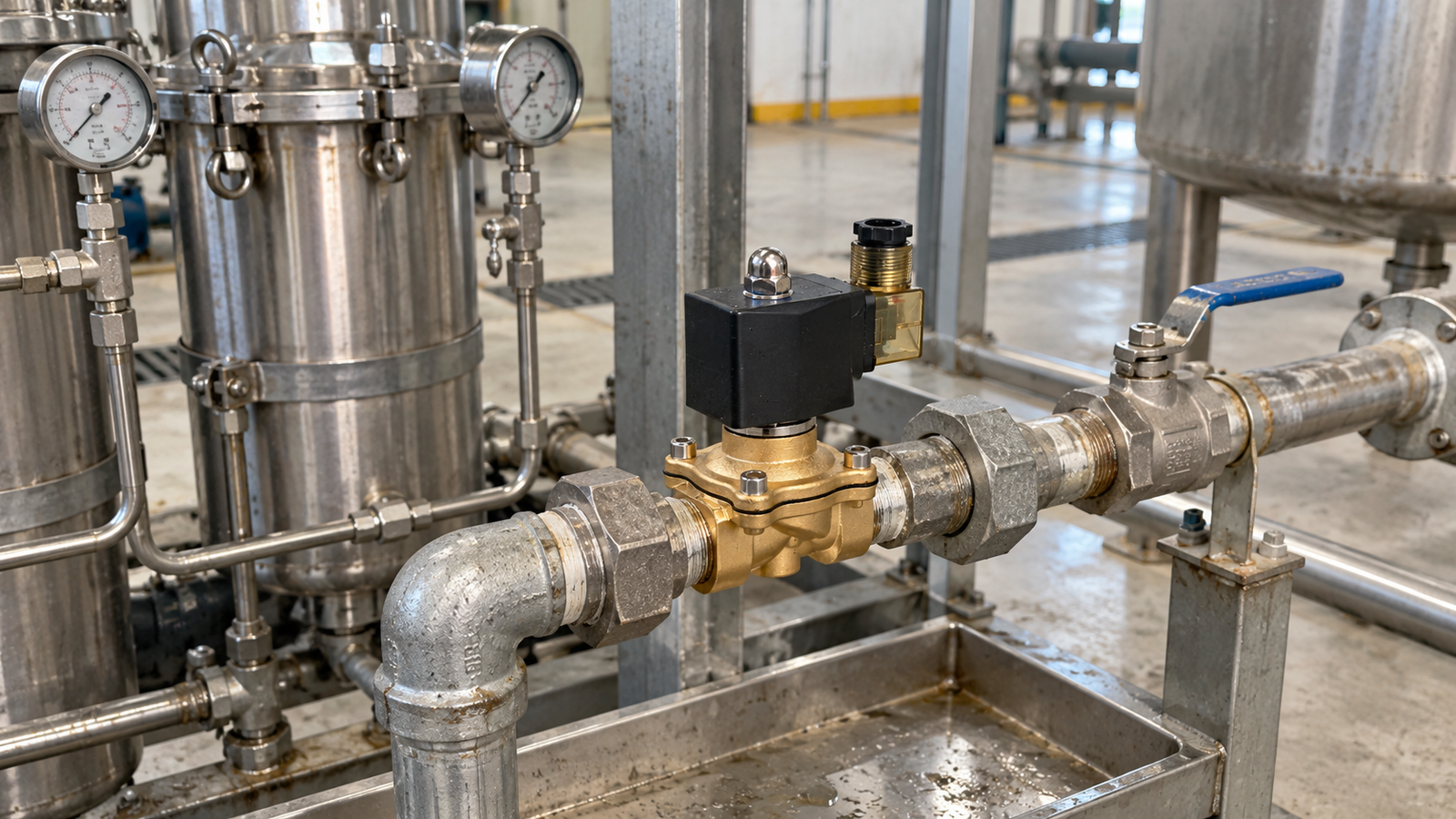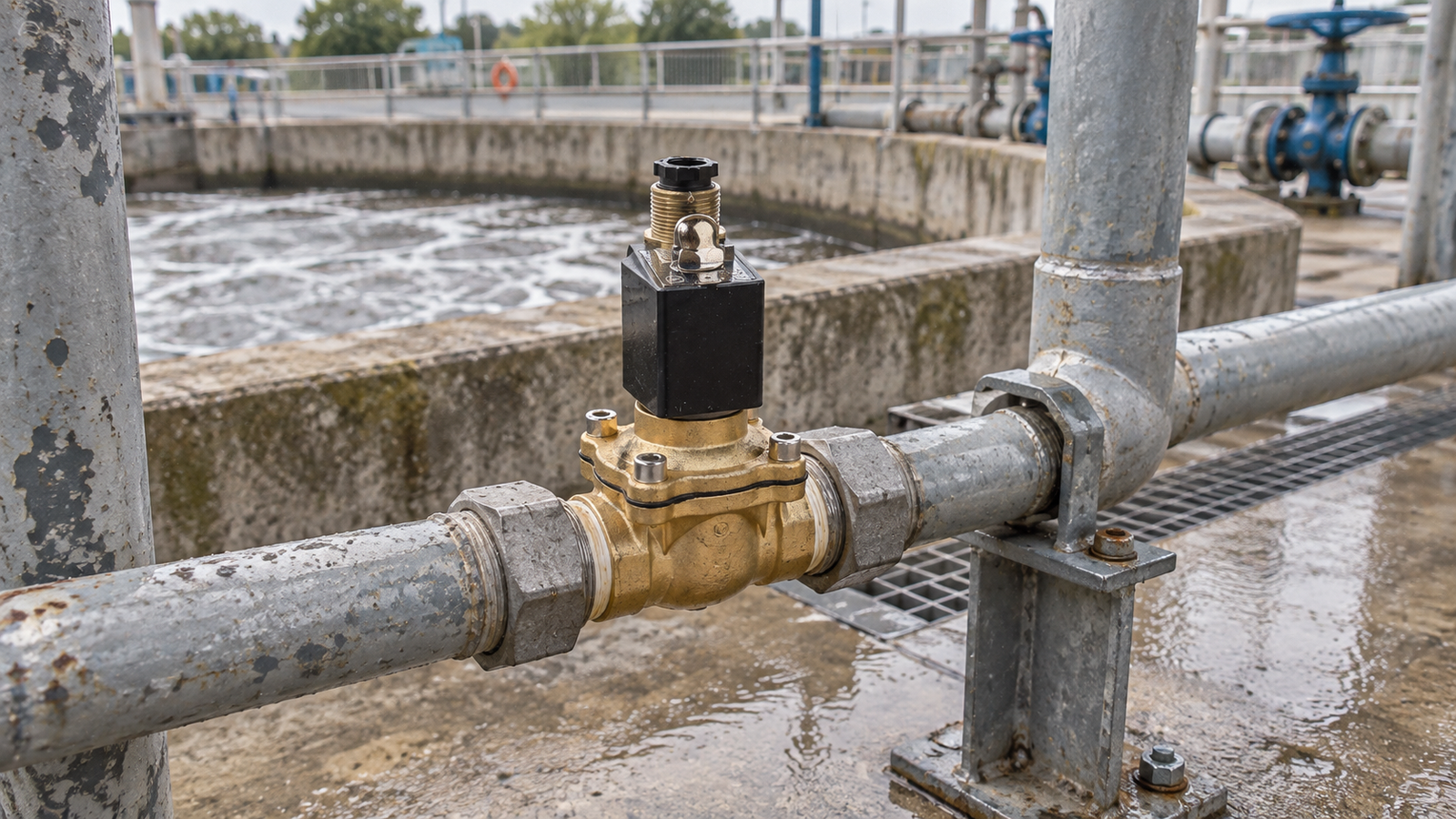
Selecting the right solenoid valve is essential for building a safe, reliable, and efficient industrial system. Whether your application involves water, air, oil, steam, or chemicals, choosing the wrong valve can lead to leakage, downtime, higher maintenance costs, and even equipment damage.
This guide explains seven key factors you should check before purchasing a solenoid valve. The language is simple and practical so engineers, buyers, and maintenance teams can use it easily.
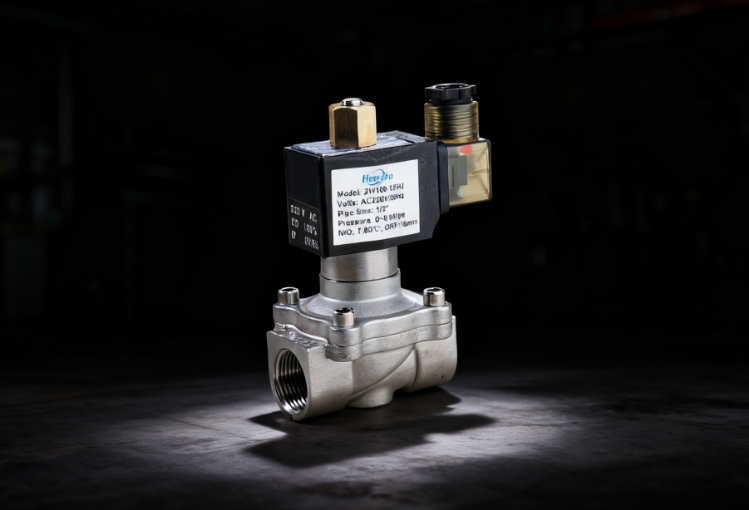
1. Medium Type
The first and most important question is:
What fluid or gas will pass through the valve?
Different media require different materials and internal designs.
Examples:
- Water / Air → Brass or stainless steel with NBR or EPDM
- Oil / Fuel → Brass or stainless steel with FKM
- Steam → Stainless steel with EPDM or special high-temp seals
- Chemicals / Acids → Stainless steel or PTFE valves
Choosing the correct body and seal material prevents corrosion and extends the valve’s lifetime.
2. Pressure Range
A solenoid valve must match your system’s pressure.
Check two values:
- Maximum working pressure
- Minimum pressure (important for pilot-operated valves)
If your system has low or zero pressure, select a direct acting solenoid valve.
If pressure is stable and medium to high, a pilot operated design is usually more efficient.
3. Temperature of the Medium
Temperature affects body material, coil life, and seal performance.
General guidelines:
- Standard valves: up to 80°C
- Hot water: 90–120°C with EPDM
- Steam: 120–180°C with stainless steel + high-temp seals
- Cryogenic or chilled fluids: special low-temperature materials required
Using the wrong seal at high temperature can cause swelling, leakage, or failure.
4. Valve Function: NC or NO
You must decide the valve’s default state:
- Normally Closed (NC):
Valve stays closed without power.
Best for safety—most commonly used. - Normally Open (NO):
Valve stays open without power.
Best for cooling, circulation, or venting applications.
Always consider what should happen during a power failure.
5. Voltage and Electrical Type
Solenoid valves come in different coil options:
- 24VDC
- 12VDC
- 220VAC / 110VAC
- Low-power coils for battery or energy-saving systems
- Explosion-proof coils for hazardous areas
Choosing the correct voltage avoids overheating and coil burn-out.
6. Orifice Size and Flow Requirements (Cv/Kv)
Flow rate matters.
Even if your pipeline is 1 inch, you might not need a 1-inch orifice.
Flow is determined by the Cv/Kv value, not only pipe size.
- Small orifice = lower flow, more precise control
- Large orifice = higher flow, lower pressure drop
Always match the valve to the required flow, not just the line diameter.
7. Environmental and Installation Conditions
Consider where the valve will be installed:
- Outdoor or wet areas:
Need IP65 or higher protection - Hot environments:
Use high-temperature coils - Dirty media:
Install a filter or use a larger orifice - Vertical or horizontal mounting:
Some valves perform better when mounted upright
Correct installation ensures stable operation and longer life.
Final Thoughts
Choosing the right solenoid valve is a combination of understanding your medium, pressure, temperature, and flow requirements. When these factors are matched correctly, your system will run smoothly, safely, and efficiently.
If you want help selecting a solenoid valve, you can share your working conditions (medium, temperature, pressure, flow, and pipe size), and I can recommend the best option for your application.