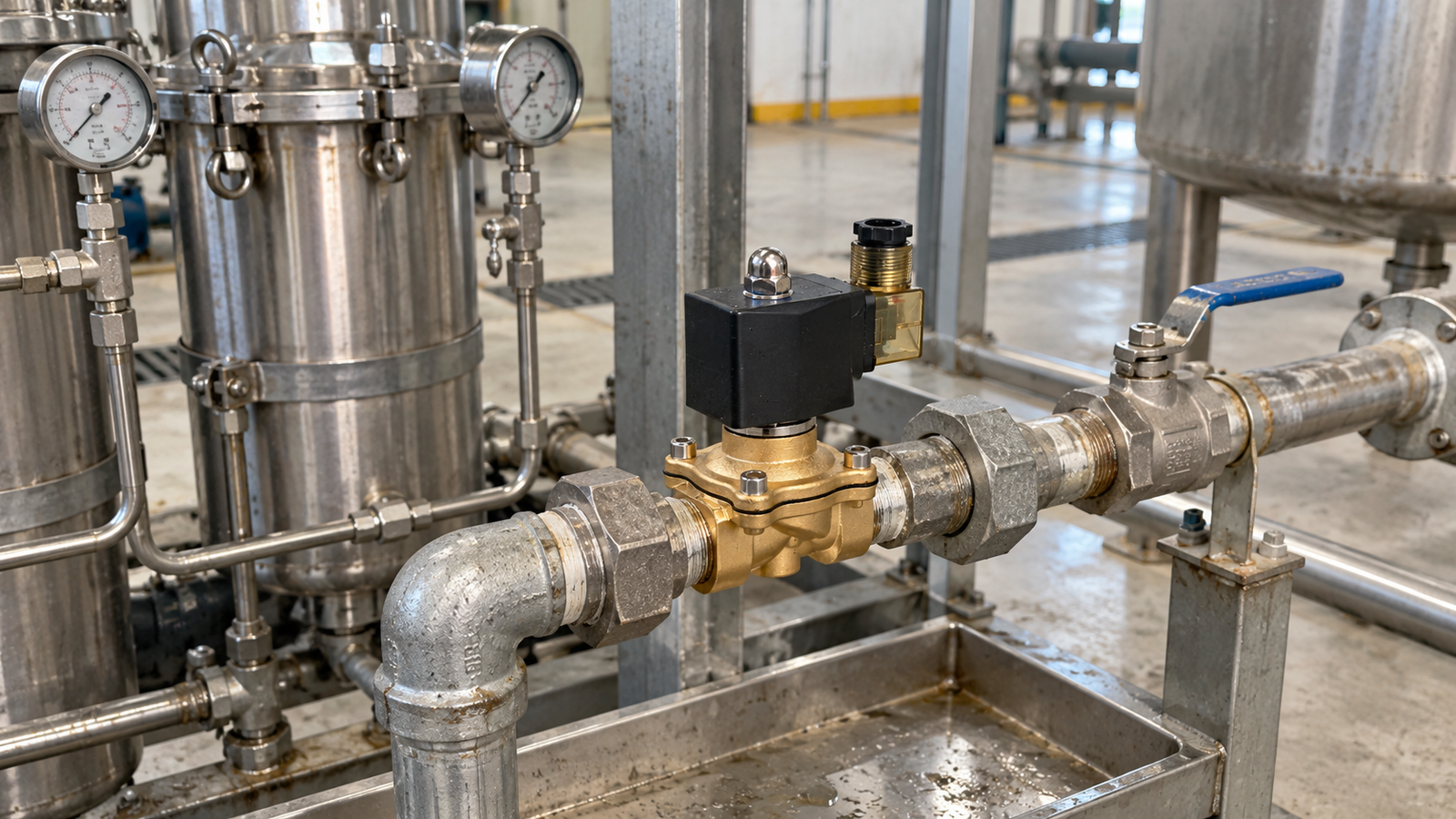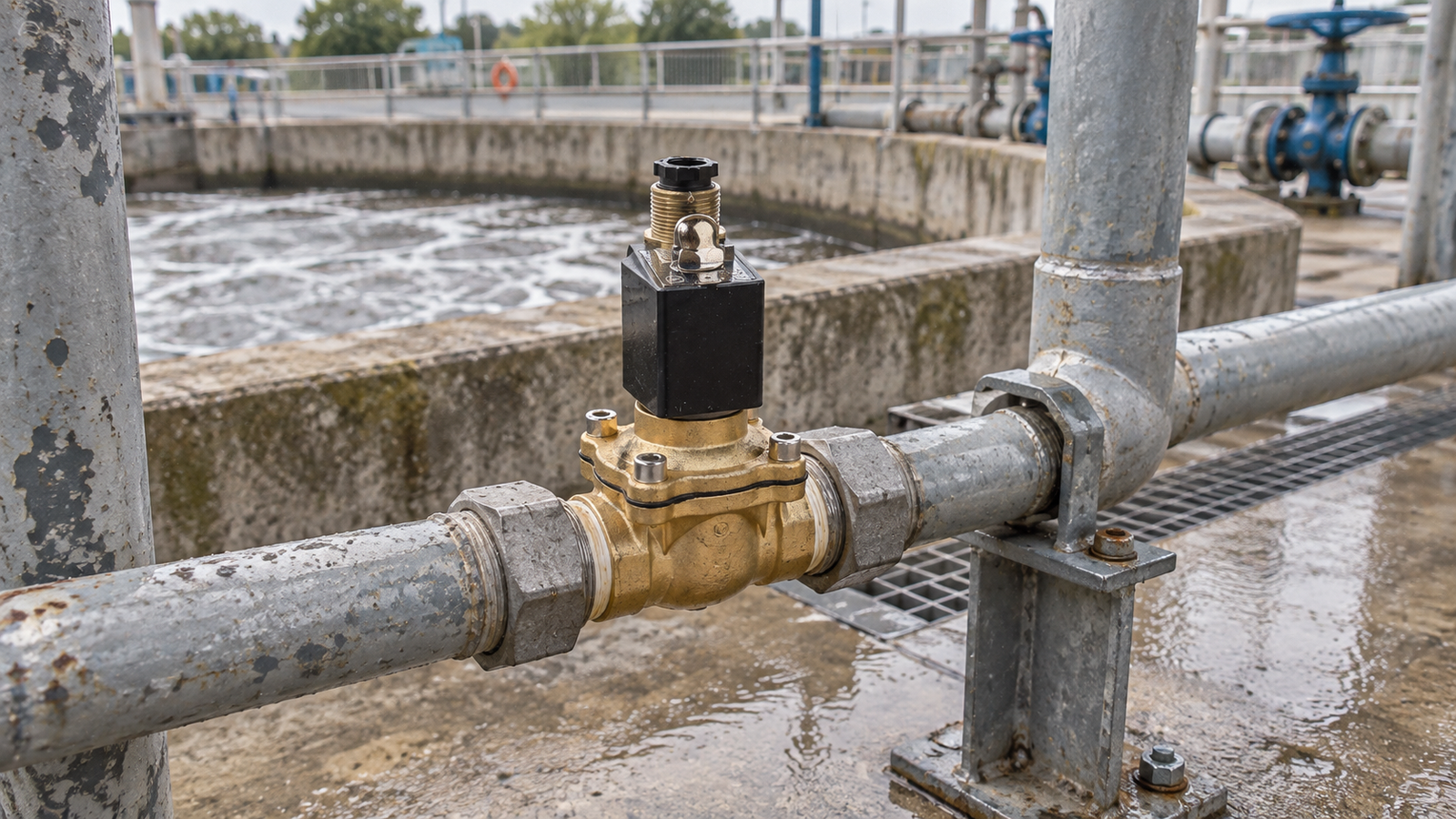
Solenoid valves come in many types, but the 2-way solenoid valve is the most common design used in industrial systems. Whether you work with water, air, oil, or gas, you will likely use a 2-way valve in your automation process.
This article explains what a 2-way solenoid valve is, how it works, and when to use it — all in clear, simple language.
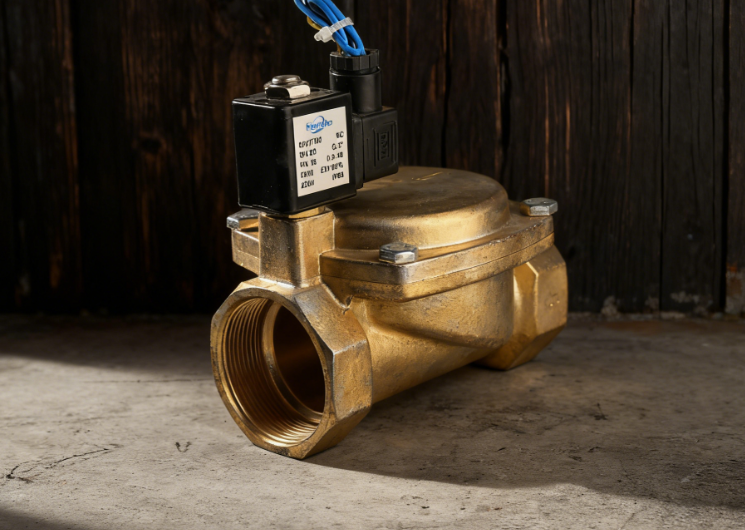
1. What Is a 2-Way Solenoid Valve?
A 2-way solenoid valve has:
- 1 inlet port
- 1 outlet port
This means the valve can do one basic job:
Allow or block flow in a single direction.
Because it only has two ports, it is perfect for simple on/off control of liquids and gases.
2. How Does a 2-Way Solenoid Valve Work?
A 2-way valve works by controlling the movement of a plunger using an electromagnetic coil.
When power is OFF:
- The plunger sits on the valve seat
- The flow path is blocked
When power is ON:
- The coil creates a magnetic field
- The plunger lifts off the seat
- Fluid flows through the valve
This switching action is fast, reliable, and ideal for automation.
3. Normally Closed vs Normally Open
A 2-way solenoid valve can be configured in two ways:
Normally Closed (NC)
- Default state: closed
- Opens when energized
- Most common option
- Used when “no flow” is the safe condition
Normally Open (NO)
- Default state: open
- Closes when energized
- Used in cooling or circulation systems
- Useful when you want flow during power loss
Choosing NC or NO depends on your safety and process requirements.
4. Direct Acting vs Pilot Operated 2-Way Valves
There are two internal working principles:
Direct Acting
- Can operate from 0 bar
- Good for low-pressure or vacuum systems
- Smaller orifice sizes
- Simple internal structure
Pilot Operated
- Requires minimum pressure (e.g., 0.3–0.5 bar)
- Handles larger flows
- More efficient for medium and high pressures
- Common in general water and air systems
Always check your system pressure before choosing.
5. Common Industrial Applications
2-way solenoid valves are widely used because they are simple and versatile. Typical applications include:
- Water inlet and outlet control
- Air compressor systems
- Oil and fuel lines
- Irrigation systems
- HVAC equipment
- Industrial washing machines
- Boiler and steam systems (with high-temp designs)
- Automatic dosing or dispensing equipment
If your system needs to “open and close flow,” a 2-way valve is often the best choice.
6. Advantages of 2-Way Solenoid Valves
- Simple design
- Compact size
- Fast switching
- Easy to automate
- Suitable for many media types
- Available in brass, stainless steel, or plastic
- Cost-effective for most industrial processes
These benefits make them the most widely used solenoid valve type.
7. How to Choose the Right 2-Way Valve
Before selecting a valve, check:
- Medium (water, air, oil, chemical)
- Pressure range (min and max)
- Temperature (fluid and environment)
- Valve type (NC or NO)
- Working principle (direct or pilot)
- Material (brass, stainless steel, PVC)
- Orifice size / Cv value for correct flow
- Voltage (24VDC, 220VAC, etc.)
Matching these factors ensures long-lasting, reliable operation.
Final Thoughts
2-way solenoid valves are the foundation of fluid control in industrial automation. They are simple, fast, and highly reliable. Understanding how they work and how to select the right model helps you avoid failures, reduce downtime, and improve system performance.
If you want the next article to focus on 3-way valves, steam valves, coil types, IP protection levels, or troubleshooting, just let me know—I can write it anytime。