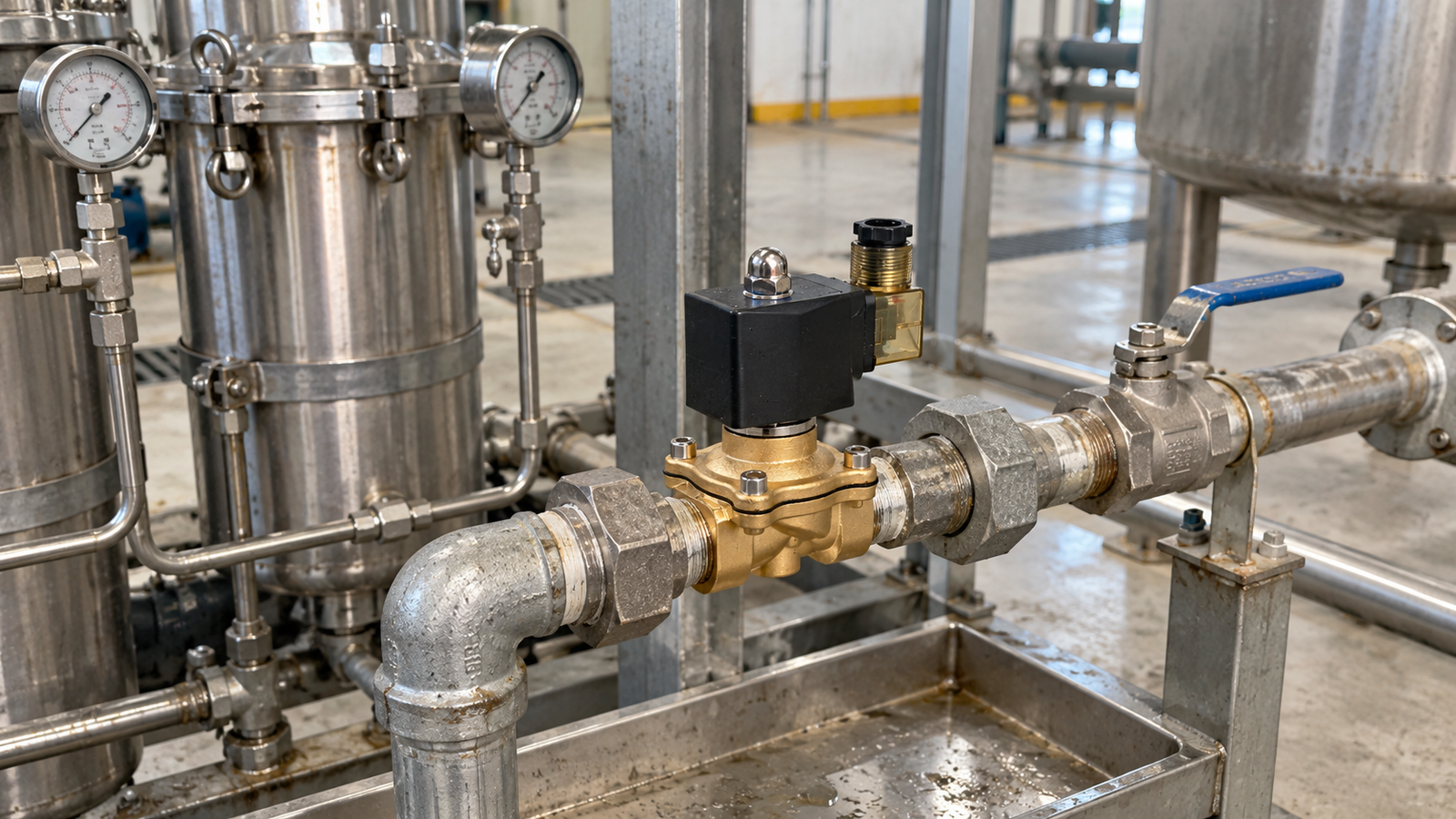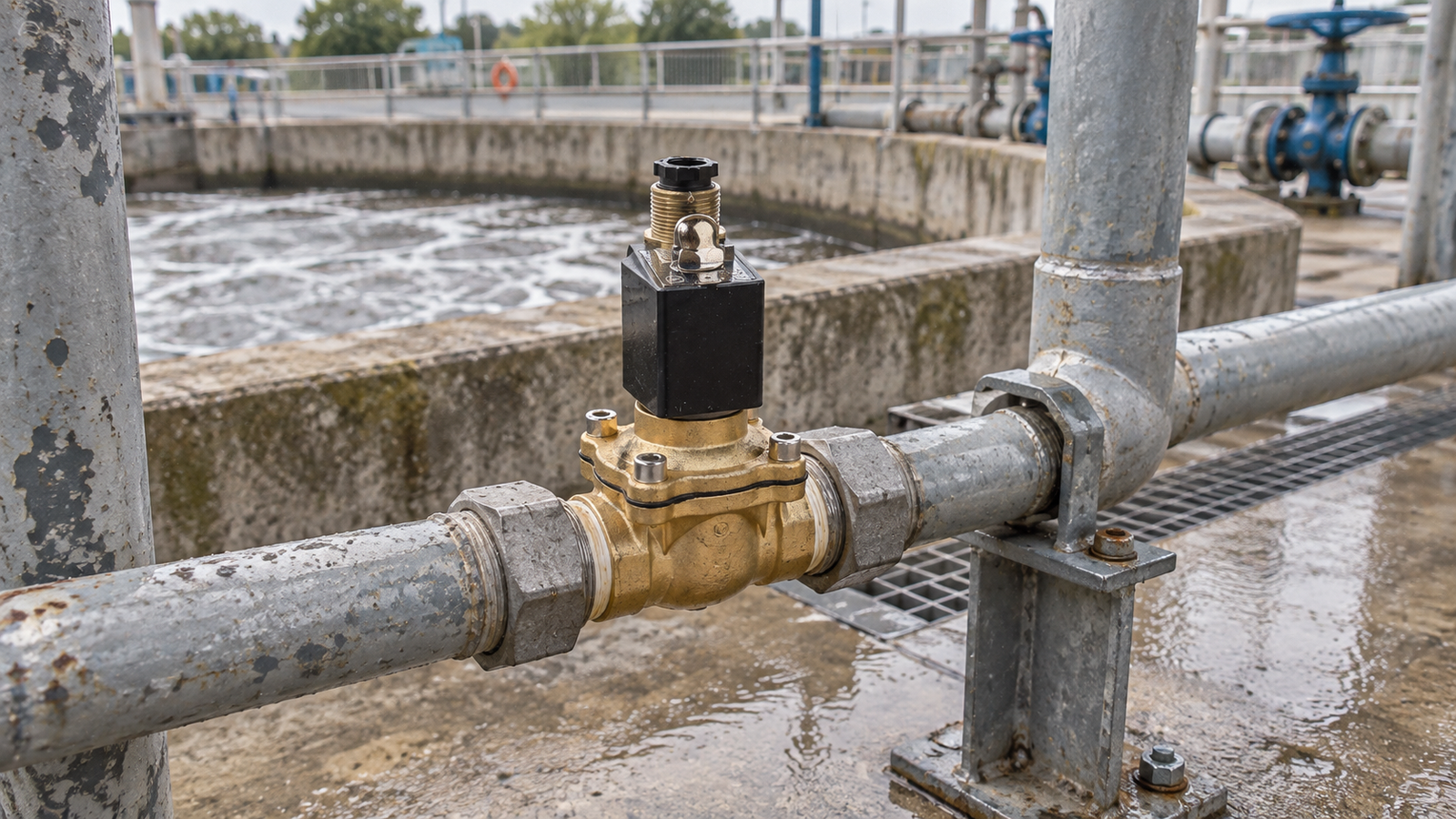
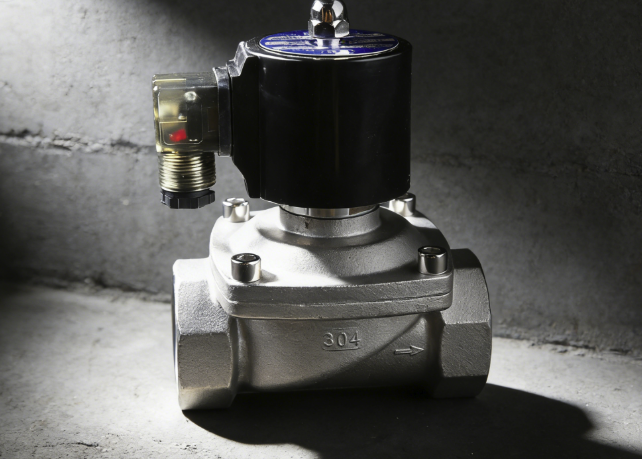
Steam systems place much higher demands on solenoid valves than water or air systems. High temperature, pressure, and condensate can quickly damage a valve if it is not designed for steam service.
This article explains how to choose the right solenoid valve for steam applications, using simple, practical language for industrial users.
1. Why Steam Is Challenging for Solenoid Valves
Steam is not just “hot water.” It creates special challenges:
- High temperature (often 120–180°C or higher)
- Rapid temperature changes
- Condensate formation
- High pressure and energy content
- Seal hardening or deformation
Standard solenoid valves designed for water or air often fail quickly in steam systems.
2. Use Stainless Steel Valve Bodies
For steam applications, stainless steel is strongly recommended.
Why stainless steel?
- Handles high temperatures
- Resists corrosion from condensate
- Maintains strength under pressure
- Longer service life than brass in steam
Brass valves may deform or suffer from seal damage in continuous steam service.
3. Choose the Right Seal Material
Seal material is critical in steam applications.
Recommended seal:
- EPDM (high-temperature grade)
- Good resistance to hot water and steam
- Stable elasticity at elevated temperatures
Avoid:
- NBR → hardens quickly in steam
- FKM (Viton) → not suitable for continuous steam
Always confirm the maximum steam temperature the seal can handle.
4. Prefer Normally Closed (NC) Valves for Safety
Most steam systems use normally closed solenoid valves.
Benefits:
- Valve closes automatically during power failure
- Prevents uncontrolled steam release
- Improves system safety
Normally open valves are rarely used for steam unless required for special safety logic.
5. Pilot-Operated vs Direct-Acting for Steam
Pilot-Operated Valves
- Best for medium to large pipe sizes
- Higher flow capacity
- Requires stable pressure
- Common choice for steam lines
Direct-Acting Valves
- Suitable for small pipe sizes
- Works at low pressure
- Faster response
- Limited flow capacity
For most industrial steam systems, pilot-operated designs are preferred.
6. Install the Valve Correctly in Steam Lines
Proper installation extends valve life significantly.
Best practices:
- Install the valve above the steam line if possible
- Ensure condensate can drain away
- Install a steam trap upstream
- Use a Y-strainer to prevent debris damage
- Mount the coil upright to avoid heat damage
Poor installation is a major cause of early failure.
7. Control Water Hammer in Steam Systems
Steam systems are prone to water hammer due to condensate.
Prevention tips:
- Use slow-closing solenoid valves
- Avoid oversized valves
- Install proper condensate drainage
- Ensure correct pipe slope
Reducing water hammer protects both the valve and the pipeline.
8. Typical Steam Applications for Solenoid Valves
Steam-rated solenoid valves are commonly used in:
- Boilers
- Autoclaves
- Steam sterilizers
- Heat exchangers
- Industrial dryers
- Textile and food processing equipment
In these systems, reliability and safety are critical.
Final Thoughts
Steam applications require special solenoid valves designed for high temperature and pressure. Choosing stainless steel bodies, EPDM seals, normally closed designs, and correct installation methods ensures long service life and safe operation.
If you want the next article to focus on steam trap selection, condensate control, high-temperature coils, explosion-proof steam valves, or steam system troubleshooting, just tell me — I can continue generating SEO-optimized blogs for your website every workday.