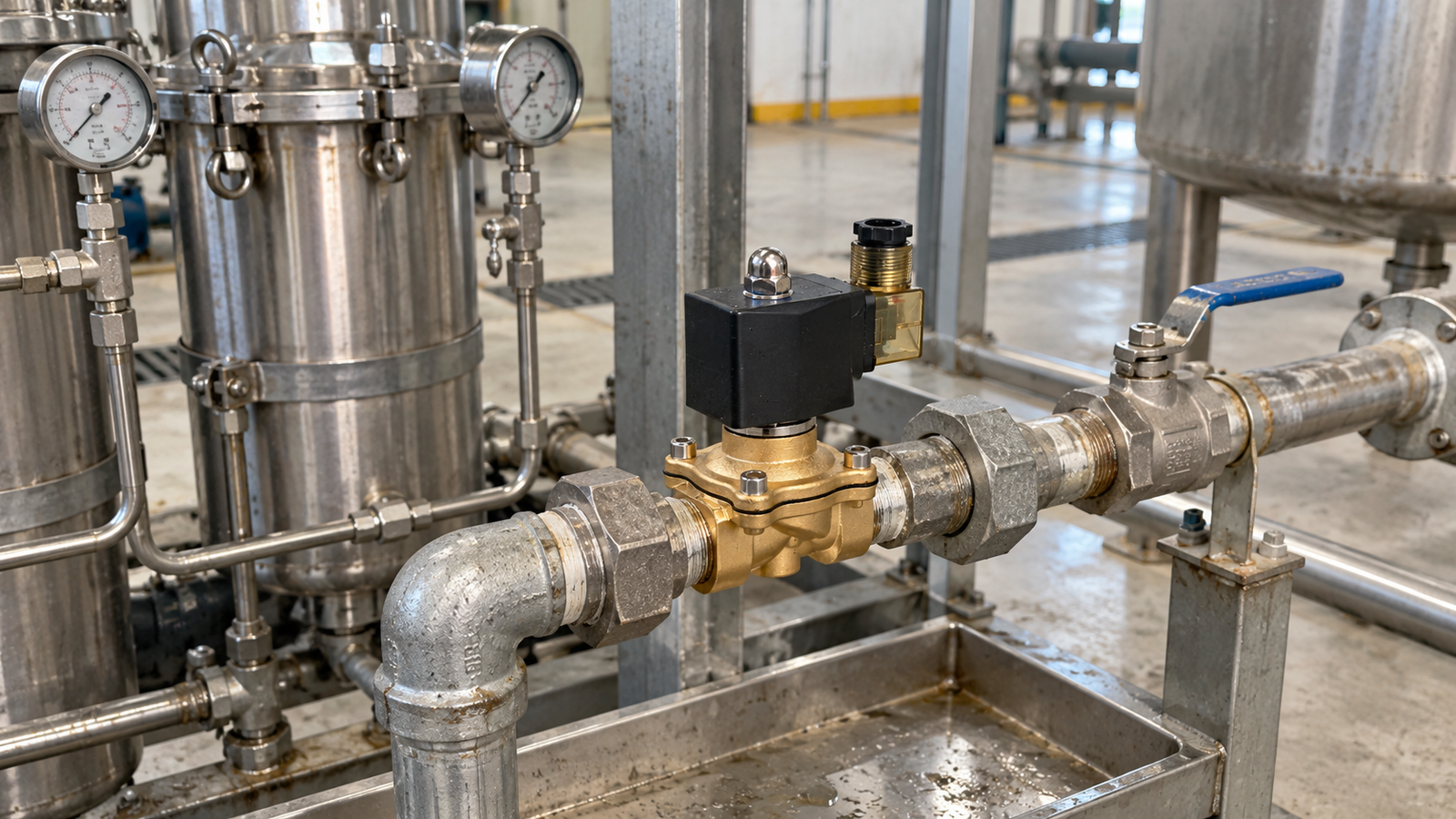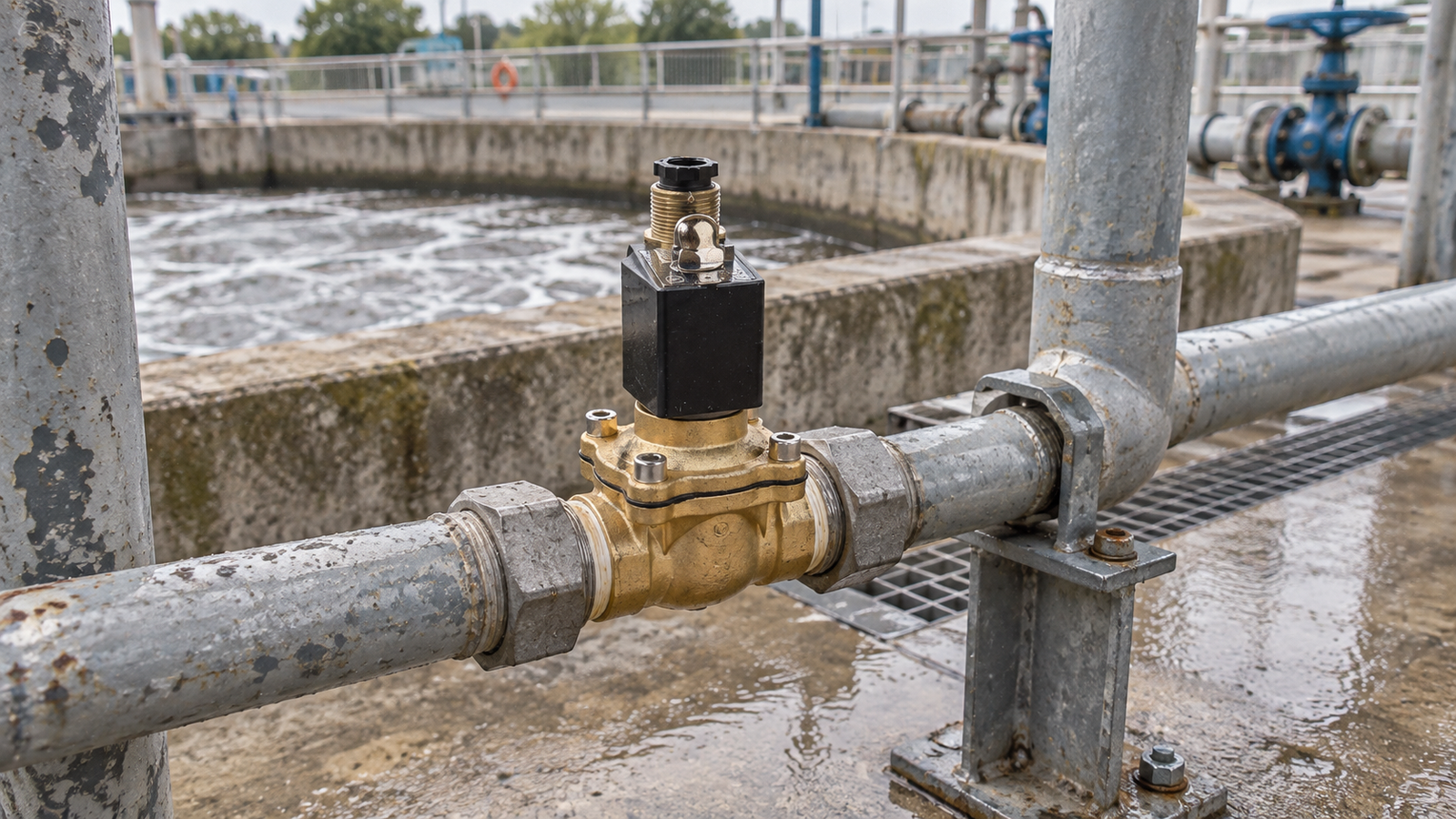
Steam solenoid valves don’t fail “randomly” — in most cases, condensate is the real root cause. If condensate stays in the line, you get water hammer, unstable flow, coil overheating, and seals that harden or deform. A properly selected steam trap (and correct trap installation) protects the solenoid valve and the entire steam system.
This article explains how steam traps work, how to choose the right type, and how to install them so your steam solenoid valves last longer.
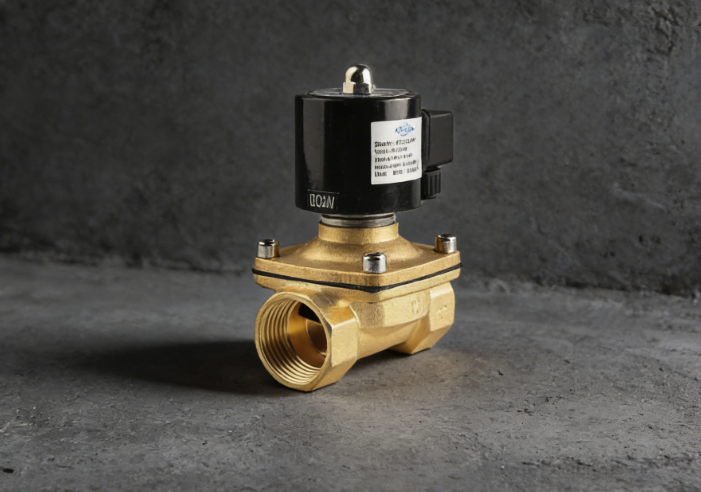
1. Why Condensate Damages Solenoid Valves in Steam Systems
Even if your solenoid valve is stainless steel + EPDM, condensate can still destroy it.
Common condensate-related problems:
- Water hammer hits the valve internals like a hammer blow
- Erosion from high-velocity wet steam damages seats and orifices
- Thermal shock from rapid temperature changes shortens seal life
- Poor drainage keeps the valve body “flooded,” increasing failure risk
- Unstable differential pressure causes pilot-operated valves to chatter
If you see noisy pipes, valve vibration, inconsistent opening, or repeated coil burnouts, condensate control is the first thing to check.
2. What a Steam Trap Actually Does
A steam trap has one simple job:
✅ Discharge condensate and non-condensable gases (air)
❌ Keep live steam inside the system
Good trapping improves:
- Heating efficiency (dry steam transfers heat better)
- Valve stability (steady steam flow)
- Safety (less water hammer)
3. The 3 Most Common Steam Trap Types (and When to Use Each)
A) Thermodynamic (Disc) Steam Traps
Best for:
- Outdoor steam mains
- High pressure, robust piping
- Simple, cost-sensitive steam distribution
Pros:
- Compact, durable
- Handles superheated steam better than many other types
Limitations:
- Can be noisy
- Not ideal for low-pressure or very light loads
B) Float & Thermostatic (F&T) Steam Traps
Best for:
- Heat exchangers
- Process equipment needing continuous condensate removal
- Stable temperature control applications
Pros:
- Continuous discharge (excellent drainage)
- Very good air venting during startup
Limitations:
- More complex internal structure
- Needs cleaner steam (use strainer)
C) Thermostatic (Balanced Pressure / Bellows) Traps
Best for:
- Tracing lines
- Light condensate loads
- Systems where sub-cooling is acceptable
Pros:
- Excellent air venting
- Good for startup air removal
Limitations:
- May discharge condensate at slightly lower temperature (sub-cooled)
- Not always ideal for fast-response heating processes
4. Steam Trap Selection Checklist (Simple and Practical)
When choosing a steam trap, confirm these parameters:
- Steam pressure (max / normal / minimum)
- Condensate load (startup vs running)
- Back pressure at trap outlet
- Need for continuous discharge (heat exchangers often do)
- Air venting requirement (critical during startup)
- Installation location (main line, equipment drain, tracing)
A trap that’s perfect for a steam main may be totally wrong for a heat exchanger — this is a common mistake.
5. Where to Install a Steam Trap to Protect a Solenoid Valve
If you are installing a solenoid valve on a steam line, the “trap strategy” matters as much as the valve selection.
Best practices:
- Install a drip leg before the valve (vertical pocket to collect condensate)
- Put the steam trap on the drip leg outlet
- Add a Y-strainer before the trap (and often before the valve too)
- Ensure the trap discharge line has proper slope and no flooding
- Avoid long horizontal sections where condensate can pool near the valve
This layout keeps the solenoid valve exposed to dry steam, not wet condensate.
6. Sizing Tips: Avoid Oversized Steam Traps (Yes, Oversized Is Bad)
Many users oversize traps “for safety.” In reality:
- Oversized traps can cycle poorly
- They may waste steam
- They can create unstable drainage and contribute to water hammer
A good approach:
- Size for startup load but confirm stable performance at running load
- Consider using an F&T trap for continuous discharge applications
7. Common Mistakes That Cause Early Valve Failure
If your steam solenoid valve keeps failing, check these first:
- No steam trap near the valve / equipment
- Trap installed too far away
- Trap outlet line blocked or flooded
- No strainer → dirt damages both trap and valve seat
- Wrong trap type (e.g., disc trap on sensitive heat exchanger drainage)
- Coil mounted sideways/downward → heat + moisture damages the coil faster
8. Typical Applications Where Steam Traps + Solenoid Valves Must Work Together
You’ll see this combination in:
- Steam sterilizers and autoclaves
- Jacketed tanks
- Heat exchangers
- Steam humidification systems
- Industrial dryers
- Textile and food processing steam lines
In these systems, condensate control is not optional — it’s part of “valve reliability design.”