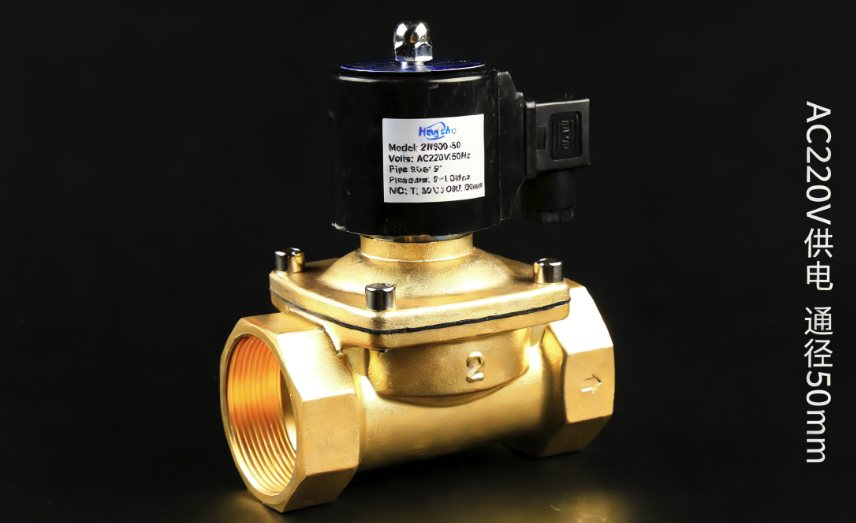
What Is a Normally Closed (NC) Solenoid Valve?
A normally closed solenoid valve is closed when no electrical power is applied. The valve opens only when the solenoid coil is energized, allowing the fluid or gas to flow.
Working principle:
- Power OFF → Valve closed
- Power ON → Valve open
Key features:
- High safety level (flow stops automatically during power failure)
- Widely used in industrial systems
What Is a Normally Open (NO) Solenoid Valve?
A normally open solenoid valve remains open when no power is applied. The valve closes only when the solenoid coil is energized.
Working principle:
- Power OFF → Valve open
- Power ON → Valve closed
Key features:
- Energy-saving for long-term open applications
- Flow continues during power loss
Key Differences Between NO and NC Solenoid Valves
| Item | Normally Closed (NC) | Normally Open (NO) |
|---|---|---|
| Default state (power off) | Closed | Open |
| Energized state | Open | Closed |
| Safety level | High | Medium |
| Energy consumption | Higher (long-term energized) | Lower (normally de-energized) |
| Common usage | Most industrial systems | Special continuous-flow systems |
How to Choose Between NO and NC Solenoid Valves
- Power failure condition
- Flow must stop → Normally closed
- Flow must continue → Normally open
- Safety requirements
- Steam, gas, fuel → Normally closed
- Cooling water, circulation systems → Normally open
- Operating time
- Frequently opened/closed → Normally closed
- Mostly open for long periods → Normally open
Typical Applications
Normally Closed Solenoid Valves
- Industrial water and air systems
- Pneumatic automation
- Steam and gas control
- Process safety shut-off systems
Normally Open Solenoid Valves
- Cooling water systems
- Overheating protection circuits
- Special continuous-flow applications
Conclusion
The choice between normally open and normally closed solenoid valves depends mainly on system safety logic during power failure. In most industrial applications, normally closed solenoid valves are the preferred and safer option.
Proper selection improves system reliability, safety, and long-term performance.