Solenoid valves are widely used in industrial automation, water treatment, pneumatic systems, and process control. Among all valve types, direct-acting solenoid valves and pilot-operated solenoid valves are the most commonly used—but also the most frequently confused during selection.
Choosing the wrong type often leads to problems such as valves not opening, unstable operation, excessive coil heating, or shortened service life. This article explains the technical differences, selection logic, and typical applications of both types to help you make the right decision.
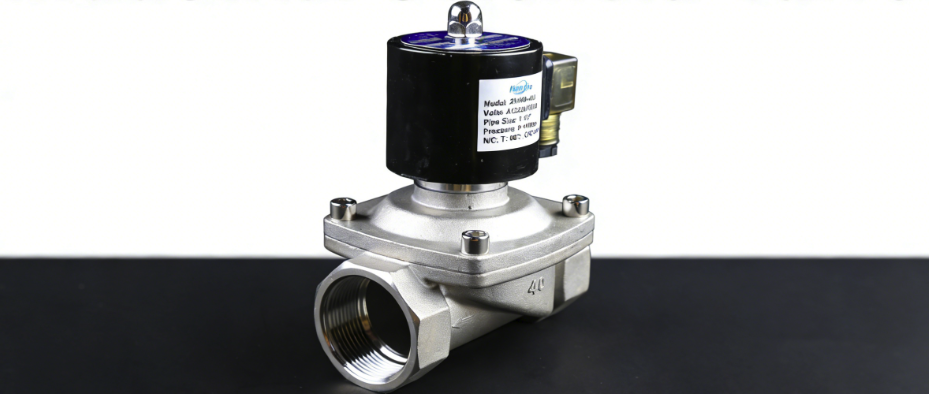
Core Keywords (SEO)
Direct-acting solenoid valve, pilot-operated solenoid valve, solenoid valve selection, solenoid valve working principle, industrial solenoid valve, water solenoid valve, pneumatic solenoid valve
What Is a Direct-Acting Solenoid Valve?
A direct-acting solenoid valve uses electromagnetic force generated by the coil to directly lift or push the valve plunger, opening or closing the flow path.
Key characteristics
- Does not require minimum operating pressure
- Can operate at zero pressure or vacuum
- Simple structure and fast response
Limitations
- Limited flow capacity
- Higher coil power for larger orifice sizes
- Coil temperature rise may be higher in continuous operation
What Is a Pilot-Operated Solenoid Valve?
A pilot-operated solenoid valve uses the solenoid coil to control a small pilot orifice. System pressure then helps move the main valve diaphragm or piston.
Key characteristics
- Requires a minimum pressure differential
- Suitable for large flow rates and larger pipe sizes
- Lower coil power consumption
Limitations
- Will not operate correctly at very low or zero pressure
- Sensitive to contamination if filtration is insufficient
Direct-Acting vs Pilot-Operated: Key Differences
| Item | Direct-Acting | Pilot-Operated |
|---|---|---|
| Minimum pressure required | No | Yes |
| Flow capacity | Small to medium | Medium to large |
| Power consumption | Higher | Lower |
| Suitable for low pressure | Yes | No |
| Typical valve size | Small | Medium to large |
How to Choose the Right Type
1. System Pressure Condition
- Low pressure, gravity-fed, or vacuum systems → Direct-acting
- Stable pressure systems with sufficient differential → Pilot-operated
2. Flow Rate and Pipe Size
- Small flow, precise control → Direct-acting
- Large flow, energy-efficient operation → Pilot-operated
3. Energy Consumption and Coil Heating
- Continuous-duty applications with large flow → Pilot-operated
- Intermittent or low-flow control → Direct-acting
4. Media Cleanliness
- Dirty or particle-containing media → Direct-acting (with filtration)
- Clean media with proper filtration → Pilot-operated
Typical Application Scenarios
Direct-Acting Solenoid Valves
- Gravity-fed water systems
- Pure water and RO systems
- Vacuum equipment
- Low-pressure pneumatic control
Pilot-Operated Solenoid Valves
- Industrial water pipelines
- Cooling and circulation systems
- Air compressor systems
- Steam and high-flow process control
Common Selection Mistakes
- Using pilot-operated valves in low-pressure systems
- Oversizing direct-acting valves for high-flow applications
- Ignoring minimum pressure specifications
- Installing pilot-operated valves without filtration
Avoiding these mistakes significantly improves system reliability.
Conclusion
Direct-acting and pilot-operated solenoid valves are designed for different operating conditions, not for competition with each other. Correct selection based on pressure, flow, media, and energy efficiency is the key to stable performance and long service life.
Choosing the right solenoid valve type at the design stage can prevent most operational issues before they occur.