
Voltage selection is a critical but often underestimated factor in solenoid valve applications. Choosing the wrong voltage type can lead to unstable operation, excessive coil heating, shortened service life, or complete valve failure.
This article explains the differences between DC24V and AC220V solenoid valves, their advantages and limitations, and how to select the correct voltage for different industrial applications.
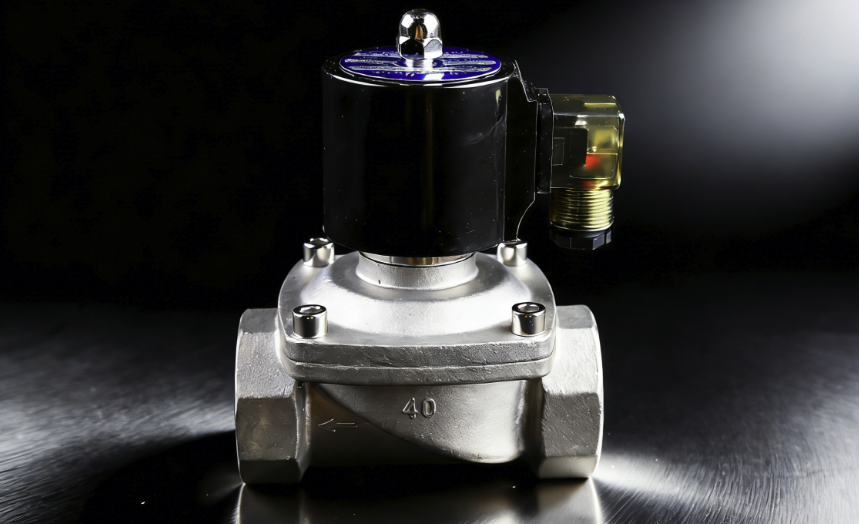
Why Solenoid Valve Voltage Matters
The solenoid coil converts electrical energy into magnetic force. Voltage type and stability directly affect:
- Actuation force
- Response time
- Coil temperature rise
- Reliability and service life
Incorrect voltage selection is a common cause of solenoid valve malfunction in the field.
DC24V Solenoid Valves
Key Characteristics
- Stable and predictable magnetic force
- Low electrical noise
- Better suited for high-frequency switching
- Easier integration with PLC and control systems
Advantages
- Lower risk of coil overheating
- Faster and more consistent response
- Safer for operators and maintenance personnel
Limitations
- Requires DC power supply
- Sensitive to voltage drop if wiring is poor
Typical Applications
- PLC-controlled automation systems
- Robotics and assembly lines
- Packaging and filling machines
- Solar-powered or battery-backed systems
AC220V Solenoid Valves
Key Characteristics
- High pull-in force at startup
- Simple wiring with direct mains connection
- Widely used in traditional industrial equipment
Advantages
- No external power supply required
- Strong initial actuation force
- Suitable for standard industrial environments
Limitations
- Higher coil temperature during long-term energization
- Slightly slower and less stable response
- Sensitive to voltage fluctuation and frequency
Typical Applications
- Water treatment equipment
- HVAC systems
- Traditional machinery and pumps
- General industrial fluid control
DC24V vs AC220V: Key Differences
| Aspect | DC24V | AC220V |
|---|---|---|
| Power stability | High | Medium |
| Response consistency | Excellent | Moderate |
| Coil temperature | Lower | Higher |
| Safety level | Higher | Lower |
| Control integration | Easy (PLC-friendly) | Limited |
| Long-term energization | Better | Less ideal |
Common Voltage Selection Mistakes
- Using AC220V in high-frequency switching applications
- Ignoring voltage drop in long DC wiring
- Connecting DC coils to AC power (or vice versa)
- Selecting voltage based only on availability, not application
Practical Voltage Selection Guidelines
- Choose DC24V for automation, high-speed, or precision control
- Choose AC220V for simple on/off control and stable environments
- Ensure actual supply voltage matches coil rating
- Consider ambient temperature and ventilation
- Use surge protection in unstable power environments
Special Considerations for Continuous Operation
For solenoid valves that remain energized for long periods:
- Prefer DC low-power coils
- Confirm 100% duty cycle rating (ED 100%)
- Ensure sufficient heat dissipation
This significantly reduces the risk of coil overheating and premature failure.
Conclusion
Selecting the correct solenoid valve voltage is not just an electrical decision—it directly impacts performance, safety, and reliability.
In modern industrial automation, DC24V solenoid valves are increasingly preferred, while AC220V remains suitable for traditional, low-frequency applications.
Understanding the differences helps ensure long-term stable operation and reduced maintenance costs.