When selecting a solenoid valve for industrial automation, one common question is:
Should I use a 2-way or a 3-way solenoid valve?
Understanding the difference between these two valve types is essential for proper system design, efficiency, and long-term reliability.
In this article, we break it down in simple terms.
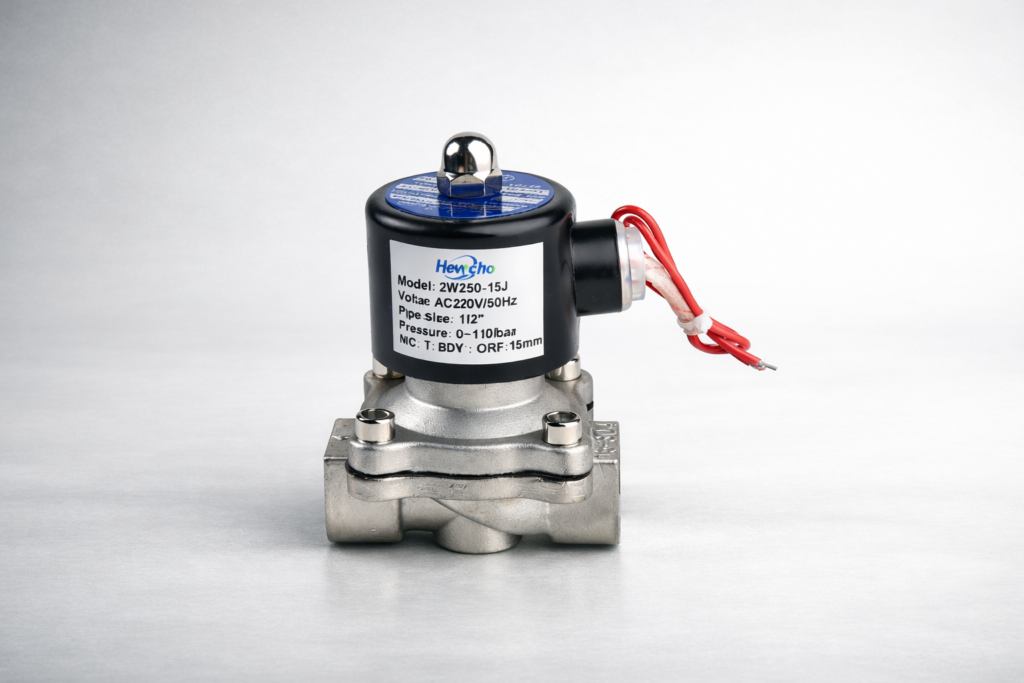
What Is a 2-Way Solenoid Valve?
A 2-way solenoid valve has:
- 2 ports (inlet and outlet)
- 2 positions (open or closed)
It is used to start or stop fluid flow.
How It Works
When energized:
- Valve opens (Normally Closed type), OR
- Valve closes (Normally Open type)
When power is removed:
- Valve returns to its original position
Common Applications
- Water control systems
- Air compressors
- Irrigation systems
- Oil flow control
- General on/off applications
If you only need to control flow in one direction (ON/OFF), a 2-way solenoid valve is usually the best choice.
What Is a 3-Way Solenoid Valve?
A 3-way solenoid valve has:
- 3 ports
- 2 positions
It is used to switch flow between two paths.
How It Works
A 3-way valve can:
- Direct flow from Port A to Port B
- Or switch flow from Port A to Port C
This makes it ideal for applications requiring diversion or exhaust functions.
Common Applications
- Pneumatic cylinders
- Single-acting actuators
- Pressure release systems
- Pilot control systems
If your system needs to alternate or redirect airflow, choose a 3-way solenoid valve.
Key Differences Between 2-Way and 3-Way Solenoid Valves
| Feature | 2-Way Valve | 3-Way Valve |
|---|---|---|
| Number of Ports | 2 | 3 |
| Function | On/Off control | Flow switching |
| Application Type | Simple systems | Pneumatic & control systems |
| Cost | Lower | Slightly higher |
| Installation | Easier | More flexible |
How to Choose the Right One
Ask yourself these questions:
- Do you only need to stop or allow flow? → Choose 2-way
- Do you need to redirect air or fluid? → Choose 3-way
- Are you controlling a pneumatic actuator? → 3-way is recommended
- Is your system simple water control? → 2-way is sufficient
Important Factors to Consider
Regardless of valve type, always check:
- Operating pressure range
- Fluid type (air, water, oil, gas)
- Temperature rating
- Voltage (24V DC, 110V AC, 220V AC, etc.)
- Protection rating (IP65, explosion-proof if needed)
Correct selection improves system efficiency and reduces maintenance costs.
Final Thoughts
Both 2-way and 3-way solenoid valves are widely used in industrial automation. The correct choice depends entirely on your system design and flow control requirements.
If you are unsure which valve fits your application, consult a professional solenoid valve manufacturer to avoid design mistakes and unnecessary downtime.
Tomorrow’s SEO topic ideas:
- Direct-acting vs pilot-operated solenoid valves
- Why solenoid valves fail (and how to prevent it)
- How to size a solenoid valve correctly
- Steam solenoid valve buying guide
- Waterproof vs explosion-proof solenoid valves
If you have target keywords or a specific industry (water treatment, food processing, HVAC, etc.), tell me and I’ll tailor tomorrow’s blog for better Google ranking 🚀
再生成一篇
Here is today’s SEO-optimized solenoid valve blog post 👇
(Target keywords: solenoid valve failure, solenoid valve troubleshooting, common solenoid valve problems)
7 Common Solenoid Valve Failures and How to Fix Them
Solenoid valves are widely used in industrial automation systems. They are reliable, fast, and easy to control. However, like any mechanical component, they can fail over time.
Understanding common solenoid valve problems helps reduce downtime and maintenance costs.
In this guide, we explain the most frequent failures and how to fix them.
1. Valve Does Not Open
Possible Causes:
- No power supply
- Incorrect voltage
- Burned-out coil
- Insufficient pressure (pilot-operated valve)
Solutions:
- Check wiring and voltage
- Measure coil resistance
- Replace damaged coil
- Ensure minimum operating pressure is met
If using a pilot-operated solenoid valve, remember it requires pressure to function.
2. Valve Does Not Close
Possible Causes:
- Dirt or debris inside the valve
- Worn diaphragm
- Damaged seal
- Weak spring
Solutions:
- Clean internal components
- Replace diaphragm or seals
- Install a filter before the valve
Installing a strainer can significantly extend valve lifespan.
3. Coil Overheating
Possible Causes:
- Wrong voltage
- Continuous energizing beyond duty rating
- Poor ventilation
- High ambient temperature
Solutions:
- Confirm correct voltage (24V DC, 220V AC, etc.)
- Use a continuous duty rated coil (100% ED)
- Improve airflow around the valve
Overheating is one of the most common solenoid valve failures in industrial environments.
4. Internal Leakage
Possible Causes:
- Seal wear
- Chemical corrosion
- Excessive pressure
Solutions:
- Replace compatible sealing material (NBR, FKM, PTFE)
- Verify media compatibility
- Ensure pressure is within rated range
Chemical compatibility is critical for long-term reliability.
5. External Leakage
Possible Causes:
- Loose fittings
- Damaged threads
- Improper installation
Solutions:
- Tighten connections
- Use proper thread sealant
- Avoid overtightening
Correct installation prevents unnecessary leakage issues.
6. Slow Response Time
Possible Causes:
- Low voltage
- Internal contamination
- Coil aging
Solutions:
- Check power supply stability
- Clean valve regularly
- Replace aging coil
Fast response is essential in automated systems.
7. Excessive Noise or Vibration
Possible Causes:
- AC coil vibration
- Pressure instability
- Worn internal parts
Solutions:
- Ensure stable system pressure
- Replace worn components
- Consider DC coils for quieter operation
How to Prevent Solenoid Valve Problems
Prevention is better than repair. Follow these best practices:
✔ Install a filter or strainer
✔ Choose correct materials for your fluid
✔ Match pressure and temperature ratings
✔ Use proper voltage
✔ Perform regular inspection and cleaning
Routine maintenance greatly improves valve lifespan.
Final Thoughts
Most solenoid valve failures are caused by incorrect selection, poor installation, or lack of maintenance.
By understanding these common issues and applying proper troubleshooting methods, you can improve system efficiency and reduce downtime.
If you need help selecting a reliable industrial solenoid valve, consult an experienced manufacturer to ensure optimal performance.