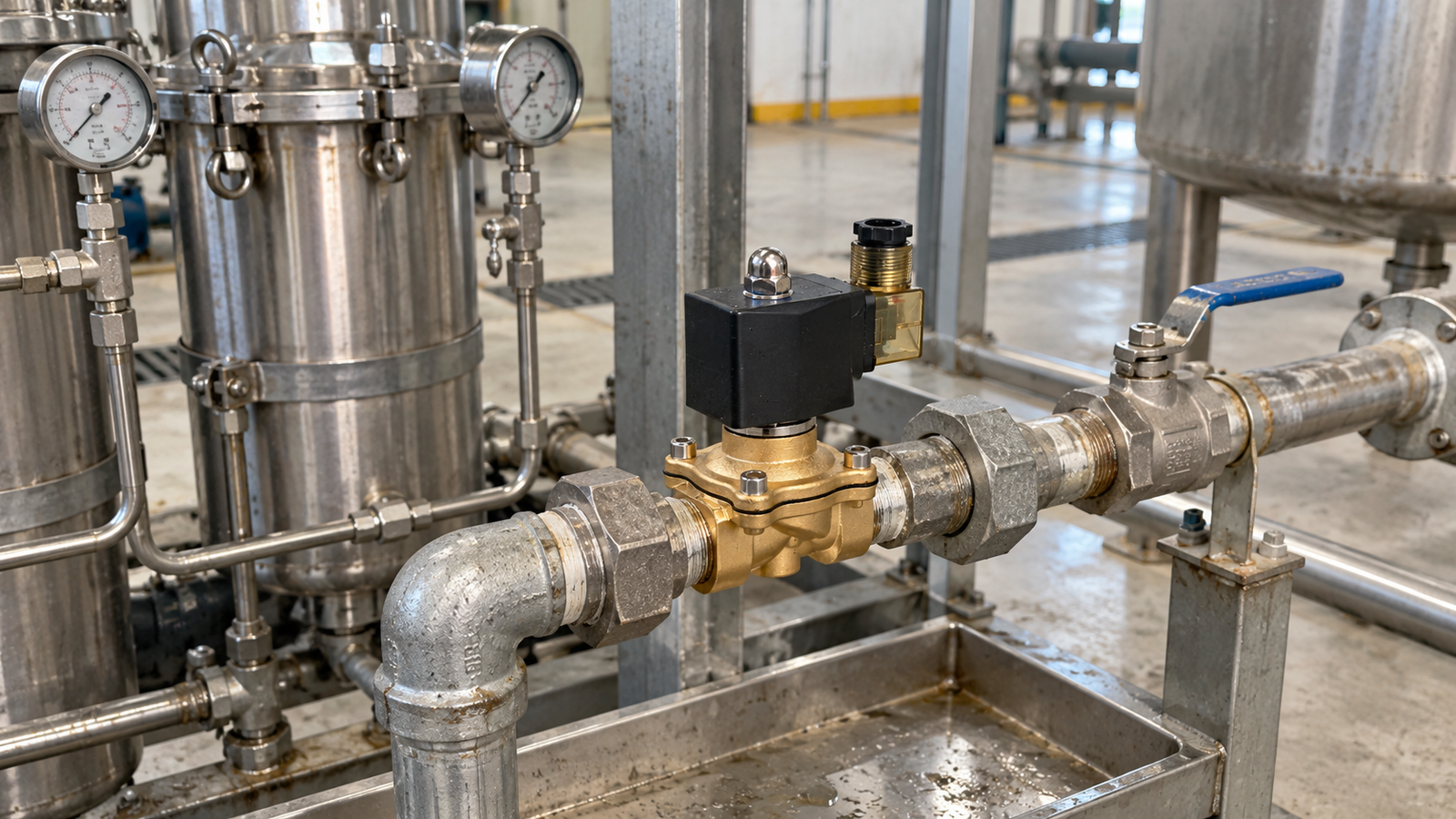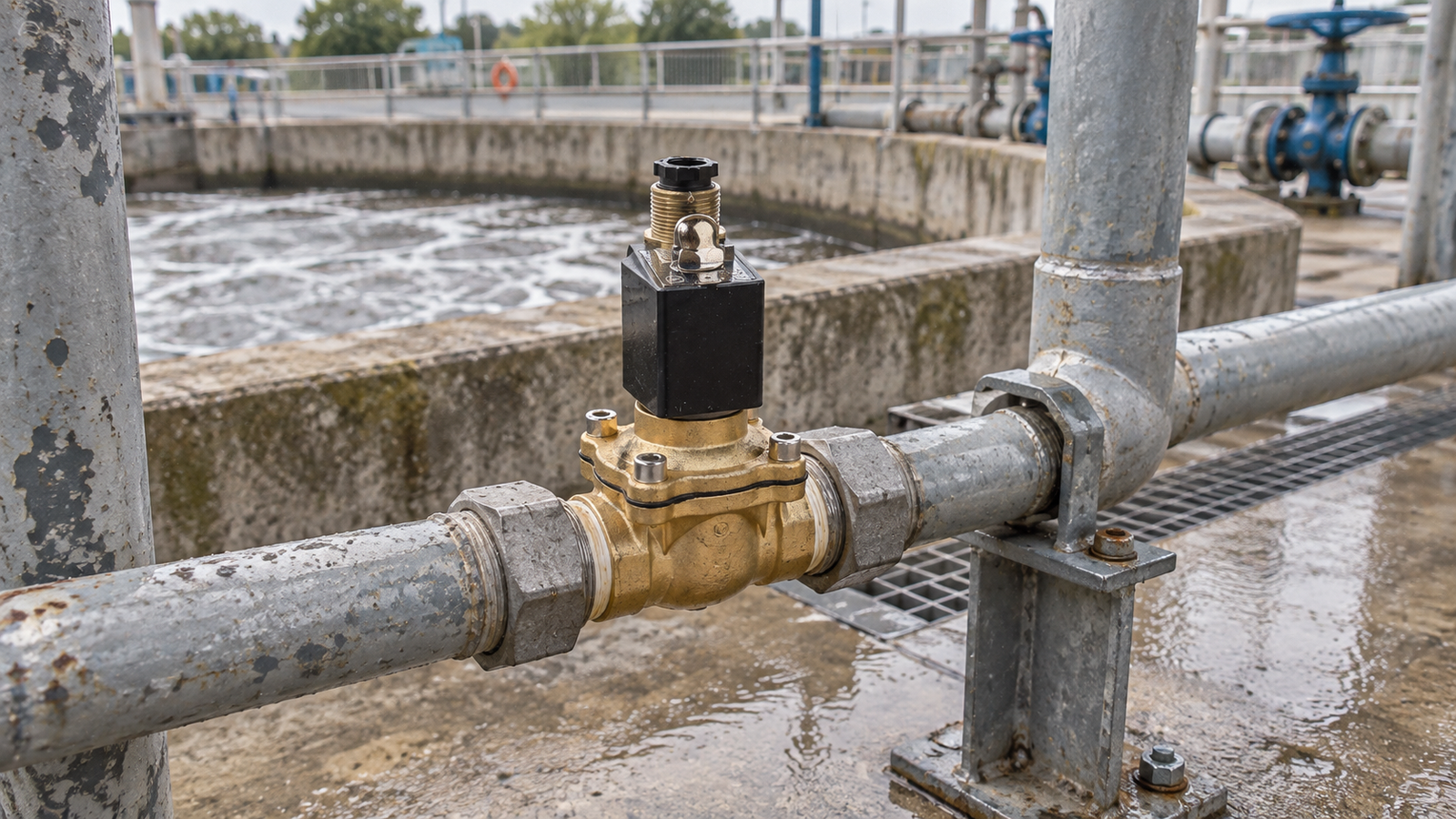
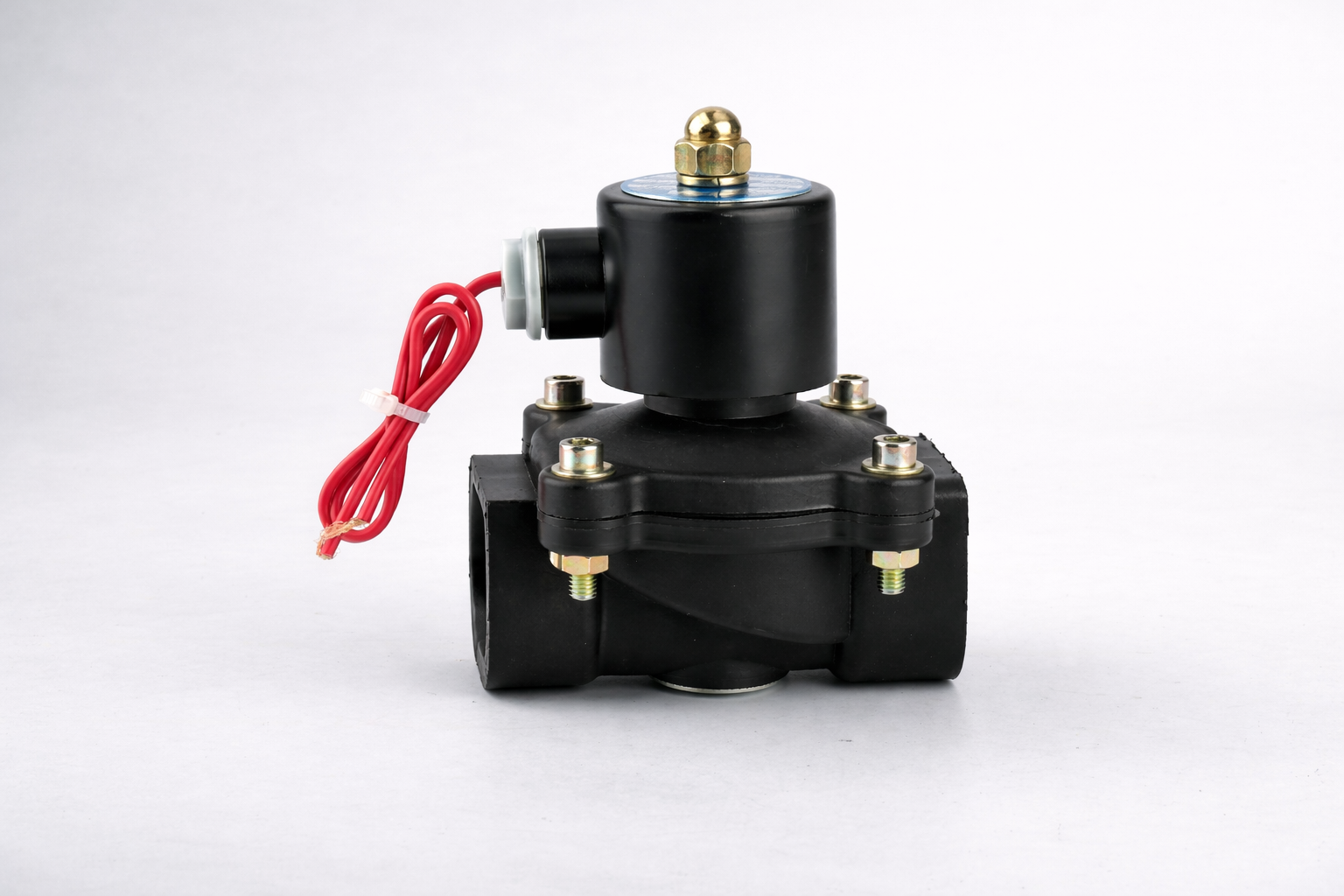
When selecting an industrial solenoid valve, one of the most important decisions is choosing the right body material.
The two most common options are brass and stainless steel.
But which one is better for your application?
In this guide, we compare brass vs stainless steel solenoid valves to help you make the right choice.
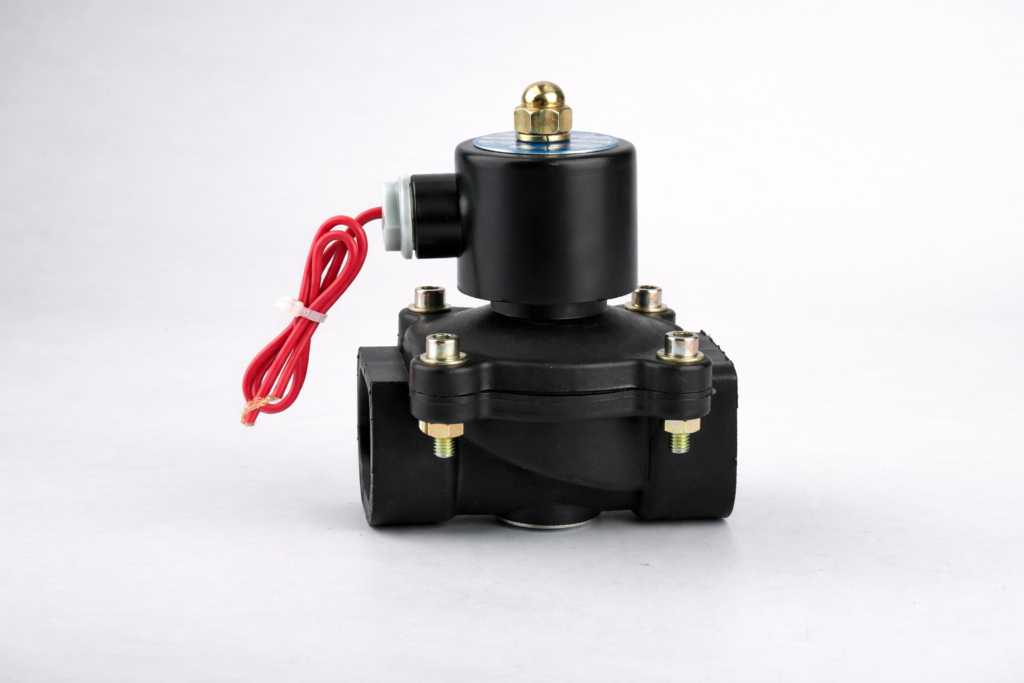
1. Brass Solenoid Valves
Brass is widely used in general industrial applications.
Advantages:
- Cost-effective
- Good corrosion resistance for water and air
- Easy to machine and manufacture
- Suitable for medium pressure systems
Best Applications:
- Water control systems
- Air compressors
- HVAC systems
- Irrigation equipment
- Non-corrosive fluids
If your system uses clean water or compressed air, brass is usually the most economical option.
2. Stainless Steel Solenoid Valves
Stainless steel offers higher corrosion resistance and durability.
Advantages:
- Excellent resistance to chemicals
- Suitable for high temperature environments
- Stronger mechanical performance
- Better for aggressive media
Best Applications:
- Chemical processing
- Food and beverage industry
- Pharmaceutical production
- Marine environments
- Steam systems
If your fluid is corrosive or high temperature, stainless steel is the safer choice.
3. Corrosion Resistance Comparison
- Brass performs well in normal water and air systems.
- Stainless steel performs better in chemical, saltwater, and acidic environments.
For long-term durability in harsh conditions, stainless steel is superior.
4. Cost Comparison
Brass solenoid valves are generally more affordable.
Stainless steel valves cost more due to:
- Higher raw material cost
- More complex machining
- Increased durability
If budget is a key factor and the environment is not aggressive, brass is a smart choice.
5. Temperature and Pressure Performance
Stainless steel handles:
- Higher temperatures
- Higher pressures
- Steam applications
Brass is suitable for moderate industrial conditions.
Always check manufacturer pressure and temperature ratings before purchasing.
How to Choose the Right Material
Ask yourself:
✔ Is the fluid corrosive? → Choose stainless steel
✔ Is this a high-temperature application? → Stainless steel
✔ Is it clean water or air with standard pressure? → Brass is sufficient
✔ Is cost sensitivity important? → Brass is more economical
Final Thoughts
Both brass and stainless steel solenoid valves are widely used in industrial systems. The right material depends on your fluid type, working conditions, and budget.
Choosing the correct valve material improves system reliability and reduces maintenance costs.
If you are unsure which material fits your application, consult a professional solenoid valve manufacturer for guidance.