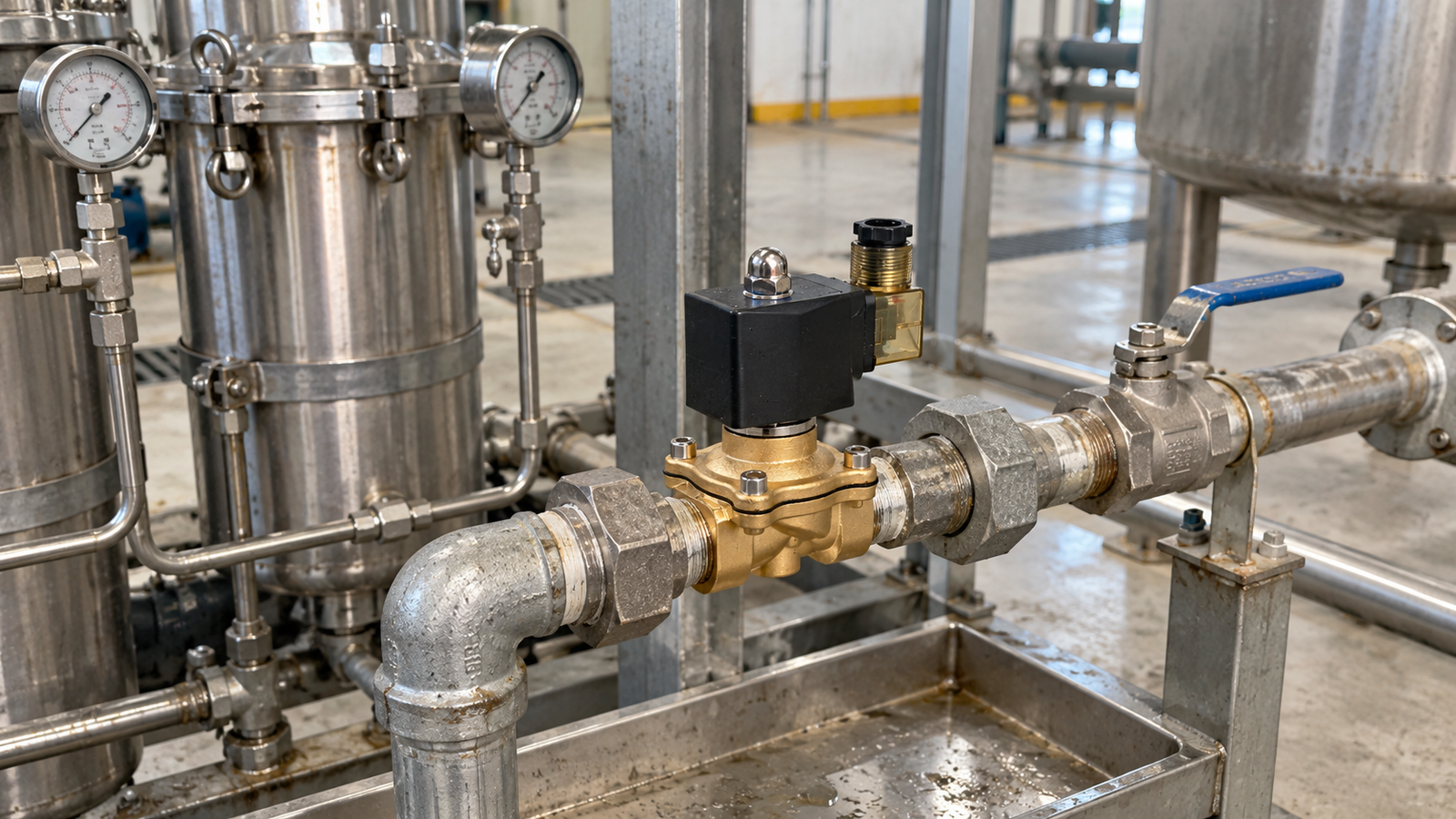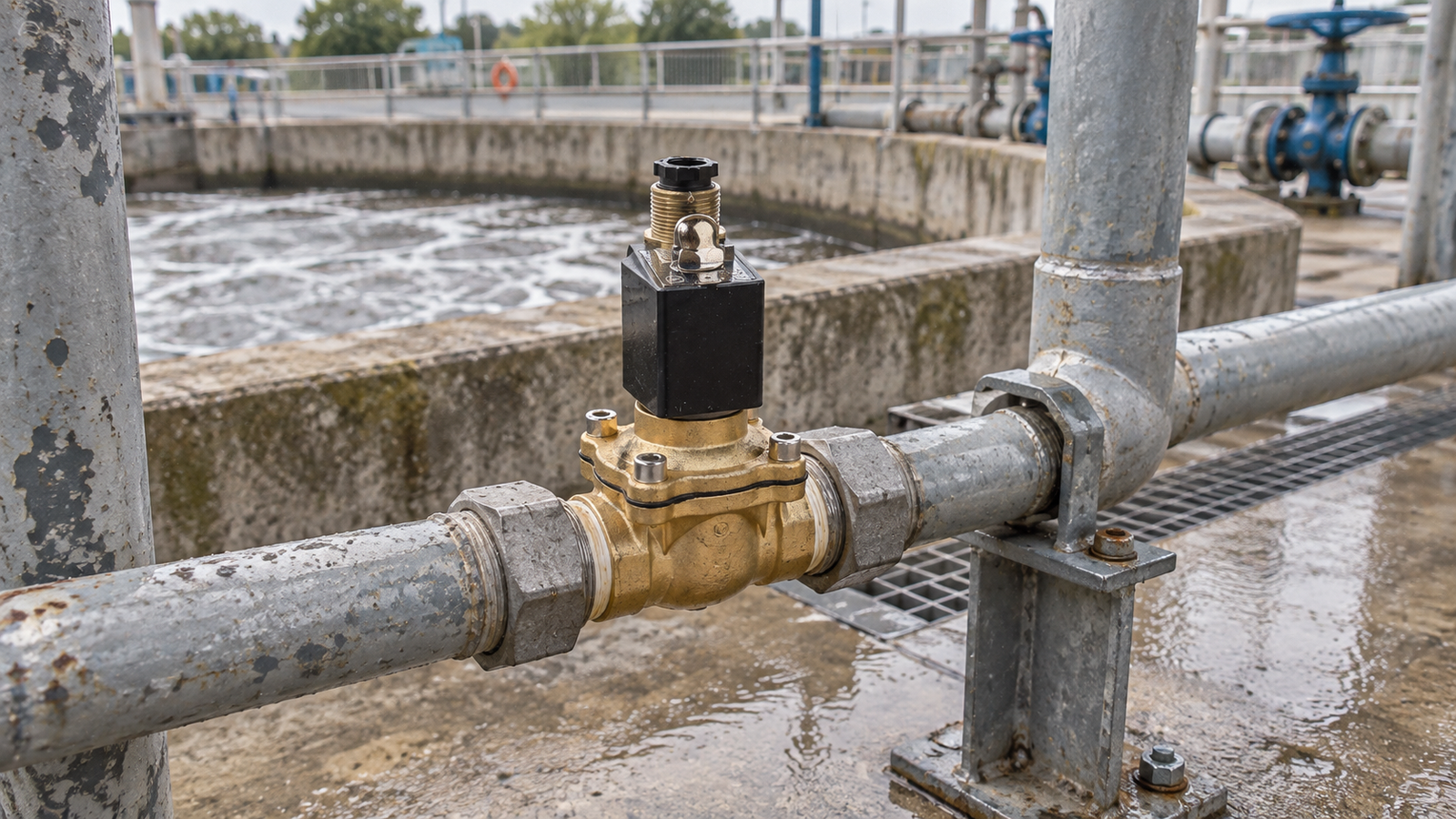
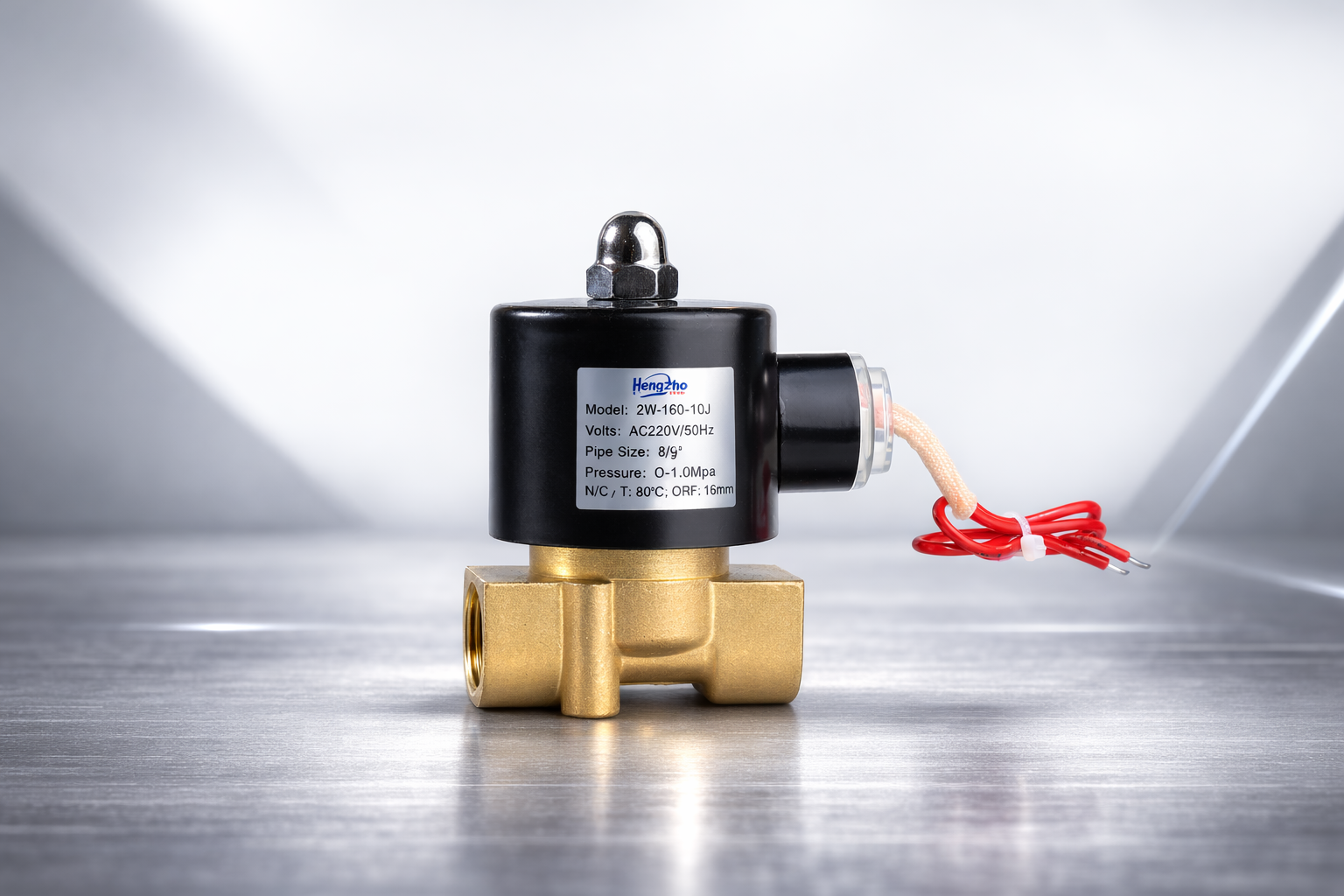
Steam systems require special components.
A standard solenoid valve designed for water or air will fail quickly in steam applications.
If you are selecting a steam solenoid valve, this guide will help you avoid costly mistakes.
Why Steam Applications Are Different
Steam operates under:
- High temperature
- High pressure
- Rapid thermal expansion
- Condensation cycles
These conditions place significant stress on valve materials and seals.
That is why a normal water solenoid valve is not suitable for steam systems.
1. Check Temperature Rating First
Steam temperature can easily exceed:
- 120°C (248°F)
- 180°C (356°F)
- Or even higher in industrial systems
Always confirm the valve’s maximum temperature rating.
Standard NBR seals will fail under high temperature.
Steam valves typically use:
- FKM (Viton)
- PTFE (Teflon)
- EPDM (for certain applications)
2. Choose the Right Body Material
Steam systems usually require:
- Stainless steel body (recommended)
- Or high-quality forged brass (for lower pressure steam)
Stainless steel offers better resistance to heat and pressure stress.
3. Select Pilot-Operated vs Direct-Acting
Most steam systems operate under pressure, so:
- Pilot-operated solenoid valves are commonly used
- Direct-acting valves are suitable for small or low-pressure steam systems
Confirm the minimum operating pressure before purchasing.
4. Verify Pressure Range
Steam pressure can vary significantly.
Always check:
✔ Maximum working pressure
✔ Differential pressure
✔ Safety factor
Selecting a valve with insufficient pressure rating may cause leakage or failure.
5. Coil Protection and Heat Resistance
High temperature environments can damage coils.
Look for:
- High temperature coil insulation
- Continuous duty rating (100% ED)
- Proper ventilation
- Optional heat sink design
Overheated coils are a common failure point in steam applications.
6. Installation Tips for Steam Valves
Proper installation improves lifespan:
- Install vertically if recommended
- Add a steam trap to reduce condensate
- Use a filter to prevent debris damage
- Avoid overtightening connections
Regular inspection is important in high-temperature systems.
Common Mistakes in Steam Valve Selection
✘ Using water-rated solenoid valves
✘ Ignoring seal material compatibility
✘ Choosing incorrect pressure rating
✘ Not considering temperature fluctuations
These mistakes often lead to premature valve failure.
Final Thoughts
Selecting the right steam solenoid valve requires attention to temperature, pressure, material, and seal compatibility.
Steam is a demanding medium, and using the correct high-temperature solenoid valve ensures system safety and long-term reliability.
If you are unsure about your steam system requirements, consult a professional industrial valve manufacturer for proper selection guidance.