
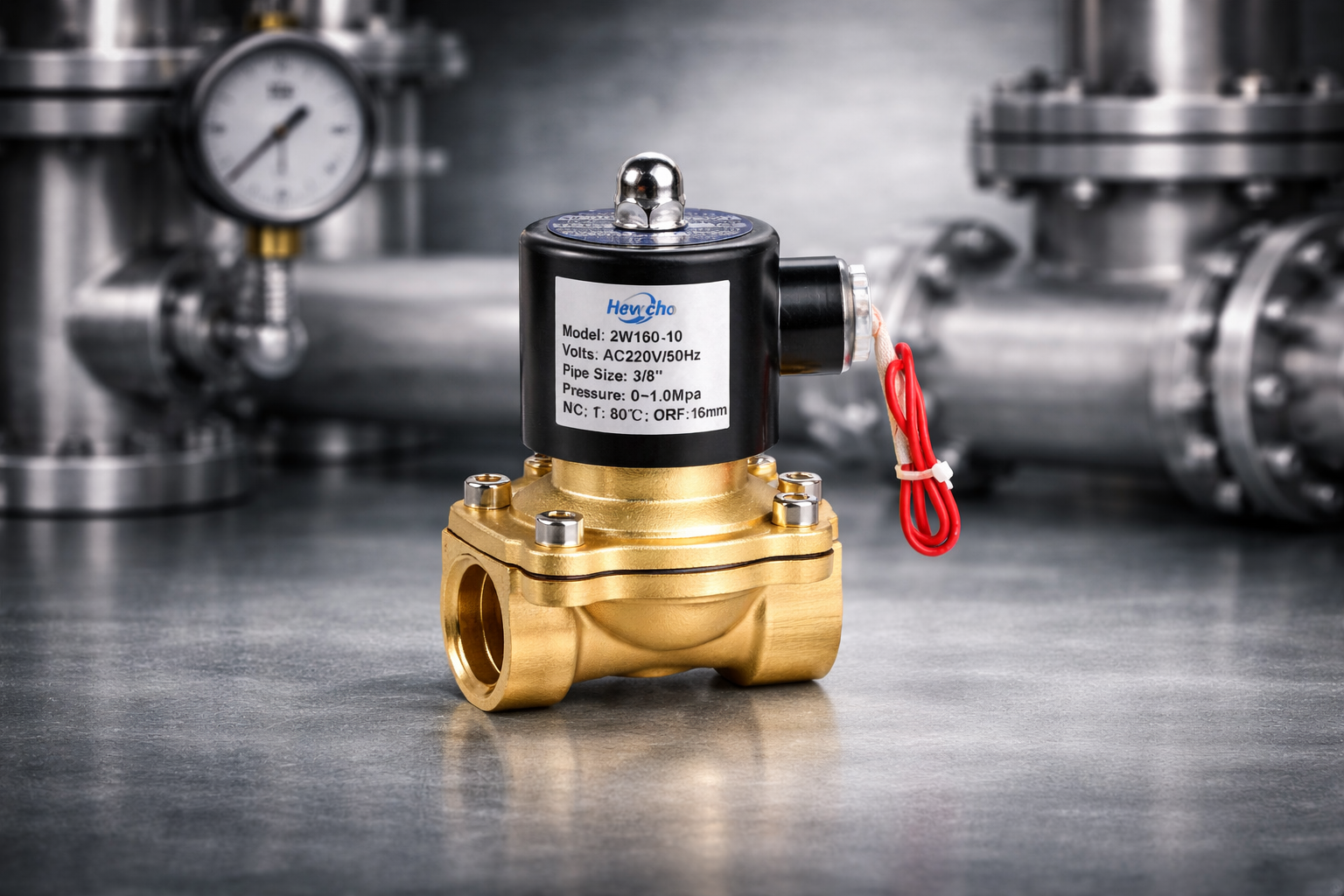
When selecting a 2-way solenoid valve, one important question is whether you need a normally closed (NC) valve or a normally open (NO) valve.
Both types are widely used in industrial systems, but they are designed for different control needs.
In this guide, we explain the difference between them and how to choose the right one for your application.
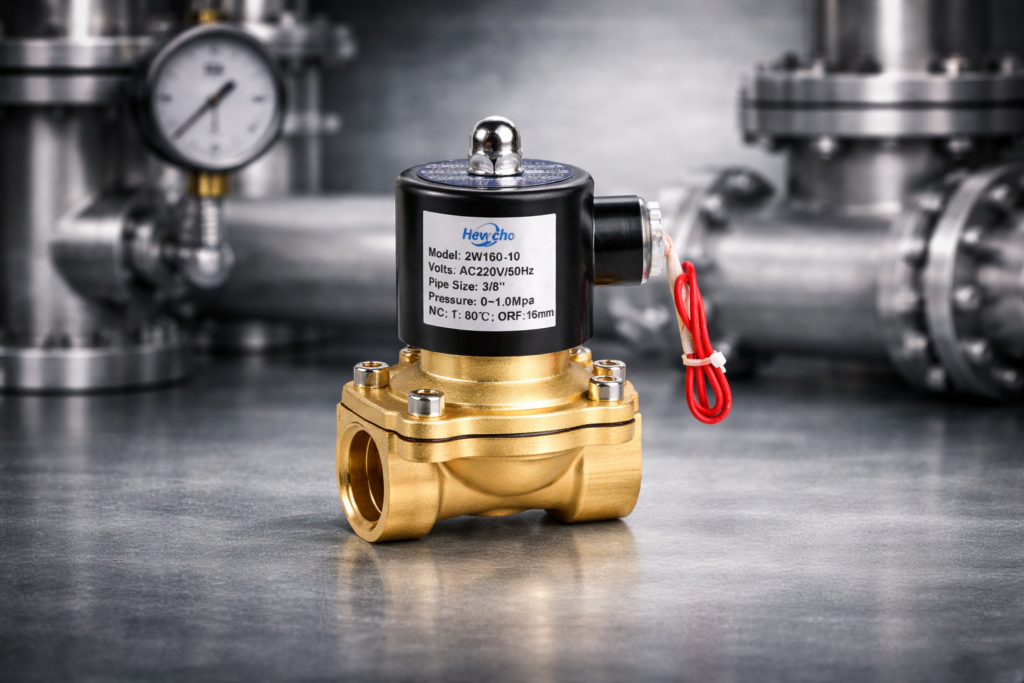
What Is a 2-Way Normally Closed Solenoid Valve?
A 2-way normally closed solenoid valve stays closed when there is no power.
When the coil is energized, the valve opens and allows the medium to flow through.
How It Works
- Power OFF → Valve closed
- Power ON → Valve open
This is the most common type of 2-way solenoid valve.
Common Applications
Normally closed valves are often used in:
- Water shut-off systems
- Air control systems
- Irrigation equipment
- Industrial automation lines
- Safety control systems
They are popular because the flow stops automatically when power is lost.
What Is a 2-Way Normally Open Solenoid Valve?
A 2-way normally open solenoid valve stays open when there is no power.
When the coil is energized, the valve closes and stops the flow.
How It Works
- Power OFF → Valve open
- Power ON → Valve closed
This type is less common, but very useful in special applications.
Common Applications
Normally open valves are used in:
- Cooling water circulation systems
- Emergency water supply systems
- Drain systems
- Equipment that requires continuous flow during power failure
In these systems, keeping the flow open by default is important.
Main Difference Between NC and NO Valves
The main difference is the default valve position when power is removed.
| Valve Type | Default Position | Energized Position |
|---|---|---|
| Normally Closed (NC) | Closed | Open |
| Normally Open (NO) | Open | Closed |
This difference directly affects system safety and operating logic.
When Should You Choose a Normally Closed Valve?
A normally closed valve is the better choice when:
- You want the flow to stop during power failure
- The system only opens flow when needed
- Safety shut-off is important
- Energy is used only when the valve needs to open
For most standard industrial fluid control systems, NC valves are the first choice.
When Should You Choose a Normally Open Valve?
A normally open valve is better when:
- Flow must continue during power loss
- The system usually stays open and only closes sometimes
- Continuous circulation is necessary
- Emergency cooling or drainage is required
This type is useful when stopping flow could damage equipment or affect safety.
Key Factors to Consider Before Selection
Before choosing a 2-way NC or NO solenoid valve, check the following:
1. Power Failure Requirement
Ask yourself:
What should happen if power is lost?
- Flow stops → Choose NC
- Flow continues → Choose NO
2. Duty Cycle
If the valve stays energized for long periods, coil heating should be considered.
3. Medium Type
Make sure the valve is suitable for:
- Water
- Air
- Oil
- Gas
- Steam
4. Pressure and Temperature
Check that the valve matches your system conditions.
5. Voltage
Choose the right voltage, such as:
- 24V DC
- 110V AC
- 220V AC
Correct selection improves reliability and service life.
Common Mistakes in Choosing NC or NO Valves
Many users choose a valve based only on port size or price. That can lead to control problems.
Common mistakes include:
- Choosing NC when continuous flow is required
- Choosing NO when fail-safe shut-off is needed
- Ignoring coil heating during long energizing periods
- Not considering the system’s safety logic
A wrong choice can affect both efficiency and safety.
Final Thoughts
Both 2-way normally closed and 2-way normally open solenoid valves are important in industrial systems. The correct choice depends on what your system needs to do when power is on and when power is off.
If you need automatic shut-off, choose normally closed.
If you need continuous flow during power failure, choose normally open.
Understanding this difference helps you choose the right valve and avoid unnecessary system problems.