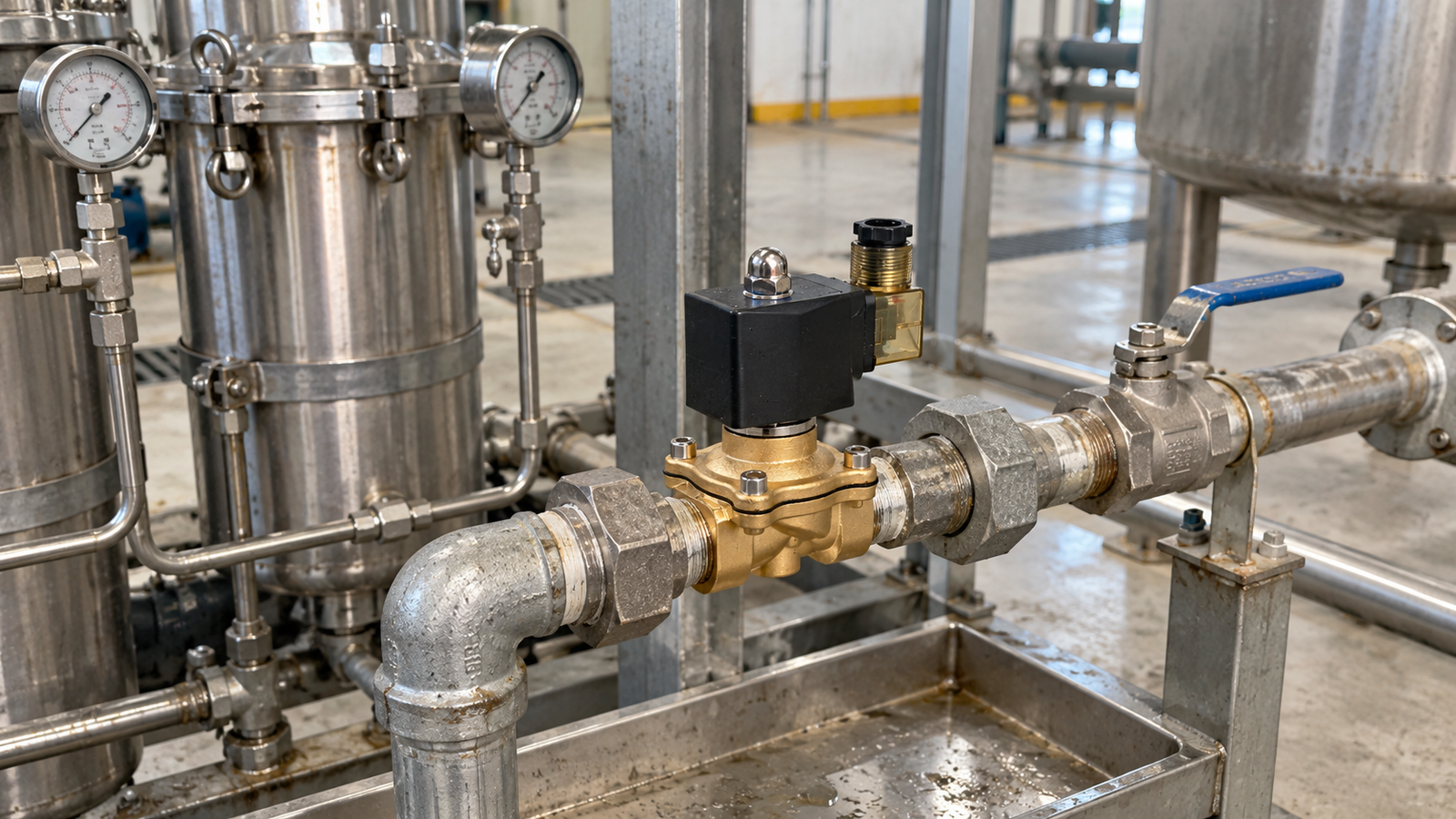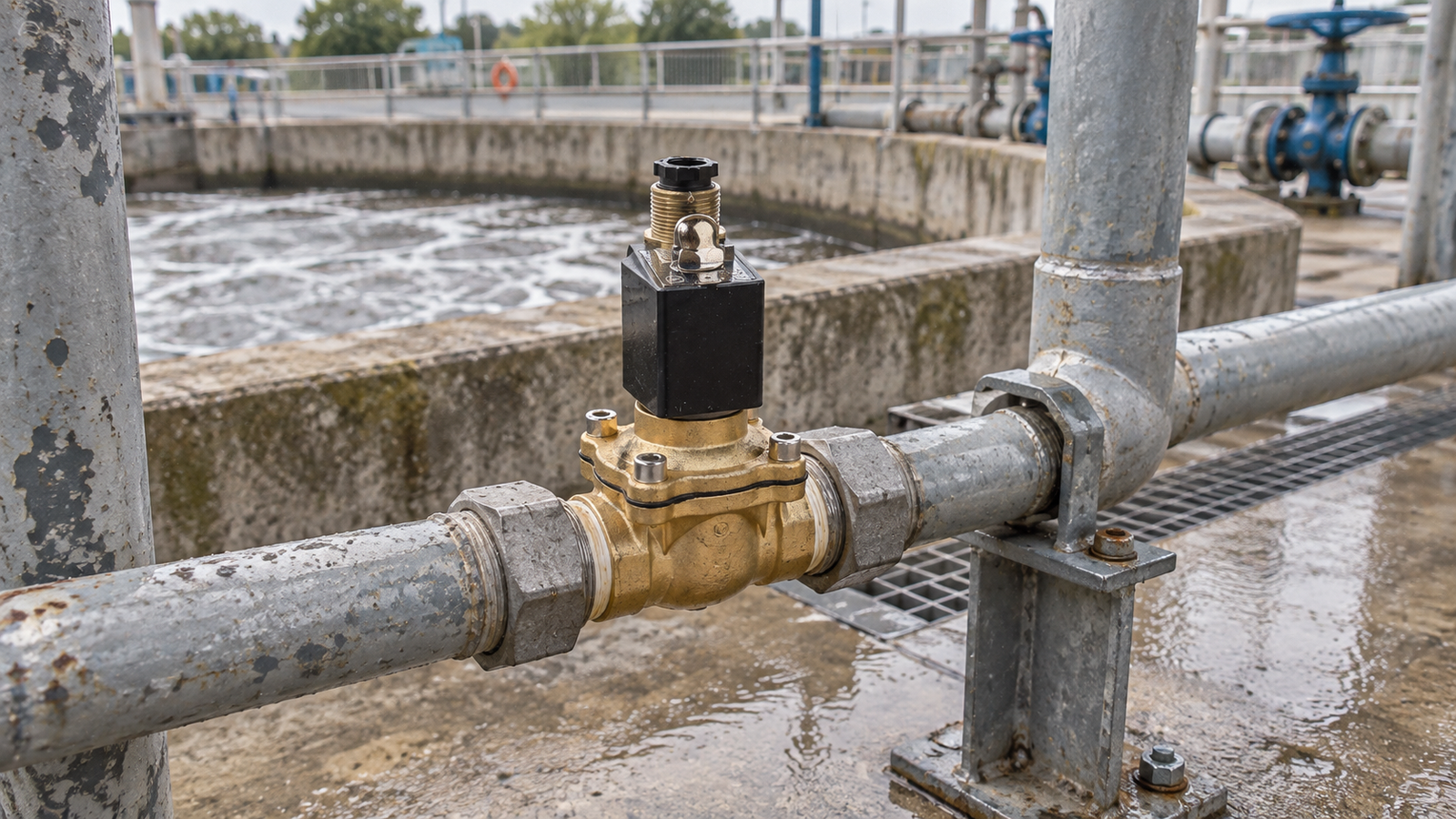
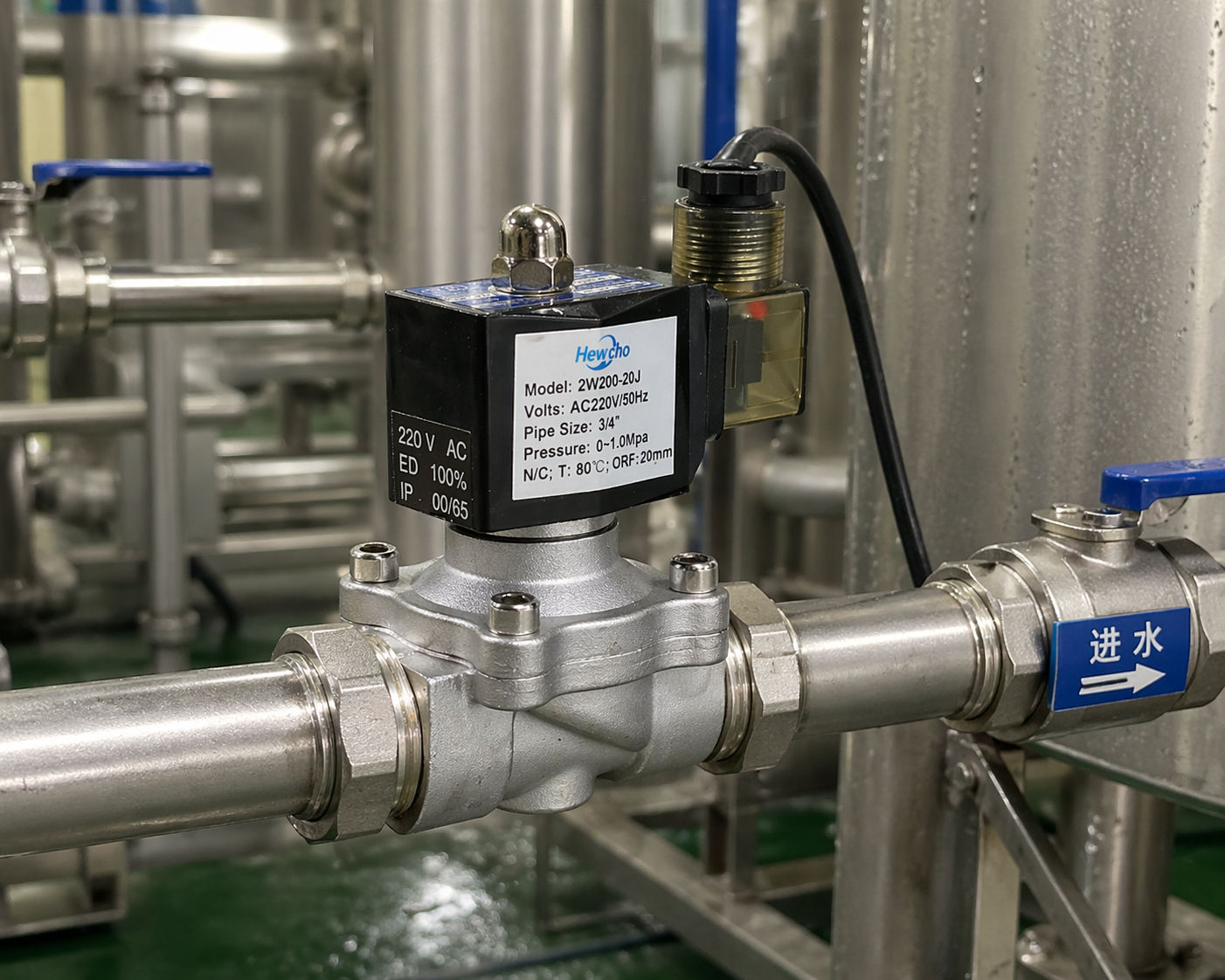
When sourcing fluid control components for international markets, procurement managers often focus on standard temperature ratings. However, if your distribution network serves heavy industries in northern, sub-zero climates, supplying standard off-the-shelf valves is a recipe for catastrophic system failures.
In environments where temperatures routinely drop below freezing, fluid dynamics change, elastomers harden, and metals contract. For pipelines operating in these extreme conditions, the reliability of your system rests entirely on selecting highly specialized 2-way solenoid valves.
Here is the technical engineering guide to specifying and sourcing 2-way valves—particularly the widely used 2W and SLP series architectures—for extreme cold-weather operations.
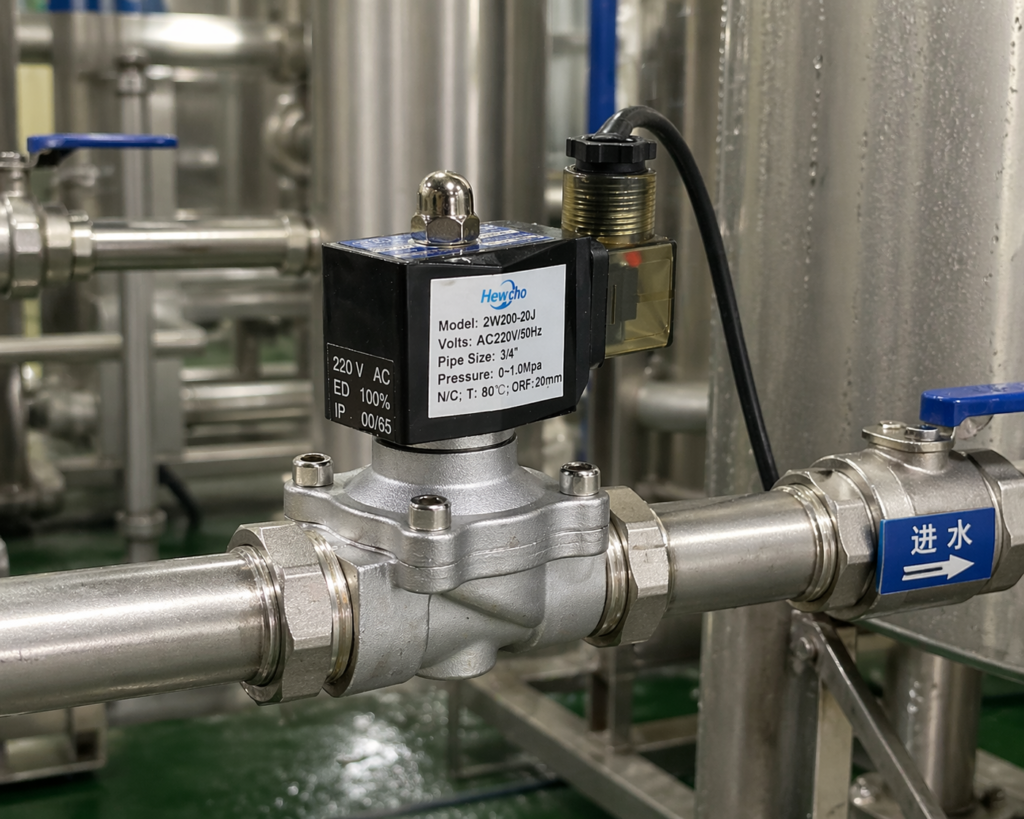
1. The Elastomer Challenge: Why Standard Seals Fail
The most immediate point of failure in a sub-zero environment is the valve’s internal seal. The industry-standard elastomer, NBR (Buna-N), is highly cost-effective but generally has a lower temperature limit of around -10°C (14°F).
When exposed to temperatures below this threshold, standard NBR loses its elasticity. It becomes brittle and glass-like. When the solenoid coil energizes and the plunger slams against this hardened seal, the rubber will crack, leading to immediate internal leakage.
The Cold-Weather Solution: When sourcing for extreme cold, you must specify low-temperature elastomers.
- PTFE (Teflon): Capable of withstanding temperatures far below -50°C, PTFE maintains its structural integrity without becoming brittle.
- Specialized Low-Temp EPDM or Silicone: For applications requiring a softer, more flexible seal at sub-zero temperatures, aerospace-grade silicone or specially formulated EPDM are the required upgrades.
2. Viscosity and the Semi-Direct Acting Advantage
Cold weather drastically increases the viscosity of liquids, particularly light oils and industrial lubricants. A fluid that flows like water at 20°C may turn into a thick syrup at -20°C.
Purely pilot-operated valves rely on a tiny internal pilot hole and the kinetic energy of the fluid to lift the diaphragm. If the fluid becomes highly viscous due to extreme cold, it cannot move through the pilot hole fast enough, and the valve will fail to open.
This is where the architecture of the 2W Series and SLP Series 2-way valves provides a massive advantage. These series utilize a semi-direct acting (assisted lift) mechanism. The electromagnetic coil is physically attached to the diaphragm. When energized, the coil physically pulls the seal open, rather than relying entirely on the fluid’s pressure to do the work. This mechanical assistance ensures the valve actuates reliably, even when the media is sluggish and viscous.
3. Combating External Freeze and Ice Jacking
If a 2-way valve is installed outdoors or in an unheated facility, external moisture is a constant threat.
“Ice jacking” occurs when condensation or rain seeps into the tiny gap between the electromagnetic coil and the brass or stainless steel armature tube. When the temperature drops, that trapped water freezes and expands. The sheer force of expanding ice is enough to crush the thin metal armature tube, permanently jamming the internal plunger.
The Procurement Fix:
- Fully Encapsulated Coils: Ensure the coils you source are completely potted in epoxy, leaving no air gaps for moisture to collect.
- IP67 Minimum Rating: For outdoor sub-zero applications, an IP65 rating is insufficient. Specify IP67-rated housings with watertight DIN connectors to completely block snow melt and condensation from entering the electrical components.
4. Valve Body Material: Forged Brass vs. Stainless Steel
While forged brass is incredibly resilient, extreme cold combined with high pressure can exploit any microscopic weaknesses in lower-quality metals.
If your clients are utilizing these 2-way valves in high-pressure pneumatic systems (such as outdoor air compressors or heavy-duty snowmaking equipment), 304 or 316 Stainless Steel is often the safer choice. Stainless steel maintains a higher tensile strength and impact resistance at sub-zero temperatures compared to brass, ensuring the valve body will not fracture if subjected to sudden pressure spikes or external impacts.
Conclusion
Exporting and distributing fluid control systems to cold-climate regions requires a strict departure from standard procurement habits. By specifying semi-direct acting architectures like the 2W and SLP series, demanding low-temperature seals, and ensuring robust coil protection, you provide your industrial buyers with 2-way solenoid valves that will survive the harshest winters on earth.