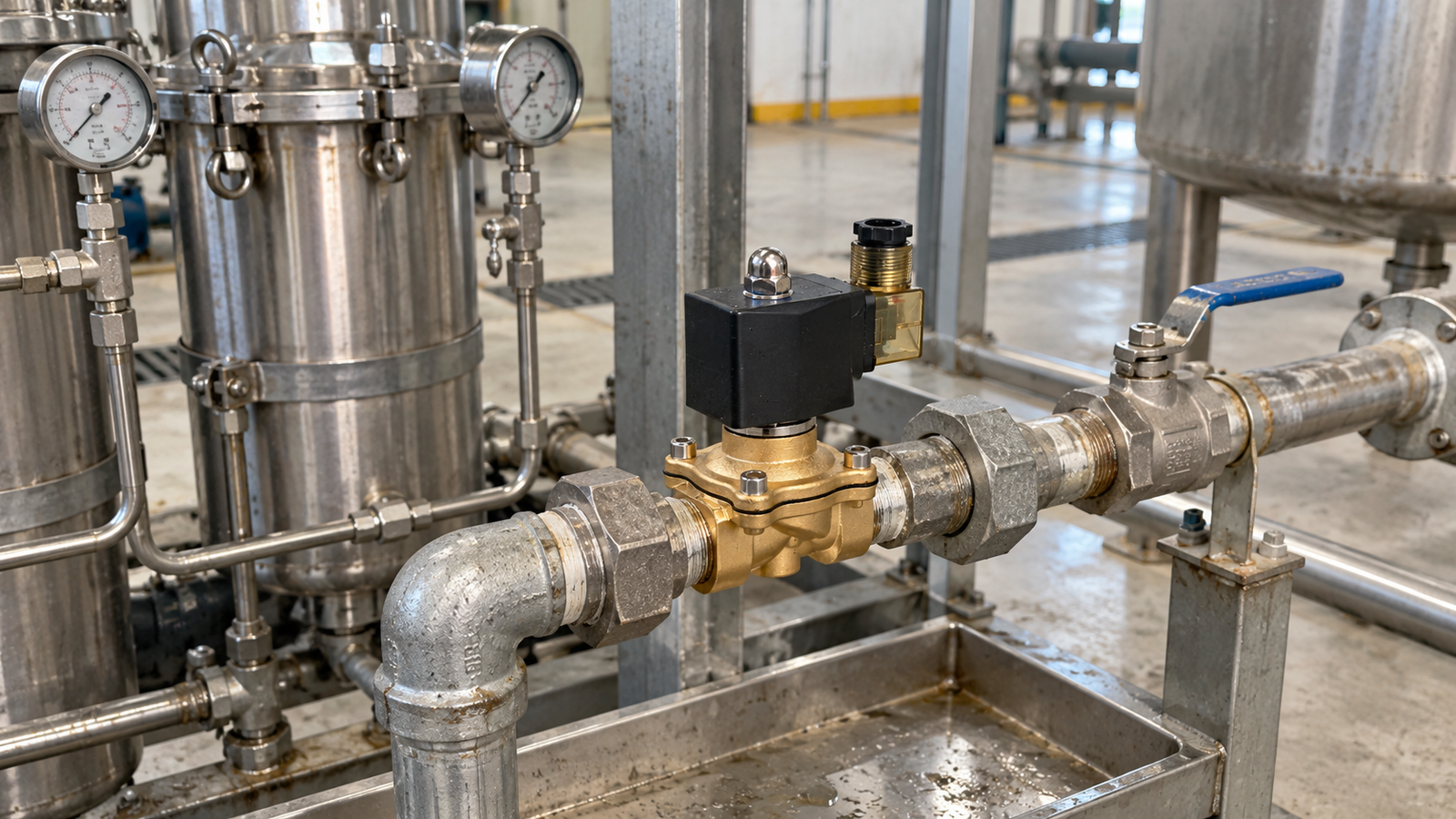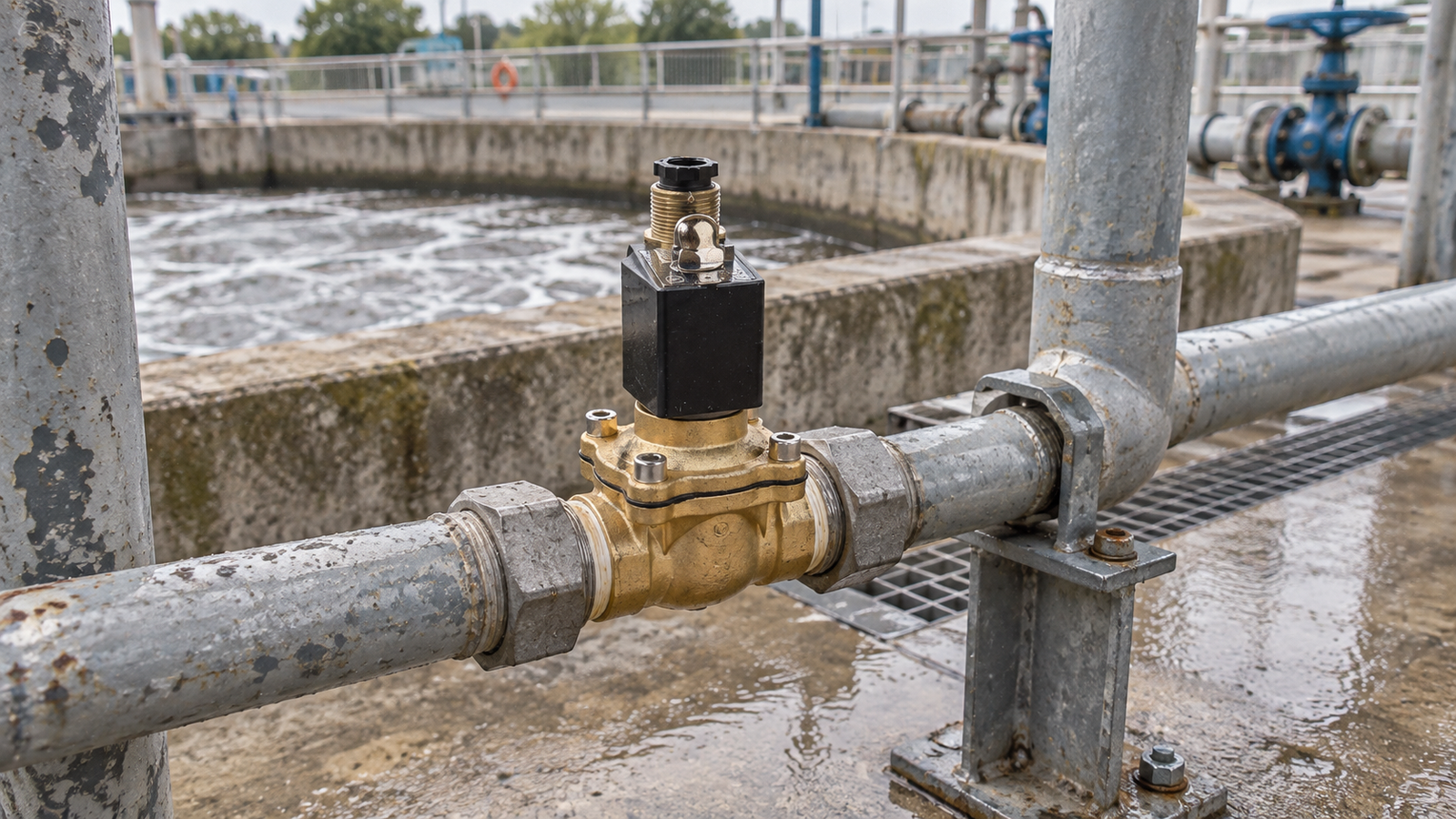
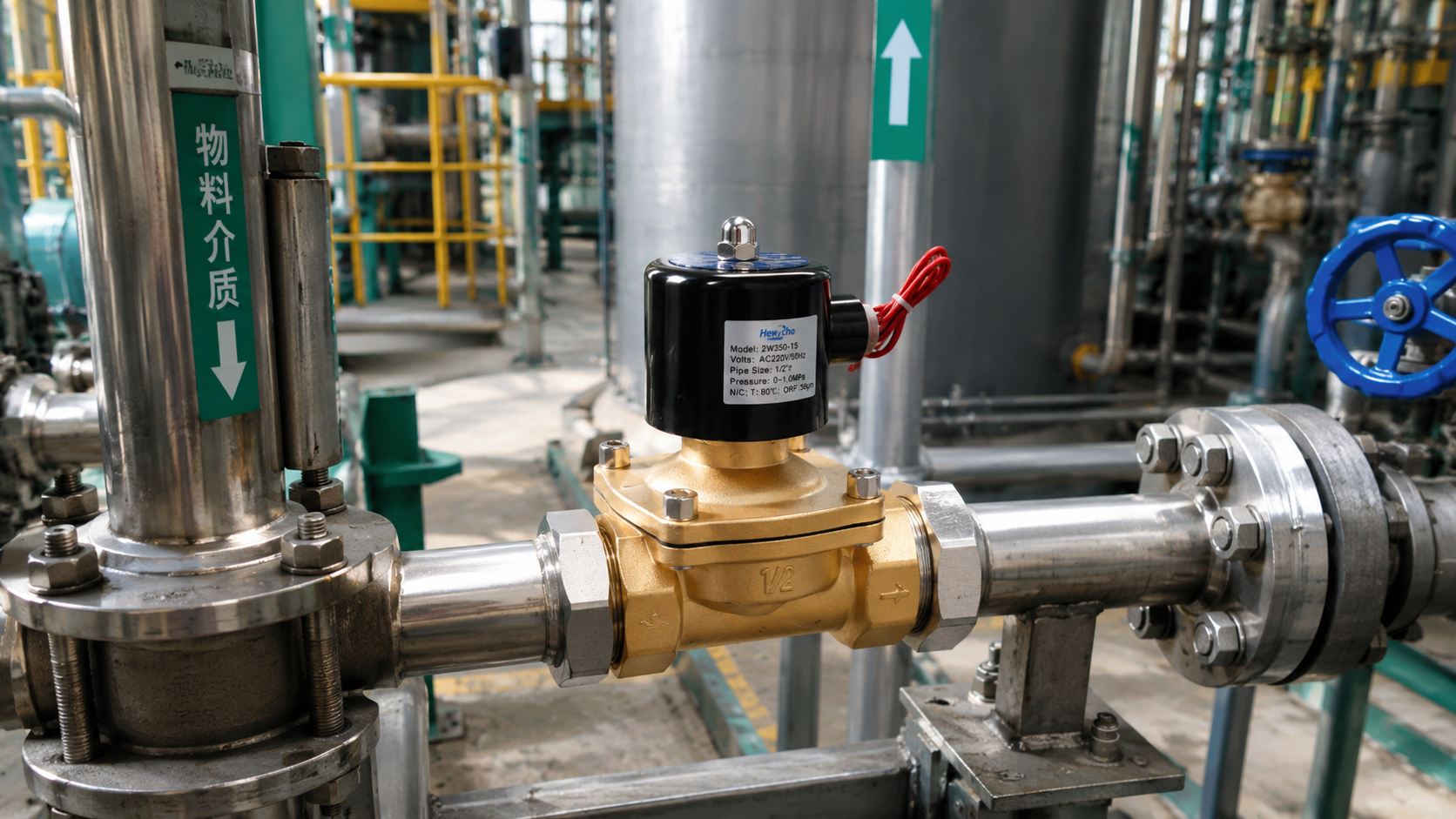
In industrial fluid control, efficiency is often measured by speed. Engineers design systems to move massive volumes of water, chemicals, or coolants as quickly as possible. However, this high-velocity flow introduces a hidden, destructive force into your pipeline.
When a fluid moving at high speed is suddenly forced to stop, the kinetic energy does not simply disappear. It transforms into a violent acoustic shockwave known as Water Hammer (Hydraulic Shock).
If you have ever heard a loud “bang” or felt the pipes shudder when an automated valve closes, your system is experiencing water hammer. Over time, this shockwave will blow out O-rings, shatter PVC joints, and destroy expensive instrumentation. Because 2-way solenoid valves actuate incredibly fast, they are frequently the trigger for this destructive phenomenon. Here is the engineering guide to understanding hydraulic shock and designing your 2-way valve systems to prevent it.
1. The Physics of the Shockwave
Water, unlike compressed air or gas, is incompressible. It cannot absorb impact by squishing down.
Imagine a 100-foot pipeline moving water at 10 gallons per minute. That water has significant weight and momentum. When a 2-way solenoid valve at the end of that line snaps shut in 20 milliseconds, the water slams into the closed valve seal. Because the water cannot compress, the kinetic energy rebounds backward through the pipe at the speed of sound.
This creates a massive, instantaneous pressure spike that can easily exceed three to four times the normal operating pressure of the system. If your line is rated for 10 Bar, a water hammer shockwave can easily subject your fittings to a 40 Bar micro-explosion.
2. Why Solenoid Valves Are the Prime Suspects
Standard manual ball valves or gate valves rarely cause water hammer because it takes a human hand several seconds to physically turn the handle, allowing the water to decelerate gradually.
Solenoid valves, on the other hand, are engineered for instant automation.
- Direct-Acting Valves: As discussed in our response time guide, these valves use pure magnetic force to drop the internal plunger, often snapping the valve shut in under 30 milliseconds. This instant blockade guarantees a severe shockwave in high-velocity systems.
- AC vs. DC Coils: Alternating Current (AC) coils generally snap shut faster than Direct Current (DC) coils, making AC-powered fluid systems slightly more prone to severe hydraulic shock.
3. Engineering the Valve: Anti-Water Hammer Designs
If you are designing a high-velocity liquid pipeline (such as commercial irrigation, car washes, or batch filling stations), you cannot use standard direct-acting valves. You must source 2-way valves specifically engineered to decelerate the fluid.
The Solution: Slow-Closing Pilot Valves
To prevent water hammer, manufacturers alter the internal architecture of pilot-operated 2-way valves.
Instead of the main diaphragm dropping instantly, the valve is designed with a restricted pilot bleed-hole. When the coil is de-energized, the fluid slowly bleeds into the upper chamber, forcing the main diaphragm to close smoothly and gradually over the course of 1 to 3 seconds. This controlled deceleration acts like the brakes on a car, absorbing the kinetic energy and completely eliminating the shockwave.
Procurement Tip: When sourcing valves for long pipe runs, always look for spec sheets that explicitly mention “Anti-Water Hammer” or “Adjustable Closing Time” features.
4. System-Level Solutions to Protect Your Pipeline
If replacing the existing 2-way solenoid valves with slow-closing models is not an immediate option, engineers must deploy system-level modifications to absorb the shock:
- Install Water Hammer Arrestors: These are small, sealed cylinders installed on a T-fitting immediately upstream of the 2-way valve. Inside the cylinder is a pressurized pocket of air (or nitrogen) separated by a piston. Because gas is compressible, the arrestor acts as a shock absorber. When the water hammer wave hits, it pushes the piston up into the gas chamber, safely absorbing the destructive energy.
- Increase Pipe Diameter: Hydraulic shock is directly tied to fluid velocity. By replacing a 1-inch pipe with a 2-inch pipe, you can move the exact same volume of water per minute, but the fluid will travel at a much slower speed. Slower velocity means significantly less kinetic energy upon impact.
- Install Pressure Reducing Valves (PRVs): Lowering the overall supply pressure of the system before it reaches the solenoid valve will proportionately lower the intensity of the resulting shockwave.
The Bottom Line
Ignoring water hammer is an expensive gamble. A single ruptured fitting can flood a facility and cause thousands of dollars in downtime and equipment damage. By understanding the fluid dynamics of your pipeline and specifying slow-closing, pilot-operated 2-way solenoid valves, you can silence the “bang” and ensure decades of safe, leak-free operation.