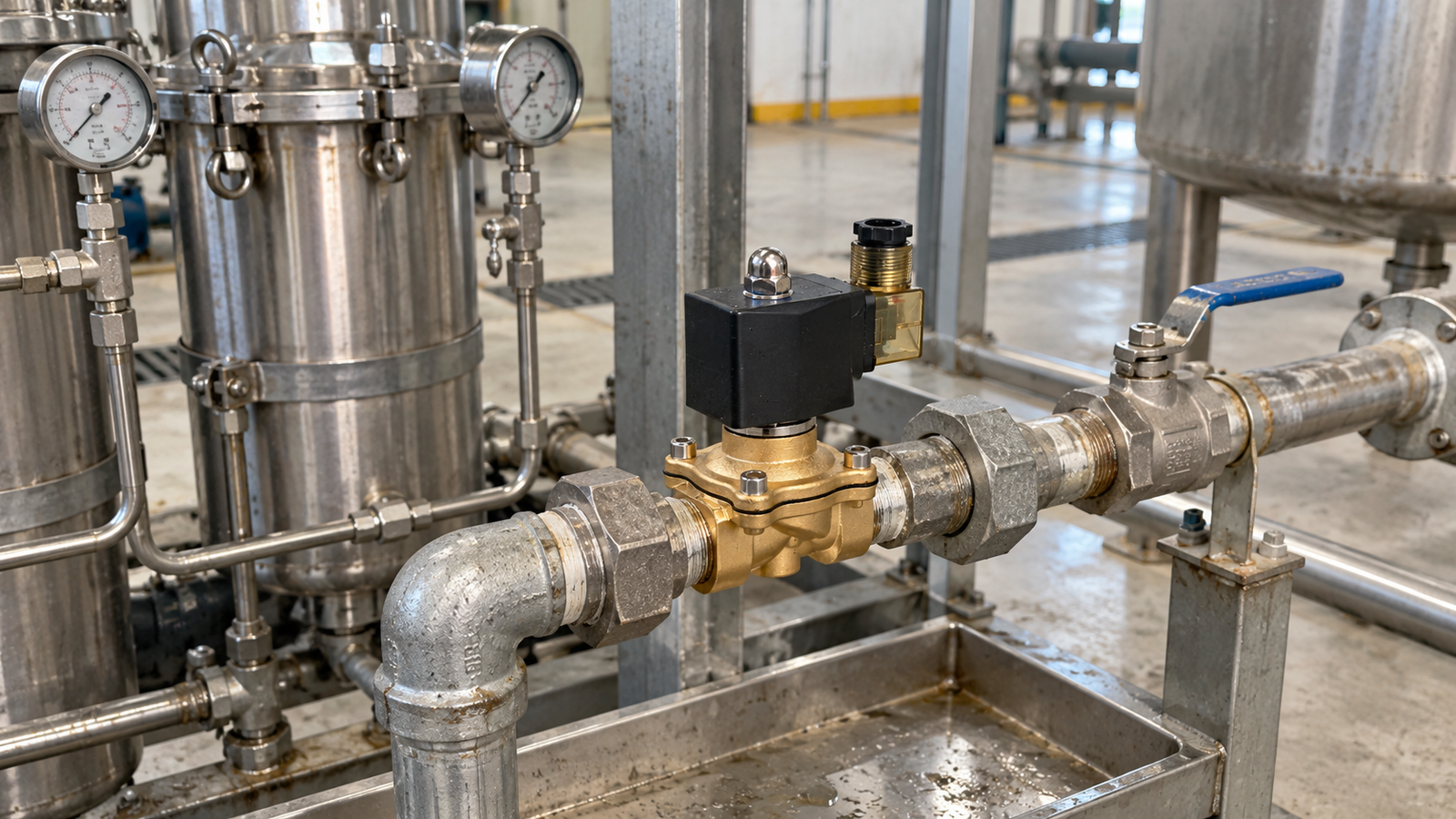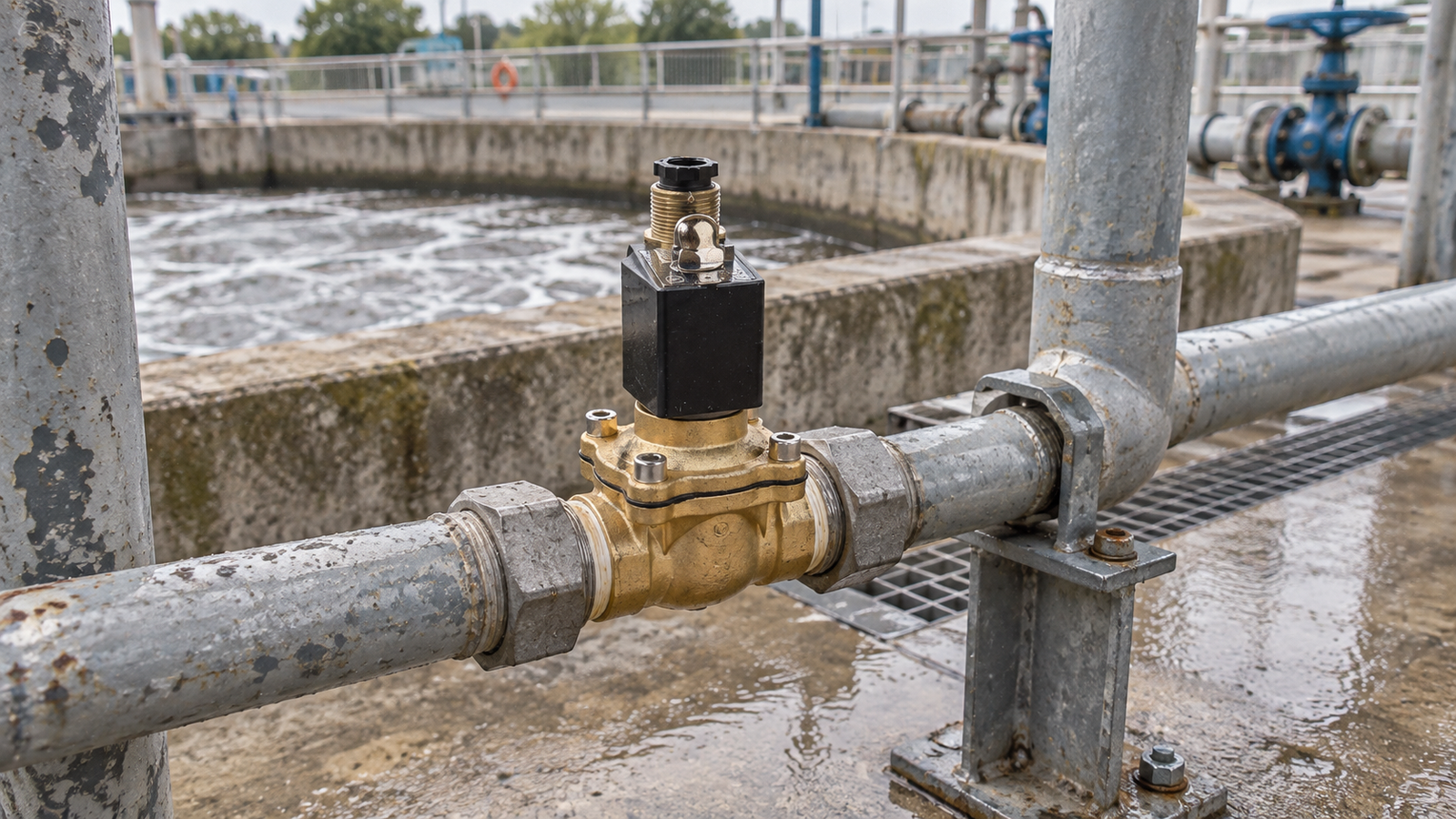
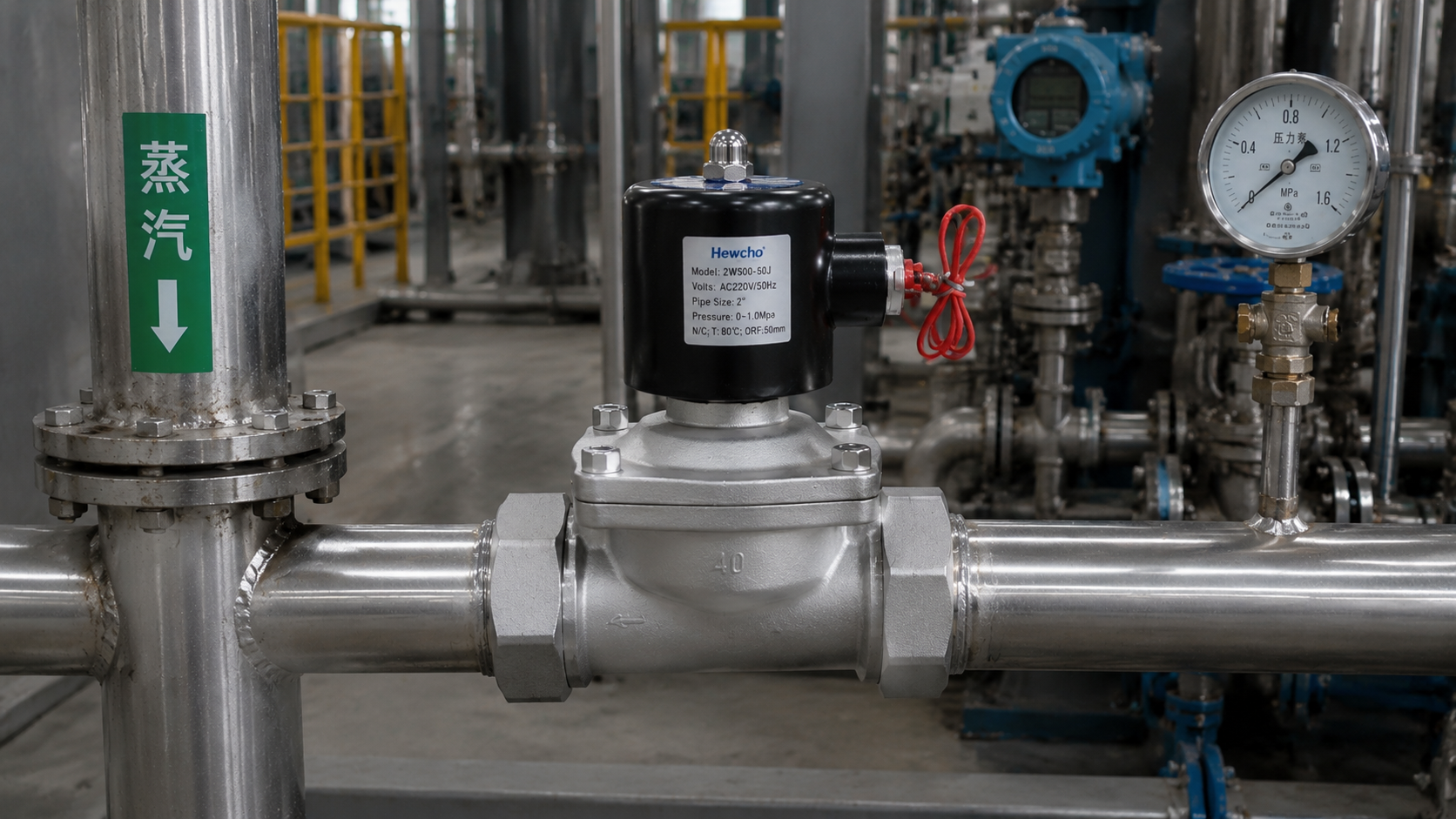
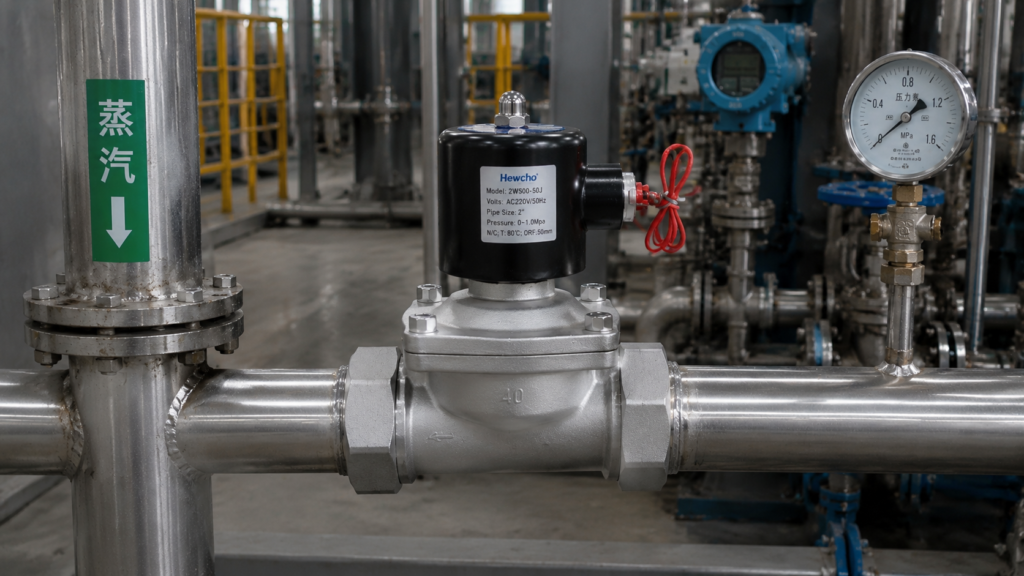
Yesterday, we took a deep dive into the violent mechanics of cavitation and flashing, mapping out how rapid fluid velocity shifts can erode a valve from the inside out. Today, we turn our attention to a more frequent, costly, and potentially hazardous operational issue faced by plant engineers: Valve Leakage.
In an automated processing plant, a leaking 2-way solenoid valve is never just a minor maintenance nuisance. Whether it is a slow, imperceptible weep or a sudden, high-volume bypass, leakage directly compromises system pressure, degrades batching accuracy, and—when handling volatile chemicals or superheated steam—poses immediate safety risks to facility personnel.
To systematically eliminate fluid loss, troubleshooting teams must categorize the failure mode into one of two distinct physical categories: Internal Leakage (Seat Bypass) or External Leakage (Fugitive Emissions). Here is the technical diagnostic guide to identifying the root causes of both phenomena and executing the correct engineering fixes.
1. Internal Leakage: The Invisible Seat Bypass
Internal leakage occurs when the 2-way valve is fully de-energized (for a Normally Closed valve), yet fluid continues to pass through the internal orifice from the inlet port to the outlet port. Because the fluid remains entirely contained within the piping system, this type of leak is often invisible until detected by downstream flow sensors or a unexpected drop in holding pressure.
Root Cause A: Particulate Contamination (The #1 Culprit)
The vast majority of internal leaks are caused by tiny solid particles—such as pipe scale, welding slag, rust, or thread sealant tape—becoming trapped between the moving sealing element (diaphragm/plunger) and the stationary machined valve seat. Even a microscopic grain of sand ($<100\ \mu\text{m}$) will prevent an elastomer seal from compressing flat against the seat, creating a tiny channel for fluid to bypass continuously.
- The Fix: Disassemble the valve body, flush the internal cavities with clean water or compressed air, and inspect the elastomer for permanent indentation marks. To prevent recurrence, install a Y-strainer upstream of the valve inlet.
Root Cause B: Insufficient Pressure Differential ($\Delta P$)
As established in our mechanical architecture guides, pilot-operated 2-way valves rely heavily on the system’s own inlet pressure to force the main diaphragm downward and hold it sealed tightly against the orifice. If the system pressure drops below the manufacturer’s required minimum threshold (e.g., falling below $0.3\text{ Bar}$), the internal return spring lacks the force to create a bubble-tight shutoff on its own.
- The Fix: Audit your system pressure dynamics. If low-pressure or gravity-fed conditions are a permanent feature of the pipeline loop, replace the pilot valve with a Direct-Acting or Semi-Direct Acting (Assisted Lift) 2-way solenoid valve.
2. External Leakage: Environmental Breach and Safety Hazards
External leakage occurs when the fluid escapes the internal pressurized wetted path and breaches the external atmosphere. This failure mode is immediately apparent, often manifesting as pooling liquid, escaping gas hissing, or localized ice formation in cryogenic lines.
Root Cause A: Armature Tube O-Ring Degradation
A 2-way solenoid valve features a structural joint where the stainless steel armature tube (the guiding cylinder for the plunger) connects to the forged brass or stainless steel valve body. This static connection is typically sealed using a high-performance rubber O-ring.
Over millions of cycles, or when subjected to aggressive chemical cleanings, this O-ring can suffer from compression set—losing its elasticity and hardening into a brittle shape that can no longer maintain a seal under high pressures.
- The Fix: Depressurize the line, unscrew the armature tube assembly assembly using a calibrated torque wrench, and replace the body O-ring. Always verify that the replacement elastomer’s chemical rating matches the fluid profile (e.g., upgrading to Viton/FKM for hydrocarbon-heavy lines).
Root Cause B: Thermal Fatigue and Over-Torqueing
In systems that rapidly cycle between extreme temperatures (such as steam lines or ambient outdoor installations in sub-zero climates), the different expansion rates of the brass body and stainless steel fasteners can stretch bolts or warp the matching sealing faces. Conversely, maintenance technicians often over-tighten the bonnet screws during routine inspections, crushing the internal gaskets beyond their elastic limits and causing a permanent leak path.
- The Fix: Always utilize a torque wrench to tighten body-to-bonnet fasteners strictly to the manufacturer’s torque specifications, ensuring even, cross-pattern tightening.
Diagnostic Troubleshooting Checklist
When a 2-way solenoid valve begins leaking in the field, technicians should execute this rapid multi-point diagnostic sequence:
| Diagnostic Symptom | Probable Leak Type | Primary Suspect Component | Immediate Corrective Action |
|---|---|---|---|
| Fluid passes through when coil is dead | Internal | Trapped debris on valve seat | Flush valve body; install upstream Y-strainer. |
| Fluid weeps from underneath the coil block | External | Armature tube interface O-ring | Replace the static O-ring; inspect for body thread damage. |
| Hissing sound coming from a closed steam line | Internal | Thermally degraded elastomer | Upgrade internal seals to rigid PTFE (Teflon). |
| Valve leaks externally after a cold weather snap | External | Thermal contraction of body seals | Tighten fasteners to spec; insulate the valve body. |
Summary
System reliability is built on precise, tight closures. By training maintenance teams to accurately distinguish between internal seat bypasses and external fugitive emissions, you can dramatically reduce troubleshooting diagnostic time. Sourcing 2-way valves with uncompromised material density, matching elastomer seals precisely to chemical media, and protecting line inputs with proper filtration ensures your automated systems maintain uncompromised pressure isolation and leak-free process efficiency.