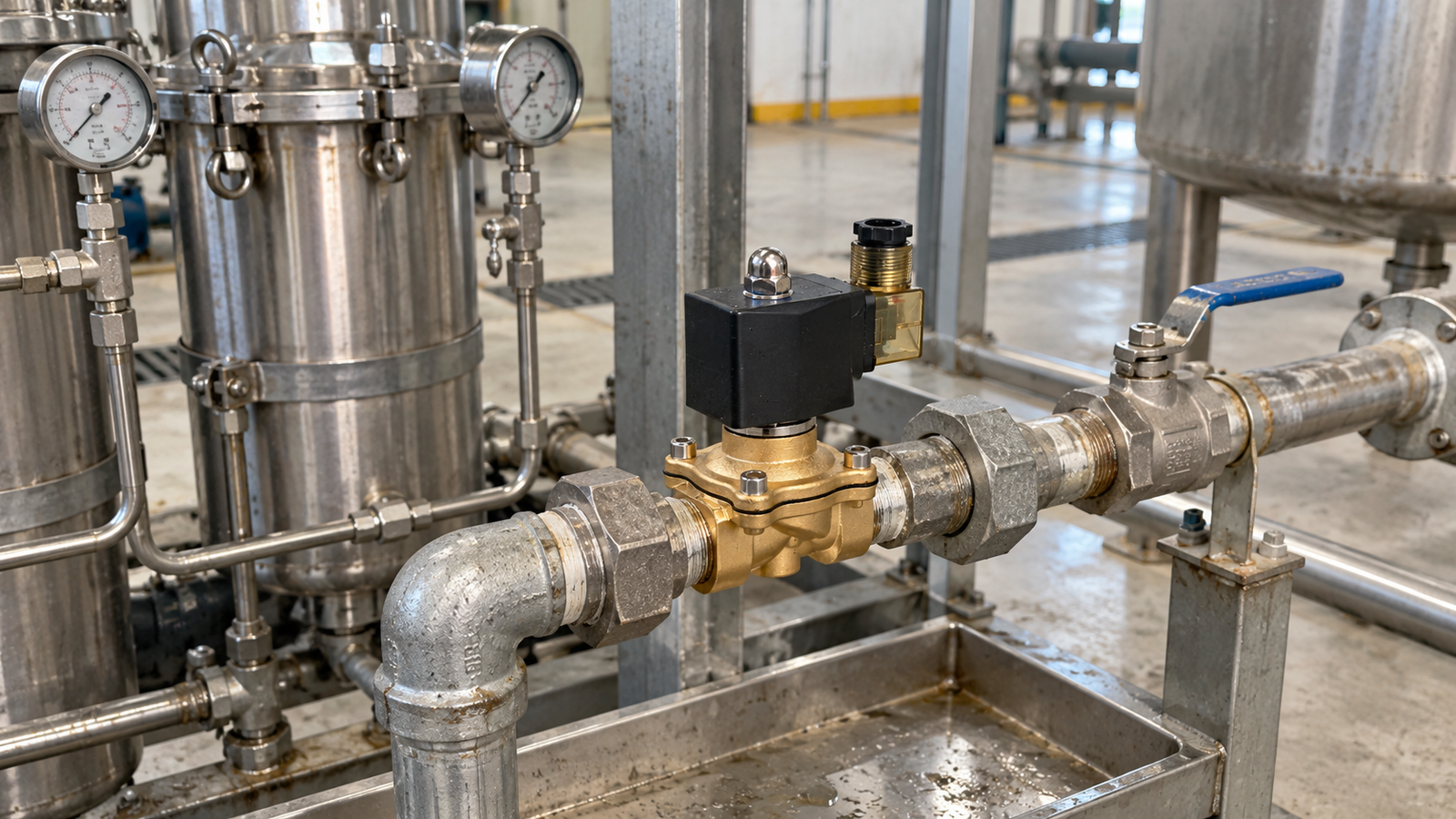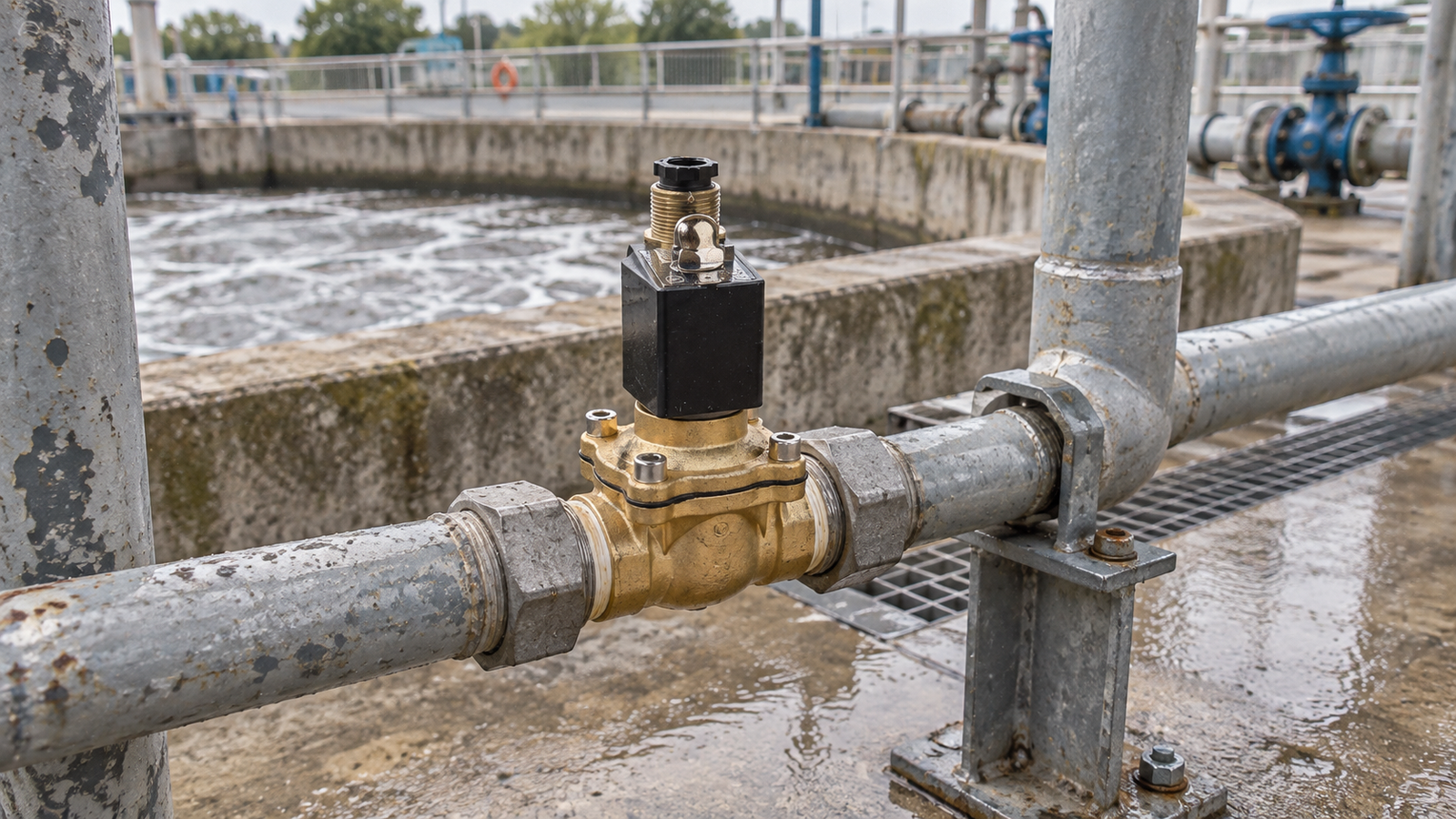
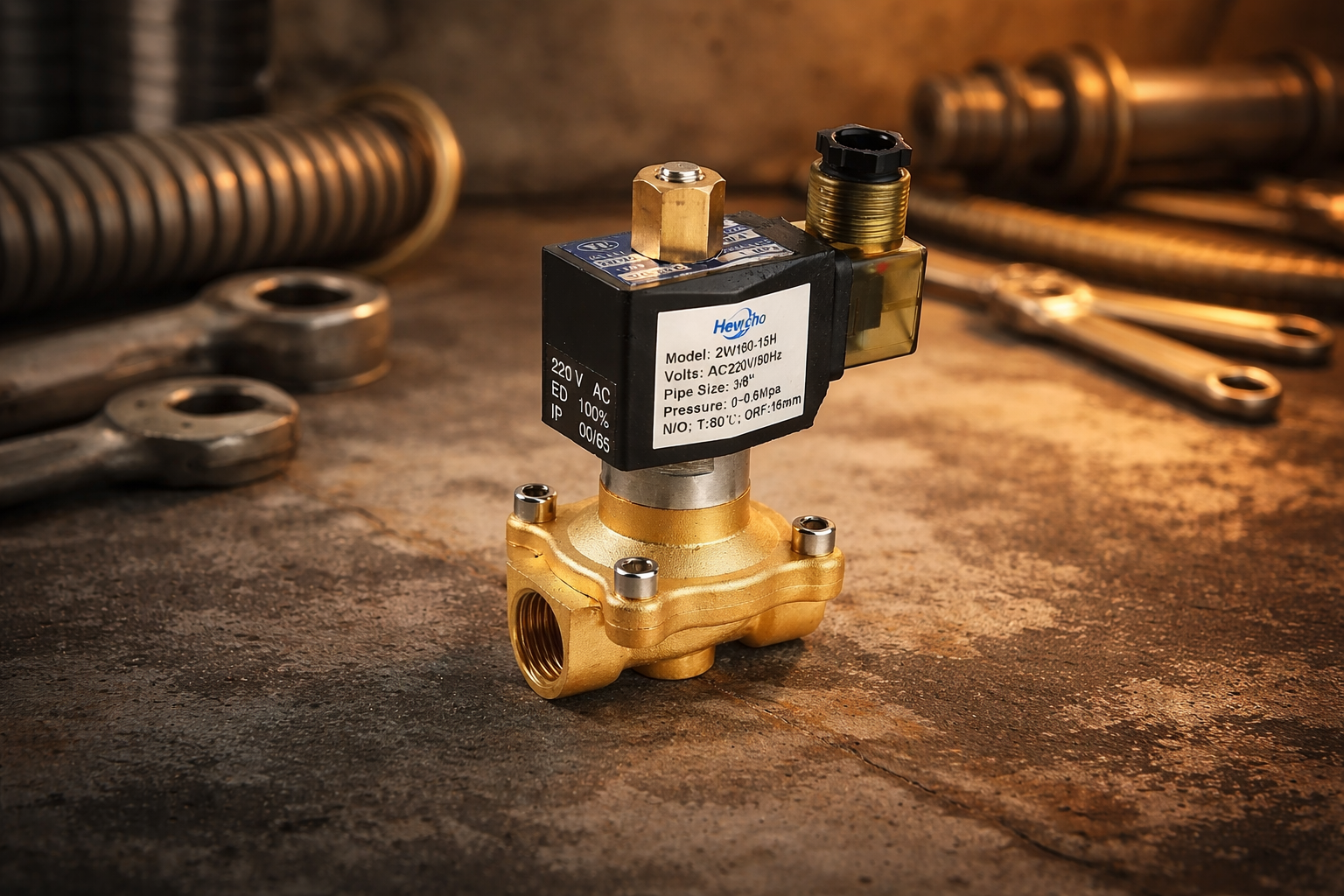
Solenoid valves are widely used in industrial automation systems for precise control of liquids and gases. However, like any electromechanical device, they can experience performance issues over time. Understanding common solenoid valve problems and how to troubleshoot them can help reduce downtime, improve system reliability, and extend service life.
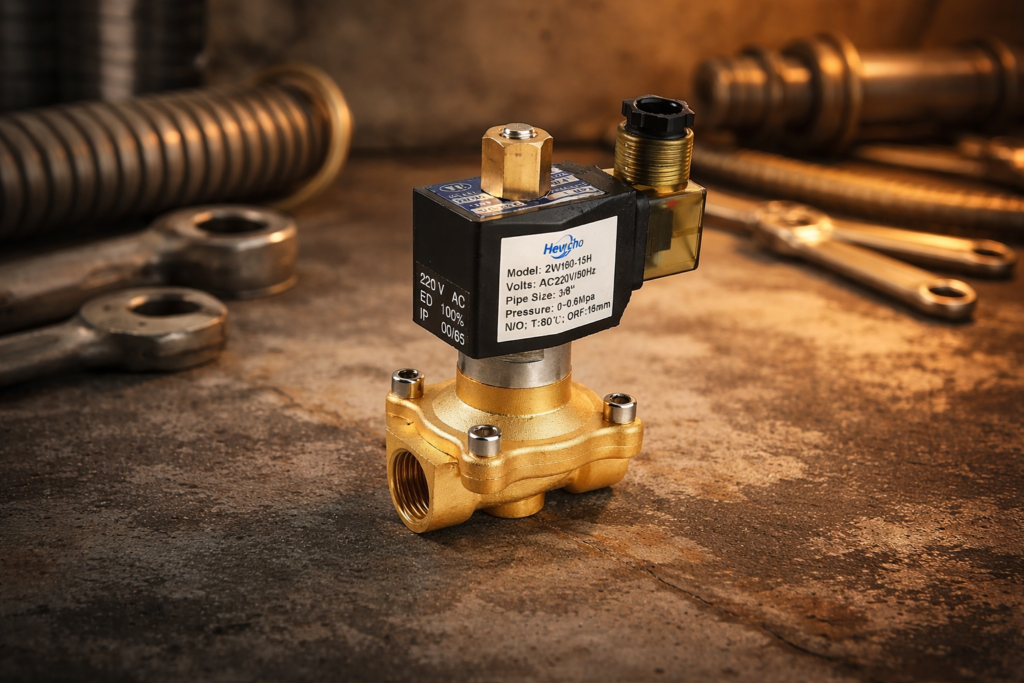
Why Solenoid Valves Fail
Solenoid valve failures are usually not caused by manufacturing defects but by improper selection, incorrect installation, or unsuitable working conditions. Factors such as contaminated media, incorrect pressure, voltage instability, and harsh environments can all lead to malfunction.
In many industrial cases, identifying the root cause quickly is critical to maintaining stable operation.
1. Solenoid Valve Not Opening
One of the most common issues is when the valve does not open after energizing.
Possible Causes
- No power supply or incorrect voltage
- Coil burnout or electrical failure
- Insufficient pressure differential (for pilot-operated valves)
- Blockage inside the valve (debris or dirt)
Solutions
First, check whether the correct voltage is reaching the coil. Then inspect the coil for overheating or damage. If the system uses a pilot-operated valve, verify that the minimum pressure requirement is met. Cleaning the valve and installing a filter or strainer can prevent future blockages.
2. Solenoid Valve Not Closing
In some cases, the valve remains open even after power is removed.
Possible Causes
- Damaged or worn seals
- Foreign particles stuck in the sealing area
- Spring failure
- Residual pressure keeping the valve open
Solutions
Disassemble the valve and inspect the sealing components. Replace worn seals and remove any debris. If the spring is damaged or weakened, it should be replaced to ensure proper closing action.
3. Internal or External Leakage
Leakage is a serious issue that can affect system efficiency and safety.
Possible Causes
- Seal material incompatible with the medium
- Seal wear due to temperature or pressure
- Improper installation or loose connections
Solutions
Select sealing materials that match the fluid properties. For example, EPDM, FKM, and PTFE each have different chemical and temperature resistance characteristics. Tighten fittings and ensure proper installation. Regular inspection helps detect early wear before leakage becomes severe.
4. Coil Overheating or Burning Out
Overheating coils can lead to complete valve failure.
Possible Causes
- Continuous energization beyond duty cycle
- Incorrect voltage or frequency
- Poor heat dissipation in high-temperature environments
Solutions
Ensure the coil voltage matches the system supply. Use coils rated for continuous duty if the valve operates frequently. In high-temperature environments, consider using heat-resistant coils or relocating the valve.
5. Slow Response or Delayed Action
A solenoid valve should respond quickly. Slow operation can reduce system performance.
Possible Causes
- Low voltage supply
- High viscosity of the medium
- Internal wear or contamination
- Incorrect valve type selection
Solutions
Check the electrical supply and ensure stable voltage. If the medium is viscous, choose a valve designed for such conditions. Regular maintenance and cleaning can improve response time.
6. Noise and Vibration
Excessive noise or vibration during operation can indicate underlying problems.
Possible Causes
- AC coil characteristics (normal humming)
- Loose components
- Pressure fluctuations or water hammer
Solutions
A slight humming noise is normal for AC coils. However, excessive vibration should be addressed by securing the valve and stabilizing system pressure. Installing dampers or pressure regulators can help.
7. Incorrect Valve Selection
Many operational problems originate from incorrect valve selection rather than mechanical failure.
Improper classification—such as wrong pressure range, incorrect port configuration, or unsuitable materials—can lead to unstable performance, leakage, or even system shutdown.
Solution
Follow a structured selection process that considers media type, pressure, temperature, flow rate, and electrical requirements. Proper selection ensures long-term reliability and safe operation.
Preventive Maintenance Tips
To avoid common solenoid valve problems, regular maintenance is essential.
- Install filters or strainers to keep media clean
- Check voltage and wiring connections regularly
- Inspect seals and replace them when worn
- Keep the valve and surrounding environment clean
- Ensure correct installation orientation
Solenoid valves are sensitive to contamination and perform best with clean fluids or gases.
Conclusion
Solenoid valve problems are often predictable and preventable. By understanding common failure modes such as failure to open or close, leakage, overheating, and slow response, you can take proactive steps to maintain system performance.
Proper selection, correct installation, and regular maintenance are the key factors in ensuring reliable and long-lasting operation of solenoid valves in industrial applications.