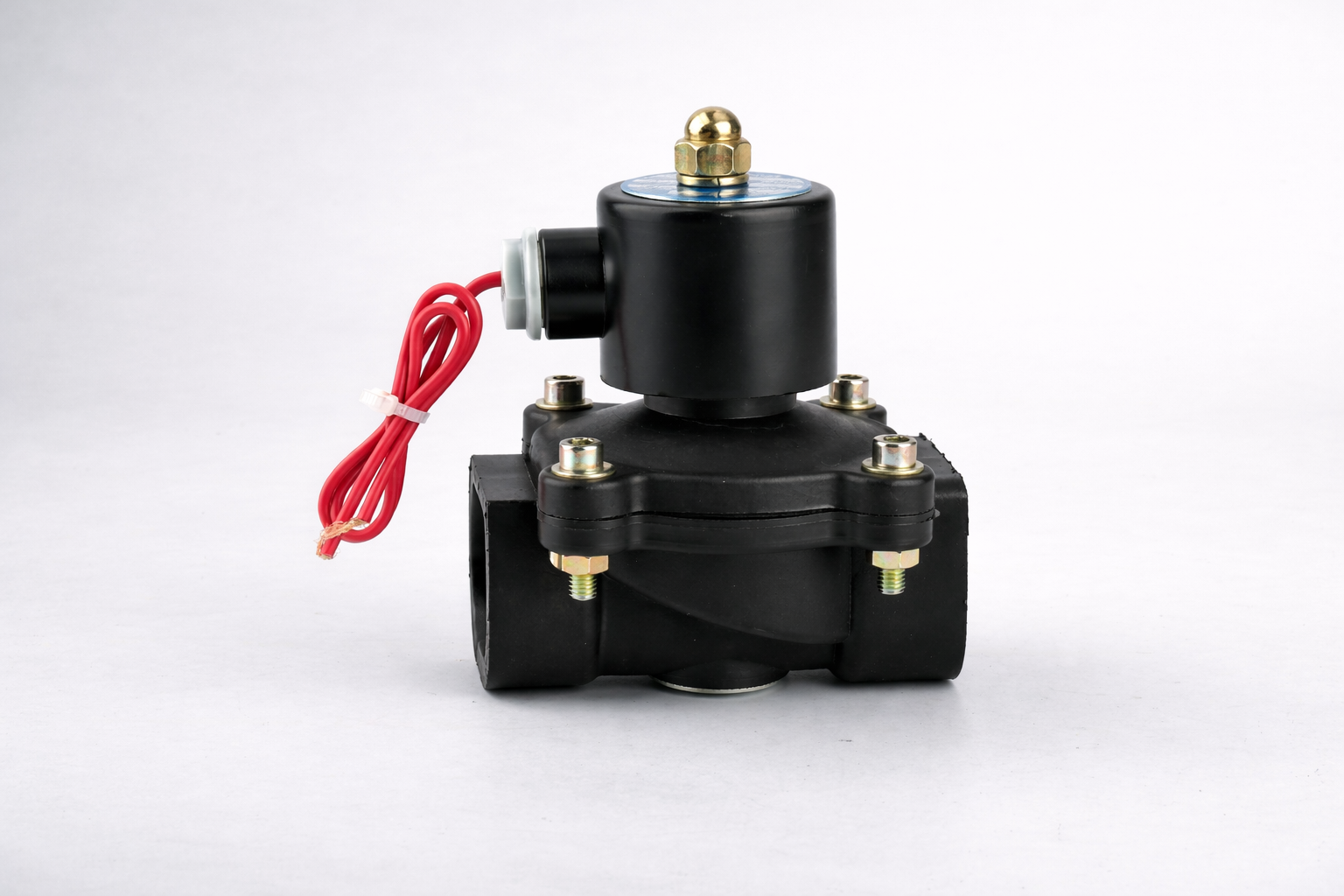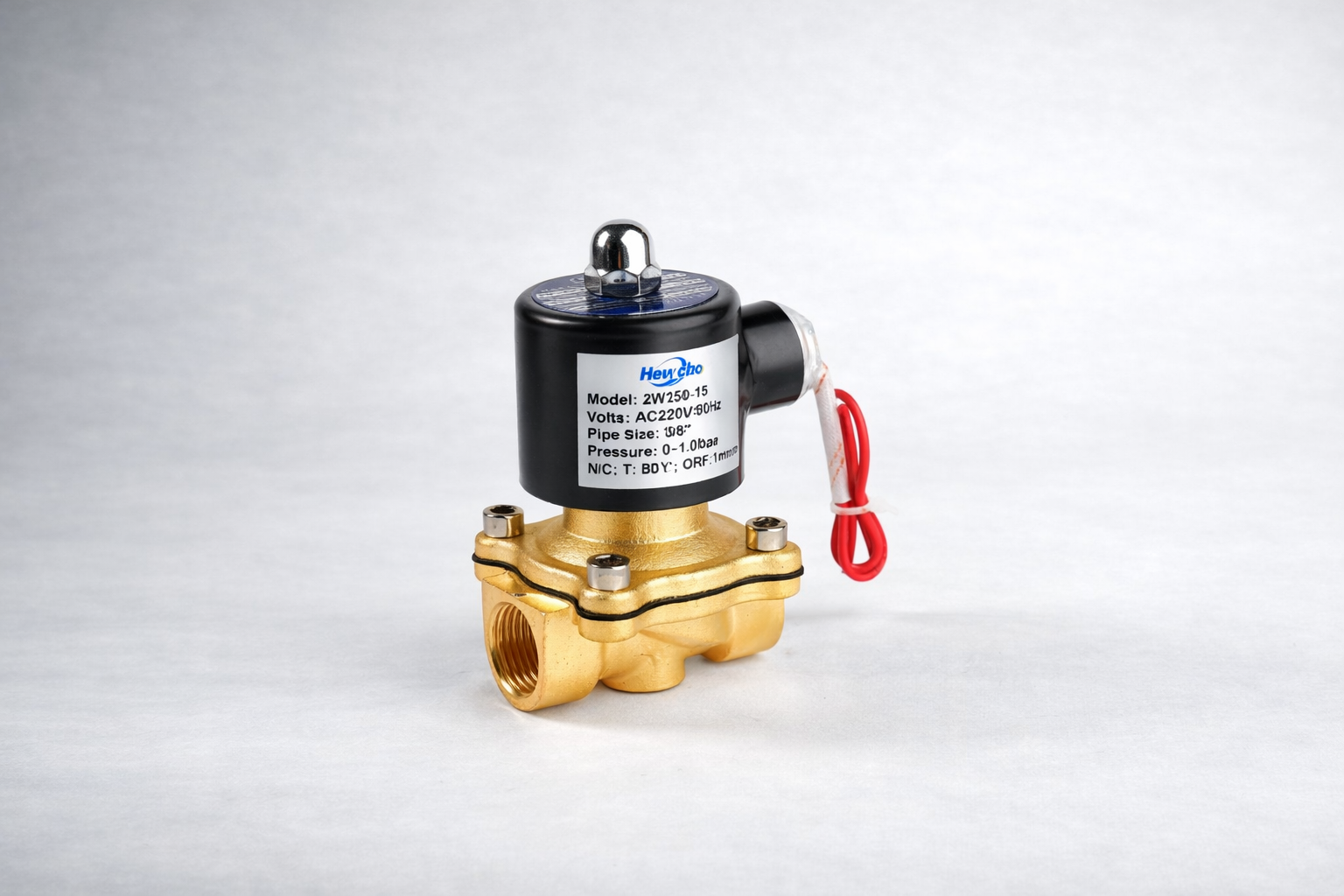
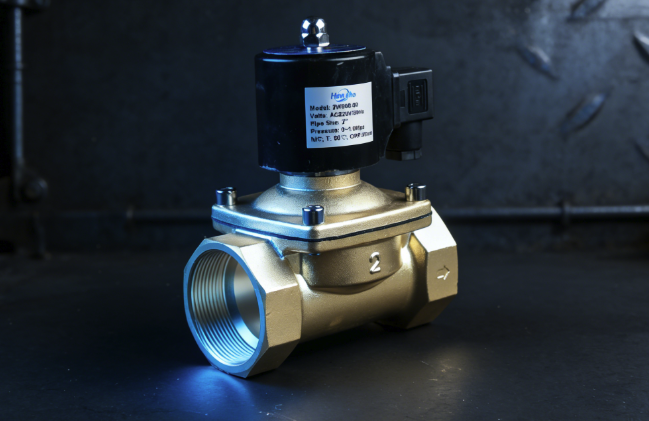
Not all solenoid valves need system pressure to operate. In many industrial applications, especially low-pressure or vacuum systems, a direct-acting solenoid valve is the only reliable choice.
This article explains what a direct-acting solenoid valve is, how it works, and when you should use it — written in clear, simple English for industrial users.
1. What Is a Direct-Acting Solenoid Valve?
A direct-acting solenoid valve opens and closes using only the magnetic force of the coil. It does not rely on fluid pressure to operate.
Key characteristic:
The valve can work at 0 bar pressure.
This makes direct-acting valves ideal for applications where pressure is low, unstable, or completely absent.
2. How Does a Direct-Acting Solenoid Valve Work?
The working principle is simple and reliable.
Power OFF
- The spring pushes the plunger onto the valve seat
- The orifice is sealed
- Flow is blocked
Power ON
- The coil creates a magnetic field
- The plunger is lifted directly
- The valve opens
- Fluid flows through
Because the plunger opens the main orifice directly, no pilot pressure is required.
3. Direct-Acting vs Pilot-Operated: Key Differences
| Feature | Direct-Acting | Pilot-Operated |
|---|---|---|
| Minimum pressure | 0 bar | 0.3–0.5 bar required |
| Flow capacity | Low to medium | Medium to high |
| Valve size | Small | Medium to large |
| Response time | Fast | Slower |
| Structure | Simple | More complex |
| Best for | Low pressure, vacuum | Stable pressure systems |
Choosing the wrong type is a common reason for valve failure.
4. When Should You Use a Direct-Acting Solenoid Valve?
Direct-acting solenoid valves are the best choice when:
✔ System pressure is very low
- Gravity-fed tanks
- Low-head water systems
✔ Pressure is unstable
- Frequent start/stop operations
- Venting and draining systems
✔ Vacuum is involved
- Vacuum pumps
- Suction lines
✔ Precise, small flow is required
- Dosing systems
- Sampling equipment
- Laboratory instruments
✔ Fast response is needed
- Pneumatic signal control
- High-speed automation
5. Common Industrial Applications
Direct-acting solenoid valves are widely used in:
- Vacuum systems
- Compressed air control
- Low-pressure water lines
- Medical equipment
- Laboratory and analytical devices
- Automatic drains
- Cooling and lubrication lines
- Pilot control for larger valves
They provide reliable operation where pilot-operated valves cannot.
6. Advantages of Direct-Acting Solenoid Valves
- Works from zero pressure
- Fast switching
- Simple internal structure
- High reliability
- Easy maintenance
- Accurate control for small flows
- Suitable for DC and AC coils
These advantages make them a preferred solution in many specialized systems.
7. Limitations to Consider
Direct-acting valves also have some limitations:
- Lower flow capacity
- Smaller orifice sizes
- Higher coil power for larger sizes
- Not cost-effective for very large pipelines
For high flow and stable pressure, pilot-operated valves are usually better.
8. Selection Tips for Industrial Users
Before choosing a direct-acting solenoid valve, check:
- Required flow rate
- Orifice size and Cv value
- Medium type (air, water, oil, gas)
- Temperature range
- Seal material (NBR, EPDM, FKM, PTFE)
- Voltage and duty cycle
- Installation environment
Correct selection ensures stable and long-term performance.
Final Thoughts
Direct-acting solenoid valves are essential for low-pressure and zero-pressure applications. When system pressure cannot be guaranteed, they offer reliability, fast response, and precise control that pilot-operated valves simply cannot provide.
If you want the next article to focus on pilot-operated valves, 2-way vs 3-way comparison, steam solenoid valves, coil selection, or common installation mistakes, just tell me — I can continue generating daily SEO-ready content for your website.