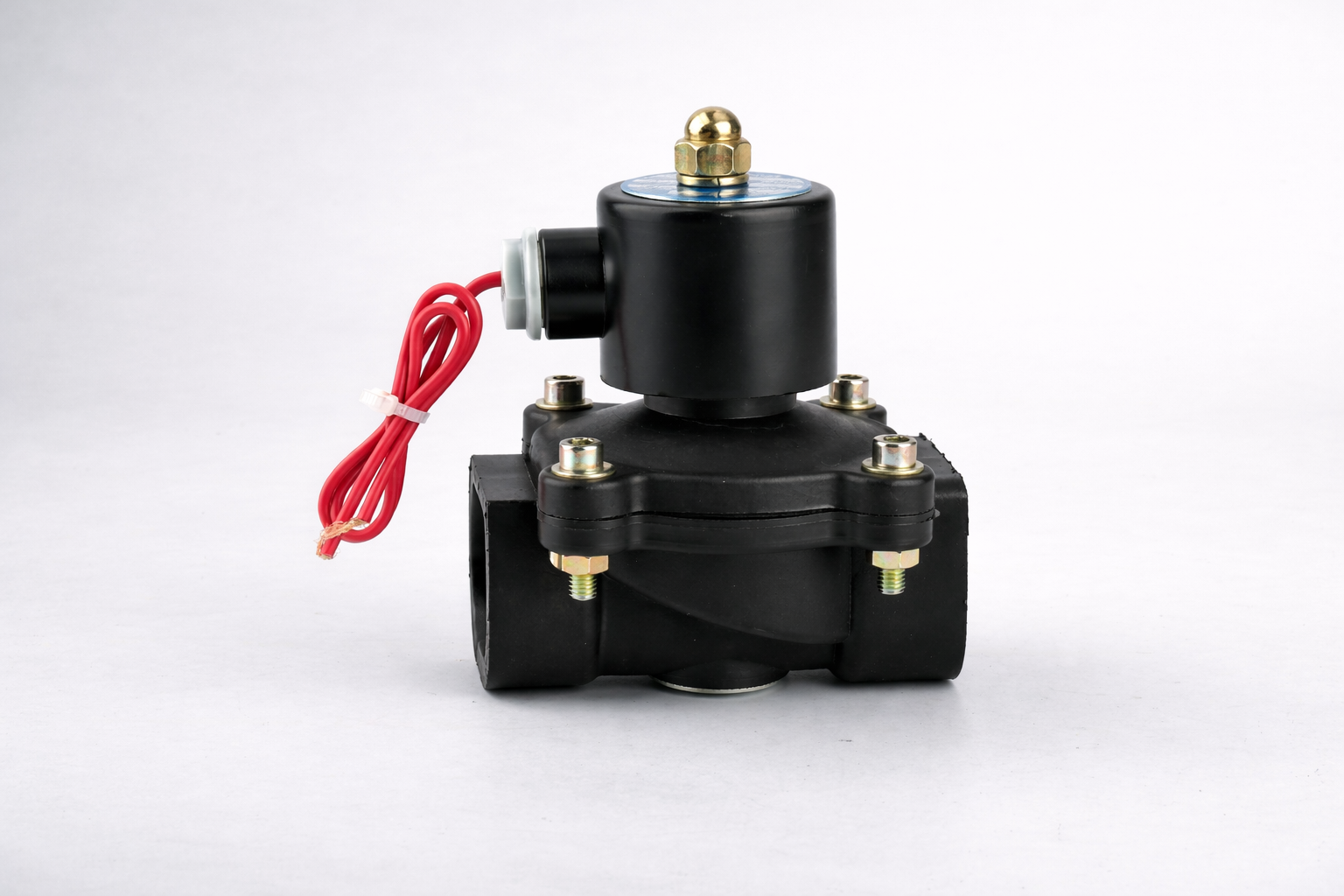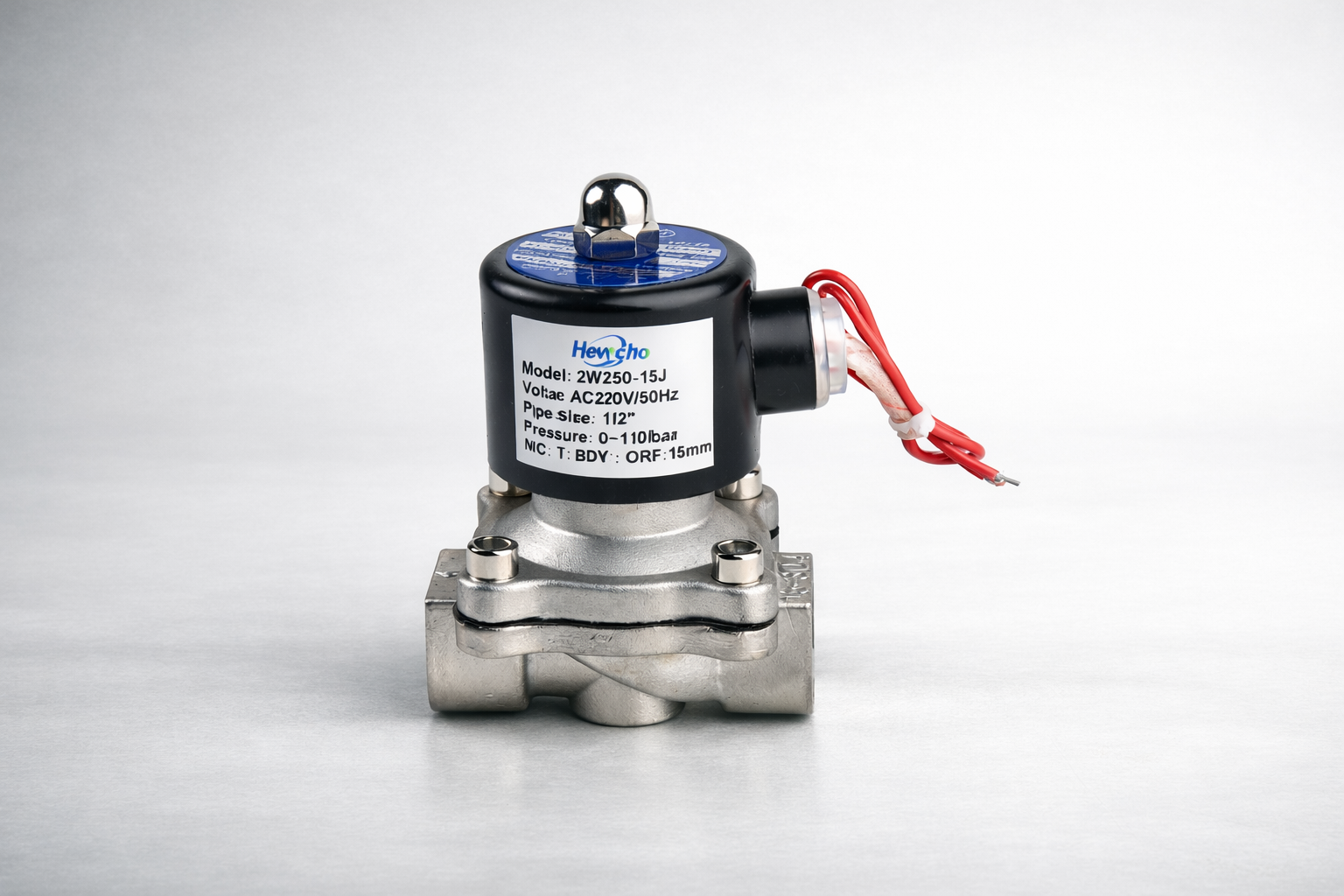
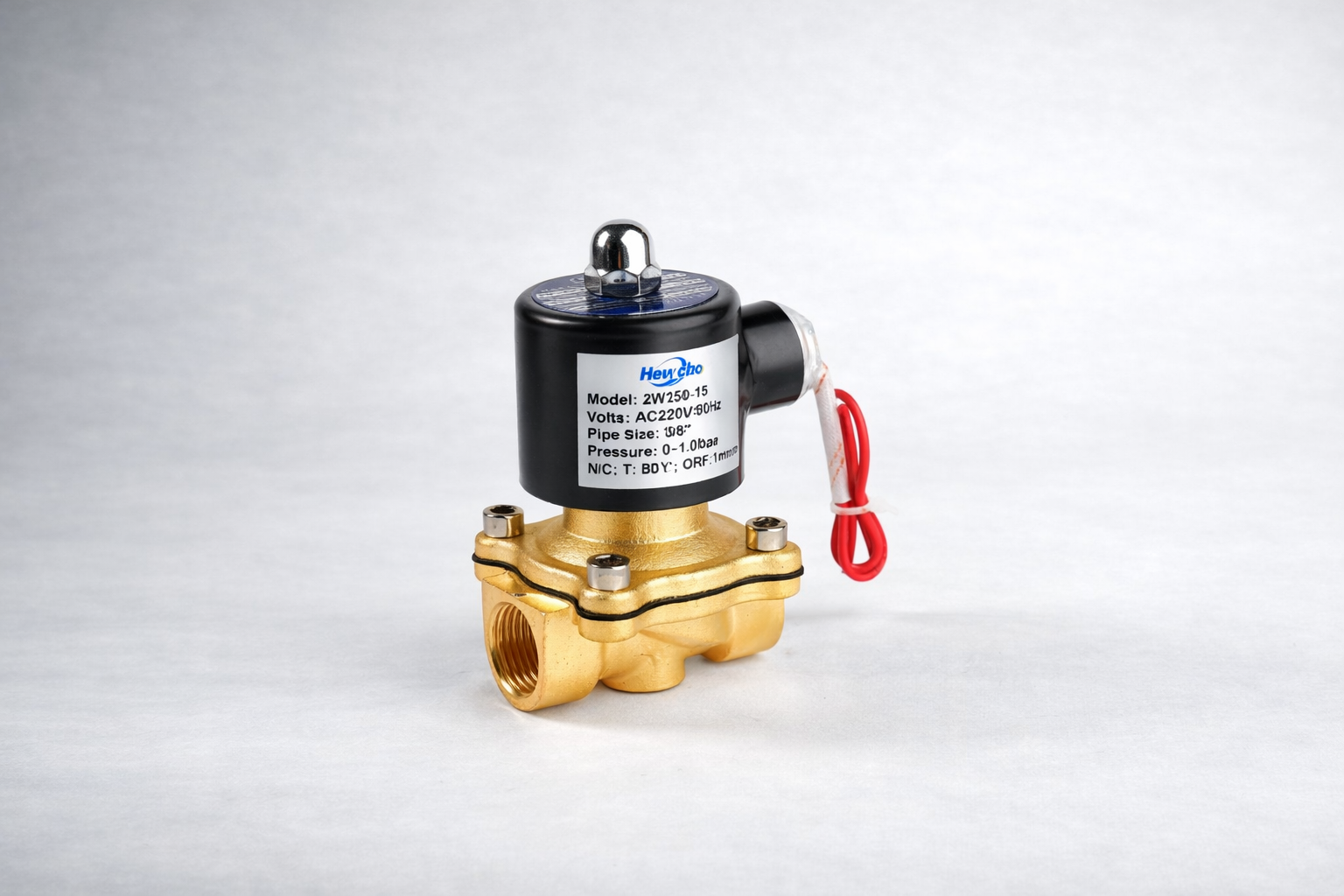
When selecting a solenoid valve for industrial systems, one of the most important decisions is choosing between a direct acting solenoid valve and a pilot operated solenoid valve.
Many system failures happen because the wrong type was selected.
In this guide, we explain the differences in simple terms to help you make the right decision.
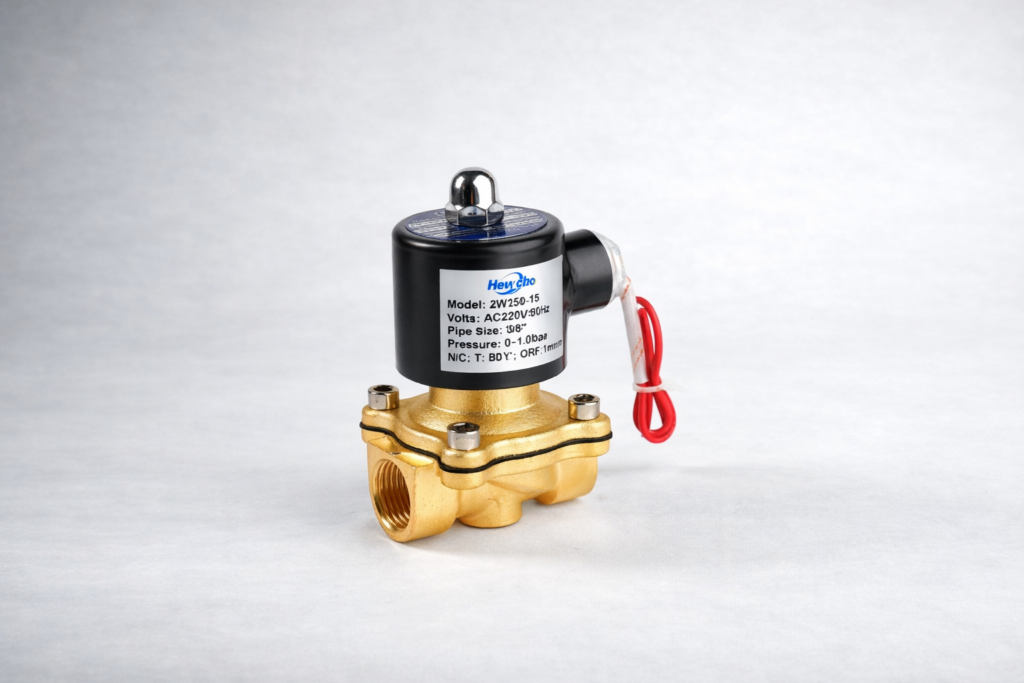
What Is a Direct Acting Solenoid Valve?
A direct acting solenoid valve uses the electromagnetic force from the coil to directly open or close the valve.
Key Features:
- Works from 0 bar pressure
- Simple internal structure
- Fast response time
- Suitable for small flow rates
Best For:
- Low-pressure systems
- Vacuum applications
- Small pipelines
- Laboratory equipment
- Precise flow control systems
If your system starts at zero pressure, direct acting is usually the safest choice.
What Is a Pilot Operated Solenoid Valve?
A pilot operated solenoid valve uses system pressure to help open and close the valve.
The solenoid controls a small pilot hole, and pressure difference moves the main diaphragm.
Key Features:
- Requires minimum operating pressure (usually 0.3–0.5 bar)
- Suitable for larger flow rates
- More energy-efficient for bigger sizes
- Ideal for industrial pipelines
Best For:
- Water treatment systems
- Air compressors
- Industrial automation lines
- Irrigation systems
- Large diameter piping
If your system has stable pressure and large flow demand, pilot operated valves are more efficient.
Main Differences
| Feature | Direct Acting | Pilot Operated |
|---|---|---|
| Minimum Pressure | 0 bar | Requires minimum pressure |
| Flow Capacity | Small to medium | Medium to large |
| Energy Consumption | Higher for large sizes | More efficient |
| Response Speed | Faster | Slightly slower |
| Structure | Simple | More complex |
How to Choose the Right Solenoid Valve
Ask these key questions:
- Does your system operate at zero pressure?
→ Choose Direct Acting - Do you need high flow capacity?
→ Choose Pilot Operated - Is energy efficiency important in large pipelines?
→ Pilot operated is better - Are you working with vacuum systems?
→ Direct acting is required
Choosing the wrong type may result in:
- Valve not opening
- Weak flow
- Overheating coil
- System instability
Common Selection Mistakes
Many buyers only check port size and price. This is not enough.
Always verify:
- Operating pressure range
- Fluid type (water, air, oil, gas)
- Temperature rating
- Voltage compatibility
- Installation orientation
Correct selection improves lifespan and reduces maintenance costs.
Final Thoughts
Both direct acting and pilot operated solenoid valves are widely used in industrial applications. The correct choice depends on your pressure conditions and flow requirements.
If you are unsure, consult an experienced solenoid valve manufacturer before purchasing. Proper selection saves money and prevents downtime.