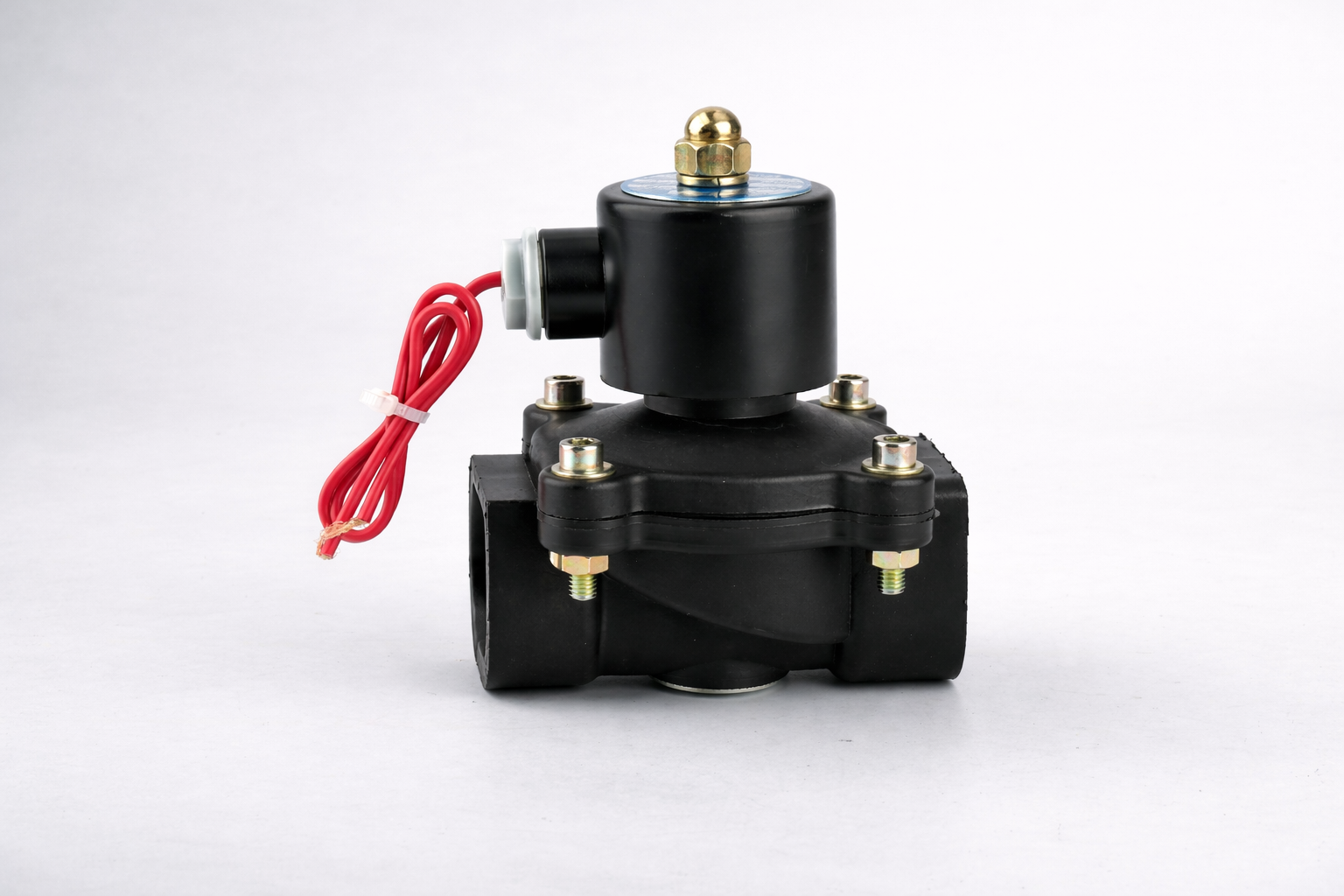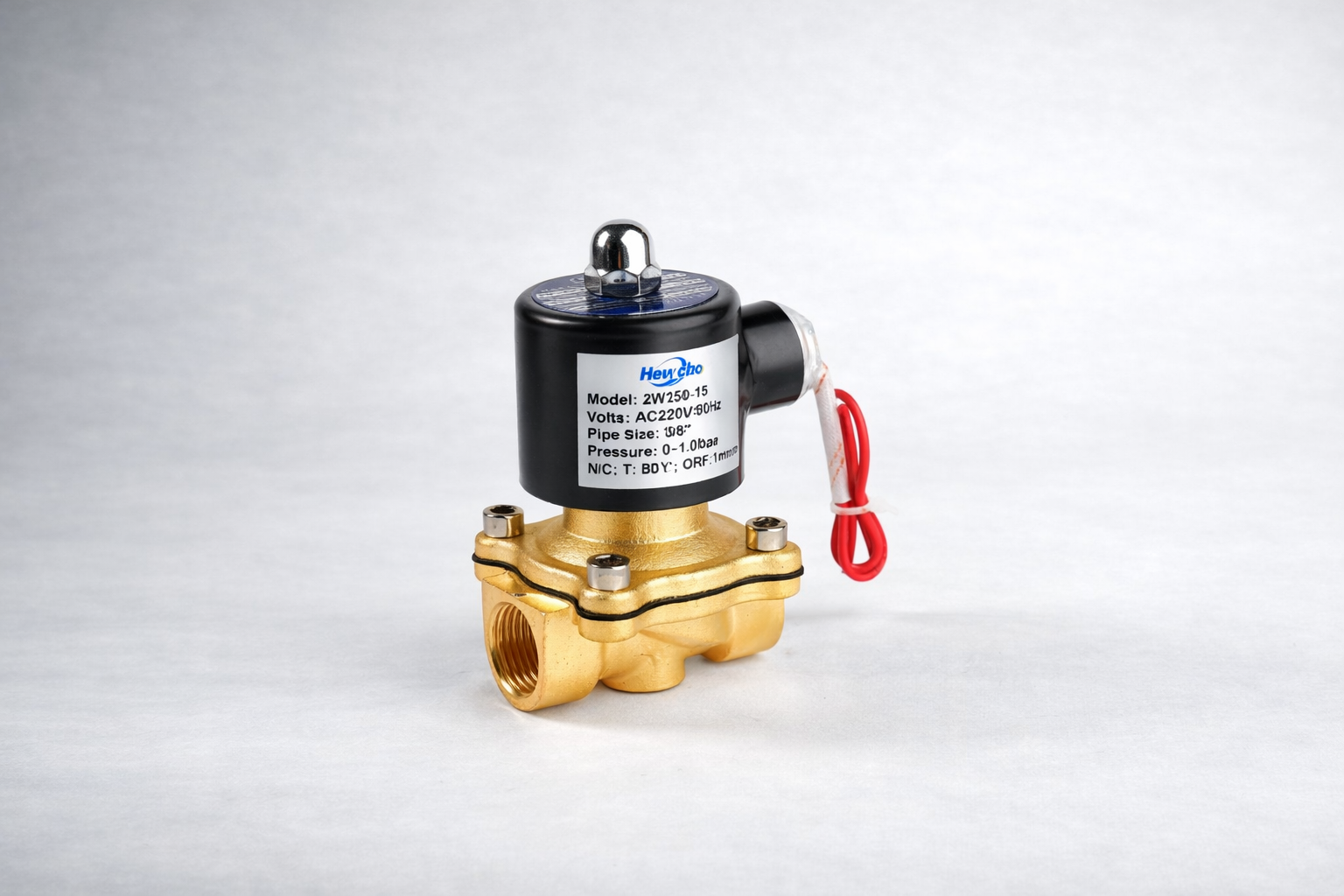
If your solenoid valves “randomly” stick, chatter, or trip outputs on the PLC, odds are the wiring and suppression—not the valve—are to blame. Here’s a practical, field-tested guide to make your coils behave from day one.
1) Pick the right coil—and power it like you mean it
- Match voltage and type exactly: 24 VDC ≠ 24 VAC.
- Duty cycle: Most plants need 100% duty coils. Intermittent coils overheat if left on.
- Inrush vs. holding (AC): AC coils pull a high inrush; ensure the relay/SSR is rated for it. DC coils are steadier (wattage-based).
Quick check: After 15 minutes energized, the coil should be hot-but-touchable. Too hot to hold? Verify voltage and duty cycle.
2) Suppression: protect your outputs and your ears
Electromagnetic coils kick back voltage when de-energized. Suppress it at the coil, not the PLC.
- DC coils: Fit a flyback diode (1N4007 class is fine for most 24 VDC). Orientation: band to +.
- Want faster drop-out? Use a TVS diode (e.g., 33 V) instead of a plain diode to limit the clamp time.
- AC coils: Use an RC snubber (e.g., 0.1 µF + 100 Ω, 250 VAC rated) across the coil or contact.
- Inductive loads on relay contacts: Snubber across the coil, not across the contacts alone.
Rule of thumb: Suppress at the load whenever possible. It shortens wiring inductance and keeps noise local.
3) Cabling and routing that won’t haunt you later
- Cable spec: Twisted pair for DC, shielded cable in noisy panels or long runs.
- Routing: Keep coil cables away from VFD outputs and high-current bars. Cross at right angles if you must.
- Shield grounding: Terminate shield at one end only (typically at the control cabinet PE bar) to avoid ground loops.
- Drip loops & IP rating: Use molded DIN connectors outdoors/washdown and add a drip loop to keep water out.
4) Outputs: size and choose them for the real load
- Relays: Check make/break ratings and the HP/inductive rating—not just resistive amps. Use arc suppression.
- Transistors (sourcing/sinking): Confirm coil inrush and holding current vs. output current limit. Add flyback/TVS.
- SSRs: Choose zero-cross (AC) for steady coils, random-fire if timing is critical.
Tip: If one PLC point drives multiple coils, use an interposing relay or small output module—don’t load a single point to the edge.
5) Grounding and bonding: the quiet plant advantage
- Bond valve manifolds and nearby metalwork to PE.
- Tie the 0V of your 24 VDC supply to PE at one star point (common industrial practice) for noise immunity.
- Use a single-point ground scheme in each panel; avoid daisy-chained grounds across long distances.
6) PLC logic that avoids “ghosts”
- Debounce on feedback: If your valve has an end-switch, add a 50–150 ms software filter.
- Watchdogs: After output ON, expect feedback within a reasonable window (e.g., 250–800 ms) and alarm if missed.
- Retry strategy: One auto-retry is fine; more than that can mask mechanical issues.
- Interlocks: Block re-energizing for a short time after de-energize (e.g., 100 ms) to let residual magnetism decay.
7) Commissioning checklist (15 minutes well spent)
- Polarity & voltage: Confirm with a meter at the coil under load.
- Suppression present: Visual check (diode/TVS or RC) at each connector.
- Insulation: Megger the cable if the run is long or in wet areas.
- Cycle test: 10 rapid on/offs—listen for consistent snap; log open/close times.
- Thermal touch test: Coil temperature stable after 15 minutes? Good.
8) Troubleshooting quick hits
- Buzzing (AC coil): Low voltage, dirty core tube, or loose armature. Clean pole faces; verify supply.
- PLC output faults: Missing diode/TVS, shared return with VFDs, or undersized output device.
- Occasional leak-by: Debris on the seat—install an 80–100 μm upstream strainer and clean the core tube.
- Won’t open on startup: Pilot-operated valve with no ΔP. Use direct-acting or add a bypass to establish pressure.
9) Documentation that saves the next technician
- Label the connector with voltage, coil type (AC/DC), and suppression (“24VDC + TVS”).
- Keep a laminated one-pager in the panel: wiring color code, fuse rating, and the valve’s expected open/close time.
- Stock a spare coil and seal kit per critical line—bagged with the valve tag number.
A tiny case study (why suppression at the load matters)
A packaging line kept losing two PLC transistor outputs every few weeks. Coils were 24 VDC, wired 18 m apart through a shared trunk, suppression placed only on a terminal block in the panel. We moved suppression to each valve connector (TVS across the pins), separated the return from a nearby VFD conduit, and tied 0V to PE at one star point. Failures stopped; measured switching spikes dropped from ~120 V to <35 V at the PLC.
Quick selection cheatsheet
DC coil best practice
- Flyback diode or 33 V TVS at the connector
- Twisted pair, shielded if >10 m or near VFDs
- Source/sink output ≥2× holding current
AC coil best practice
- RC snubber across coil
- Relay with inductive rating/high inrush capacity
- Verify coil inrush vs. contact rating
Bottom line
Most “bad valves” are good coils wired into noisy systems. Get the coil type right, suppress at the load, route cables cleanly, size outputs honestly, and add a touch of PLC filtering. Do that, and your solenoids will stop being the scapegoat—and start being the reliable building blocks they’re meant to be.
Have a live panel drawing? Share one coil spec, cable length, supply type, output device, and whether you have suppression at the valve or in the cabinet. I’ll annotate a clean, low-noise wiring approach you can drop into your standard.