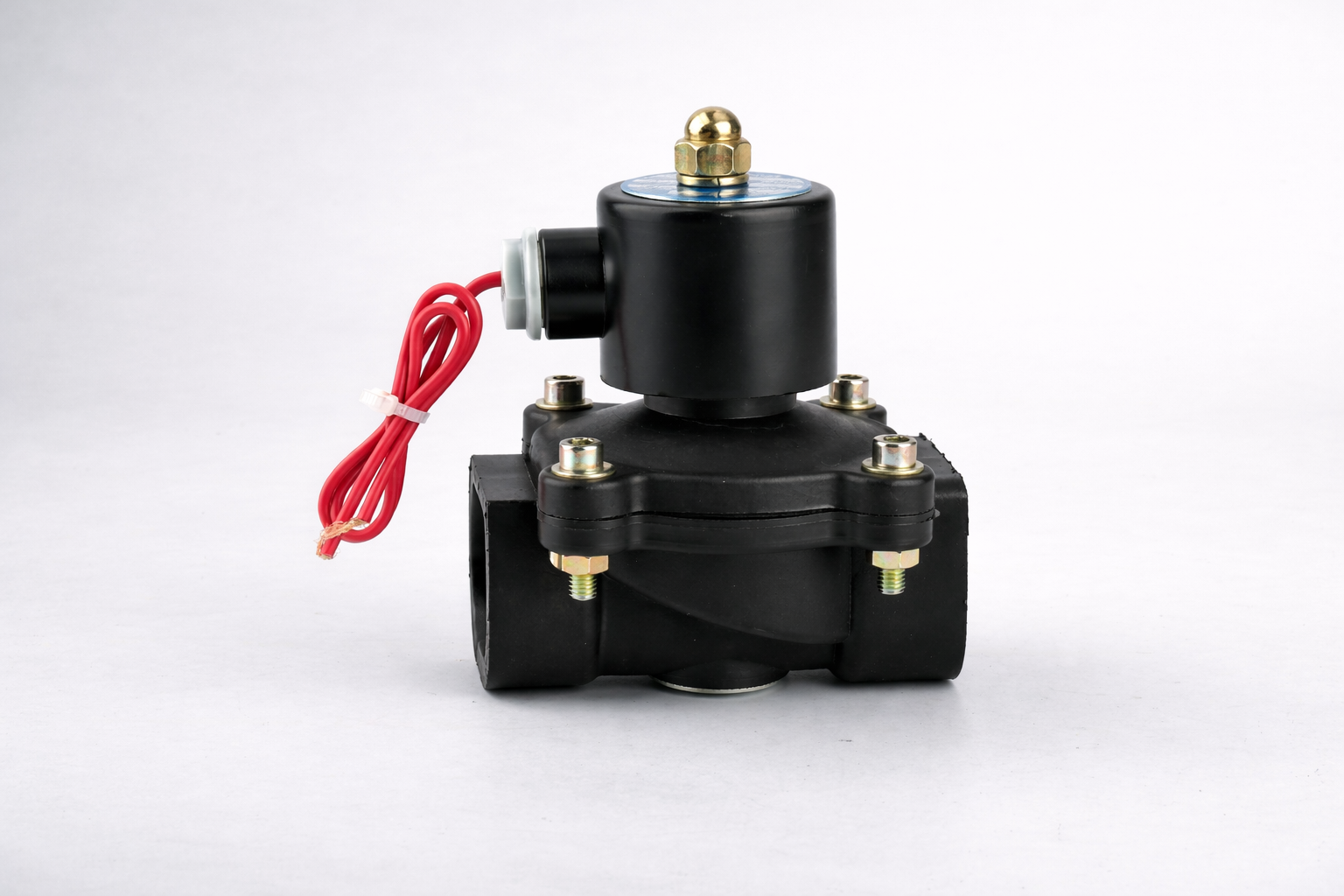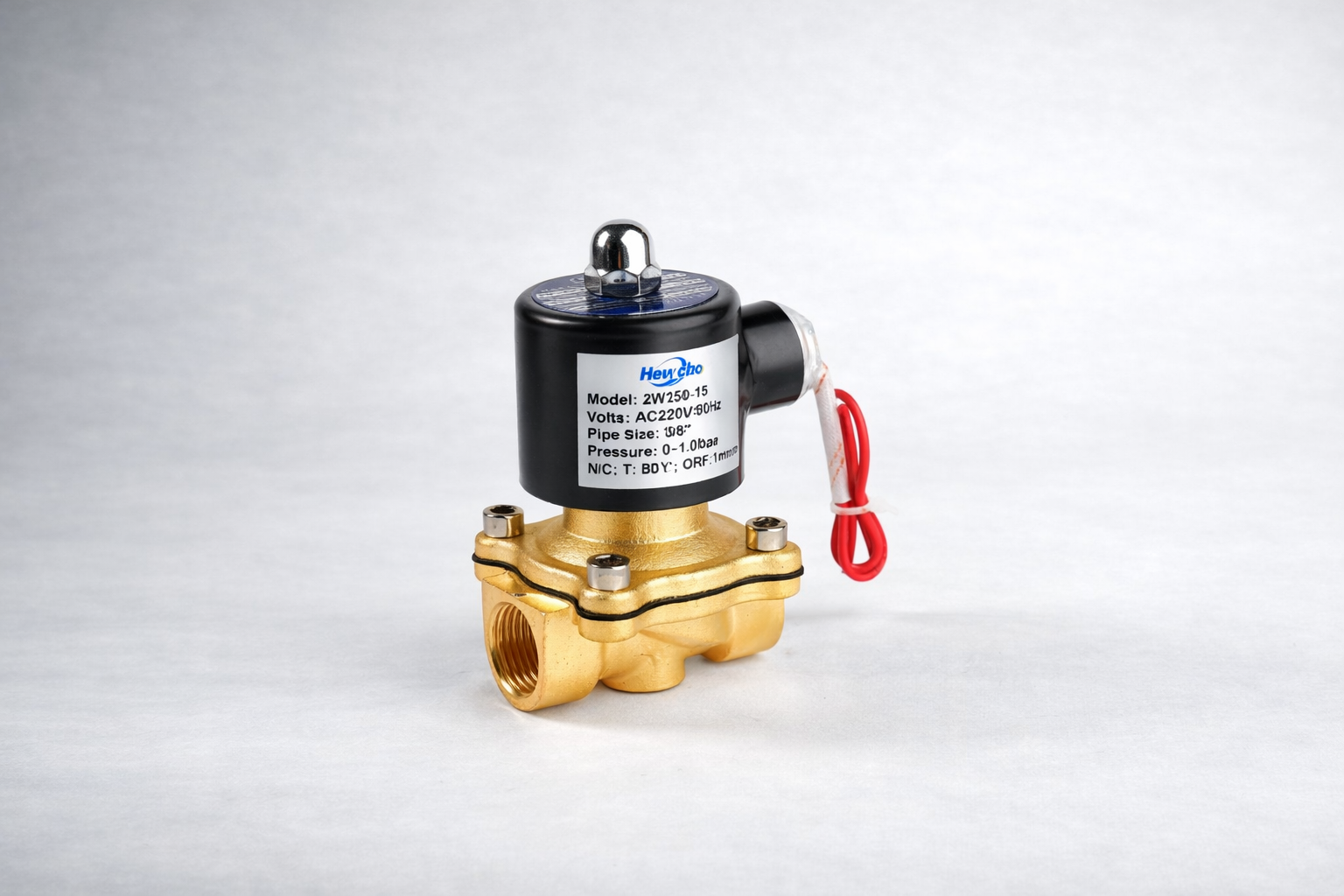
Most solenoid valve problems don’t start on the line—they start on paper. Over the past few years I’ve watched beautifully drawn P&IDs grind to a halt because a single coil was wrong, or a seal met the wrong chemical for five minutes. This post is a practical walk-through of how I specify, install, and keep solenoid valves running in real plants. It’s not theory; it’s the checklist I wish someone had handed me on day one.

1) Start with the failure mode, not the flow
Before you open a catalog, decide what the valve should do when power is lost.
- Fail Closed (NC): Default for water, air, and anything where an unexpected stop is safer.
- Fail Open (NO): Drains, vents, or lines that must relieve under fault conditions.
- Manual override: If you’ll ever need to bypass for cleaning or testing, spec it now. Retrofitting later is a pain.
Rule I live by: If a surprise shutdown should stop media, choose NC. If pressure must relieve, choose NO.
2) Pick the actuation that fits the physics
- Direct-acting: Opens at 0 bar. Use for gravity tanks, vacuum, low ΔP loops, short dosing lines. You trade some flow (Cv) for certainty.
- Pilot-operated: Big flow, small coil. Needs a minimum differential (often 0.3–0.5 bar). Great on compressed air mains and pressurized loops.
If you’re unsure whether ΔP is always available, you’re not unsure—you need direct-acting.
3) Choose materials like your uptime depends on it (it does)
Think seals first, body second:
- NBR (Buna-N): Water, air, light oils. Not for ozone/strong solvents.
- EPDM: Hot water/steam, glycols. Avoid petroleum oils/fuels.
- FKM (Viton®): Fuels and many solvents. Mediocre for hot water/steam.
- PTFE: Aggressive chemistry, higher temps; slower to seal but survives the nasty stuff.
Bodies: Brass (general duty), 316SS (corrosion/food), polymers (certain acids/bleach). When in doubt, grab the SDS of your media and check compatibility by elastomer first.
4) Size by Cv, not by pipe size
Pipe DN is a plumbing number; Cv is the control number. For water at room temp: Flow (GPM)≈Cv×ΔP (psi)SG\text{Flow (GPM)} \approx C_v \times \sqrt{\frac{\Delta P\ \text{(psi)}}{\text{SG}}}Flow (GPM)≈Cv×SGΔP (psi)
If you need 5 GPM at 8 psi ΔP, a Cv near 4–5 is right—even if the line is 1″. Oversizing invites chatter and water hammer; undersizing starves the process.
5) Mind the coil: electricity is an ingredient
- Voltage/type: 24 VDC is not 24 VAC. Match exactly.
- Duty cycle: Most plants need 100% duty. Intermittent coils will cook if left on.
- Ambient & enclosure: IP65 for washdown, IP67 outdoors. Hot rooms derate coils—give them breathing space.
- Noise/suppression: Add a diode (DC) or RC snubber (AC) at the coil. Your PLC outputs (and your ears) will thank you.
6) Install like someone will have to fix it (because they will)
- Orientation: Coil upright extends life; horizontal is usually okay; coil-down is asking for debris issues.
- Strainer: 80–100 μm upstream. The cheapest “spare part” you’ll ever buy.
- Drip loop & connector gasket: Keeps water from wicking into coils.
- Labeling: Tag voltage, function (NC/NO), and flow direction on the line. Saves hours during audits.
7) Tame surge and hammer before they tame you
Fast valves + long rigid lines = pressure spikes.
- Select soft-closing versions when available.
- Right-size the orifice (back to Cv).
- Add snubbers, air chambers, or a small accumulator downstream on touchy circuits.
8) Commissioning: a 10-minute routine that catches 90% of issues
- Dry click test: Energize/de-energize 10 times; listen for consistent snap.
- Leak check: Pressurize and soap the joints; watch the outlet for weep.
- Cycle under load: Run at operating flow and record open/close time.
- Thermal touch test: After 15 minutes energized, coil should be hot-but-touchable. Too hot to hold? Check voltage and duty.
Log these numbers. When something feels “off” six months later, you’ll have a baseline.
9) Maintenance you’ll actually do
Quarterly is realistic for most utilities; monthly for sticky media.
- Wipe and inspect the pole faces and plunger—a speck of rust here causes a day of ghost faults.
- Pop the strainer and rinse.
- Buzzing on AC coils? Check undervoltage or a dirty core tube.
- Keep one spare coil and one seal kit per critical line, stored with the tag number.
Field story: the gravity tank that wouldn’t behave
A CIP return ran from a low head tank through a pilot-operated valve. On startup the ΔP was near zero, so the valve “half-opened,” the pump surged, and the level sensor threw alarms. We swapped to a direct-acting NC valve with Cv sized for 6 GPM at 10 psi, added a 100 μm strainer, and set a soft-start on the pump VFD. The line has been quiet ever since, and the pump current dropped ~6–7% under steady state.
Quick selector (bookmark this)
- Vacuum / gravity feed / dosing: Direct-acting, NC, EPDM (hot water) or FKM (fuels).
- Compressed air manifolds: Pilot-operated 3/2 or 5/2, IP65 coil, 24 VDC, add snubber.
- Food & beverage / CIP: 316SS body, EPDM or PTFE seals, FDA/EC contact approvals.
- Aggressive chemicals: PTFE seats/seals, 316SS or compatible polymer body, confirm compatibility chart.
- Outdoor/washdown: IP67 coil, molded cable, stainless hardware, UV-resistant connector.
FAQs I get in every design review
Can I throttle with a solenoid valve?
Not gracefully. They’re on/off parts. For modulation, use a control valve—or pulse width control if your process tolerates it.
AC vs DC—does it matter beyond the plug?
Yes. AC has inrush/hold behavior and can buzz if undervoltage; DC is quieter and easier on PLC outputs but watch wattage and heat.
How long should a coil last?
Years under correct voltage and ambient. Most “coil failures” are actually heat, moisture ingress, or wrong duty rating.
Closing thought
Treat the solenoid valve like a control element, not a fitting. Decide the fail state, pick the right actuation, size by Cv, match seals to the fluid, and give the coil the environment it needs. Do that consistently and “valve trouble” fades into the background—exactly where it belongs.
Have a live application? Tell me the media, target flow, ΔP, temperature range, and fail mode. I’ll map that to a short, no-nonsense part shortlist you can drop into your BOM.