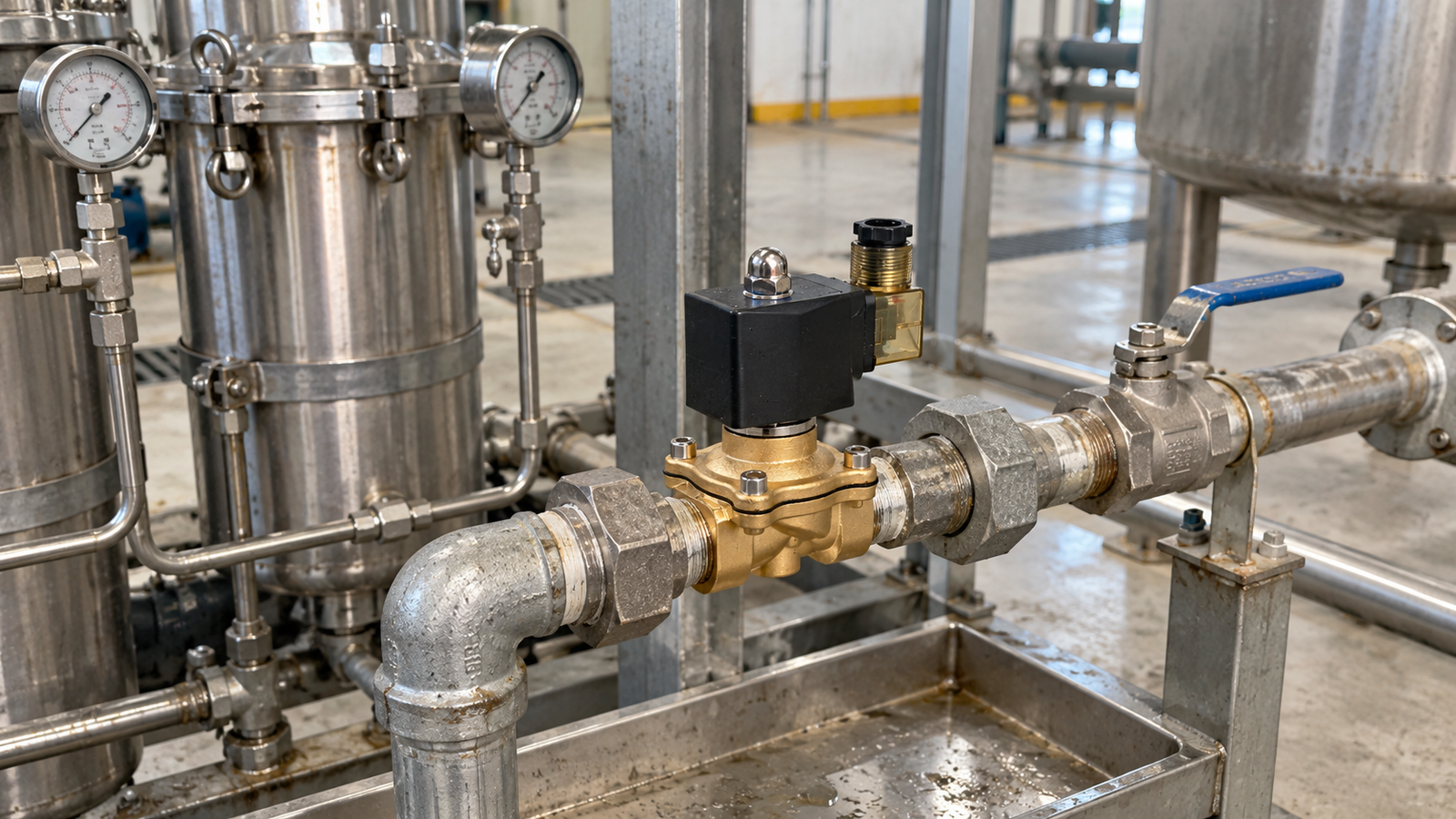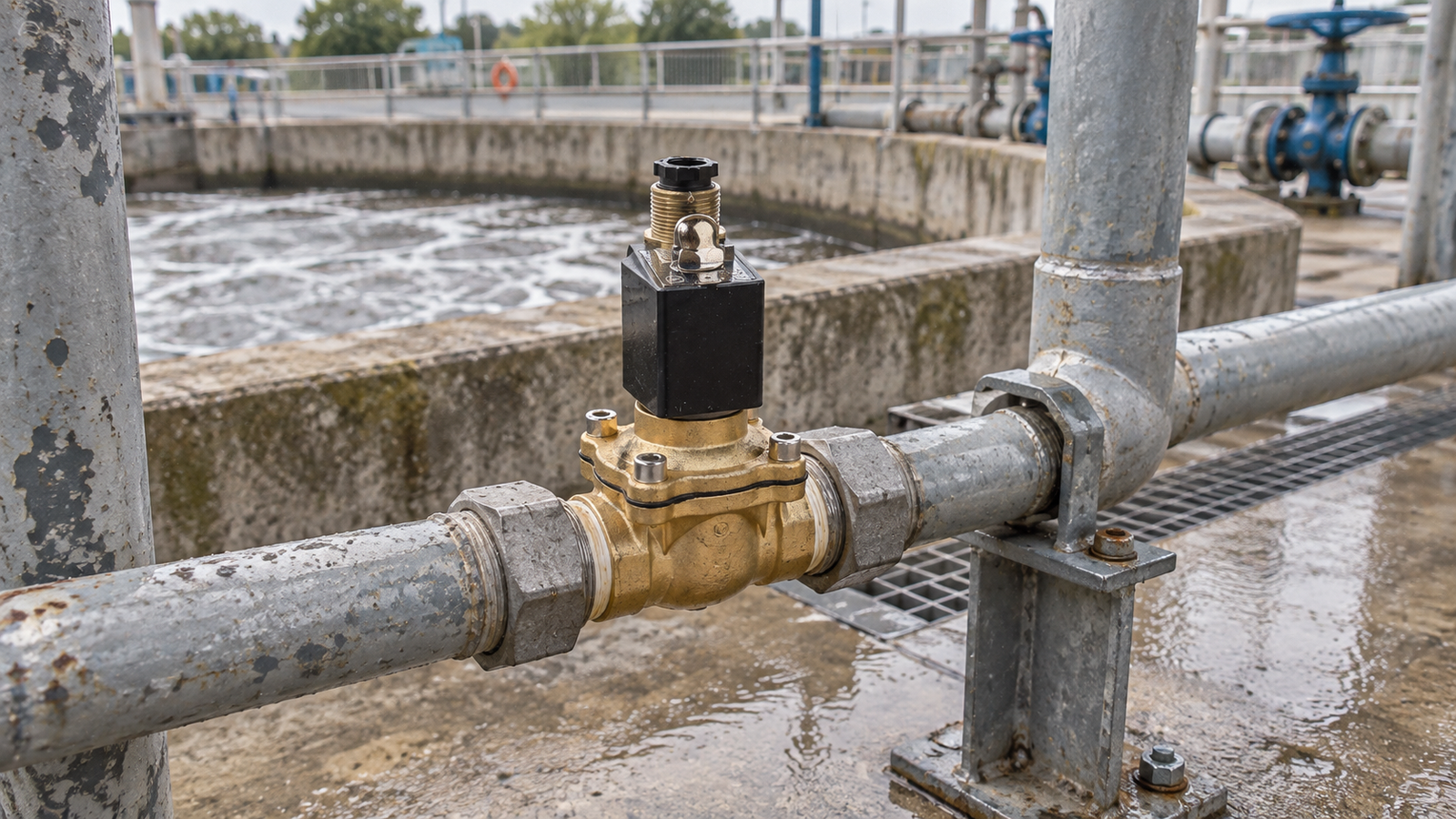
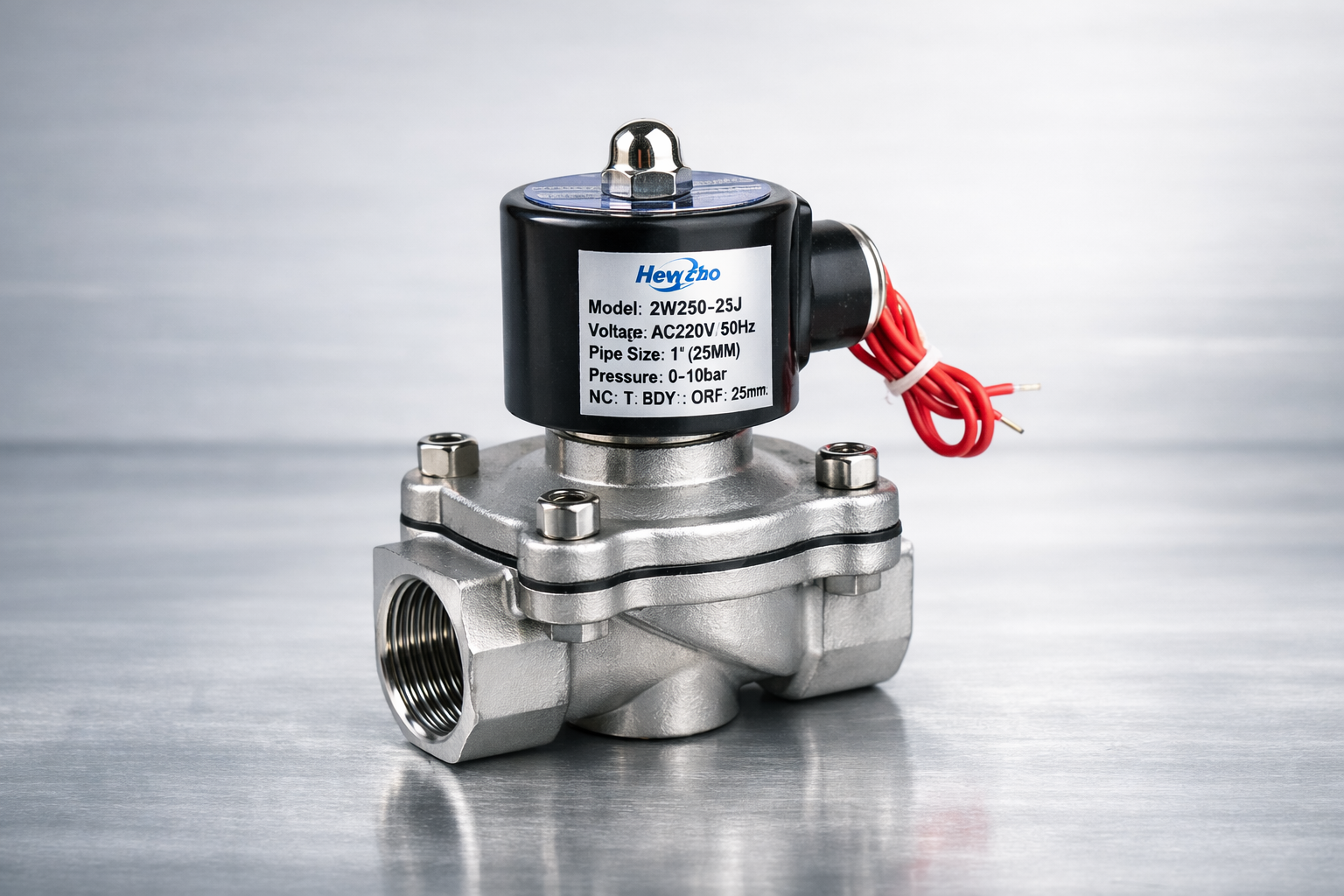
Solenoid valves are widely used in industrial automation, water systems, air control, and many other applications. They allow systems to automatically control the flow of liquids or gases using electricity.
But how exactly does a solenoid valve work?
In this guide, we explain the working principle of solenoid valves in a simple and practical way.
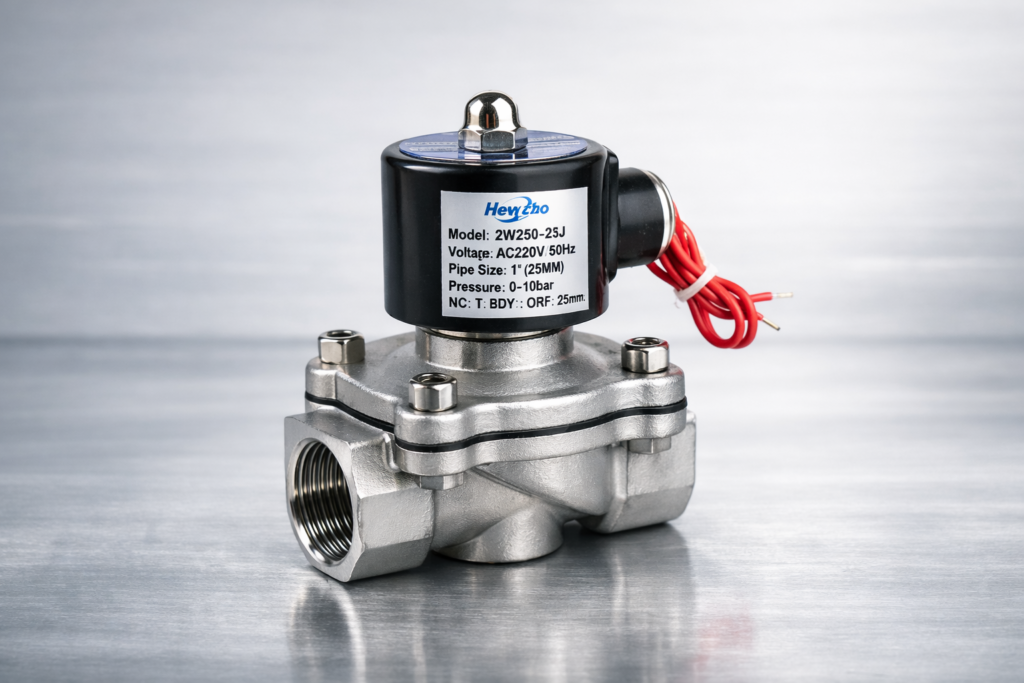
What Is a Solenoid Valve?
A solenoid valve is an electromechanical device used to control the flow of fluid. It uses an electric current to create a magnetic field, which moves an internal plunger to open or close the valve.
This allows systems to control fluid flow automatically without manual operation.
Solenoid valves are commonly used in:
- Water treatment systems
- Industrial automation equipment
- Air compressors
- Irrigation systems
- HVAC equipment
They provide fast and reliable flow control.
Main Components of a Solenoid Valve
A typical solenoid valve contains several key components:
Solenoid Coil
The coil generates a magnetic field when electricity passes through it.
Plunger (Armature)
The plunger moves up or down when the magnetic field is activated.
Valve Body
The body contains the flow channel and connects to the piping system.
Spring
The spring returns the plunger to its original position when power is removed.
Seal or Diaphragm
These components prevent leakage and ensure proper sealing.
Each component plays an important role in the valve’s operation.
Solenoid Valve Working Principle
The operation process is simple:
- No Power Applied
The spring pushes the plunger into the closed position (for normally closed valves).
Fluid cannot pass through the valve. - Power Applied
Electricity flows through the coil and creates a magnetic field. - Magnetic Force Lifts the Plunger
The plunger moves upward, opening the valve. - Fluid Flow Begins
Liquid or gas flows through the valve. - Power Removed
The magnetic field disappears, and the spring pushes the plunger back to the original position, closing the valve.
This process happens very quickly, often within milliseconds.
Advantages of Solenoid Valves
Solenoid valves are widely used because they offer several benefits:
- Fast response time
- Automatic operation
- Compact design
- Easy installation
- Reliable performance
These advantages make them ideal for automated control systems.
Common Applications
Solenoid valves are used in many industries, including:
Industrial Automation
Control of air and fluid in production equipment.
Water Treatment Systems
Automatic control of water flow.
HVAC Systems
Regulation of refrigerant or water flow.
Agricultural Irrigation
Automated watering systems.
Medical Equipment
Precise control of gases and liquids.
Because of their reliability, solenoid valves are essential components in modern automation systems.
Final Thoughts
A solenoid valve works by converting electrical energy into mechanical movement, allowing automatic control of fluid flow.
Its simple structure, quick response, and reliable operation make it one of the most important components in industrial fluid control systems.
Understanding how solenoid valves work helps engineers and system designers choose the right valve for their applications.