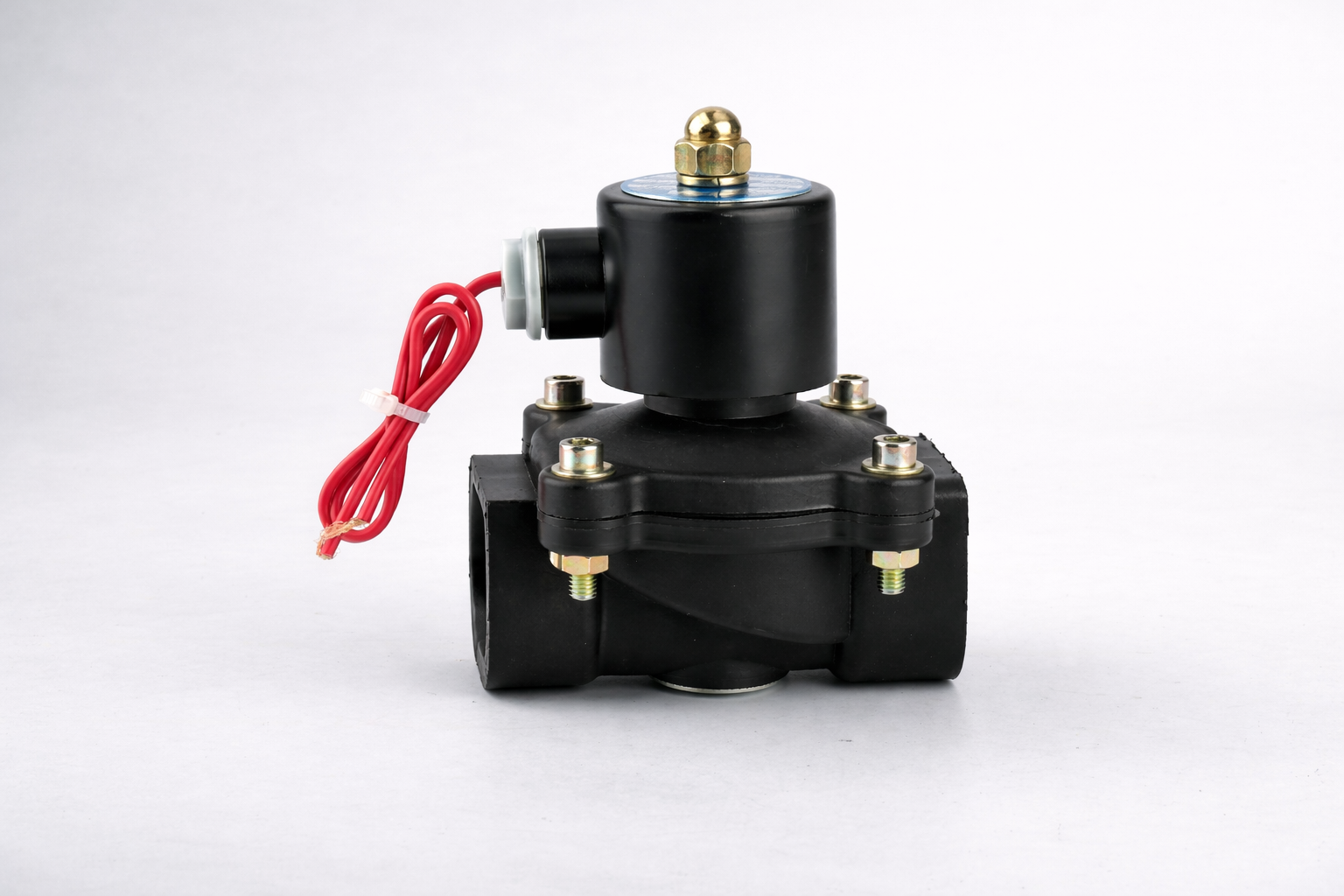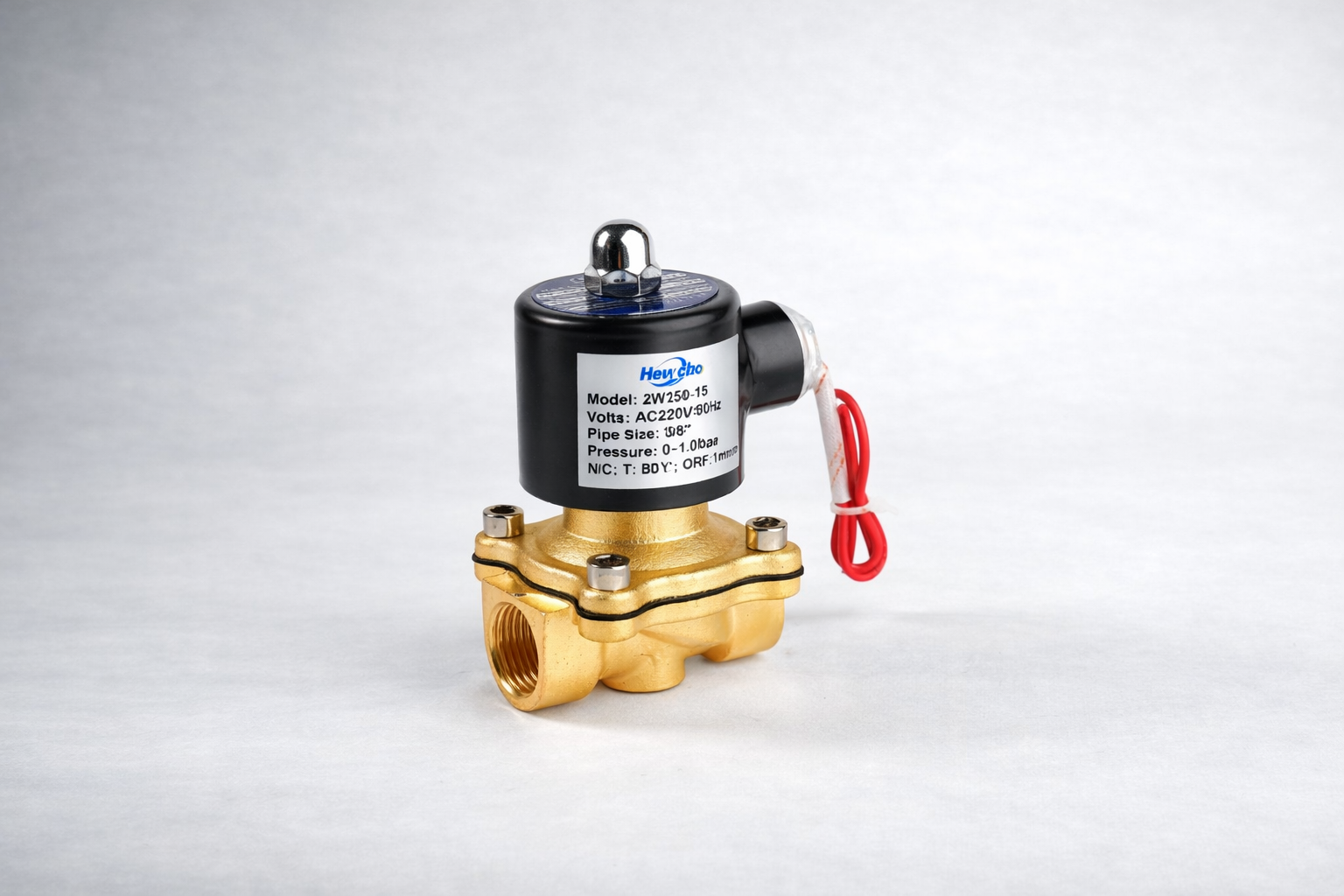
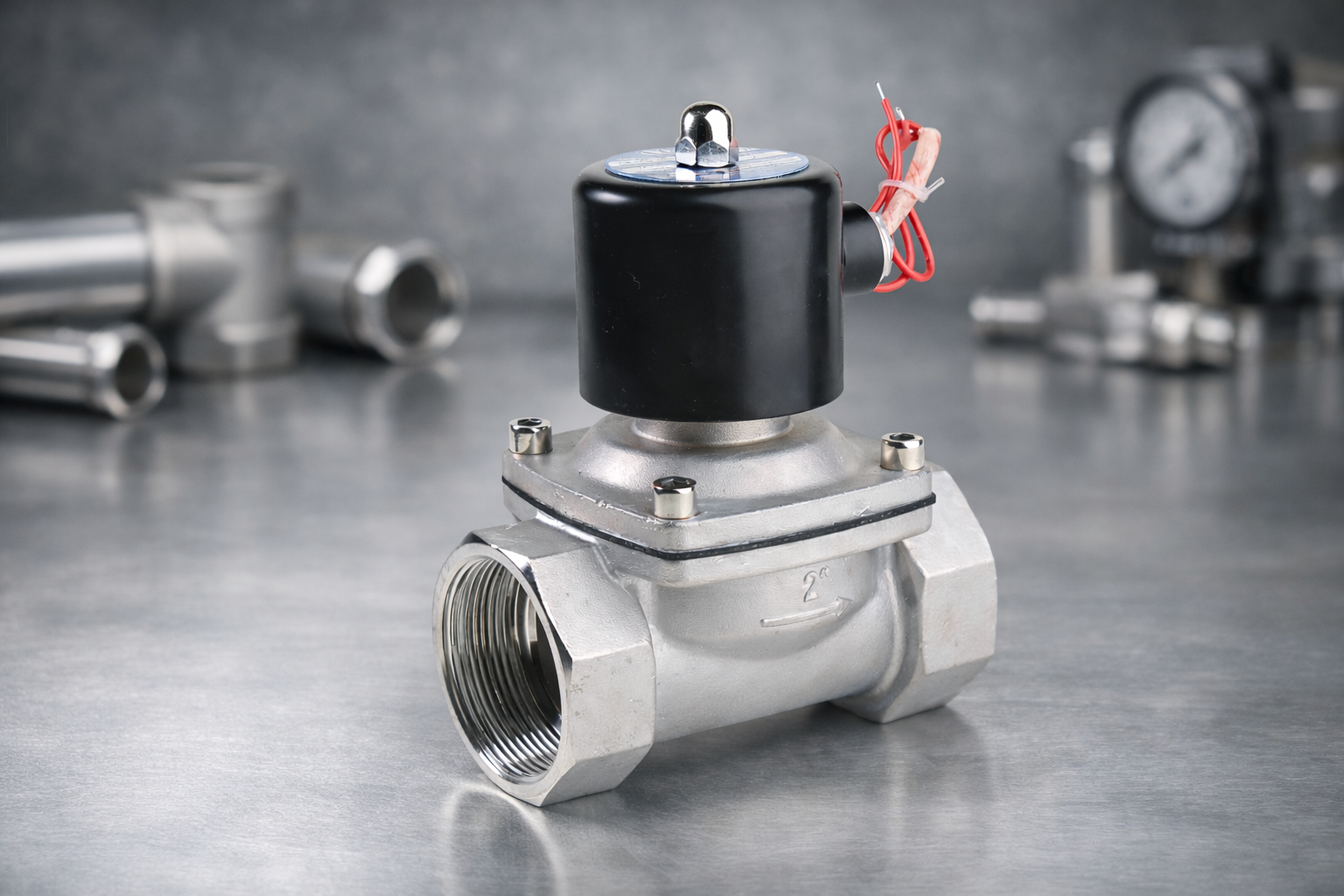
Selecting the right solenoid valve is critical for system performance, safety, and long-term reliability. A wrong choice can lead to leakage, overheating, slow response, or even system failure.
In this guide, we’ll walk through the key factors to consider when choosing a solenoid valve for industrial use.
1. Understand Your Medium
The first step is identifying the fluid type:
- Water
- Air
- Steam
- Oil
- Gas
- Corrosive chemicals
Different media require different materials.
For example:
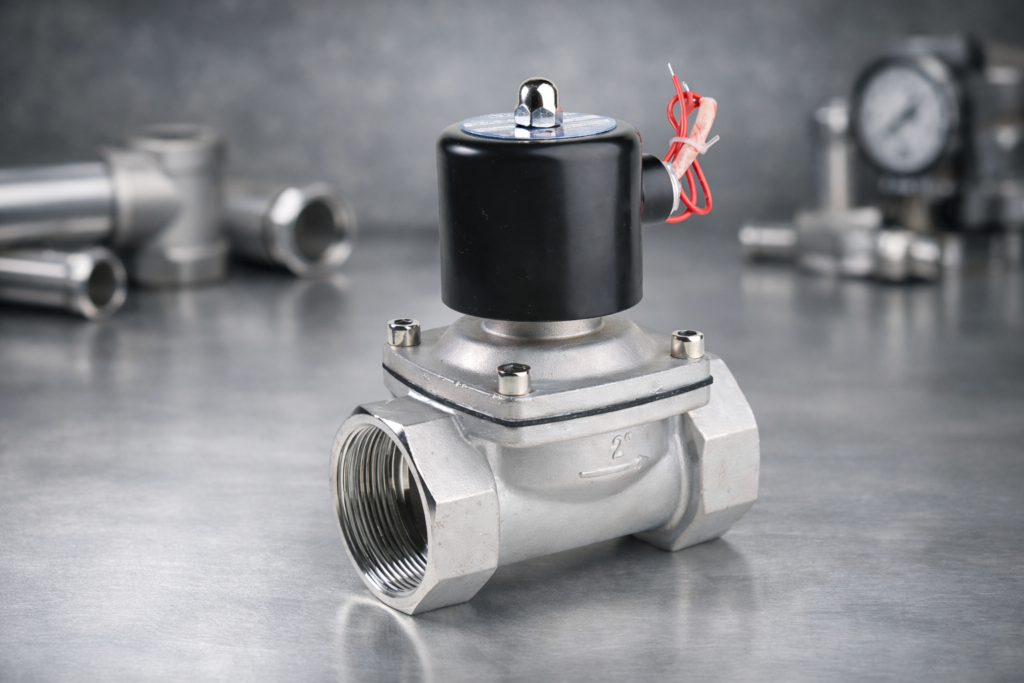
- Water & air → Brass or stainless steel body
- Steam → Stainless steel with high-temperature seals
- Corrosive liquids → PTFE seals and stainless steel body
Always verify chemical compatibility before selecting a valve.
2. Check Pressure and Temperature Range
Two critical specifications:
- Operating pressure (min & max)
- Fluid temperature range
Some solenoid valves require a minimum pressure to operate (pilot-operated valves).
If your system runs at zero pressure, you’ll need a direct-acting solenoid valve.
High-temperature applications require special coil insulation and high-temp sealing materials like FKM or PTFE.
3. Choose the Right Valve Type
There are three common types:
Direct-Acting Solenoid Valve
- Works from 0 bar
- Ideal for low flow systems
- Fast response
Pilot-Operated Solenoid Valve
- Suitable for high flow
- Requires minimum pressure
- More energy-efficient for larger sizes
Semi-Direct Acting
- Works at low pressure
- Higher flow capacity than direct-acting
Your system pressure determines the correct type.
4. Select the Correct Voltage
Common coil voltages include:
- 12V DC
- 24V DC
- 24V AC
- 110V AC
- 220V AC
Choose based on your power supply.
For industrial automation systems, 24V DC is the most common choice due to safety and stability.
5. Consider Response Time and Duty Cycle
If your application requires frequent switching:
- Choose a valve rated for continuous duty (100% ED)
- Ensure the coil has proper heat protection
- Look for fast response time specifications
For high-frequency operation, coil quality is extremely important.
6. Think About Environment Protection
Is the valve installed:
- Outdoors?
- In humid environments?
- In dusty factories?
Look for proper protection levels like:
- IP65
- IP67
Explosion-proof solenoid valves are required in hazardous areas.
7. Connection Size and Flow Rate
Finally, check:
- Port size (1/8″, 1/4″, 1/2″, 1″, etc.)
- Cv or flow coefficient
- Pipe thread type (NPT, BSP)
Correct sizing ensures stable system performance and prevents pressure drop issues.
Final Thoughts
Choosing the right solenoid valve is not just about price — it’s about reliability, safety, and long-term performance.
Before making a decision, always confirm:
✔ Medium compatibility
✔ Pressure & temperature range
✔ Valve type
✔ Voltage
✔ Protection rating
✔ Flow requirements
If you are unsure, consult a professional valve supplier to avoid costly mistakes.