
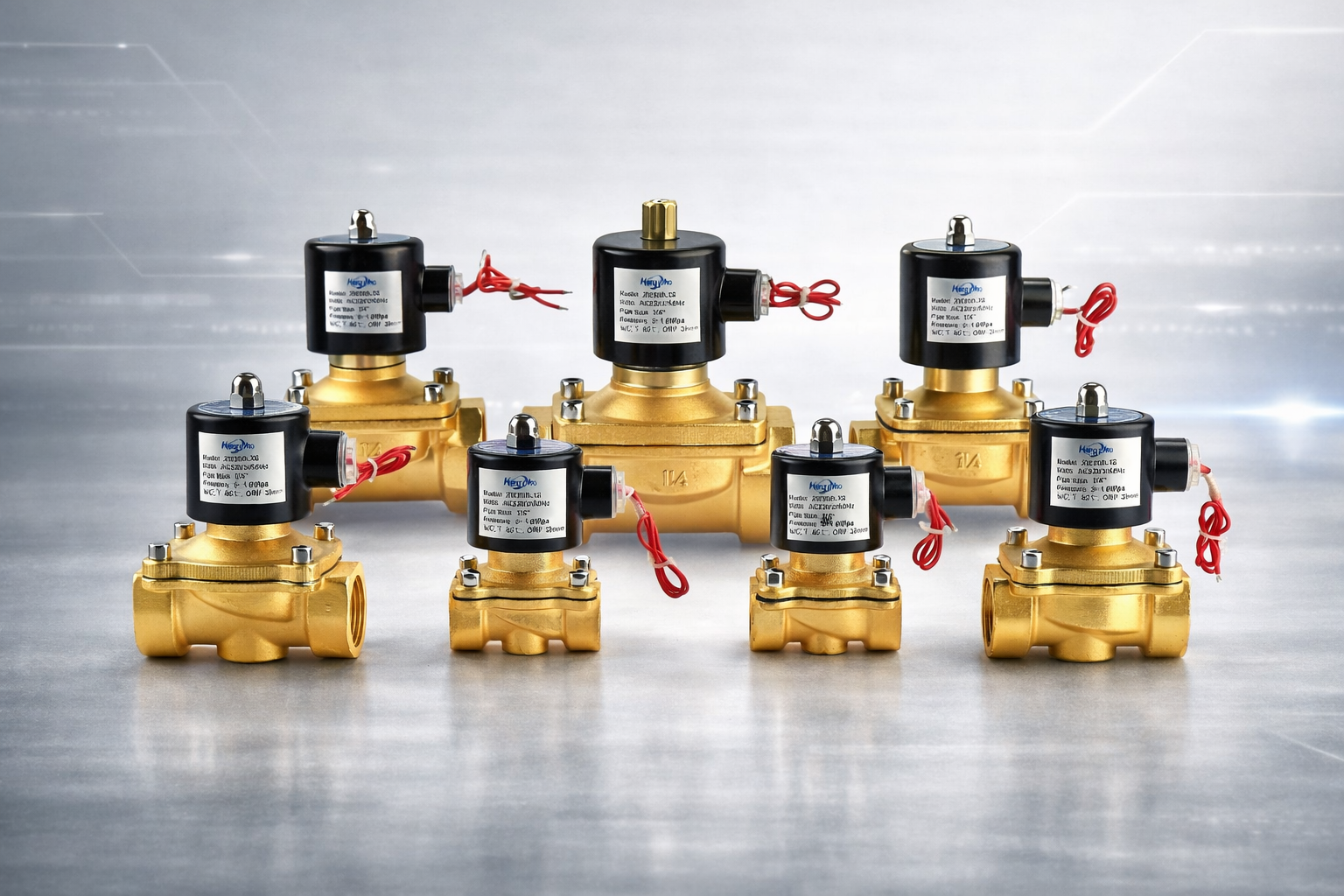
When selecting a solenoid valve, many buyers focus on the valve size and material. However, choosing the correct voltage is just as important for stable and safe operation.
Solenoid valves are available in several common voltage options such as 12V DC, 24V DC, 110V AC, and 220V AC. Each type is designed for different applications.
In this guide, we explain how to choose the right solenoid valve voltage for your system.
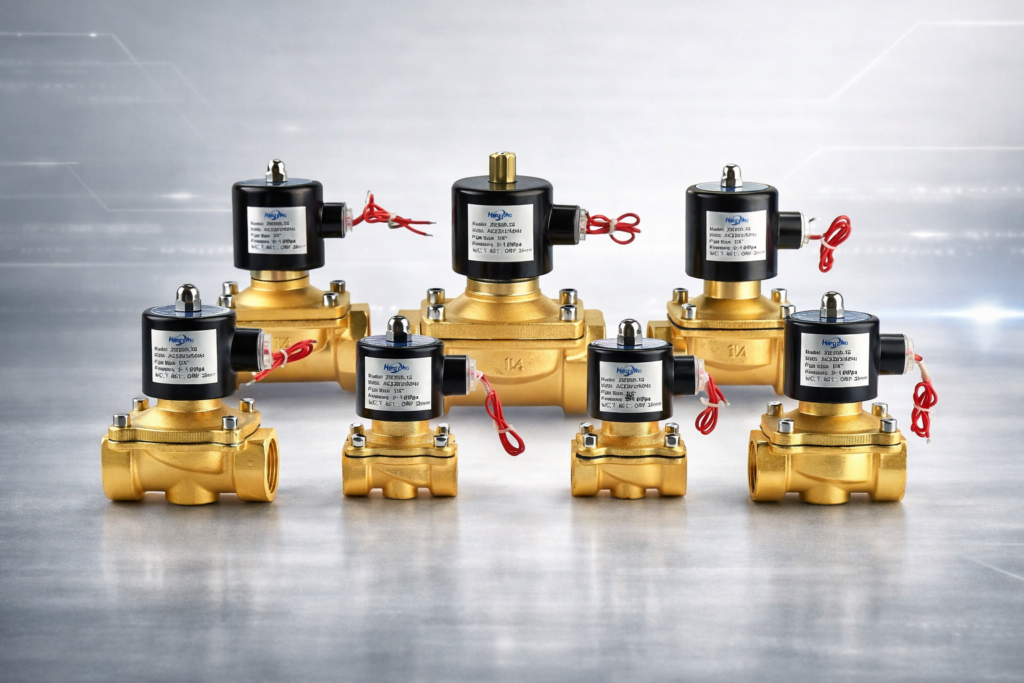
Why Voltage Selection Matters
The solenoid coil converts electrical energy into magnetic force to operate the valve. If the wrong voltage is used, it can cause several problems:
- Coil overheating
- Valve failing to open or close
- Reduced lifespan
- Electrical safety risks
Selecting the correct voltage ensures reliable and efficient operation.
12V DC Solenoid Valves
12V DC solenoid valves are commonly used in low-power systems.
Typical Applications
- Automotive systems
- Battery-powered equipment
- Small water control systems
- Portable devices
Advantages
- Safe low voltage
- Suitable for mobile systems
- Compatible with battery power
However, 12V valves are usually used for smaller flow systems.
24V DC Solenoid Valves
24V DC solenoid valves are widely used in industrial automation.
Typical Applications
- PLC control systems
- Factory automation equipment
- Pneumatic control systems
- Industrial machinery
Advantages
- Stable operation
- Safer than high-voltage systems
- Compatible with most control systems
Because of its reliability, 24V DC is the most common voltage in industrial automation.
110V AC Solenoid Valves
110V AC solenoid valves are typically used in regions where 110V power is standard.
Typical Applications
- HVAC systems
- Household appliances
- Commercial equipment
These valves connect directly to the AC power supply without requiring a DC power converter.
220V AC Solenoid Valves
220V AC solenoid valves are widely used in industrial equipment and global markets.
Typical Applications
- Industrial water systems
- Steam systems
- Large automation equipment
Advantages
- Direct connection to industrial power supply
- Suitable for higher power applications
However, proper insulation and safety measures are required due to higher voltage.
AC vs DC Solenoid Valves
There are some important differences between AC and DC coils.
| Feature | AC Coil | DC Coil |
|---|---|---|
| Power Supply | Alternating current | Direct current |
| Noise | Slight vibration possible | Usually quieter |
| Response Speed | Fast | Stable |
| Control Systems | Direct power connection | Compatible with PLC control |
Both types are widely used depending on system requirements.
How to Choose the Right Voltage
When selecting a solenoid valve, consider the following factors:
✔ Available power supply
✔ Control system type (PLC, relay, manual switch)
✔ Safety requirements
✔ Installation environment
Matching the valve coil voltage to your system power supply is essential for reliable operation.
Final Thoughts
Choosing the correct solenoid valve voltage ensures safe operation, stable performance, and longer service life. Whether you use 12V, 24V, 110V, or 220V valves, always confirm compatibility with your system power supply.
If you are unsure which voltage is best for your application, consulting a professional solenoid valve manufacturer can help you make the right decision.