December 31, 2025
Eric Jiang
Solenoid valve
Buying a steam solenoid valve based only on “stainless steel + EPDM” is risky. In steam service, many failures happen because users misunderstand the datasheet—especially minimum pressure requirements, Cv/flow rating, and coil temperature limits.
This guide explains the key datasheet items you must check before selecting a solenoid valve for steam applications.
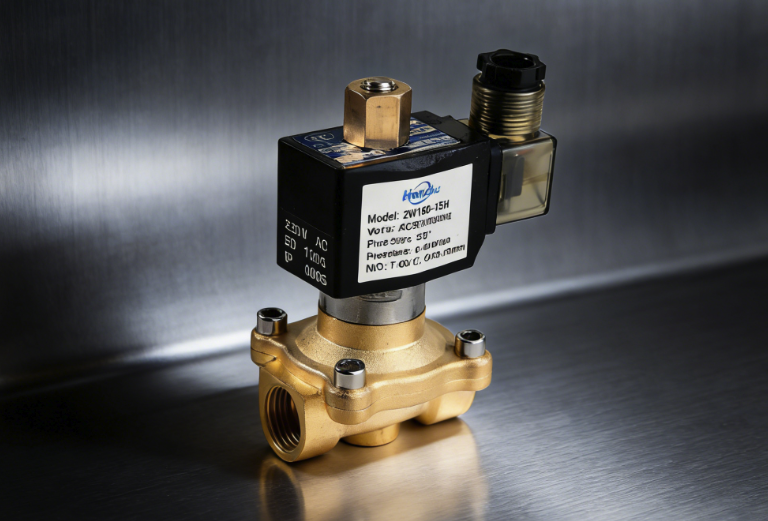
1. Operating Pressure Range (This Is Not Just “Max Pressure”)
Most users only look at maximum pressure, but steam valves—especially pilot-operated types—also have minimum operating pressure requirements.
What to check:
- Maximum working pressure (must exceed your highest possible steam pressure)
- Minimum differential pressure (ΔP) for pilot-operated valves
- Back pressure conditions (outlet pressure can reduce ΔP)
Why it matters:
- If ΔP is too low, a pilot-operated steam valve may not open, open slowly, or chatter.
Practical tip: Always compare the valve’s minimum ΔP with your real operating conditions during peak load, not only during startup.
2. Temperature Rating: Separate “Media Temperature” From “Ambient Temperature”
Steam solenoid valve datasheets often show multiple temperature limits. Mixing them up leads to coil burnouts.
Key temperature terms:
- Media temperature: the steam temperature inside the valve body
- Ambient temperature: air temperature around the coil and valve
- Coil temperature rise: additional heat generated when energized
Why it matters:
- Steam lines radiate heat. A coil sitting near a hot valve body can exceed its safe temperature even if steam temperature is “within spec.”
Practical tip: If your valve is installed near a boiler, heat exchanger, or enclosed cabinet, choose a high-temperature continuous-duty coil.
3. Cv / Kv / Flow Coefficient: What It Actually Tells You
Cv (or Kv) indicates how much flow a valve can pass at a given pressure drop. For steam selection, the goal is:
✅ Enough flow without excessive pressure drop
✅ Stable control without oversizing
Common mistakes:
- Oversizing the valve “for safety” → causes chattering, water hammer risk, unstable control
- Selecting by pipe size only → ignores real steam load and pressure drop
What to check in the datasheet:
- Cv/Kv value (or flow charts)
- Recommended pressure drop range
- Orifice size (especially for direct-acting valves)
Practical tip: If your system is experiencing unstable operation, check whether the valve is oversized for the actual steam load.
4. Valve Function: Normally Closed (NC) vs Normally Open (NO)
Datasheets clearly state NC or NO, but users still pick the wrong type.
Normally Closed (NC)
- Closed when power is OFF
- Most common for steam applications
- Safer in power failure situations
Normally Open (NO)
- Open when power is OFF
- Used only when required by specific safety logic or process design
Practical tip: If you’re unsure, NC is usually the correct default choice for industrial steam lines.
5. Valve Design: Direct-Acting vs Pilot-Operated
Your datasheet will describe the operating principle.
Direct-Acting
- Works at low pressure or near-zero ΔP
- Lower flow capacity
- Good for small lines and unstable pressure
Pilot-Operated
- Higher flow capacity
- Requires minimum ΔP
- Best for stable industrial steam pressure
Practical tip: If you have low pressure or high back pressure, direct-acting may be more reliable even if it costs more for the same pipe size.
6. Seal and Seat Type: EPDM, PTFE, Metal Seat
Datasheets typically list seal materials and sometimes seat design.
- EPDM (high-temp grade): common and reliable for saturated steam
- PTFE: chemical resistance, less elastic, needs good system cleanliness
- Metal seat: best for harsh/high-temp/dirty steam, but may not be bubble-tight depending on design
Practical tip: Seal choice should match your steam conditions and your condensate control quality. Water hammer destroys seals faster than temperature alone.
7. Coil Specs: Voltage, Power, Duty Cycle, and Protection
Coil selection is a major failure point in steam systems.
What to check:
- Voltage: AC/DC and allowed tolerance
- Power consumption (W/VA): higher power often means more heat
- Duty cycle: continuous duty is usually required for steam control
- Ingress protection (IP rating): important in humid steam rooms
- Optional: explosion-proof or hazardous area certification (if required)
Practical tip: If your plant has frequent coil failures, choose a coil with higher temperature rating, ensure upright mounting, and improve heat shielding and ventilation.
8. Connection and Installation Notes (Often Ignored, Often Critical)
Datasheets may include:
- Recommended installation direction
- Required strainer/filtering
- Coil orientation notes
- Pressure and flow direction arrows
- Media cleanliness requirements
For steam, also consider system layout:
- drip leg + steam trap near the valve
- Y-strainer upstream
- correct slope for condensate drainage
Even the best valve fails fast with poor installation.
Final Thoughts
A steam solenoid valve datasheet tells you everything you need—if you know what to look for. Focus on:
- Pressure range + minimum ΔP
- Cv/Kv and real steam load
- Media vs ambient temperature
- Coil duty and temperature rating
- Seal/seat design
- Installation requirements
If you want, I can write the next blog as a practical “selection template,” including:
- a simple checklist for buyers
- common steam system scenarios (6 bar / 10 bar / 16 bar)
- typical mistakes and how to avoid them