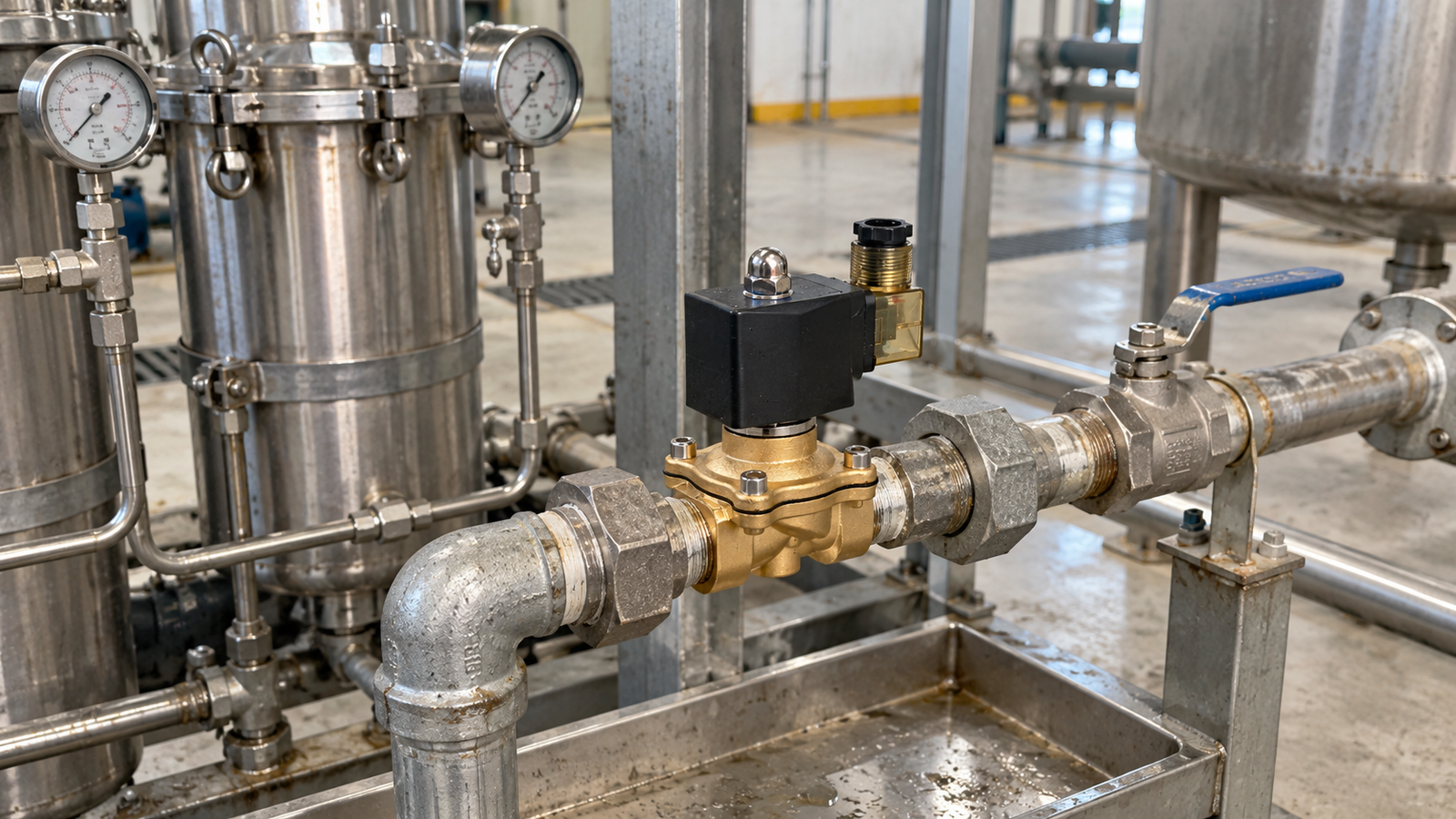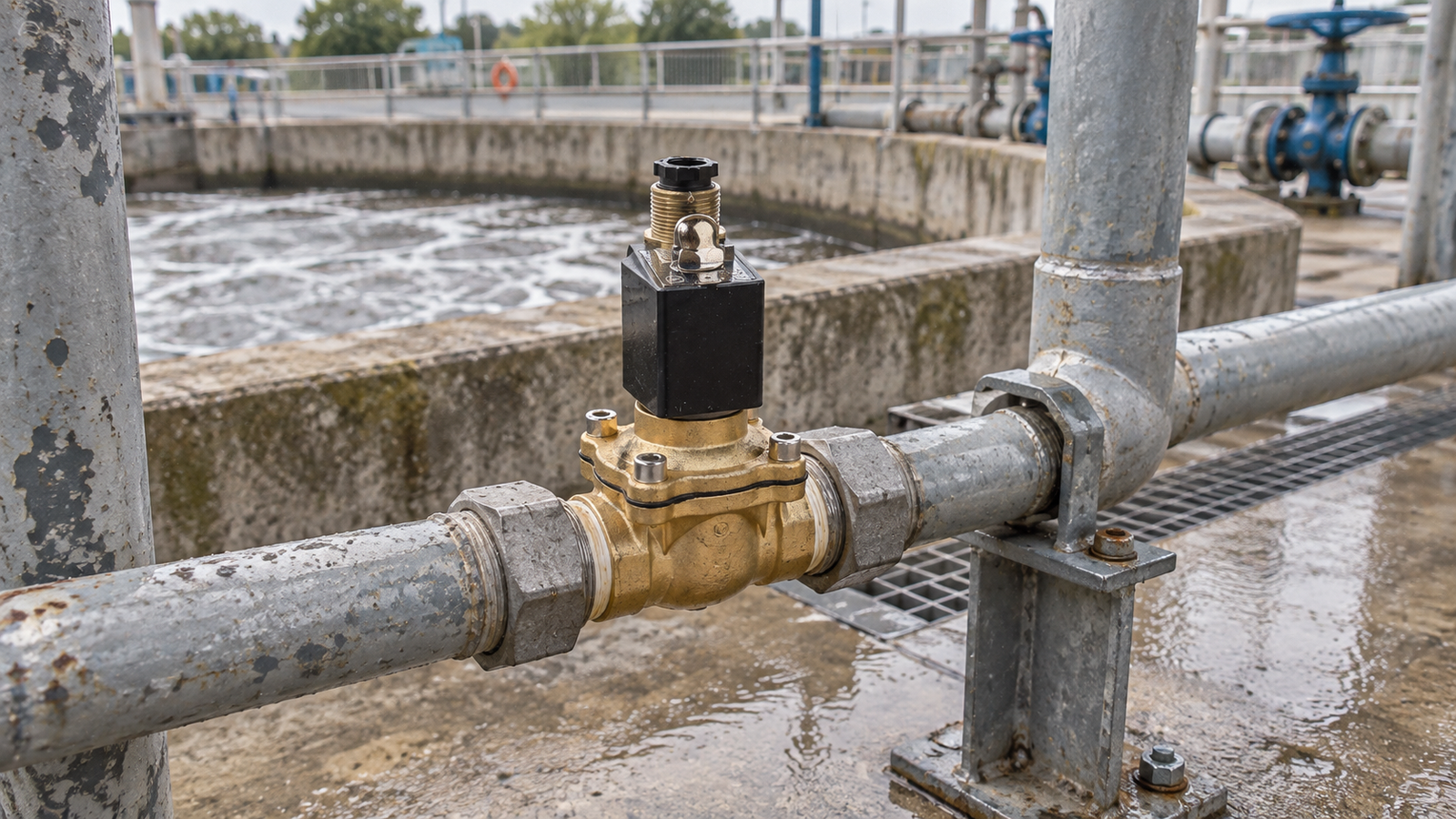
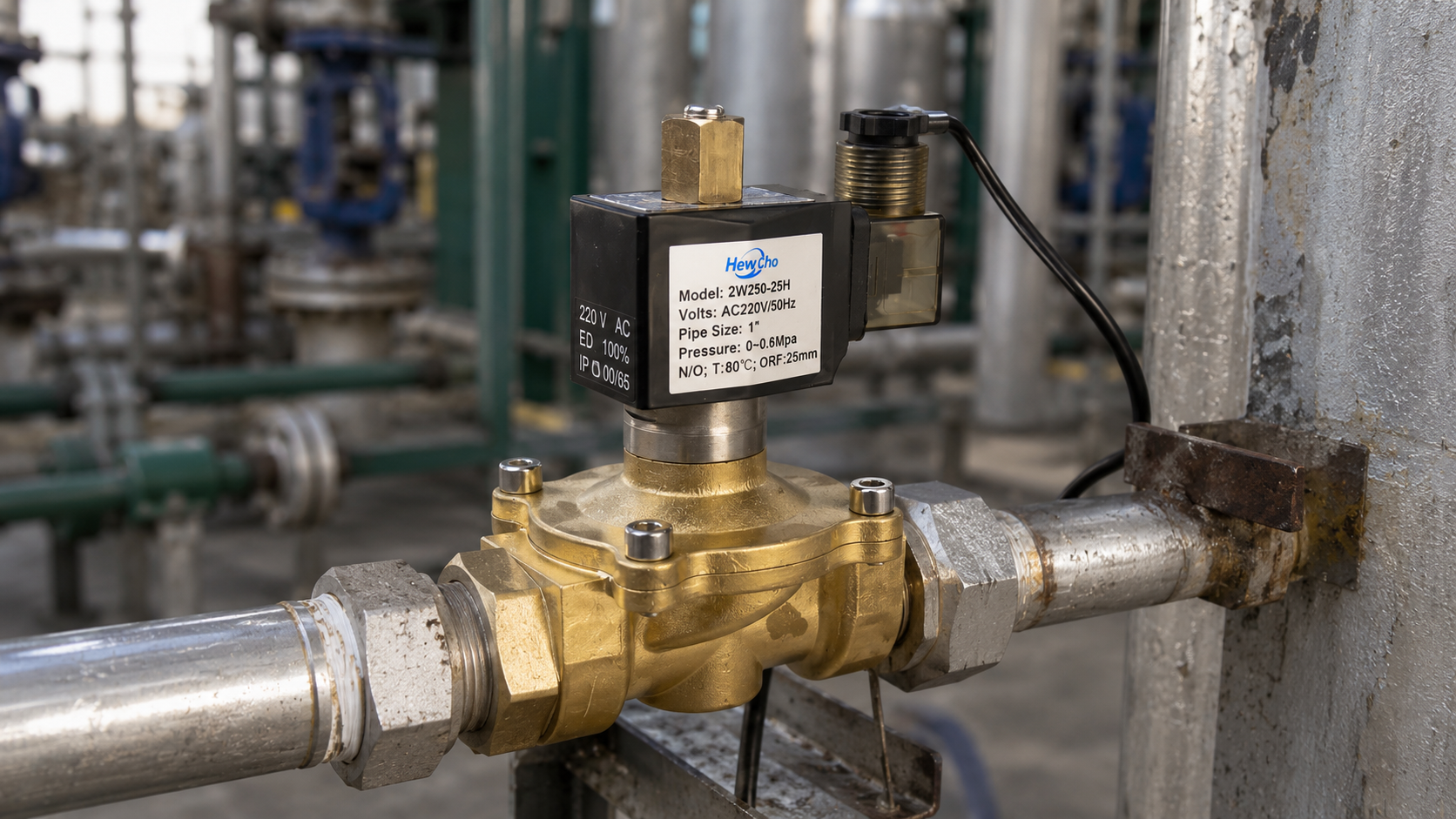
In the fluid control industry, one of the most common—and costly—purchasing mistakes happens before the valve is even installed. A facility manager or procurement officer looks at a pipeline, sees a 1-inch pipe, and orders a 1-inch 2-way solenoid valve. Once installed, the system suffers from a massive pressure drop, and the machinery starves for fluid.
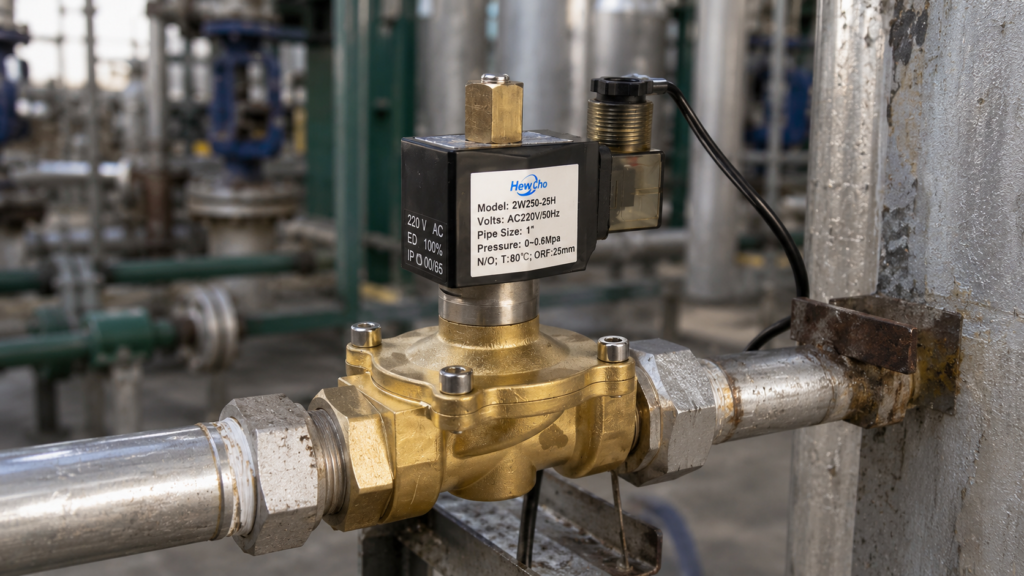
The buyer assumes the valve is defective. In reality, they fell into the classic sizing trap: confusing the external thread size with the internal orifice size.
If you are sourcing 2-way solenoid valves for your facility or your distribution network, understanding the critical difference between these two measurements is essential to guaranteeing system performance.
1. Connection Size: Just the Physical Fit
When a 2-way valve is listed as “1/2 inch” or “1 inch,” this measurement almost exclusively refers to the connection port size (typically NPT or G-Thread).
This measurement tells you absolutely nothing about how much water or air the valve can actually move. It simply tells your plumber or installation technician what size pipe fitting they need to screw into the brass or stainless steel body. You can easily have a valve with a massive 1-inch pipe thread that has an internal hole no larger than a pencil.
2. Orifice Size: The True Bottleneck
If the thread size is the doorway, the orifice size is the actual hallway inside the valve.
The orifice is the precision-machined hole hidden deep inside the valve body. It is the exact point where the internal plunger or diaphragm sits to block the flow. All the fluid in your system must pass through this specific hole.
When reviewing a manufacturer’s spec sheet for a 2-way solenoid valve, the orifice size is usually listed in millimeters (mm). This is the number that dictates the valve’s true capacity.
- Example: You might find two different 2-way valves from the same manufacturer, both featuring a 1/2″ G-Thread connection. However, Valve A has a 15mm orifice, while Valve B has a 2mm orifice. If you install Valve B in a high-volume water line, it will choke the system entirely, despite fitting perfectly onto the 1/2″ pipe.
3. Why the Disconnect Exists
Why do manufacturers produce valves with large pipe threads but tiny internal orifices? It all comes down to the physics of electromagnetic coils and pressure.
As we covered in previous guides, direct-acting 2-way valves use the raw magnetic force of the coil to lift the plunger against the pressure of the fluid.
- If a valve has a massive 25mm orifice, there is a lot of fluid sitting on top of the seal. Opening that seal against high pressure requires an incredibly large, expensive, and power-hungry electrical coil.
- To allow customers to control high-pressure fluids with a standard, energy-efficient coil, engineers must reduce the size of the orifice. A smaller orifice means less fluid weight on the plunger, making it easy for the coil to lift.
Therefore, a 2-way valve with a large thread and a tiny orifice is typically a high-pressure, direct-acting valve designed for low-volume dosing or pneumatic control.
4. The Solution: Size by Flow Coefficient ($C_v$)
To completely avoid the sizing trap, professional engineers do not size valves by pipe thread at all. They size them using the Flow Coefficient ($C_v$).
The $C_v$ rating (or $K_v$ rating in metric systems) is a standardized calculation that combines the orifice size and the valve’s internal geometry into a single, easy-to-use number. It represents the exact volume of water the valve will pass at a specific pressure drop.
The Best Practice Sizing Process:
- Calculate your system’s required flow rate (Gallons Per Minute or Liters Per Minute).
- Determine your maximum allowable pressure drop.
- Use these numbers to calculate your required
$C_v$. - Look at the manufacturer’s catalog and find a 2-way valve that meets or exceeds that
$C_v$ requirement. - Finally, look at the thread size of that chosen valve. If it does not match your piping, you simply use standard pipe reducers or expanders during installation.
The Bottom Line
A seamless pipe connection does not guarantee a seamless fluid flow. When purchasing 2-way solenoid valves, you must look past the external threads. By verifying the internal orifice size and confirming the $C_v$ rating, you ensure your pipelines operate efficiently, preventing pressure bottlenecks and protecting your equipment from fluid starvation.