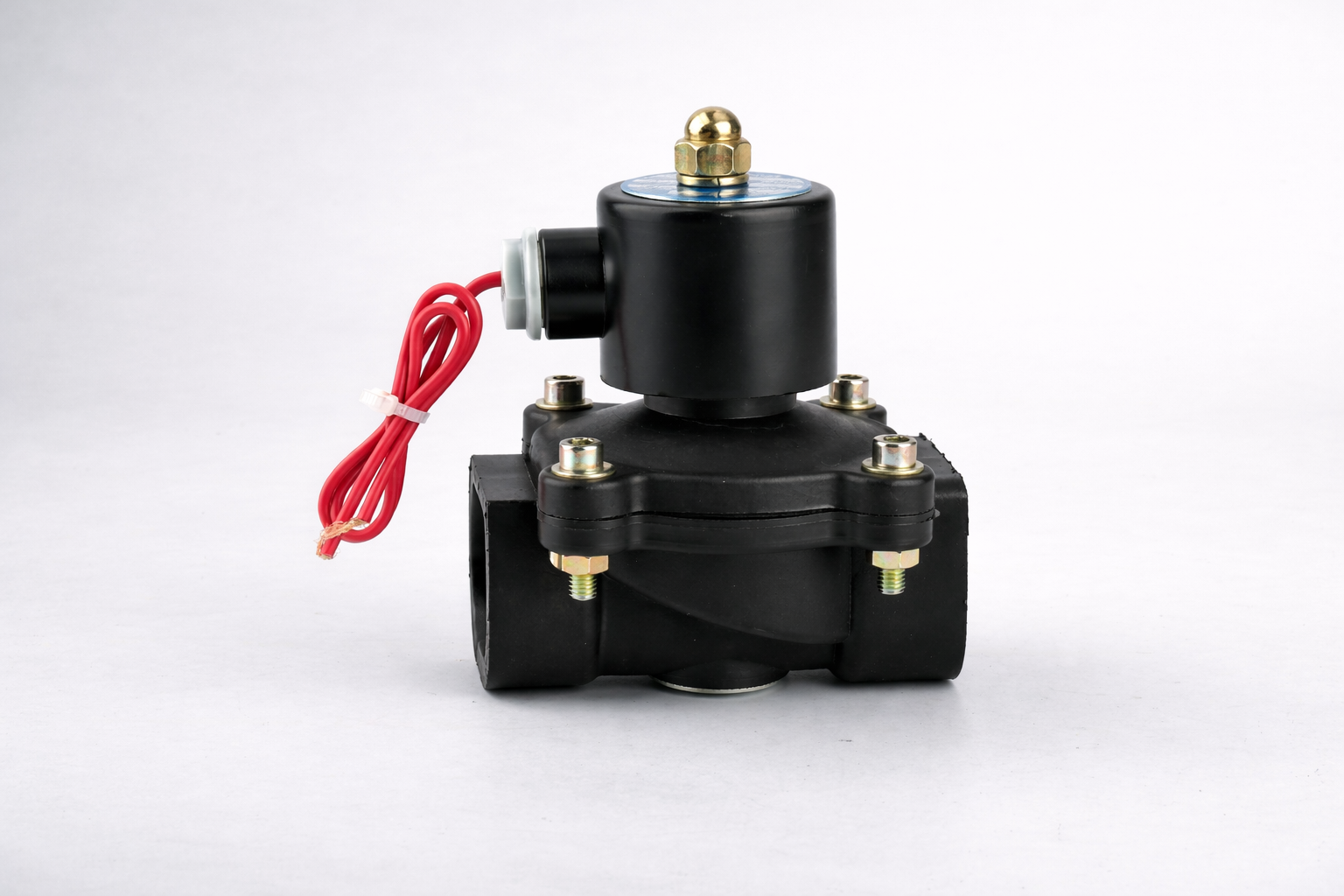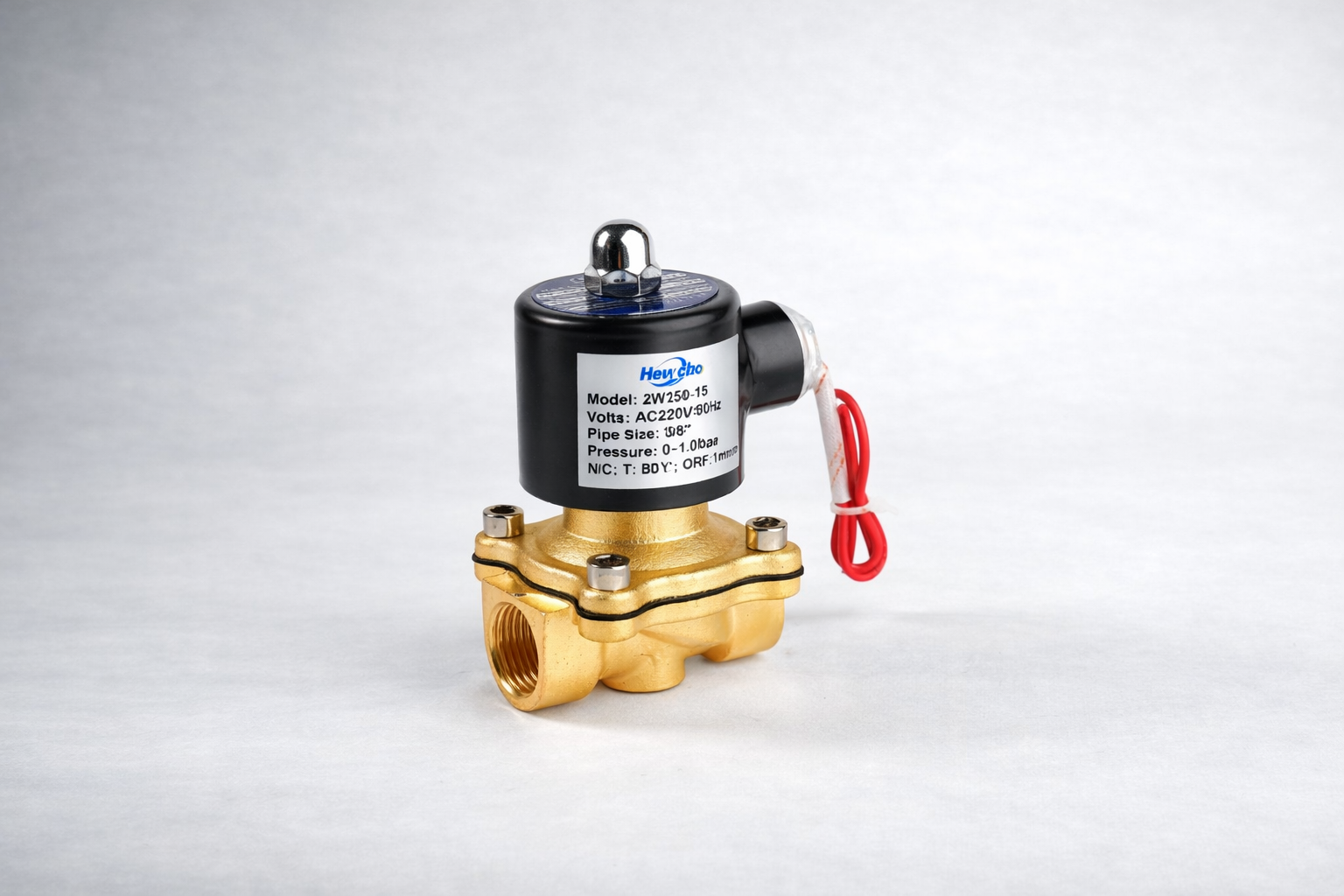
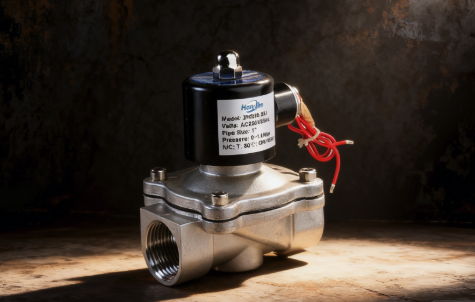
While 2-way solenoid valves are used for basic on/off flow control, many industrial systems require more advanced switching. This is where the 3-way solenoid valve becomes an excellent solution.
In this article, we explain what a 3-way solenoid valve is, how it works, and where it is commonly used — all in simple, native-speaker English that is easy for industrial customers to understand.
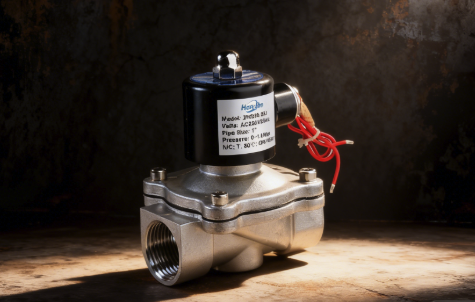
1. What Is a 3-Way Solenoid Valve?
A 3-way solenoid valve has:
- Three ports
- Two flow paths
These valves can open, close, or switch between two different circuits. This makes them ideal for controlling actuators, cylinders, pilot signals, and venting operations.
Basic functions
A 3-way valve usually performs one of these:
- Flow from Port A → Port B
- Flow from Port A → Port C
- Vent one port while pressurizing another
This switching ability makes 3-way valves more versatile than 2-way valves.
2. How Does a 3-Way Solenoid Valve Work?
A 3-way valve uses an electromagnetic coil to move a plunger or spool. Depending on the design, energizing the coil will either:
- Change the flow direction
- Switch between two output ports
- Open one path while closing another
Simplified working example:
- When power is OFF, Port A connects to Port C
- When power is ON, Port A connects to Port B
This structure allows the valve to control filling, venting, or switching between two circuits.
3. Types of 3-Way Solenoid Valves
There are two common types:
3-Way Normally Closed (NC)
- Default: Port A is blocked or vented
- Energized: Port A connects to Port B
- Often used to control pneumatic cylinders or pilot signals
3-Way Normally Open (NO)
- Default: Port A is open to Port B
- Energized: Port A connects to Port C
- Used when venting is needed as the default state
4. Direct Acting vs Pilot Operated
Just like 2-way valves, 3-way valves come in two working principles:
Direct Acting
- Works at 0 bar
- Ideal for low-pressure or vacuum applications
- Fast switching
Pilot Operated
- Requires a minimum pressure (e.g., 0.3–0.5 bar)
- Suitable for higher flow and larger port sizes
- Common in industrial air systems
Choose based on your pressure conditions.
5. Common Industrial Applications
3-way solenoid valves are widely used in pneumatic and automation systems. Typical applications include:
- Control of pneumatic cylinders
(extend/retract air actuators) - Pilot control for larger valves
(send control air to open or close main valves) - Vent or exhaust control
(release pressure automatically) - Switching between two media lines
(e.g., sampling or test systems) - Air tools and industrial automation
Because they control both pressure and venting, 3-way valves are essential in many motion and control systems.
6. Advantages of 3-Way Solenoid Valves
- Provides switching, not just on/off control
- Compact, fast, and easy to automate
- Ideal for pneumatic equipment
- Reduced need for multiple valves
- Flexible design for complex control tasks
These benefits make 3-way valves a popular choice in modern industrial automation.
7. How to Choose the Right 3-Way Valve
Before selecting a model, consider:
- Medium (air, water, oil, gas)
- Pressure range (min/max)
- Valve type (NC or NO)
- Working principle (direct or pilot)
- Flow requirement (Cv/Kv)
- Coil voltage (12VDC, 24VDC, 110VAC, 220VAC)
- Material (brass, stainless steel, aluminum, or plastic)
Matching these factors ensures smooth and reliable control.
Final Thoughts
3-way solenoid valves play a key role in industrial automation, especially in pneumatic systems where both pressure and exhaust need to be controlled. They offer flexibility, precise switching, and compact design.
If you want the next article to cover steam valves, explosion-proof coils, IP protection levels, valve maintenance, or industry-specific applications, just let me know — I can write the next one anytime。
你说:
2-way
ChatGPT 说:
下面是一篇专门围绕 2-way solenoid valve(两通电磁阀) 的全新、SEO 友好、工业客户易读的英文博客文章。可直接发布到你的官网。
What Is a 2-Way Solenoid Valve? Everything Industrial Users Need to Know
A 2-way solenoid valve is the most common type of solenoid valve used in industrial fluid control. Whether your system handles water, air, oil, gas, or chemicals, there is a good chance a 2-way valve is installed somewhere in the pipeline.
This article explains what a 2-way solenoid valve is, how it works, and how to choose the right one in clear, simple English that fits perfectly for industrial customers.
1. What Is a 2-Way Solenoid Valve?
A 2-way solenoid valve has:
- One inlet port
- One outlet port
It is designed to start or stop fluid flow in a pipe — just like an automated on/off switch for liquids or gases.
In short:
A 2-way valve either allows flow or shuts it off completely.
2. How Does a 2-Way Solenoid Valve Work?
A 2-way solenoid valve uses an electromagnetic coil to move a plunger.
When power is OFF
- The plunger sits tightly on the valve seat
- The valve blocks the flow
- Medium cannot pass
When power is ON
- The coil creates a magnetic field
- The plunger lifts
- The flow path opens
- Medium passes through the valve
This fast switching makes 2-way valves ideal for automatic systems.
3. Types of 2-Way Solenoid Valves
Normally Closed (NC)
- Default state: closed
- Opens only when energized
- The most common option in industry
- Safe choice for water, air, oil, fuel, and chemicals
Normally Open (NO)
- Default state: open
- Closes when energized
- Used in cooling or circulation systems
- Ideal when flow must continue during power failure
4. Direct Acting vs Pilot Operated
2-way valves work in two different ways internally:
Direct Acting
- Can work from 0 bar
- Suitable for low pressure or vacuum
- Smaller orifice sizes
- Quick response
Pilot Operated
- Requires minimum pressure (e.g., 0.3–0.5 bar)
- Higher flow rates
- Better for medium-to-large pipelines
- Commonly used in water and air systems
Always check your system’s minimum pressure before choosing.
5. Common Industrial Applications
2-way solenoid valves are used across almost every industry:
- Water treatment
- HVAC systems
- Air compressors
- Oil and fuel lines
- Irrigation and agriculture
- Boiler and steam systems
- Washing and dosing equipment
- Food and beverage processing
- Chemical processing
If your system needs to open or close flow, a 2-way valve is usually the right choice.
6. Benefits of 2-Way Solenoid Valves
- Simple and reliable design
- Fast switching
- Easy integration with automation systems
- Suitable for many fluid types
- Available in brass, stainless steel, or plastic
- Cost effective for most applications
This is why 2-way valves are the “standard solution” in industrial control.
7. Key Factors to Consider When Choosing a 2-Way Valve
Before selecting a 2-way solenoid valve, check:
- Medium (water, air, oil, fuel, steam, gas)
- Pressure range (min and max)
- Temperature (medium and environment)
- Valve state (NC or NO)
- Working principle (direct acting or pilot)
- Orifice size / Cv or Kv value
- Material (brass, stainless steel, PVC)
- Voltage (12VDC, 24VDC, 110VAC, 220VAC)
Choosing correctly ensures long service life and fewer failures.
Final Thoughts
A 2-way solenoid valve is a simple but powerful component that plays a vital role in industrial automation. Understanding how it works and how to choose the right one can greatly improve system reliability and performance.
If you want the next article to focus on 2-way vs 3-way, steam-rated valves, IP65 protection, valve maintenance, or direct vs pilot selection, just let me know — I can write the next one anytime。