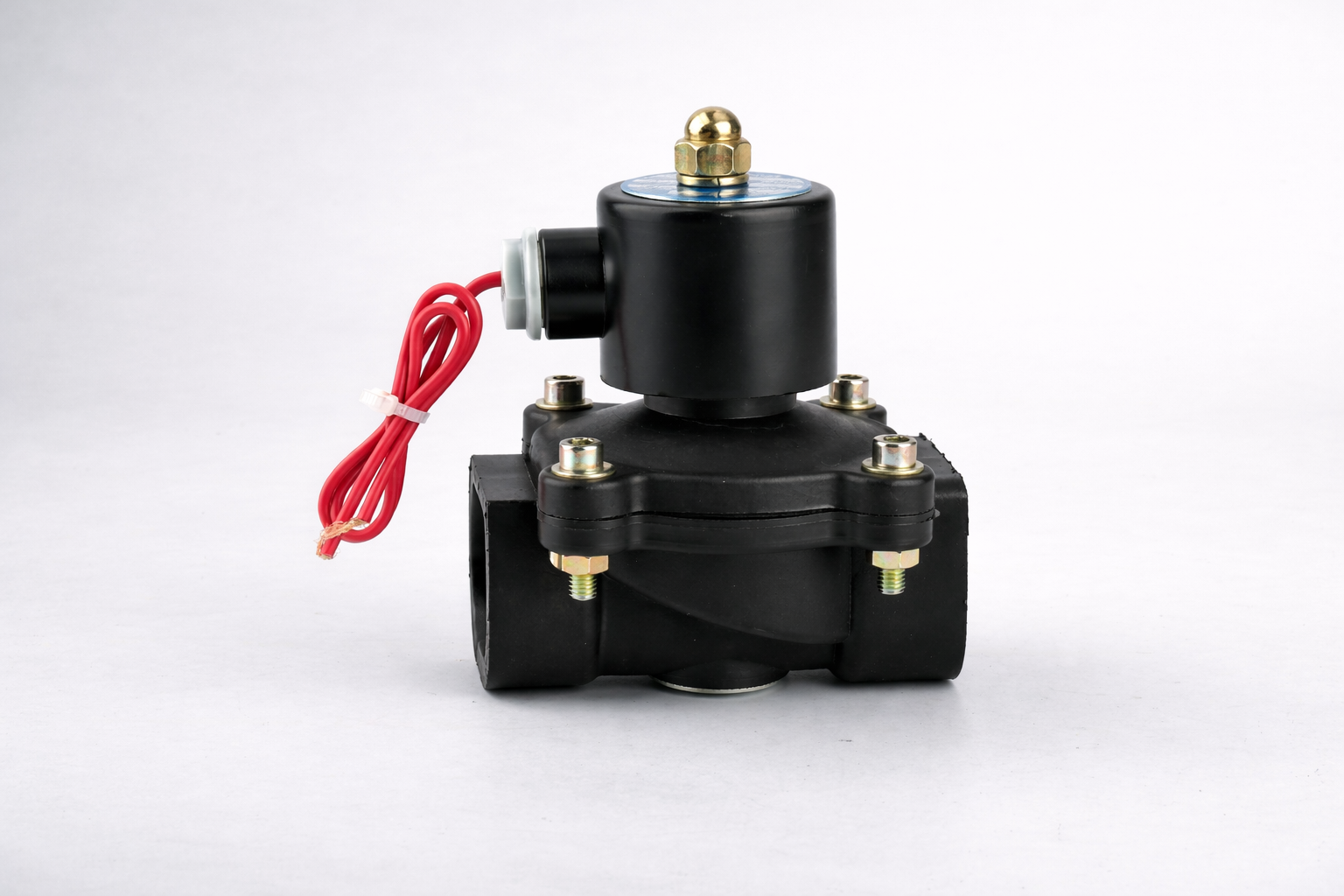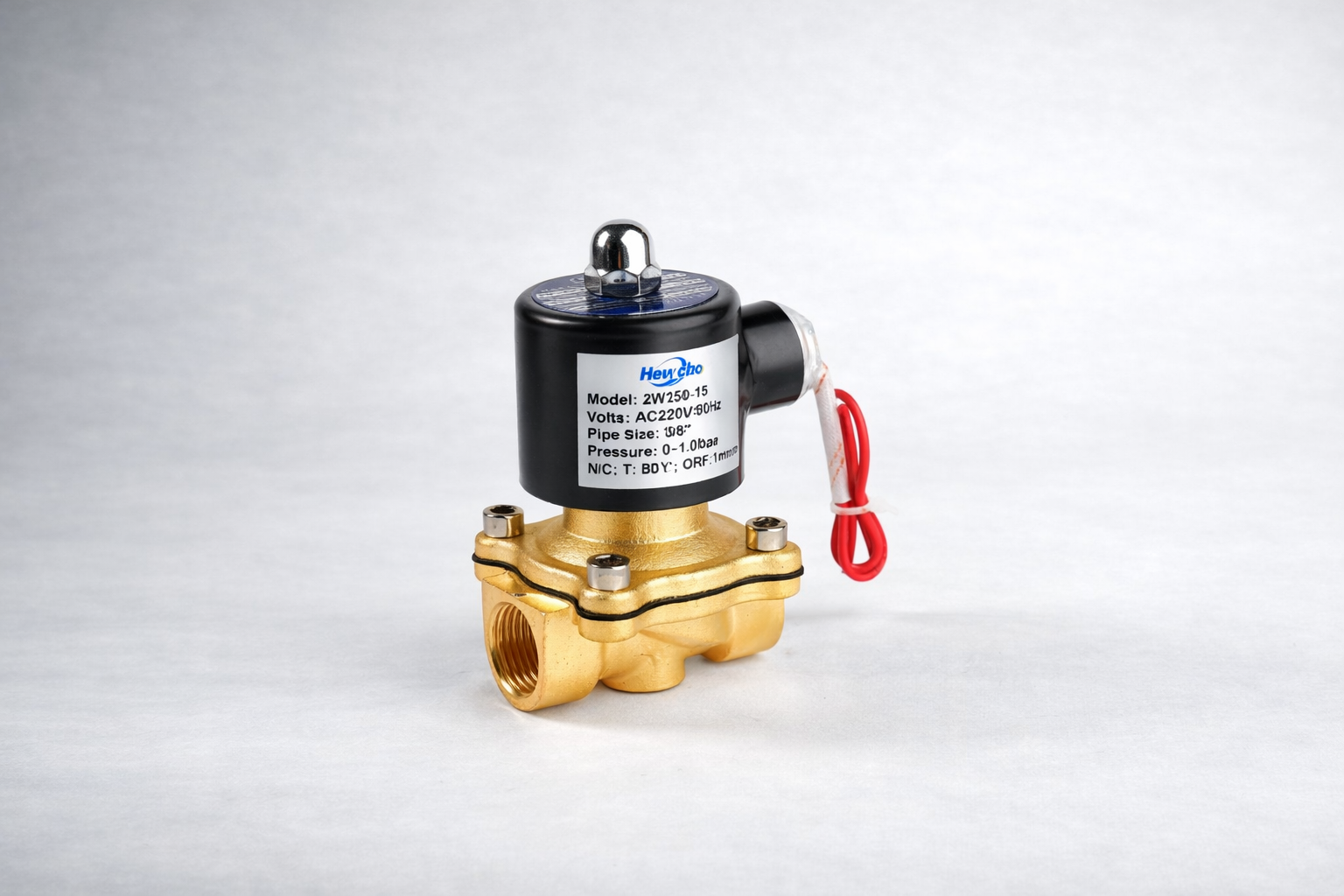
Solenoid valves come in two common designs: direct acting and pilot operated. If your system handles medium or high pressure, or if you require a large flow rate, the pilot-operated solenoid valve is often the best choice.
This article explains what a pilot-operated solenoid valve is, how it works, and where it is used — all in clean and simple English suitable for industrial customers.
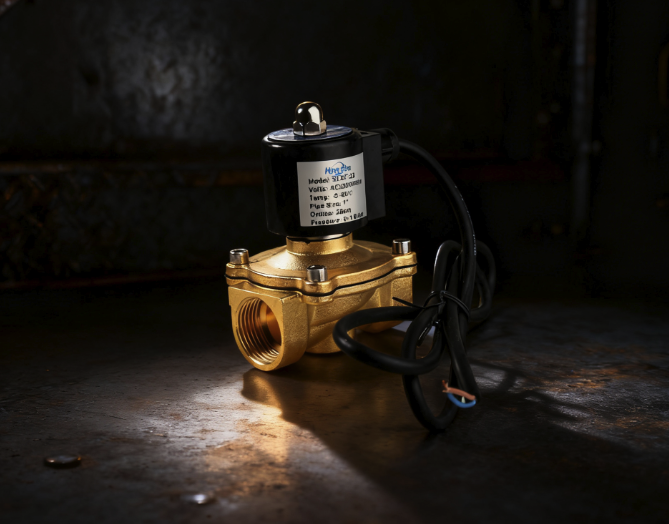
1. What Is a Pilot-Operated Solenoid Valve?
A pilot-operated solenoid valve (also called a pilot-assisted or servo-assisted valve) uses the pressure of the fluid itself to help open and close the main valve.
This design is more efficient than a direct-acting valve when:
- Flow rates are high
- Pipe size is larger
- Pressure is stable and above a minimum level
Key point:
The solenoid coil does not need to lift the entire flow path — it only opens or closes a small pilot orifice.
The fluid pressure then finishes the work.
2. How Does a Pilot-Operated Solenoid Valve Work?
Here is a simplified explanation:
When Power Is OFF (Valve Closed)
- The pilot orifice is closed
- Pressure builds on top of the diaphragm or piston
- The diaphragm presses down and seals the main valve
- No flow passes through
When Power Is ON (Valve Opens)
- The solenoid opens the pilot orifice
- Pressure above the diaphragm escapes
- Pressure below the diaphragm pushes it upward
- The main valve opens
- Fluid flows through the valve
This method allows a small coil to control a large flow reliably.
3. Why Minimum Pressure Is Needed
Pilot-operated valves rely on pressure difference.
Most models require:
- 0.3–0.5 bar minimum pressure differential
If pressure is too low, the diaphragm or piston cannot lift, and the valve may:
- Fail to open
- Open partially
- Work inconsistently
In low-pressure systems, a direct acting valve is a better choice.
4. Advantages of Pilot-Operated Solenoid Valves
✔ High flow capacity
Large orifices and strong pressure assist allow more fluid to pass.
✔ Efficient power usage
The coil uses less energy because it only moves a small pilot pin.
✔ Suitable for larger pipe sizes
Common sizes range from DN10 to DN50 or even bigger.
✔ Good for stable, pressurized systems
Ideal for water, air, oil, and many general industrial media.
5. Common Industrial Applications
Pilot-operated solenoid valves are widely used in systems with stable pressure. Typical applications include:
- Water distribution systems
- HVAC and chiller systems
- Pressurized air lines
- Oil and fuel control
- Industrial washing equipment
- Irrigation and agriculture
- Automatic filling and dosing
If your system has consistent pressure, pilot-operated valves deliver excellent performance.
6. Key Factors to Consider Before Choosing
To select the right pilot-operated solenoid valve, check:
- Pressure range
- Must meet the minimum differential pressure
- Medium type
- Water, air, oil, fuel, chemicals, steam
- Temperature limits
- For high temperatures, use stainless steel and correct seals
- Orifice size / Cv value
- Ensures correct flow capacity
- Valve function
- Normally closed (NC) or normally open (NO)
- Coil voltage
- 12VDC, 24VDC, 110VAC, 220VAC
- Material
- Brass, stainless steel, or plastic
Correct selection ensures smooth and reliable operation.
7. Pilot-Operated vs Direct Acting: Summary Table
| Feature | Pilot-Operated | Direct Acting |
|---|---|---|
| Minimum pressure | Required (0.3–0.5 bar) | Not required (0 bar) |
| Flow capacity | High | Low to medium |
| Valve size | Medium to large | Small |
| Power usage | More efficient | Requires stronger coil |
| Best applications | Stable pressure systems | Low or zero pressure |
Final Thoughts
Pilot-operated solenoid valves are ideal for applications where you need high flow, larger pipe sizes, and stable working pressure. They are efficient, reliable, and widely used across industrial automation systems.
If you want your next article to cover:
- Direct acting solenoid valves
- Steam-rated solenoid valves
- Solenoid valve materials (brass vs stainless vs plastic)
- Common solenoid valve failures
- Coil troubleshooting
Just tell me — I can write the next SEO-optimized blog anytime。