
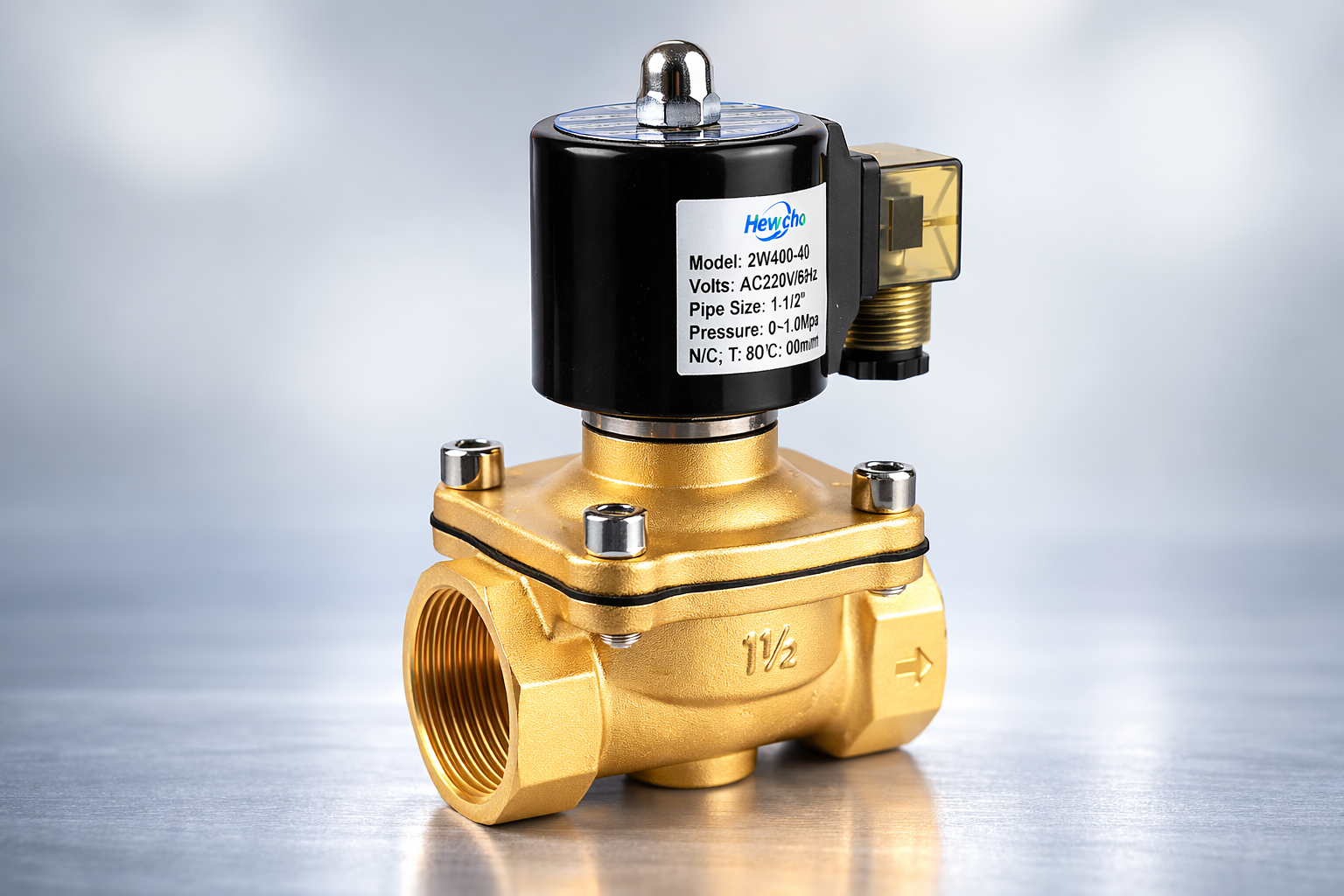
When selecting a solenoid valve, one of the most common questions is whether to choose a Normally Closed (NC) or Normally Open (NO) valve.
Understanding the difference between these two types is essential for proper system design and safe operation.
In this article, we explain how they work and how to choose the right one.
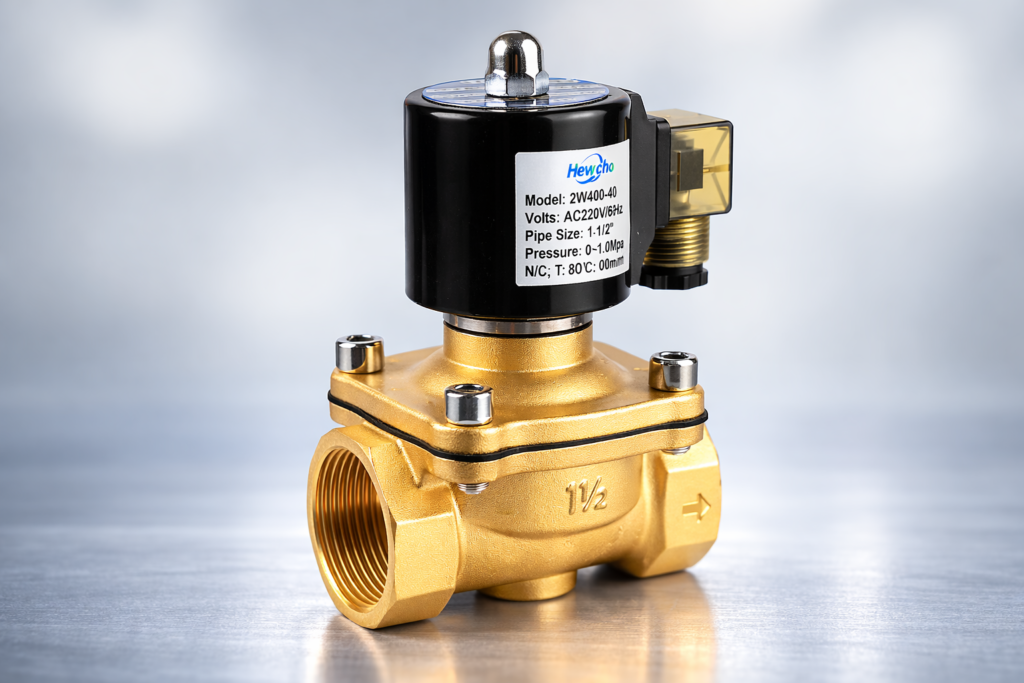
What Is a Normally Closed (NC) Solenoid Valve?
A normally closed solenoid valve remains closed when no power is applied.
When the coil is energized, the valve opens and allows fluid to pass through.
Key Characteristics
- Closed in the default state
- Opens when power is supplied
- Most commonly used valve type
Typical Applications
Normally closed valves are used when the system should stop flow if power fails.
Common applications include:
- Water supply control
- Air compressors
- Industrial automation systems
- Irrigation systems
Because they automatically shut off flow during power loss, NC valves provide an additional level of safety.
What Is a Normally Open (NO) Solenoid Valve?
A normally open solenoid valve remains open when there is no power.
When the coil is energized, the valve closes and stops fluid flow.
Key Characteristics
- Open in the default state
- Closes when power is applied
- Used in special control situations
Typical Applications
Normally open valves are often used when fluid must continue flowing during power failure.
Examples include:
- Cooling systems
- Emergency water supply systems
- Safety circulation systems
In these cases, continuous flow is necessary to protect equipment.
Key Differences Between NC and NO Valves
| Feature | Normally Closed (NC) | Normally Open (NO) |
|---|---|---|
| Default State | Closed | Open |
| Power Applied | Valve opens | Valve closes |
| Most Common Use | Yes | Less common |
| Safety Behavior | Stops flow during power loss | Maintains flow during power loss |
Choosing the correct type depends on how your system should behave when power is lost.
How to Choose the Right Option
Ask yourself these questions:
- Should flow stop if power fails?
→ Choose Normally Closed - Should flow continue if power fails?
→ Choose Normally Open - Is safety shutdown required?
→ Normally Closed is recommended - Is continuous circulation required?
→ Normally Open may be better
Selecting the wrong type can cause system failure or unsafe conditions.
Final Thoughts
Both normally open and normally closed solenoid valves serve important roles in industrial systems. The right choice depends on how your system should behave during normal operation and power interruptions.
Understanding this difference helps improve safety, reliability, and control efficiency.
If you are unsure which valve type is best for your application, consult a professional solenoid valve manufacturer for proper guidance.