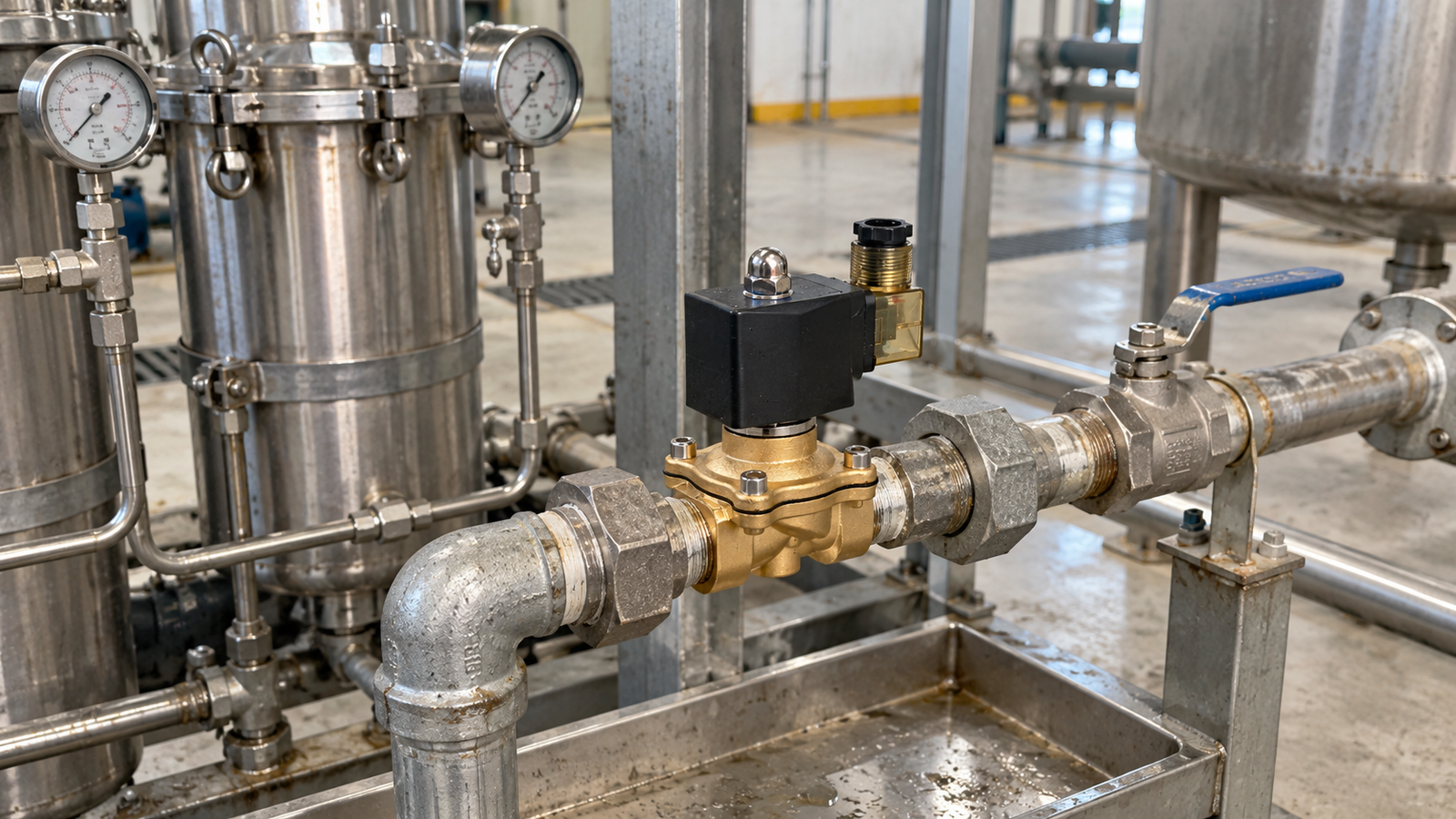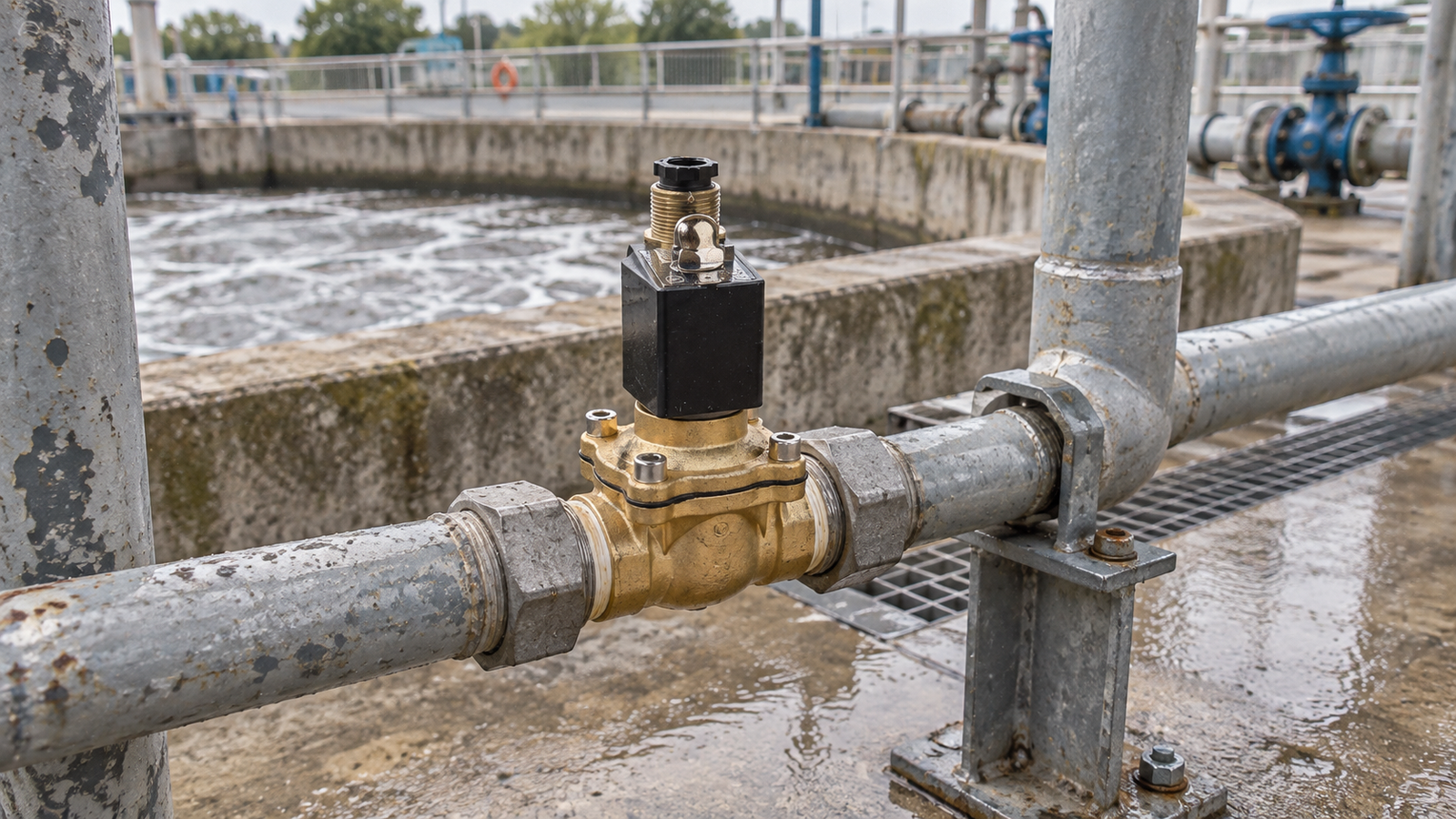
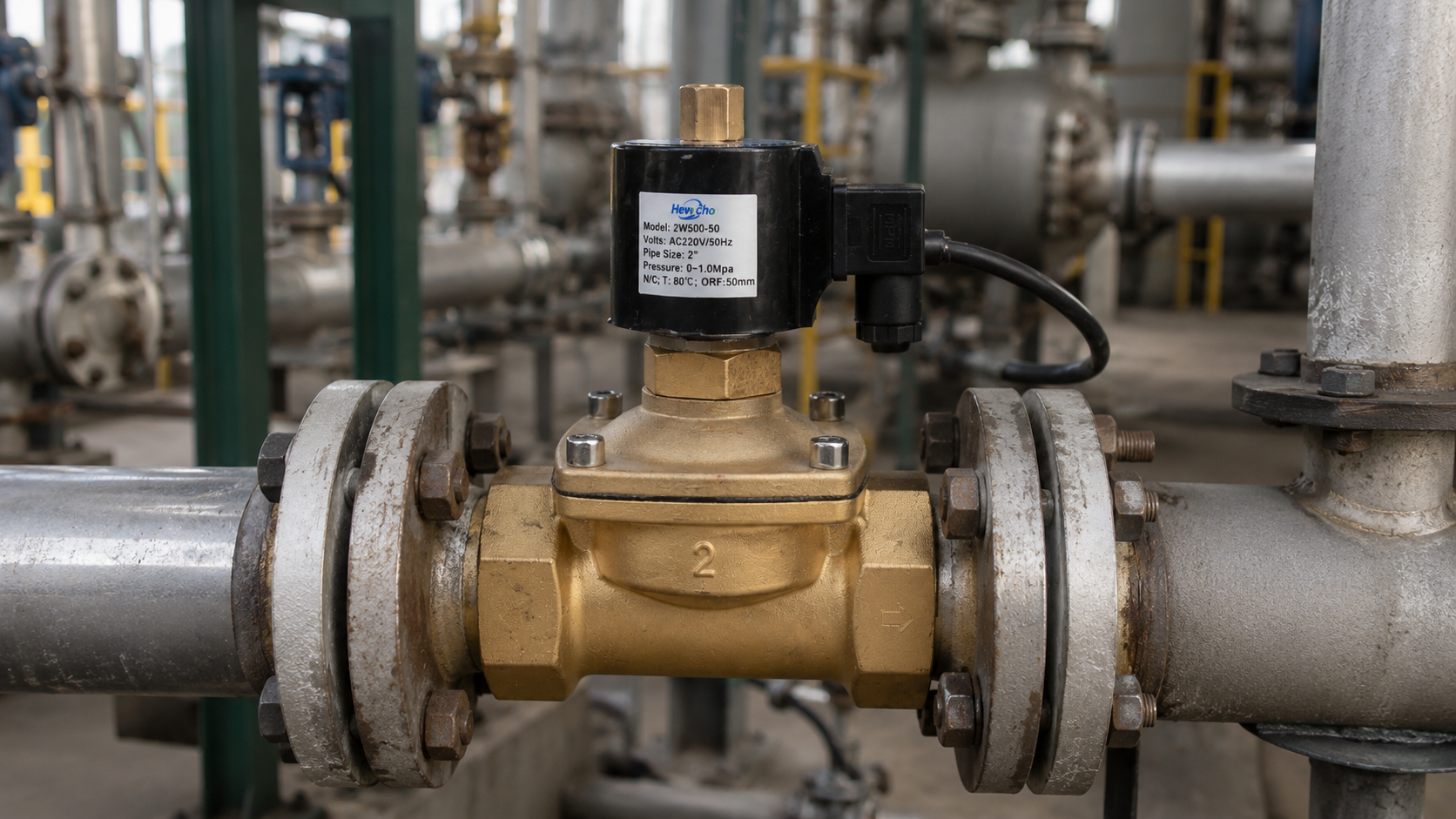
In standard industrial fluid control, a 2-way solenoid valve typically manages pressures between 0 and 10 Bar (up to 145 PSI). At these levels, standard brass bodies and rubber diaphragms perform flawlessly. However, when you step into the world of high-pressure applications—such as commercial car washes, CNC high-pressure coolant lines, and heavy-duty industrial cleaning equipment—the rules of fluid dynamics change drastically.
Subjecting a standard 2-way valve to 40, 50, or even 100 Bar of pressure will result in immediate catastrophic failure. The coil will burn out trying to open the valve, or the internal seals will completely blow out.
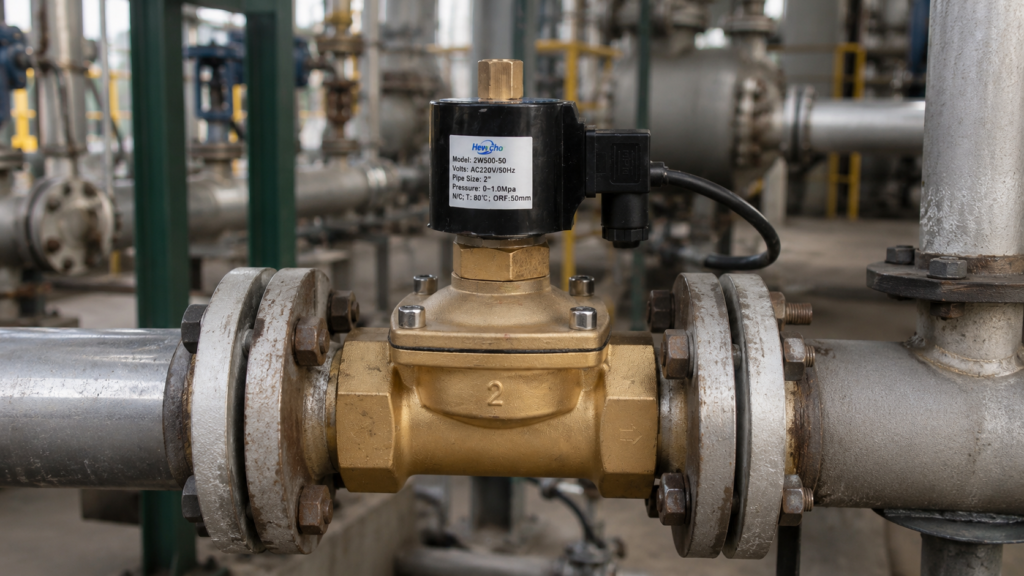
If you are an OEM building high-pressure machinery or a distributor supplying these extreme environments, you must source purpose-built high-pressure 2-way solenoid valves. Here is the engineering criteria required to survive the surge.
1. The Death of the Rubber Diaphragm: Upgrading to Piston Valves
The most significant difference between a standard 2-way valve and a high-pressure 2-way valve is the internal sealing mechanism.
Standard pilot-operated valves rely on a flexible rubber diaphragm (usually NBR or EPDM). Under extreme high pressure, the sheer mechanical force and fluid velocity will stretch, deform, and eventually tear this rubber sheet to pieces.
The High-Pressure Solution: For systems exceeding 15 Bar, you must abandon diaphragms and specify Piston-Operated 2-Way Valves. Instead of a flexing rubber membrane, these valves utilize a solid cylinder (the piston)—typically machined from stainless steel or brass. The piston slides up and down within a tightly toleranced sleeve, utilizing high-performance PTFE (Teflon) or specially reinforced Viton piston rings to create the seal. This rigid, mechanical design can withstand immense pressure spikes without fatiguing.
2. Overcoming the Opening Force (Coil Strength)
In a 2-way valve, the fluid pressure typically pushes down on the main seal, helping to keep the valve closed. When the coil is energized, it must overcome not only the tension of the internal spring but also the physical weight of the high-pressure fluid sitting on top of the orifice.
- Standard Coils Will Fail: If you put 50 Bar of pressure into a standard direct-acting valve, the standard magnetic coil will simply lack the pulling force to lift the plunger. You will hear a click, but the valve will stay locked shut.
- The Pilot-Operated Advantage: High-pressure 2-way valves almost exclusively use a pilot-operated or semi-direct piston design. By opening a microscopic pilot hole first, the valve uses the high-pressure fluid itself to push the heavy metal piston out of the way. This allows the valve to control massive pressures using a standard, energy-efficient electrical coil.
3. High-Velocity Wear and Tear (Cavitation)
High pressure equals high fluid velocity. When a 2-way valve opens in a high-pressure line, the fluid shoots through the internal orifice at incredible speeds.
If the valve body is made of cheap, porous brass, this high-velocity fluid can actually erode the metal over time—a phenomenon known as “wire drawing” or cavitation damage.
Material Selection:
While high-quality forged brass is acceptable for medium-high pressures (up to around 40 Bar for water), 304 or 316 Stainless Steel becomes mandatory as you push into ultra-high-pressure territory. Stainless steel is significantly harder than brass, making it highly resistant to the internal scouring caused by high-velocity liquids.
4. Mitigating Severe Water Hammer
We have discussed water hammer before, but in a high-pressure system, the stakes are exponentially higher. When a 2-way valve snaps shut on a fluid moving at high pressure, the resulting shockwave can easily shatter pipe fittings or destroy the pump.
When sourcing high-pressure piston valves, look for models engineered with controlled closing times. By carefully calibrating the size of the pilot bleed-hole, manufacturers can design the solid metal piston to glide shut over the course of a few hundred milliseconds, rather than slamming shut instantly. This slight delay absorbs the kinetic energy of the high-pressure fluid, protecting your entire piping infrastructure from hydraulic shock.
The Bottom Line
You cannot compromise when controlling high-pressure fluids. Utilizing standard components in extreme environments puts your equipment, your facility, and your personnel at risk. By strictly specifying piston-operated designs, robust stainless steel bodies, and properly engineered pilot mechanisms, your 2-way solenoid valves will deliver precise, reliable control no matter how high the pressure spikes.