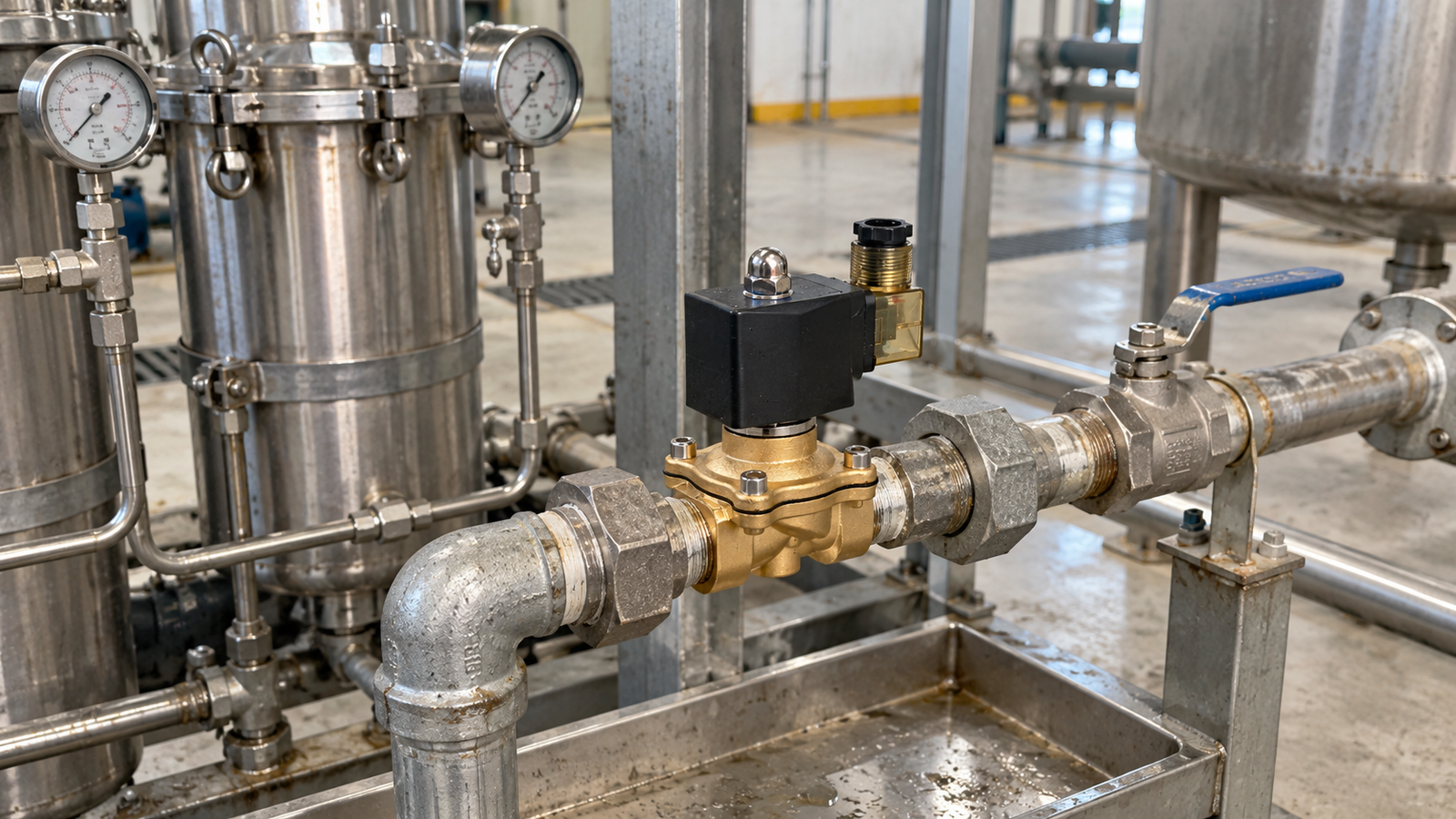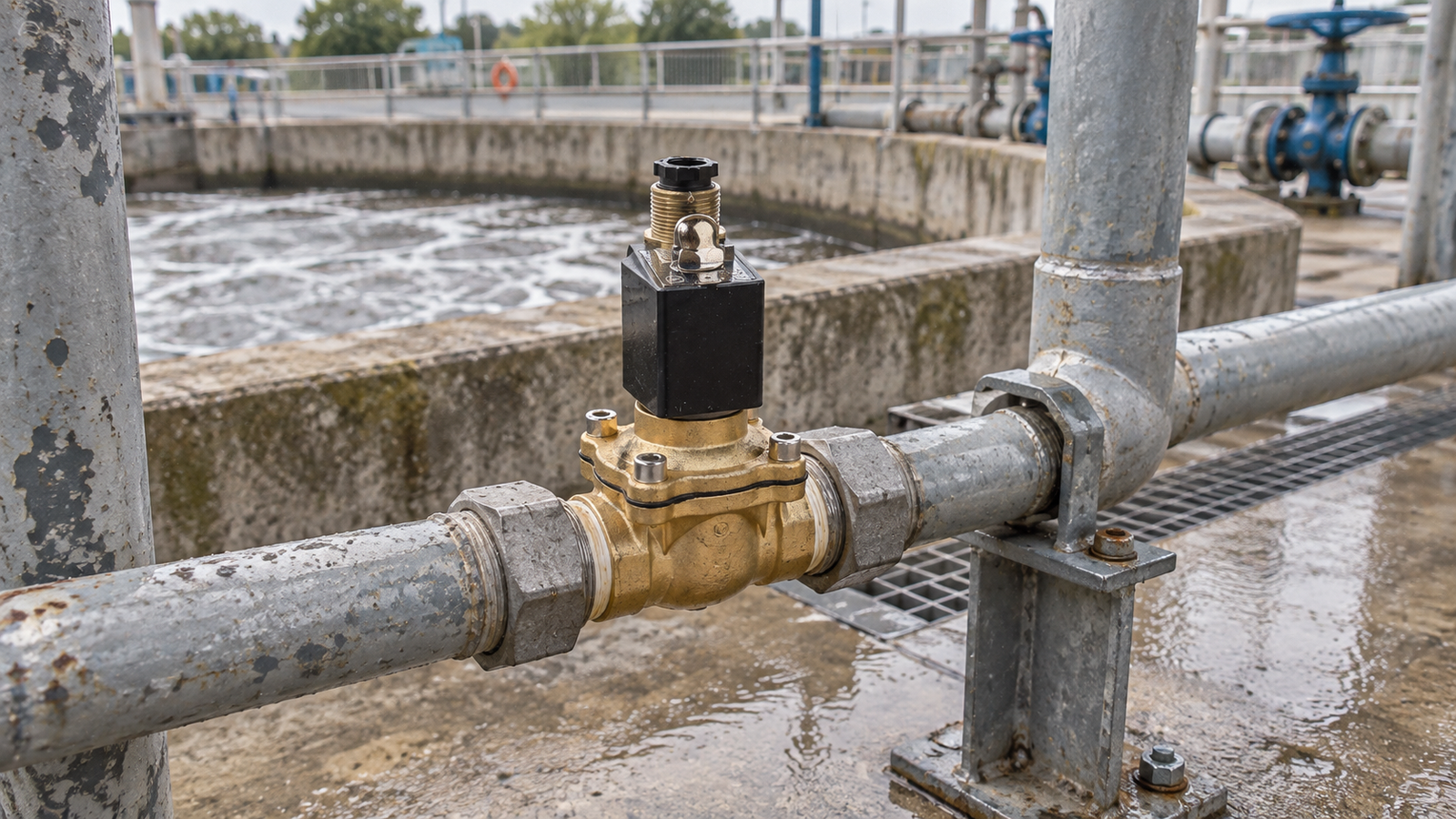
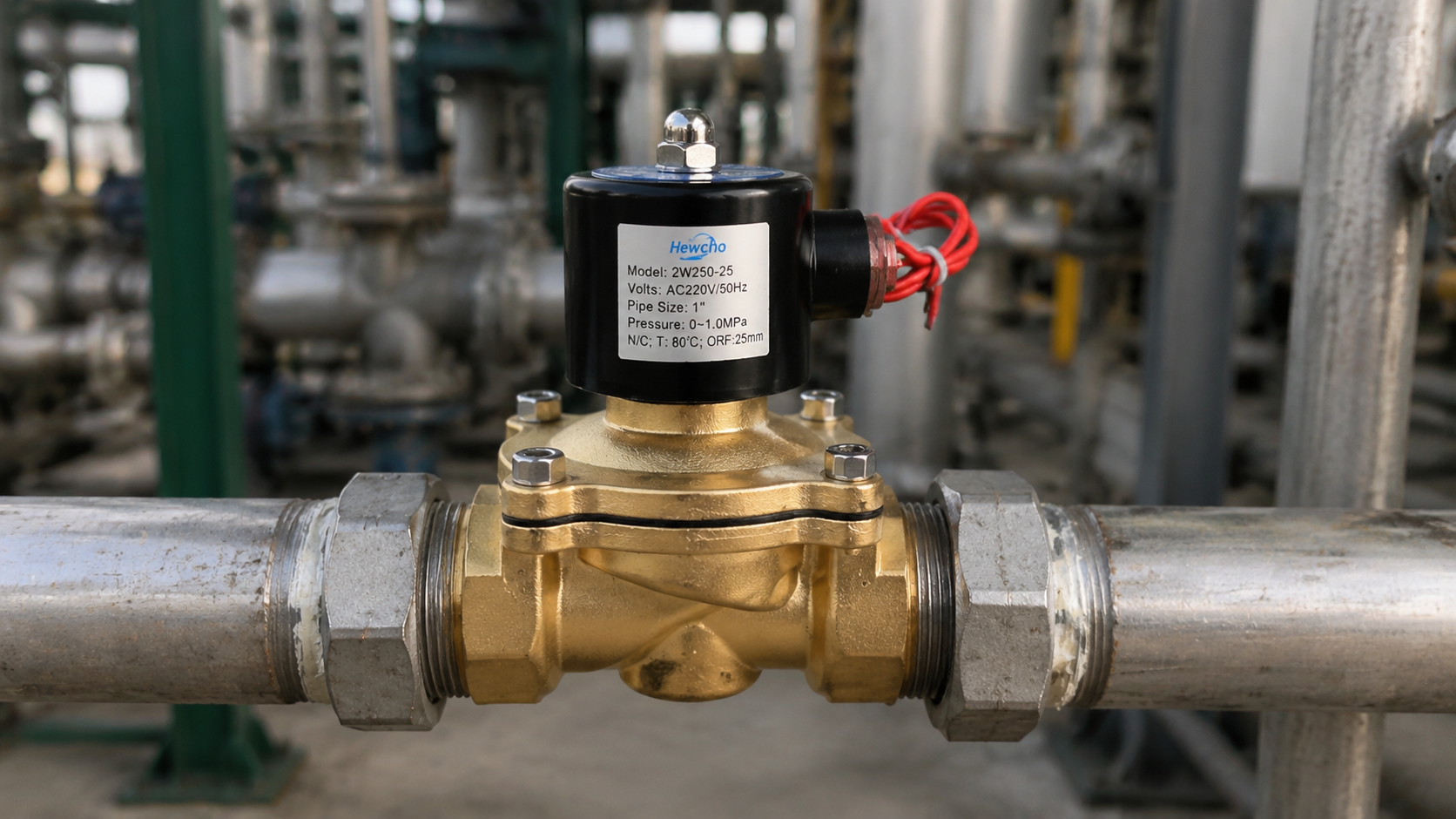
In standard industrial fluid control, if a valve leaks slightly or develops a microscopic amount of internal rust, it might cause a minor drop in efficiency. However, in the food, beverage, and pharmaceutical industries, that same microscopic flaw can lead to widespread bacterial contamination, massive product recalls, and severe legal liabilities.
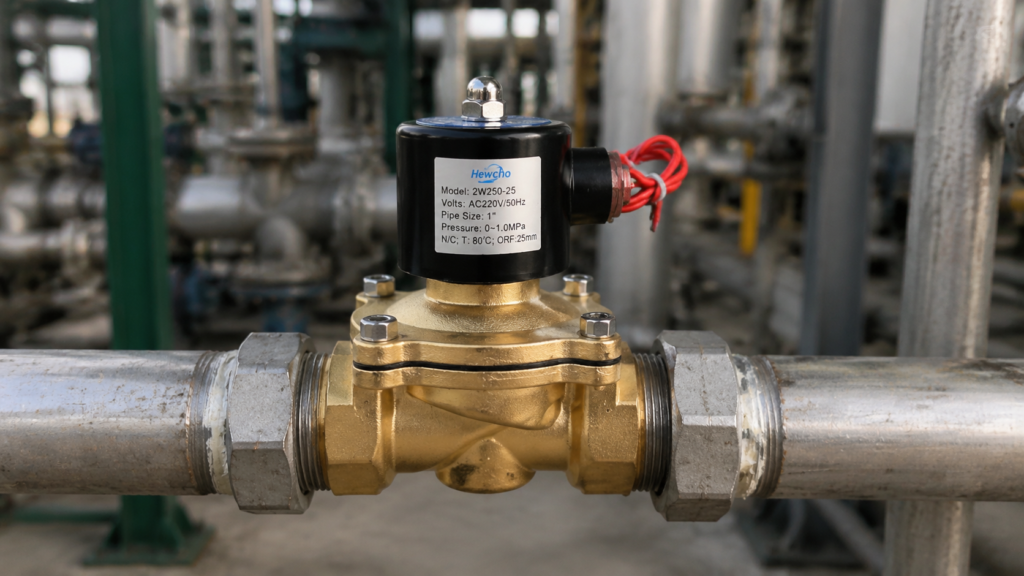
When routing consumable liquids—whether it is dairy, craft beer, drinking water, or pharmaceutical syrups—standard industrial valves are entirely unacceptable. You must utilize purpose-built sanitary (food-grade) 2-way solenoid valves.
If you are an OEM designing processing equipment or a facility engineer upgrading a bottling line, sourcing the right sanitary components requires a strict adherence to specific engineering standards. Here is your technical guide to specifying 2-way solenoid valves for food and beverage applications.
1. The End of Pipe Threads: Why Tri-Clamps are Mandatory
If you look at a standard general-purpose 2-way valve, it almost certainly connects to the pipeline via NPT or G-Threads. In the food industry, threads are a major hazard.
The microscopic grooves of a pipe thread create tiny “dead zones” where fluid can stagnate. Even with rigorous cleaning, bacteria will inevitably breed in these threaded crevices.
The Sanitary Solution:
True food-grade 2-way valves utilize Tri-Clamp (or Tri-Clover) connections. Instead of screwing onto a pipe, the valve features a smooth, flanged end that mates perfectly flat against the adjoining pipe flange, secured by an external clamp and a sanitary gasket. This creates a completely seamless internal pipeline with zero crevices for bacteria to hide, allowing for perfect sterilization.
2. Material Purity: The 316L Stainless Steel Standard
While standard 304 stainless steel is highly corrosion-resistant and often used in commercial kitchens, the internal wetted parts of a sanitary 2-way valve demand an even higher grade.
For critical food and pharma applications, you must specify 316L Stainless Steel.
- The addition of molybdenum in 316 steel gives it superior resistance to chlorides (like salt found in food processing) and harsh cleaning chemicals.
- The “L” stands for Low Carbon. Low-carbon stainless steel prevents carbide precipitation during the manufacturing and welding process, ensuring the internal surface remains perfectly smooth and completely immune to localized rusting.
Furthermore, the internal cavity of a sanitary 2-way valve is often mechanically or electro-polished to a specific surface roughness (Ra value) to ensure fluids cannot stick to the metal walls.
3. FDA-Compliant Elastomers
The internal diaphragm or seal of the 2-way valve is in direct, constant contact with the consumable product. Using standard industrial rubber is a massive compliance violation, as industrial elastomers can leach toxic chemical compounds or off-tastes into the fluid.
When sourcing a sanitary 2-way valve, you must request documentation proving the seals are FDA-compliant (or USP Class VI for pharmaceuticals).
- Food-Grade EPDM: The most common choice for beverages, dairy, and brewing. It handles hot water and steam sterilization perfectly without transferring any taste or odor to the product.
- Food-Grade Viton (FKM) or PTFE: Used when the processing involves aggressive flavorings, essential oils, or high-fat content that might degrade standard EPDM.
4. Surviving the CIP (Clean-In-Place) Process
Sanitary pipelines are not taken apart to be cleaned; they are cleaned in place. The CIP process involves flushing the entire pipeline—including the 2-way solenoid valves—with a brutal cycle of boiling water, caustic soda (alkaline), and acidic neutralizers at very high velocities.
When specifying a sanitary 2-way valve, you must ensure it is CIP-compatible.
This means the valve’s internal geometry must be “cavity-free” or feature a specialized isolating diaphragm that prevents the cleaning chemicals from getting trapped up inside the magnetic armature tube. Additionally, the electromagnetic coil must have a high-temperature insulation rating (Class F or H) to survive the radiant heat of the boiling CIP fluids passing through the valve body.
The Bottom Line
Sourcing fluid control components for the food and beverage industry leaves absolutely zero room for compromise. A standard stainless steel valve with threaded ports is not a sanitary valve. By strictly specifying Tri-Clamp connections, 316L polished stainless steel, FDA-compliant elastomers, and CIP-ready internal geometry, you guarantee that your 2-way solenoid valves meet the highest global standards for consumer safety and operational hygiene.