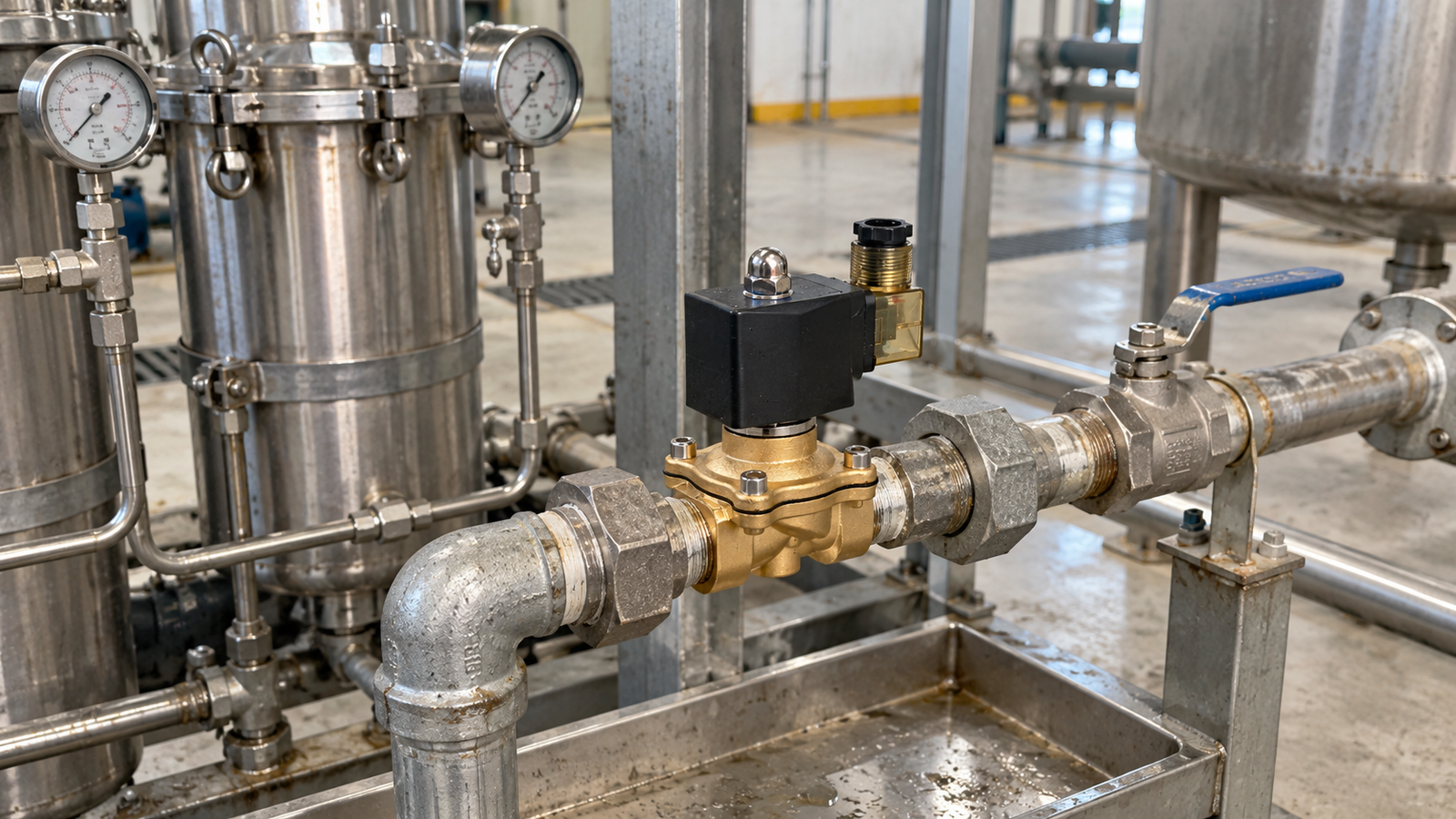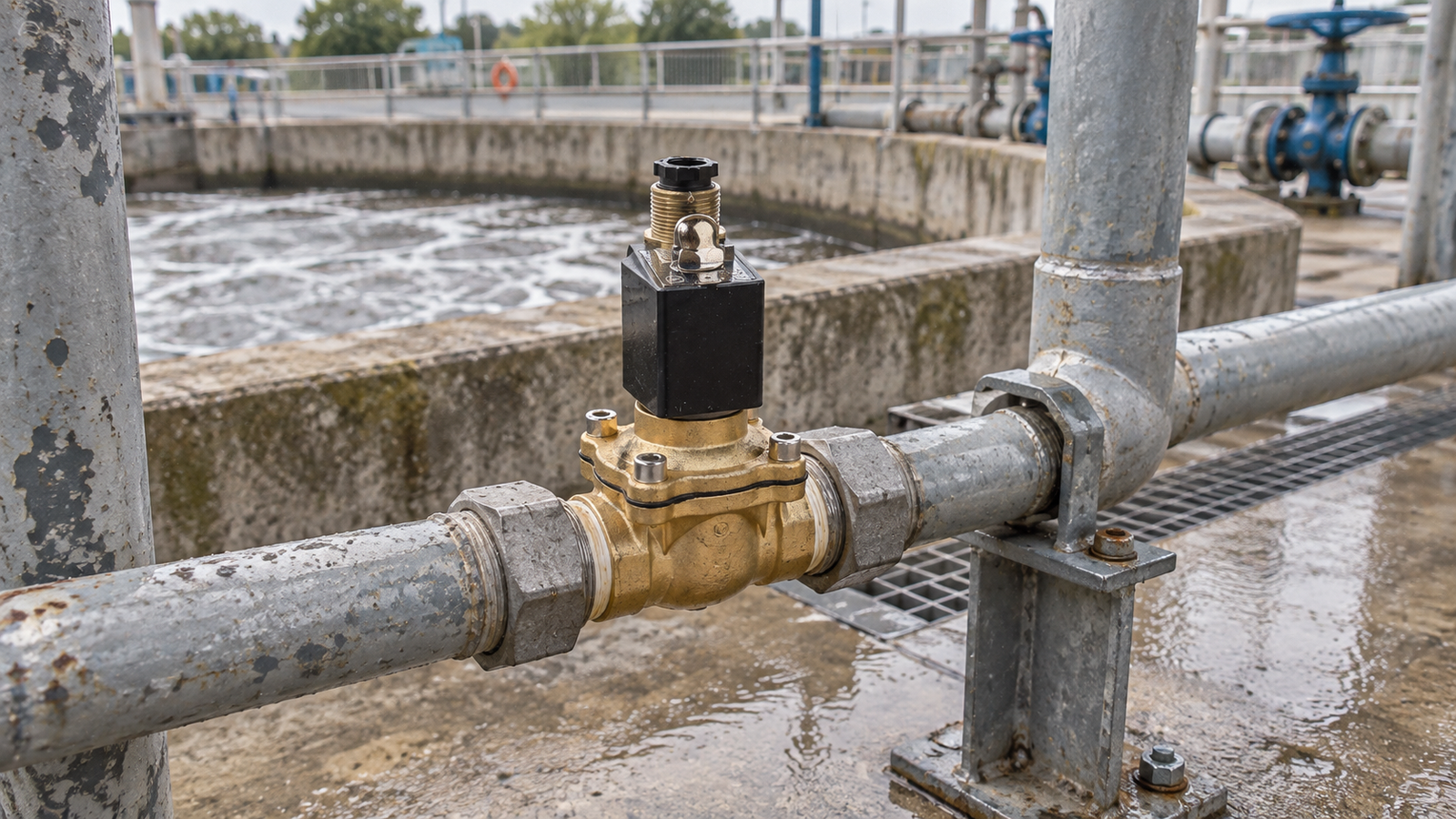
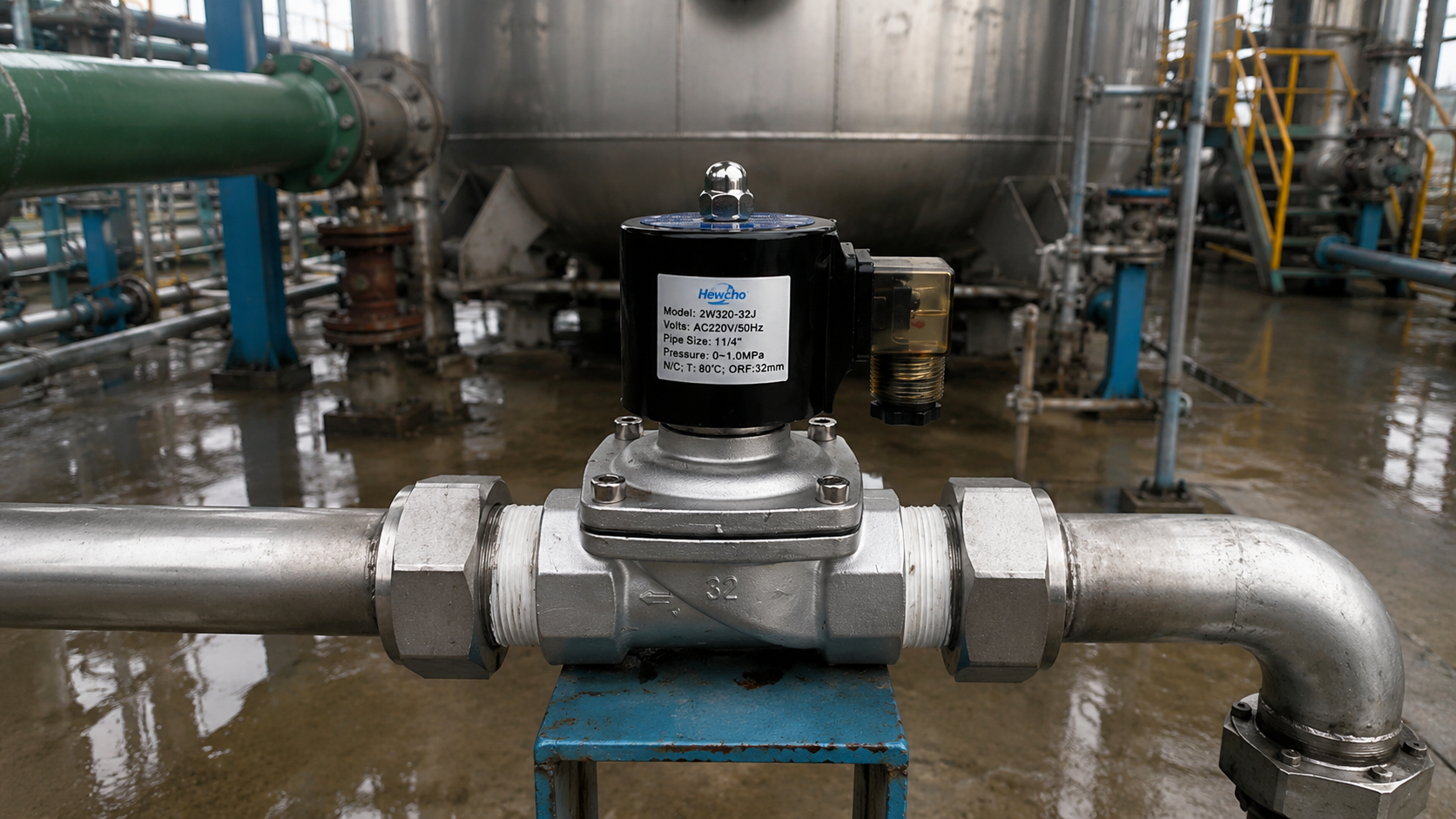
Yesterday, we finalized our series on Master-Slave architectures, focusing on redundant flow control and how synchronized duty-cycling and differential pressure sensing ensure absolute process integrity. Today, we turn our attention to the final frontier of maintenance: Acoustic Leak Diagnosis. In high-pressure gas distribution and volatile chemical lines, a seat leak in a 2-way solenoid valve is often invisible. Even a “bubble-tight” seal can degrade due to micro-pitting or thermal cycling, leading to slow, hazardous gas migration into downstream components. Standard pressure-drop testing often lacks the sensitivity to detect these “micro-seepage” failures. For this, reliability engineers are increasingly adopting Ultrasonic Leak Detection as a non-invasive, predictive diagnostic tool.
1. The Physics of High-Frequency Acoustic Emissions
When a 2-way solenoid valve experiences internal seat bypass, the fluid is forced through the microscopic leakage channel at high velocity. As this fluid transitions from high pressure to low pressure, it creates turbulence and generates high-frequency acoustic emissions, typically in the 20 kHz to 100 kHz range.
These ultrasonic waves are far above the human hearing range and are largely immune to background industrial noise (like motor hum or ventilation fans, which usually hover below 5 kHz). By utilizing an ultrasonic sensor focused on the valve seat, engineers can isolate the “hiss” of a failing seal long before it registers on a standard process pressure gauge.
2. Quantitative Diagnostic Protocol: The Decibel Shift
Ultrasonic leak detection is not merely qualitative; it provides a quantitative metric for assessing valve health. Reliability teams establish a “dB-Baseline” for every valve during the commissioning phase.
The Diagnostic Routine:
- Baseline Establishment: When the valve is brand new and verified as bubble-tight, technicians use an ultrasonic contact probe to measure the acoustic intensity (
$dB\mu V$
- Trend Analysis: During quarterly maintenance routes, technicians re-measure the acoustic intensity at the exact same physical contact points.
- Threshold Triggering:
•
$\Delta < 5\text{ dB}$
$\Delta 6\text{ dB} – 15\text{ dB}$
$\Delta > 20\text{ dB}$
3. Integrating Acoustic Sensors for Permanent Monitoring
For critical safety loops (e.g., hydrogen refueling or oxygen enrichment skids), manual ultrasonic testing is being replaced by Permanent Acoustic Emission (AE) Sensors.
These miniature piezo-electric transducers are permanently bonded to the valve body. They feed a continuous stream of data to an edge-processing unit.
- Real-Time Signature Matching: The unit ignores the “click” of the valve actuating and only filters for the persistent, high-frequency turbulence of a leaking seat.
- Automated Alerting: By automating the detection, the system can trigger an emergency shutdown (ESD) if a seal fails, preventing the hazardous accumulation of gases in downstream process areas.
Technical Sourcing Specs for Acoustic-Ready Valves
When specifying 2-way solenoid valves for remote or safety-critical monitoring, include these acoustic diagnostic provisions:
| Diagnostic Variable | Requirement | Justification |
|---|---|---|
| Acoustic Contact Surface | Precision-Machined Boss / Flat Spot | Ensures repeatable placement of the ultrasonic probe, essential for trend accuracy. |
| Body Material Hardness | Consistent Metallurgy (e.g., 316L SS) | Ensures acoustic wave propagation velocity remains constant across the fleet of valves. |
| Environmental Filtering | Digital Narrow-Band Filtering | Allows the diagnostic software to isolate the “seat-leak” frequency from ambient mechanical vibration. |
Conclusion
Acoustic diagnosis represents the final step in moving from periodic maintenance to true “Condition-Based Monitoring.” By leveraging the high-frequency turbulence signatures of seat-leakage, you bypass the limitations of pressure-drop analysis and visual inspection. This technique allows your maintenance teams to identify and replace degraded 2-way solenoid valves with surgical precision, ensuring the safety and efficiency of your fluid control infrastructure without unnecessary downtime.