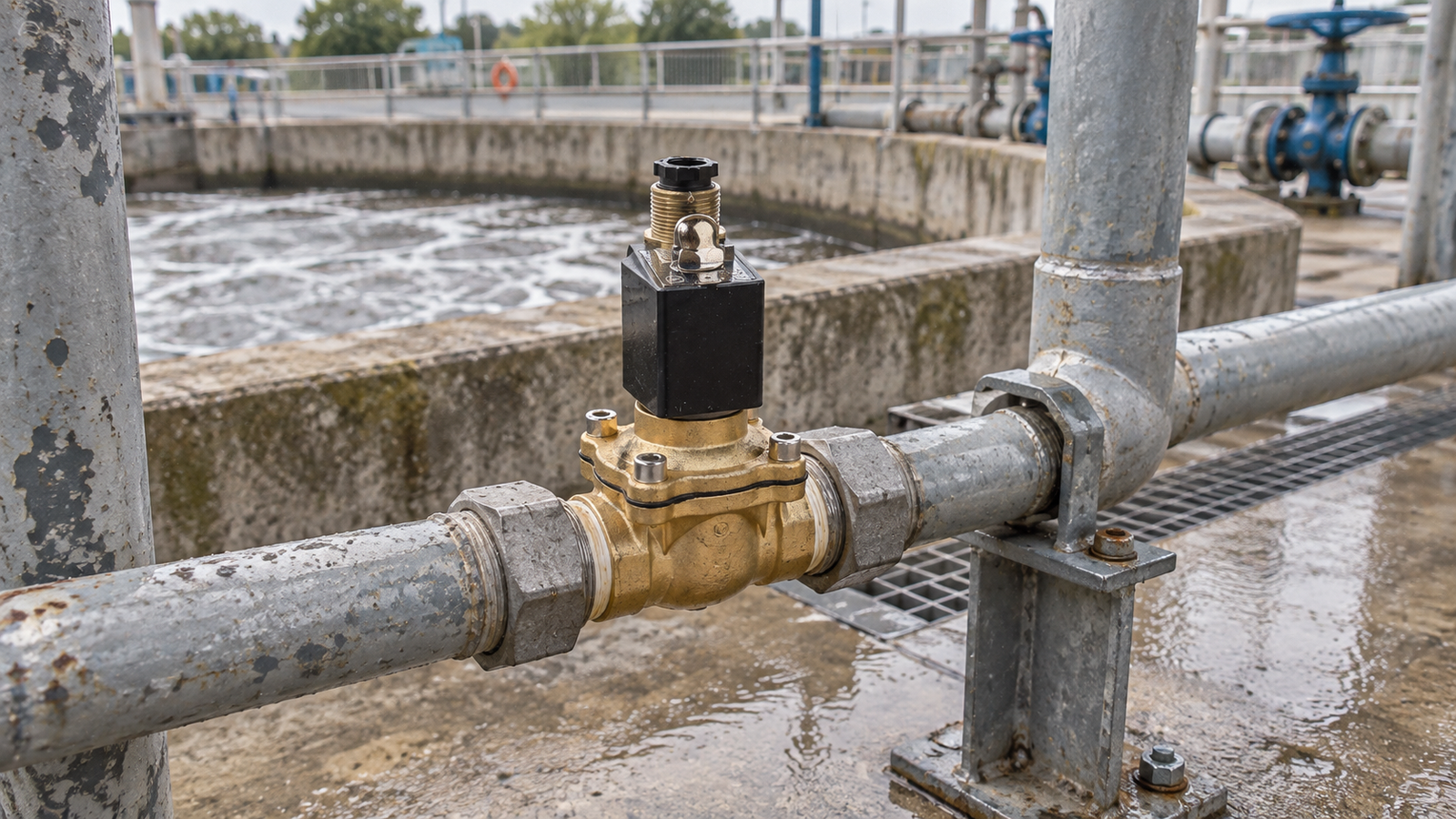
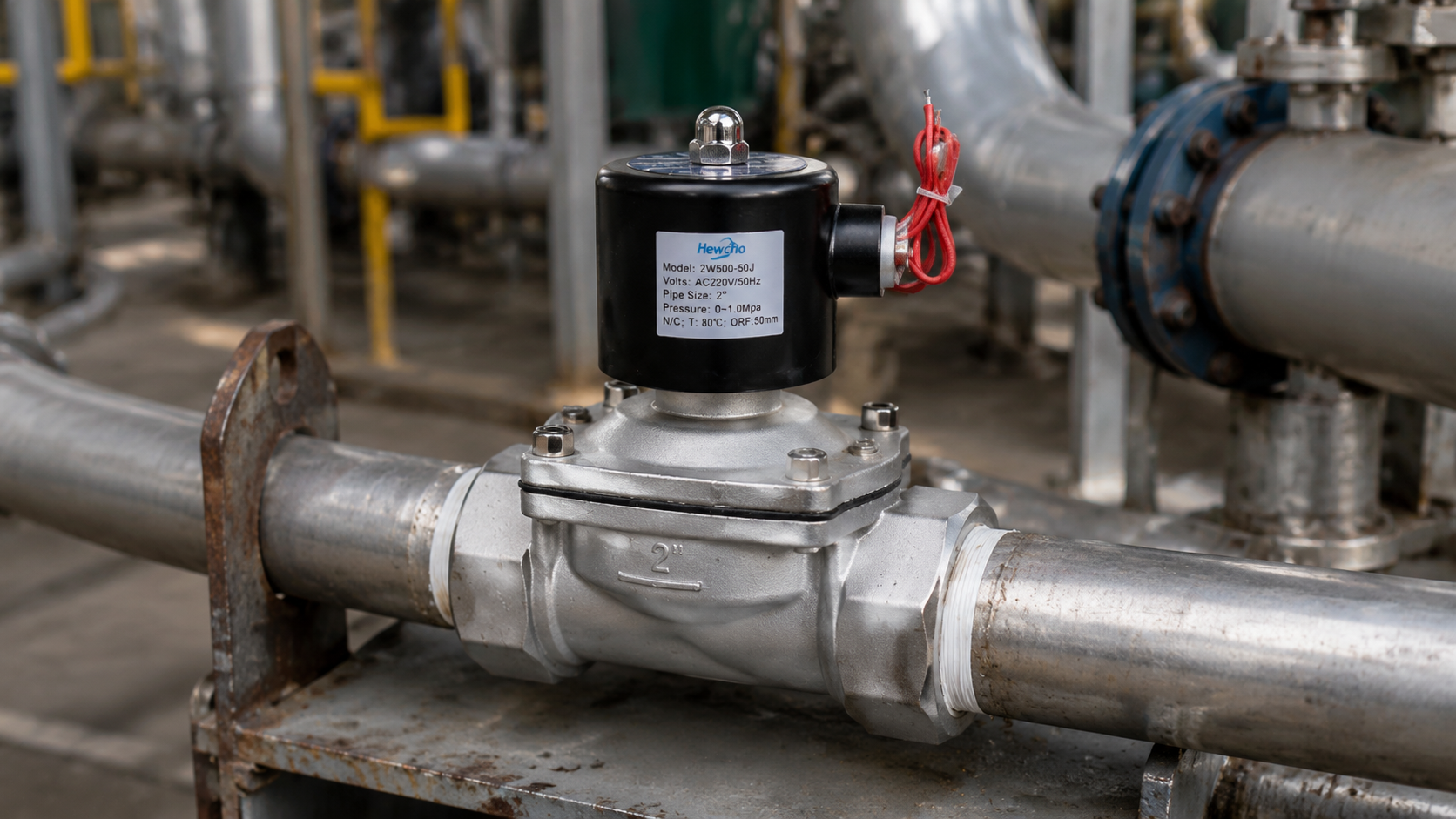
When designing an automated fluid control system, engineers spend hours calculating flow rates ($C_v$), specifying body materials, and selecting the perfect elastomer seals. However, one of the most critical decisions is often overlooked until the very end: the valve’s resting state.
In the fluid control industry, a 2-way solenoid valve is defined by what it does when the power is completely cut off. This is known as its “Normal” position. Choosing the correct configuration—Normally Open (N/O) or Normally Closed (N/C)—is not just a matter of convenience; it is a fundamental pillar of facility safety, failsafe engineering, and energy efficiency.
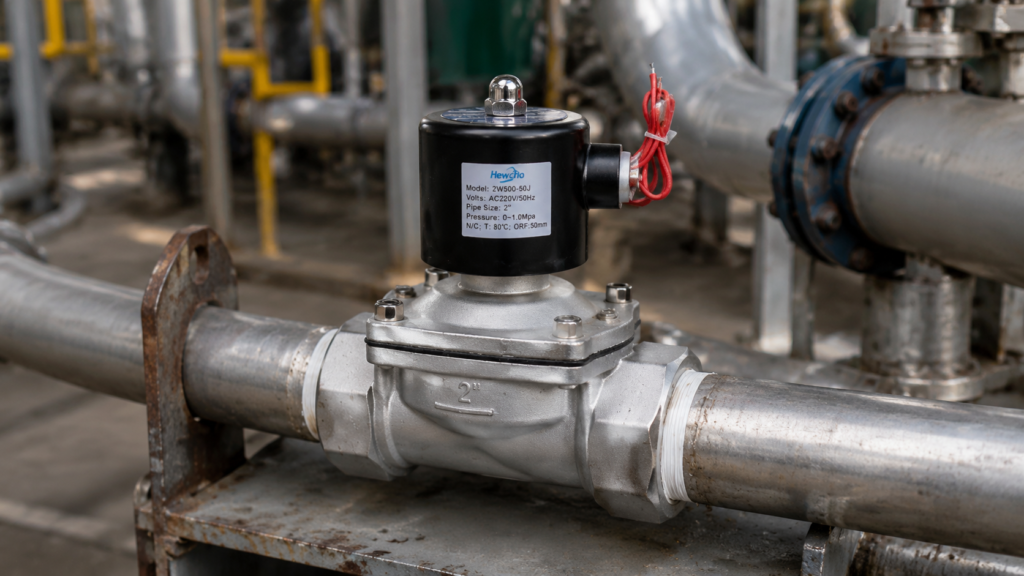
Here is a technical guide to understanding the difference and ensuring you specify the right 2-way valve for your pipeline.
1. Normally Closed (N/C): The Standard Blockade
The Normally Closed (N/C) 2-way solenoid valve is the undisputed standard, making up the vast majority of all solenoid valves installed globally.
- How it works: When the electromagnetic coil is de-energized (receives no electricity), the internal spring firmly holds the plunger and seal down against the orifice. The valve is completely closed. When electrical current is applied, the magnetic field lifts the plunger, and the fluid flows.
- The Failsafe Principle (Stop the Flow): N/C valves are utilized when the safest action during a power outage is to stop everything.
- Ideal Applications:
• Municipal Water Mains: If the facility loses power, you want the water to shut off to prevent accidental flooding.
• Fuel and Gas Lines: In the event of a plant blackout, N/C valves instantly cut off the supply of combustible gases to burners, preventing explosive hazards.
• Air Compressors: Preventing the complete drain of an air tank if the system loses electrical control.
2. Normally Open (N/O): The Emergency Vent
The Normally Open (N/O) 2-way solenoid valve operates in the exact opposite manner.
- How it works: When the coil is de-energized, the internal spring holds the plunger up and away from the orifice. The valve allows fluid to flow freely without drawing any power. When electricity is applied, the magnetic coil pushes the plunger down to block the flow.
- The Failsafe Principle (Release the Flow): N/O valves are mandatory when a power failure requires an immediate release of pressure, or a continuous flow of a critical fluid to prevent catastrophic equipment damage.
- Ideal Applications:
• Emergency Cooling Loops: If a chemical reactor or industrial server farm loses power, the N/O valve drops open naturally, instantly flooding the system with chilled water to prevent an overheating meltdown.
• Pressure Relief Systems: Venting dangerous steam or compressed air build-ups safely into the atmosphere if the central PLC goes dark.
• Fire Suppression: Allowing fire-retardant chemicals or sprinkler water to flow immediately when the alarm triggers a power cut to the main circuits.
3. The Energy Efficiency and Thermal Factor
Failsafe safety is the primary reason to choose N/O or N/C, but energy efficiency is a close second.
As discussed in previous articles, keeping a solenoid coil energized generates significant heat and consumes electricity. If you choose the wrong configuration for your operational cycle, you drastically reduce the lifespan of your coil.
The Golden Rule of Selection: Choose the configuration that matches the state your system spends the most time in.
- Scenario A: Your pipeline only needs to flow for 1 hour a day to fill a tank, and remains idle for the other 23 hours.
• Solution: Use a Normally Closed valve. You only pay for 1 hour of electricity, and the coil stays cool for 23 hours. - Scenario B: Your pipeline is a continuous 24/7 water supply that only needs to be shut off for 2 hours a month during maintenance.
• Solution: Use a Normally Open valve. The fluid flows continuously without drawing a single watt of power. You only energize the coil (and generate heat) during those rare 2 hours of maintenance. Forcing an N/C valve to stay energized 24/7 in this scenario is a waste of electricity and risks premature coil burnout.
4. Why Normally Open Valves Cost Slightly More
Procurement managers often notice that N/O valves carry a slightly higher price tag than their N/C counterparts. This is not arbitrary pricing; it is due to internal engineering.
Closing a valve against the forceful kinetic energy of high-pressure fluid requires more mechanical strength than simply letting the fluid hold the valve closed. Therefore, N/O valves often require slightly larger, more powerful electromagnetic coils to push the seal down against the rushing water or air. Additionally, the internal armature tube architecture is slightly more complex to reverse the standard magnetic pull.
Conclusion
A power outage should never result in a flooded facility, an overheating machine, or a burned-out electrical component. By carefully evaluating your system’s failsafe requirements and analyzing your daily duty cycles, you can perfectly align your 2-way solenoid valve selection—whether Normally Open or Normally Closed—to guarantee absolute safety and maximum energy efficiency.