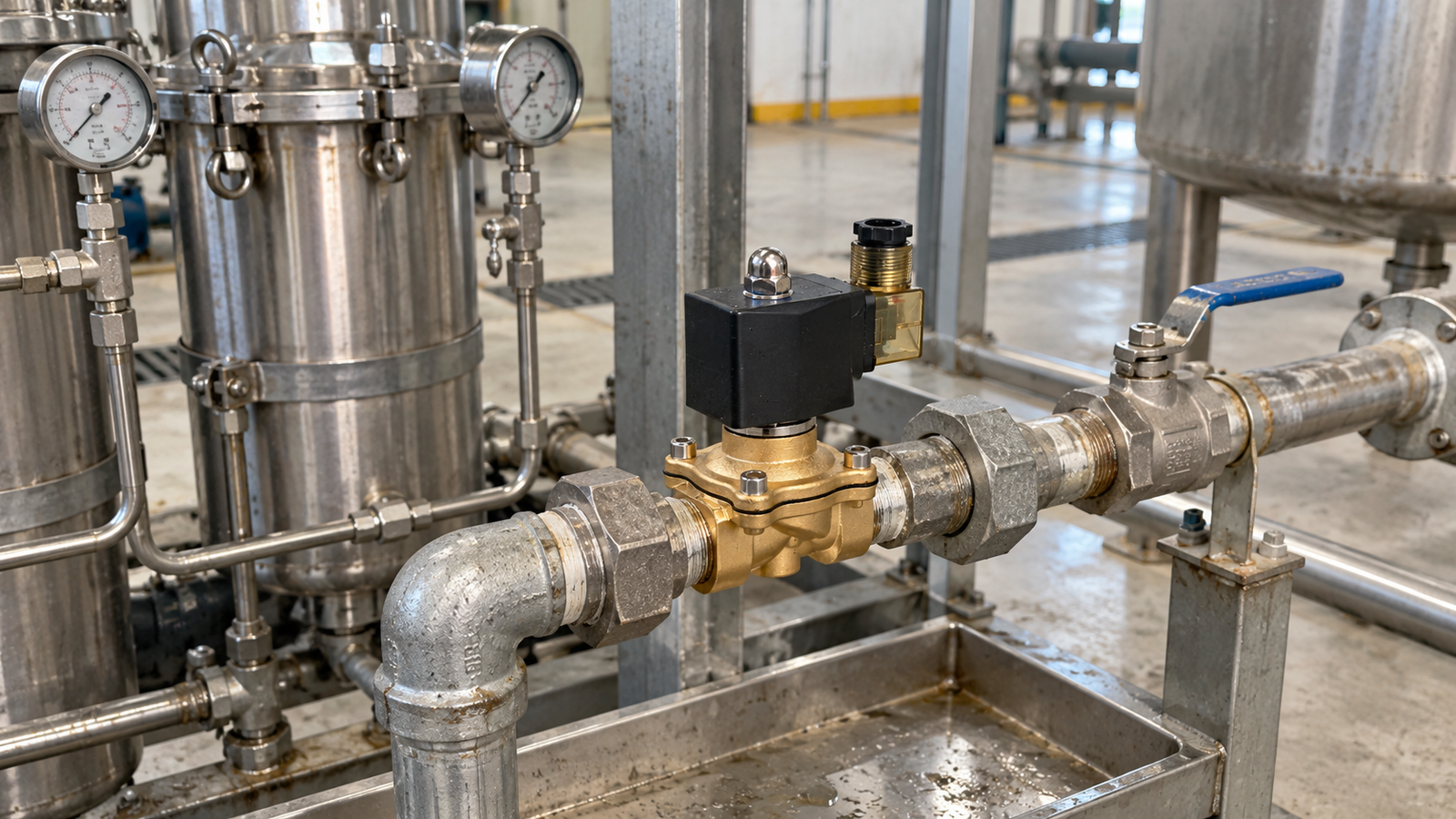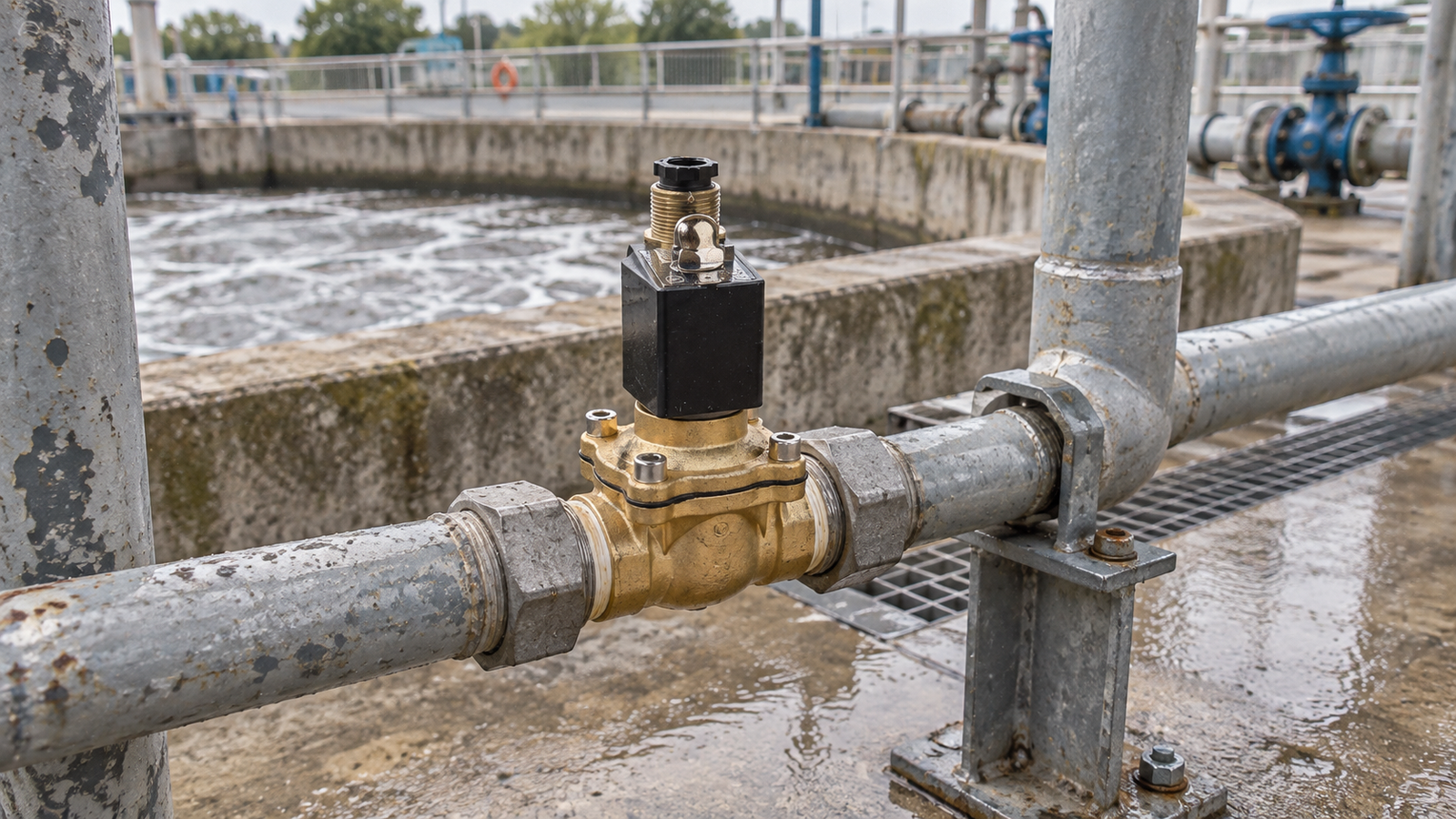
In standard industrial fluid control, the worst-case scenario for a failing valve is usually a wet floor, a drop in system pressure, or a halted production line. However, when your facility processes volatile fuels, combustible gases, or dense agricultural dust, the stakes are exponentially higher. In these environments, a single electrical spark from a standard solenoid coil can trigger a catastrophic facility explosion.
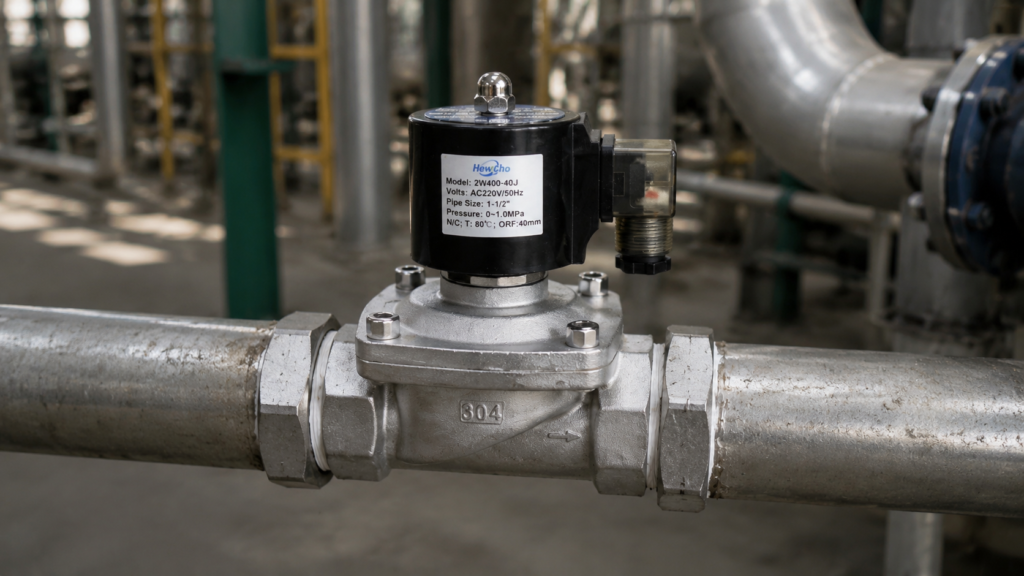
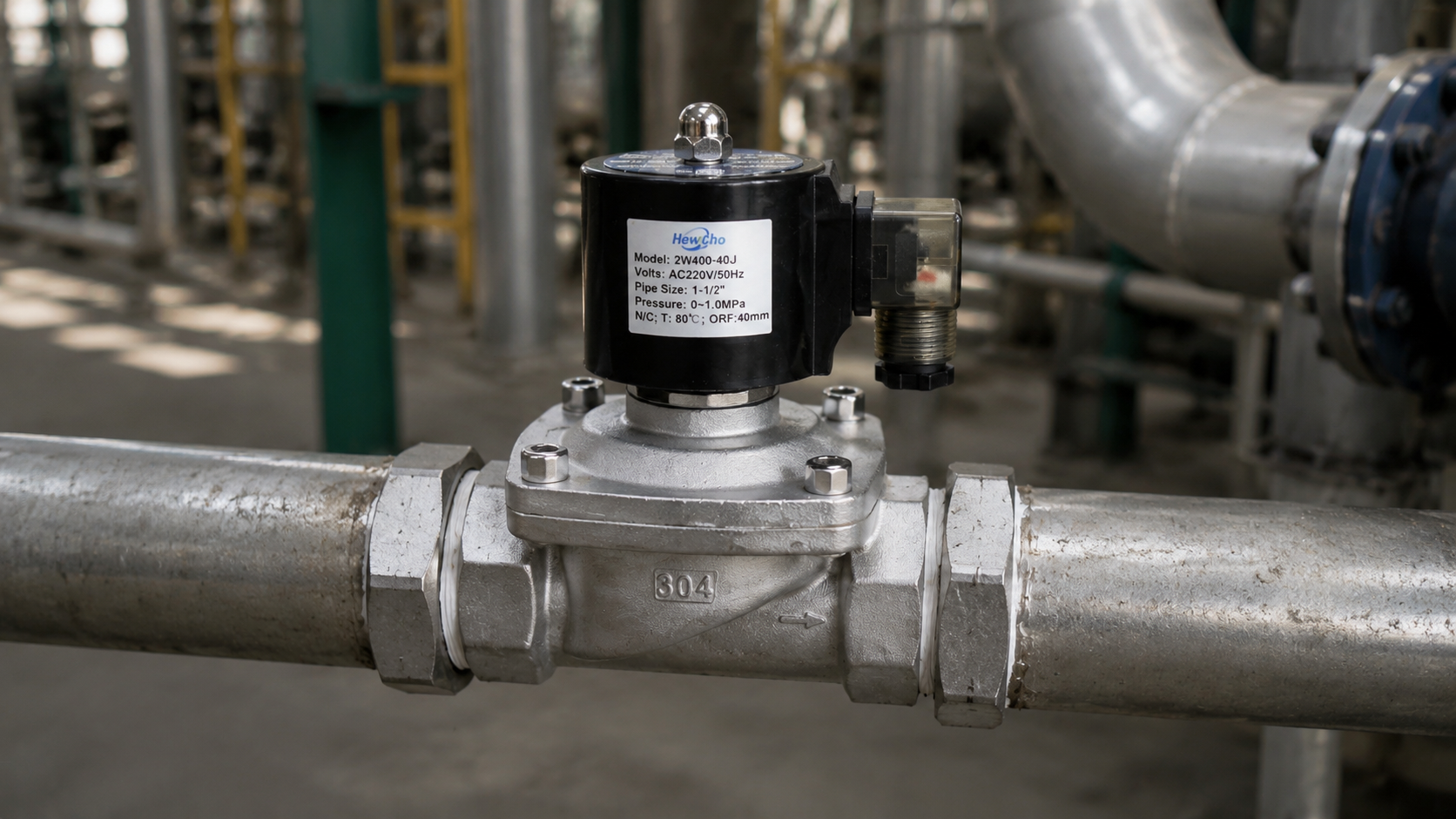
To operate automated pipelines safely in these volatile zones, engineers must exclusively specify Explosion-Proof 2-Way Solenoid Valves.
If you are a procurement manager sourcing components for chemical plants, refineries, or grain silos, standard fluid dynamics are no longer your only concern. You must master the strict electrical safety standards that govern hazardous locations. Here is the technical guide to understanding, specifying, and sourcing explosion-proof 2-way valves.
1. The Core Misconception: What Does “Explosion-Proof” Actually Mean?
The term “explosion-proof” is frequently misunderstood by junior engineers and buyers. It does not mean the valve can survive being blown up by an external blast.
Instead, an explosion-proof solenoid coil is engineered to contain an internal explosion.
Combustible gases and dust will inevitably seep into the electrical housing of the valve over time. If a short circuit or an electrical arc occurs inside the coil wiring, the trapped gas will ignite. An explosion-proof housing (typically made of thick cast aluminum, epoxy, or stainless steel) is designed to be strong enough to contain that internal blast. Furthermore, the housing’s threaded joints are machined to extremely tight tolerances, which cools the escaping flames to a temperature far below the ignition point of the hazardous atmosphere outside the valve.
In short: It prevents a tiny internal spark from becoming a massive external disaster.
2. Decoding Global Certifications: ATEX vs. NEMA/UL
You cannot simply buy a heavy-duty valve and declare it explosion-proof. The valve’s coil must carry rigorous third-party certifications based on the region where it will be installed.
- For North America (NEMA / UL / CSA): Hazardous locations are divided into Classes and Divisions. You will typically need to specify coils rated for Class I, Division 1 or 2 (for flammable gases and vapors like methane or propane) and Class II (for combustible dust like grain or coal). The physical coil housing is usually designated as NEMA 7 (for gas) or NEMA 9 (for dust).
- For Europe and International Markets (ATEX / IECEx): The ATEX directive uses a system of Zones. Zone 0 and Zone 1 are designated for areas where explosive gases are continuously or frequently present.
Procurement Tip: When importing or exporting equipment, you must ensure the 2-way valve carries the exact certification required by the end-user’s local jurisdiction. An ATEX-certified valve cannot be legally installed in a facility requiring UL/NEMA certification unless it carries dual-agency approvals.
3. The Silent Threat: Surface Temperature and T-Ratings
Sparks are not the only ignition source in a hazardous location; severe heat is equally dangerous. Every combustible gas or dust cloud has an “auto-ignition temperature”—the specific temperature at which it will spontaneously burst into flames without any spark at all.
Because continuous-duty solenoid coils generate heat, an explosion-proof 2-way valve must never exceed the auto-ignition temperature of the surrounding environment.
To manage this, explosion-proof coils are assigned a Temperature Classification (T-Rating).
- T1 to T3: These coils operate at higher surface temperatures and are only safe for gases with high auto-ignition points (like Hydrogen or Methane).
- T4 to T6: These coils are heavily regulated to maintain very low surface temperatures (T6 remains below 85°C / 185°F). They are mandatory when operating around highly volatile substances with extremely low auto-ignition points, such as Carbon Disulfide or specific ether vapors.
4. Material Selection for the Volatile Pipeline
When dealing with explosion-proof environments, the fluids flowing through the 2-way valve are rarely neutral tap water or clean air. They are almost always aggressive chemicals, crude oils, or caustic solvents.
Therefore, specifying an explosion-proof coil is only half the battle. You must match the valve body and internal seals to the aggressive media:
- The Valve Body: 316 Stainless Steel is the undisputed standard. It resists the corrosive nature of petrochemicals and marine environments far better than standard brass.
- The Internal Seals: Because hazardous media will rapidly disintegrate standard NBR rubber, you must specify premium fluoroelastomers like Viton (FKM) or, for highly aggressive solvents and extreme temperature variations, PTFE (Teflon).
The Bottom Line
Sourcing fluid control components for hazardous locations leaves absolutely no room for error or cost-cutting. A standard 2-way valve has no place in an oil refinery or a chemical processing skid. By strictly specifying certified explosion-proof housings, verifying the correct T-Ratings, and upgrading to 316 stainless steel bodies, you protect your facility from catastrophic failure and ensure strict compliance with global safety regulations.