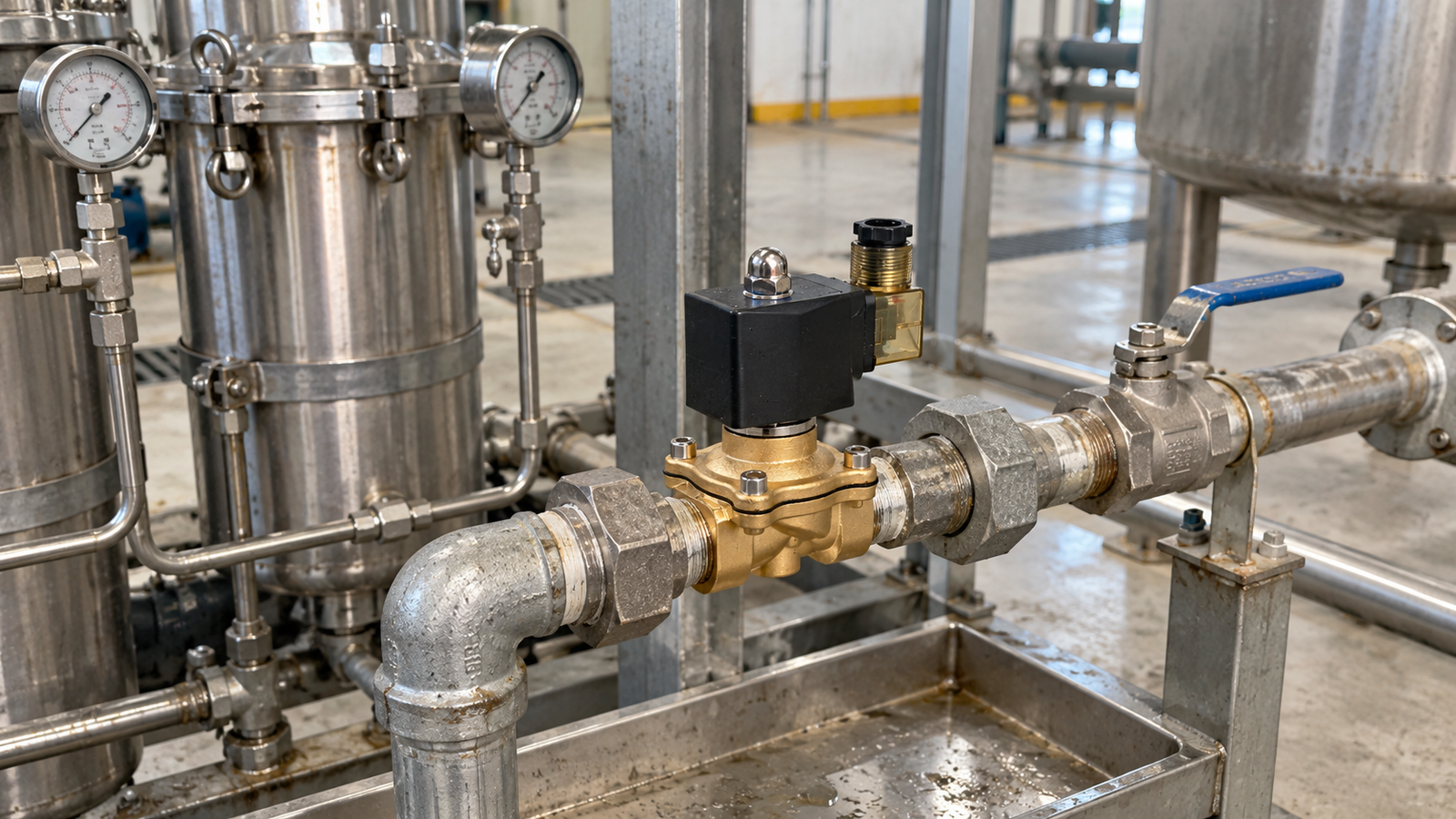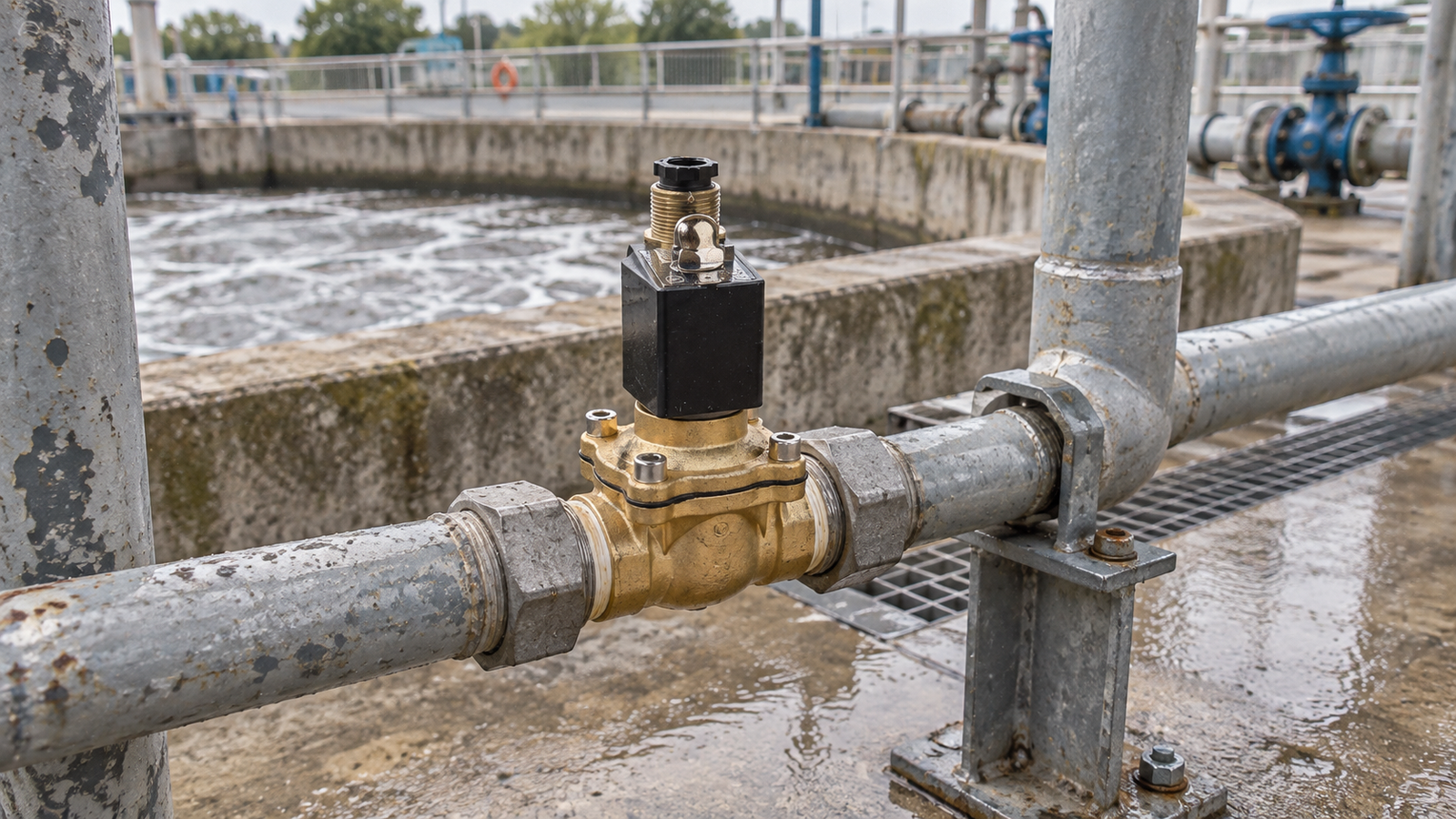

Because of their streamlined internal design, 2-way solenoid valves are incredibly resilient. However, any industrial pipeline—whether it is handling municipal water, compressed air, or industrial oils—carries the risk of contamination. Over thousands of cycles, microscopic debris or mineral scale can build up inside the valve body.
When this happens, the valve will experience “sticking.” It may stick in the open position (causing continuous internal leakage) or stick in the closed position (preventing flow entirely).
Before you assume the valve is permanently broken and throw it away, it is important to know that most sticking issues can be resolved with a simple, thorough cleaning. Here is the professional maintenance guide to bringing your 2-way solenoid valve back to life.

Why Do 2-Way Valves Get Stuck?
To fix the problem, you first need to understand what causes it. The armature (plunger) inside a 2-way valve moves within a very tight magnetic tube. The tolerances are incredibly precise. Sticking is almost always caused by:
- Foreign Debris: Sand, pipe tape (Teflon), rust, or metal shavings from the pipeline get wedged between the plunger and the tube.
- Mineral Scaling: In hard water applications, calcium and magnesium deposits build up on the brass or stainless steel internal components, creating friction.
- Swollen Seals: If the media is chemically incompatible with the internal elastomer (e.g., oil interacting with an EPDM seal), the rubber will swell, jamming the mechanical movement.
The Step-by-Step Cleaning Process
Disclaimer: Always prioritize safety. Ensure the pipeline is completely depressurized and drained, and the electrical power to the coil is fully disconnected before beginning any maintenance.
Step 1: Remove the Coil
Start by unscrewing the retaining nut at the top of the valve and sliding the electromagnetic coil off the armature tube. Set the coil aside in a dry place. Never submerse the electrical coil in water or cleaning solvents.
Step 2: Open the Valve Body
Using a wrench, carefully unscrew the armature tube (or the four retaining bolts on larger pilot-operated models) from the main valve body. Carefully lift the housing away. Watch out for the internal return spring—it is under tension and can easily bounce away and get lost.
Step 3: Inspect the Plunger and Spring
Remove the plunger and the spring. Inspect them under a bright light.
- Are there deep scratches on the metal? (This indicates hard debris like sand).
- Is there a chalky white buildup? (This indicates mineral scaling).
- Is the rubber seal at the bottom of the plunger cracked, pitted, or bloated? (If the seal is damaged, cleaning won’t help; you must order a replacement seal kit).
Step 4: Clean the Components
Use a soft-bristled brush (like a nylon toothbrush) to scrub the internal cavity of the valve body, the plunger, and the inside of the armature tube.
- For standard dirt and debris, warm water and a mild detergent are sufficient.
- For hard water scale, a mild descaling solution (like a diluted citric acid or commercial calcium remover) will dissolve the buildup.
- Crucial Tip: Avoid harsh industrial solvents or brake cleaners, as these can permanently damage the NBR or EPDM seals.
Step 5: Dry and Reassemble
Rinse all components with clean water and dry them thoroughly with compressed air or a lint-free cloth. Reinsert the plunger and spring, securely tighten the armature tube back onto the body, and reattach the coil.
The Best Fix is Prevention
If you find yourself cleaning your 2-way valves frequently, you have a systemic contamination issue. The easiest and most cost-effective way to prevent a valve from sticking is to install a Y-Strainer directly upstream of the valve inlet. A simple 40-mesh stainless steel screen will catch the debris before it ever reaches the precision components of your valve, extending its lifespan by years.
Conclusion
A sticking 2-way solenoid valve is rarely a sign of component failure; it is simply a sign that maintenance is due. By understanding how to safely disassemble and clean your fluid control components, you can significantly reduce replacement costs and minimize costly pipeline downtime.