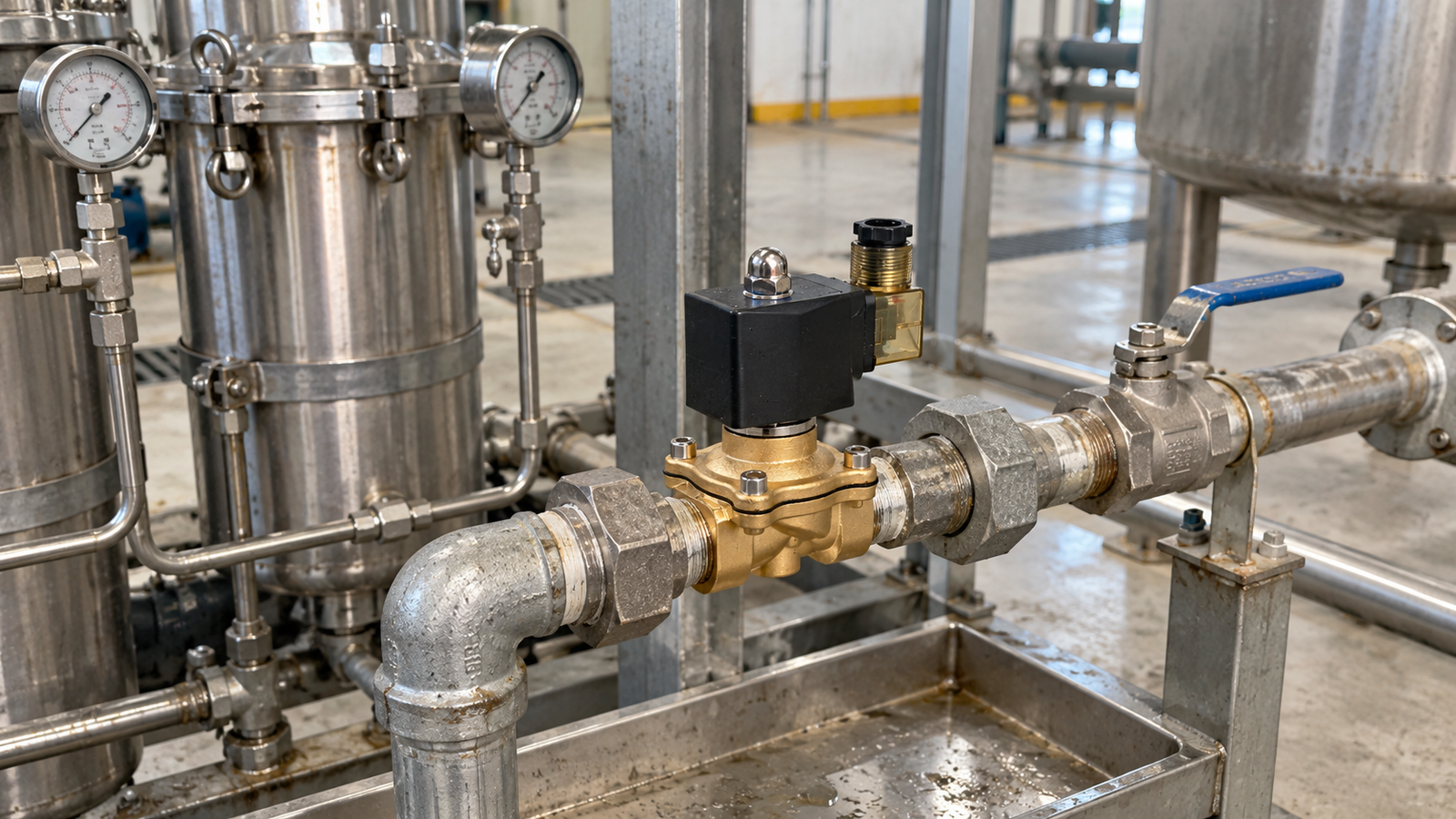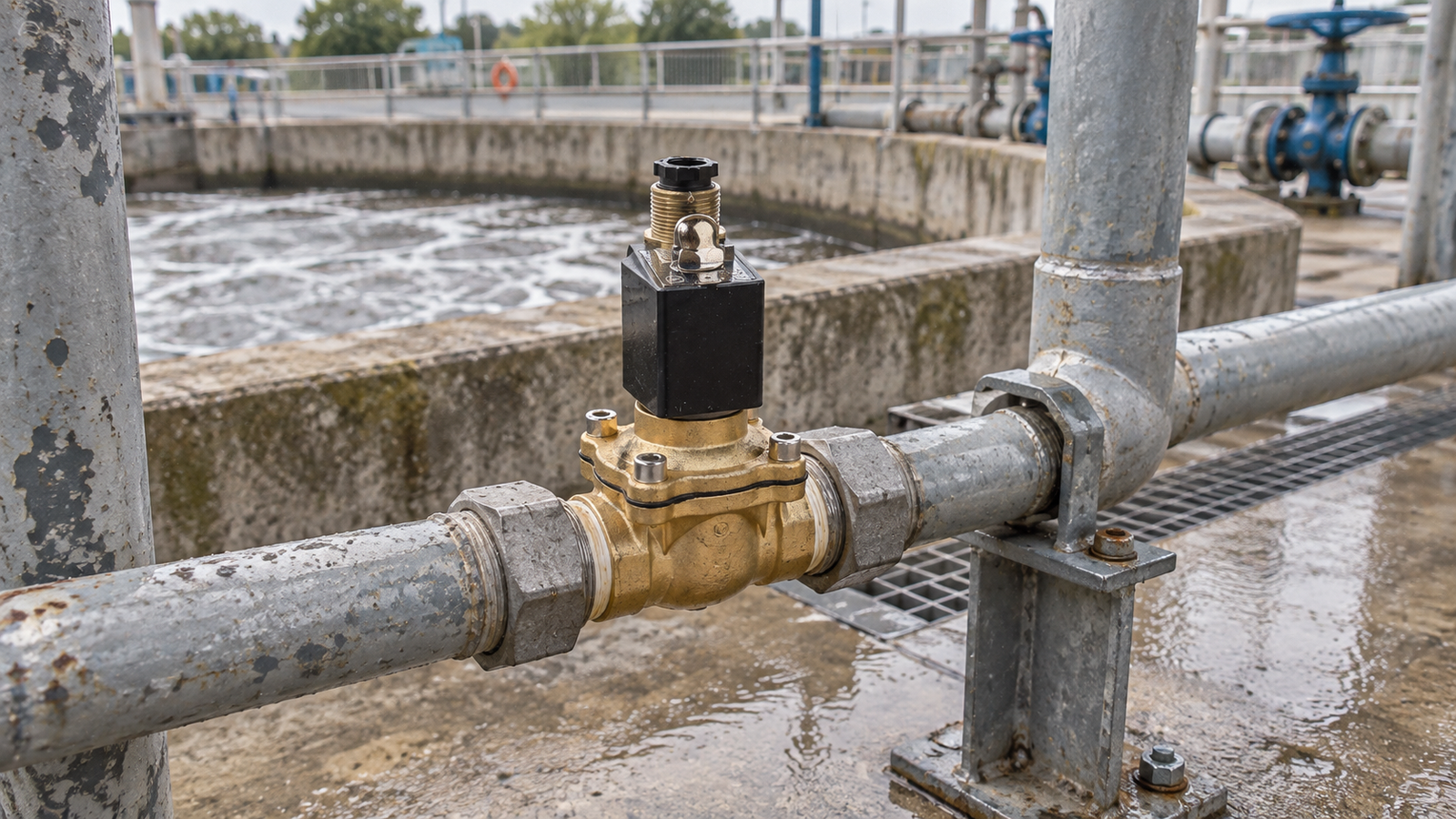
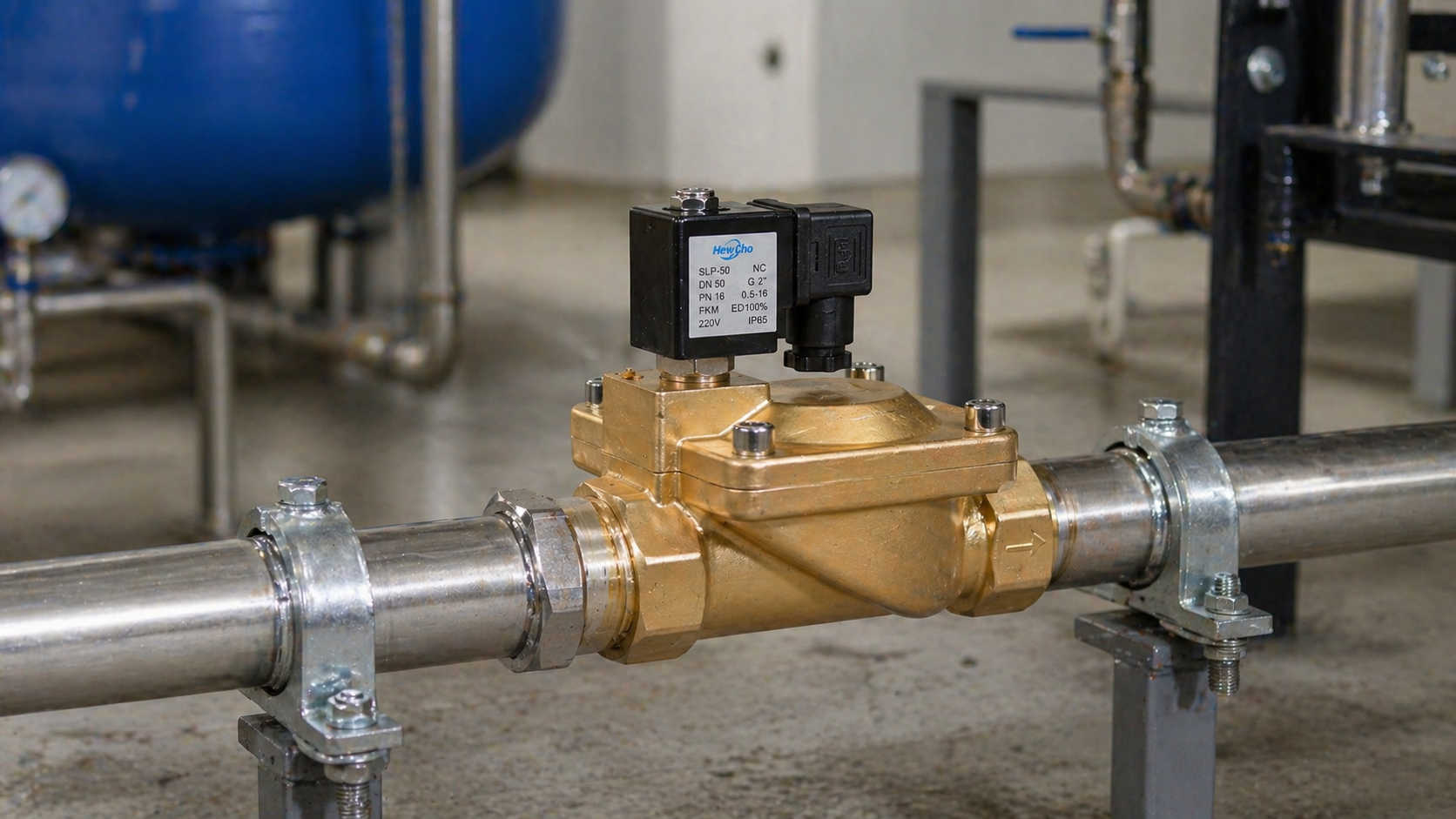
One of the most frustrating scenarios for a fluid control engineer is completing the installation of a new pipeline, powering on the system, and watching the solenoid valve completely fail to open. In many cases, the valve is wired correctly, the coil is functioning, and the valve body is perfectly sized.
The culprit? The system lacks the required minimum pressure differential.
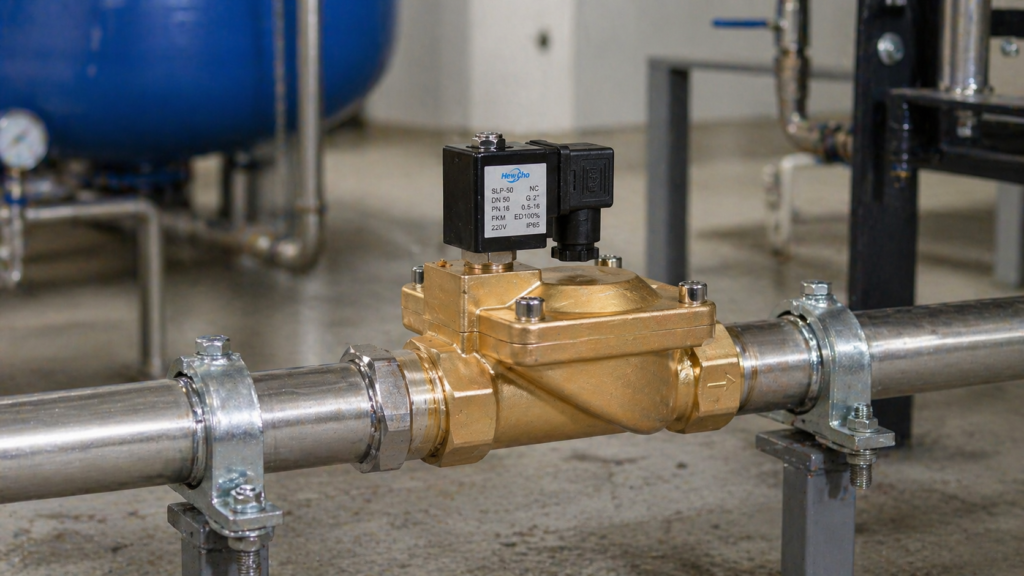
When dealing with gravity-fed water tanks, draining systems, or low-pressure cooling loops, standard fluid dynamics do not apply. In these environments, utilizing a standard pilot-operated 2-way solenoid valve is a guaranteed recipe for failure.
If you are designing a low-pressure fluid circuit, here is why you must specifically source 2-way solenoid valves with a “Zero Pressure” (0 Bar) rating, and how the semi-direct acting mechanism solves this engineering challenge.
The Problem with Standard Pilot-Operated Valves
To understand why a valve fails in a gravity-fed system, you must understand how a standard pilot-operated 2-way valve works.
In a pilot-operated design, the electromagnetic coil does not actually open the main valve seal. Instead, it opens a microscopic “pilot hole.” The valve relies on the pressure of the fluid itself (the line pressure) to push against the diaphragm and lift it open.
Because of this design, pilot-operated valves require a minimum pressure differential of usually 0.3 to 0.5 bar (4 to 7 PSI) to function. If you install this valve at the bottom of a small water tank where the gravity pressure is only 0.1 bar, the fluid simply lacks the kinetic energy to push the diaphragm up. You will hear the coil “click,” but no water will flow.
The Solution: Semi-Direct Acting 2-Way Valves
For low-pressure and gravity-fed systems, you must switch your specification to a Semi-Direct Acting (or Assisted-Lift) 2-way solenoid valve, such as the widely utilized 2W Series.
This architecture bridges the gap between direct-acting and pilot-operated technologies. In a semi-direct acting valve, the plunger of the electromagnetic coil is physically connected to the main diaphragm by a mechanical spring or linkage.
How it works at 0 Bar:
When the coil is energized, it physically pulls the diaphragm up and off the valve seat, regardless of what the fluid is doing. This allows the valve to open completely even in a total vacuum or a 0 Bar gravity-fed state.
How it works at High Pressure:
If the system pressure suddenly spikes (up to 10 Bar), the valve utilizes that fluid pressure to assist in holding the diaphragm open, just like a pilot valve. This makes the semi-direct acting 2-way valve incredibly versatile.
Key Applications for Zero-Pressure 2-Way Valves
Because of their ability to operate flawlessly without pressure assistance, semi-direct acting 2-way valves are the mandatory choice for several specific B2B and industrial applications:
1. Rainwater Harvesting and Agricultural Tanks
In sustainable agriculture and commercial rainwater harvesting, water is often stored in elevated tanks and distributed purely by gravity. The head pressure at the valve inlet is usually extremely low. A zero-pressure 2-way valve ensures reliable on/off irrigation without the need for expensive booster pumps.
2. Industrial Tank Draining and Batching
In chemical mixing or food processing, large vats often need to be drained completely to the bottom. As the tank empties, the fluid pressure drops toward zero. A semi-direct acting valve ensures the flow remains constant until the very last drop is evacuated.
3. Closed-Loop Cooling and Heating Circuits
In advanced HVAC systems or industrial machine cooling, fluid is circulated in a closed loop. Because the pressure is equalized across the entire system, the pressure differential across the valve itself is virtually zero. A 0-bar rated 2-way valve is essential for routing chilled water or glycol in these environments.
Sizing Considerations for Gravity Feed
When specifying a 2-way valve for a gravity-fed system, remember that without pressure forcing the fluid through, your flow rate will naturally be lower.
To compensate for the lack of pressure and achieve your desired flow volume (Gallons Per Minute or Liters Per Minute), you will often need to upsize the valve’s orifice and port size (e.g., moving from a 1/2″ to a 1″ connection). Fortunately, large-diameter brass 2-way valves are readily available in semi-direct acting configurations to handle these exact high-volume, low-pressure scenarios.
The Bottom Line
A solenoid valve cannot bend the laws of physics. If your fluid system does not generate its own pressure, your valve must do the mechanical heavy lifting. By explicitly specifying “Zero Pressure Differential” or “Semi-Direct Acting” 2-way valves for your gravity-fed projects, you completely eliminate the risk of stalled flow and ensure absolute reliability in your fluid control systems.