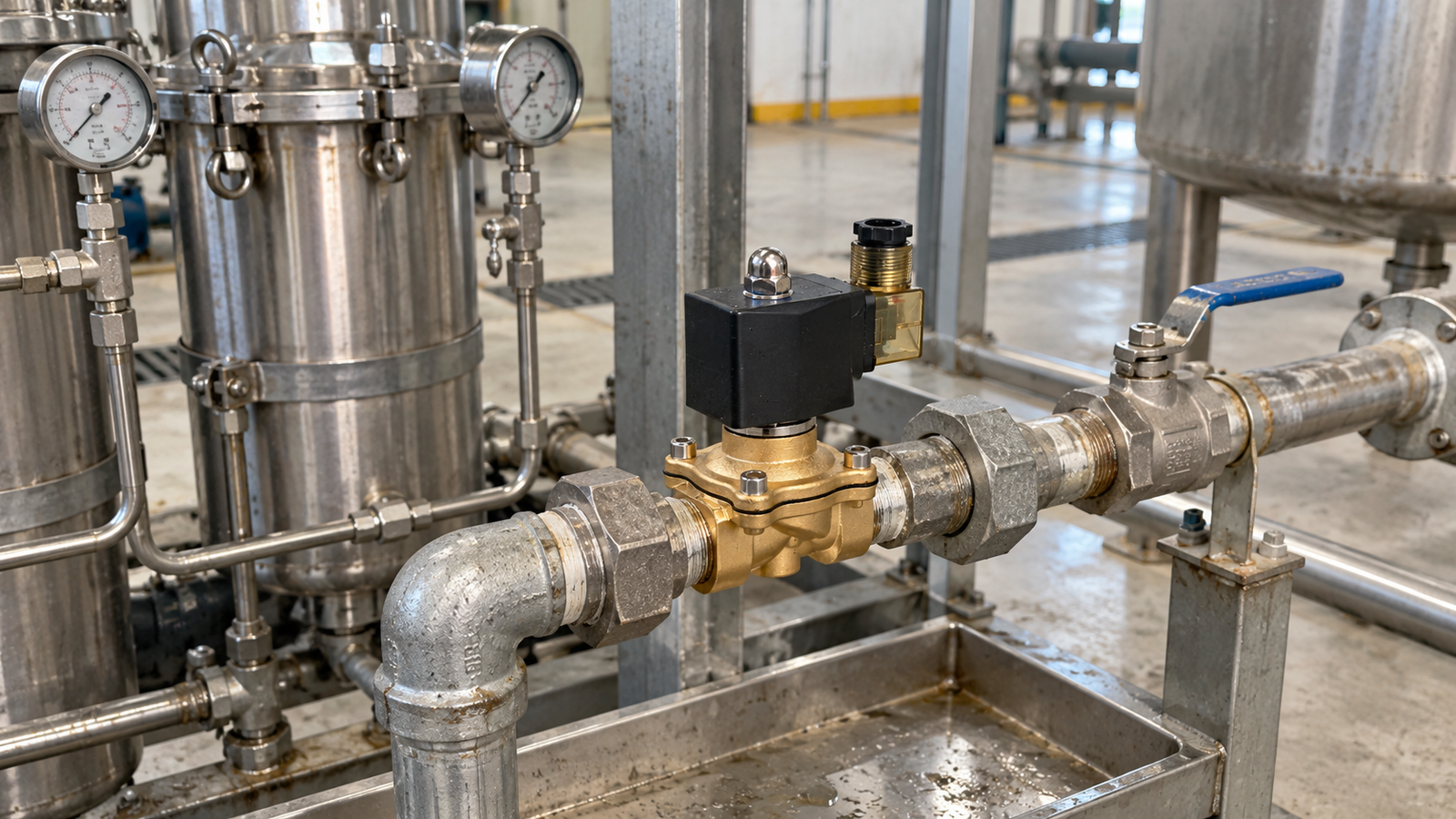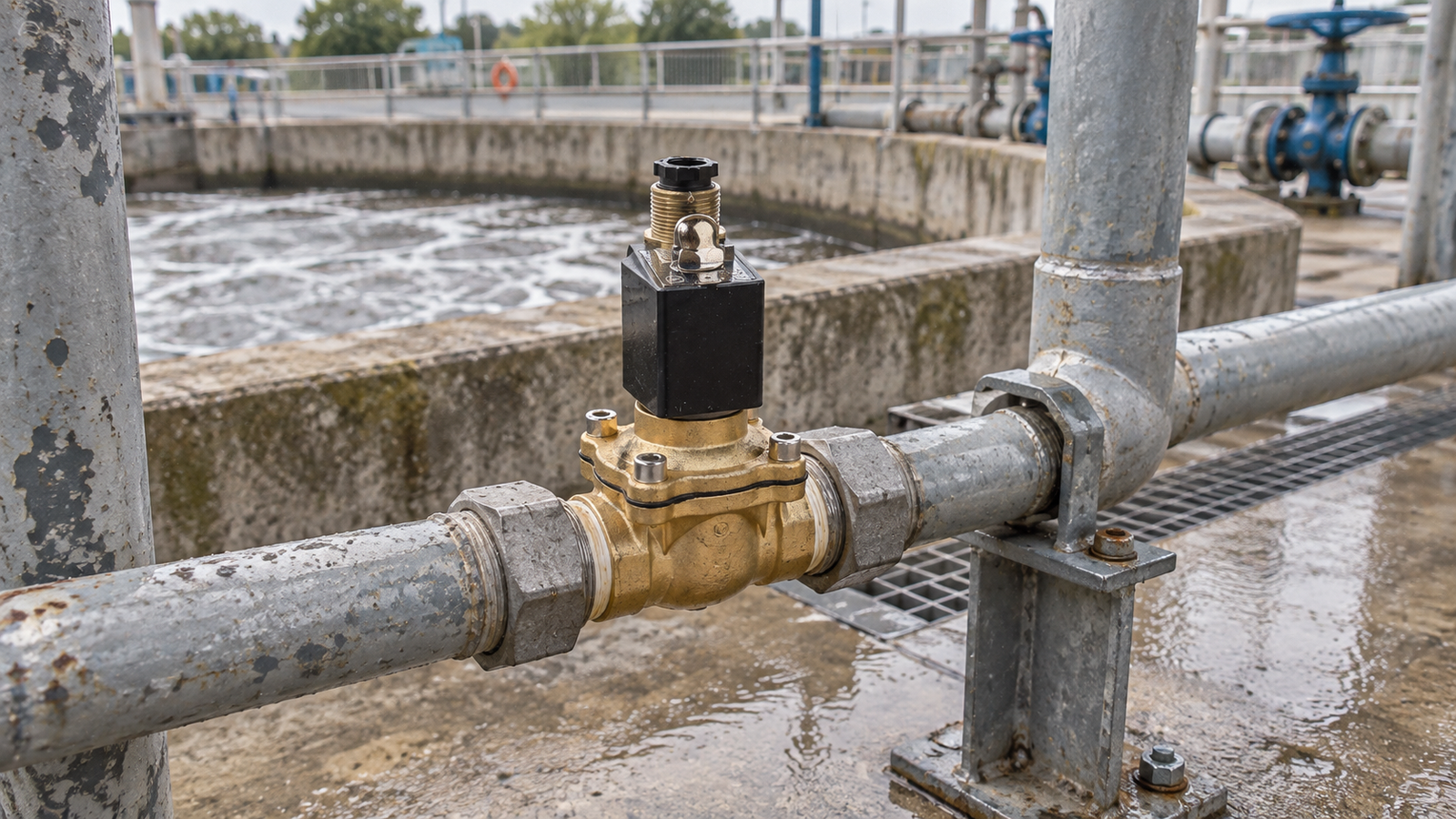
As global demand for clean, purified water increases, the commercial water treatment and Reverse Osmosis (RO) industries are expanding rapidly. Whether designing a compact skid for a hospital or a massive municipal desalination plant, engineers face the same fundamental challenge: routing, flushing, and controlling water with absolute precision.
In these high-stakes systems, complex directional valves are unnecessary. Instead, the entire purification process relies on the unwavering performance of the 2-way solenoid valve.
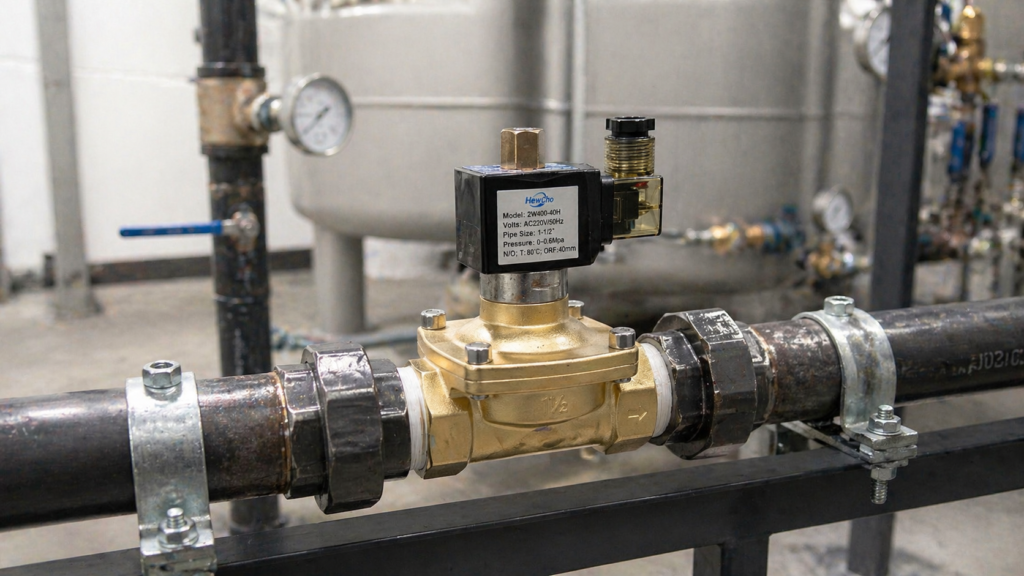
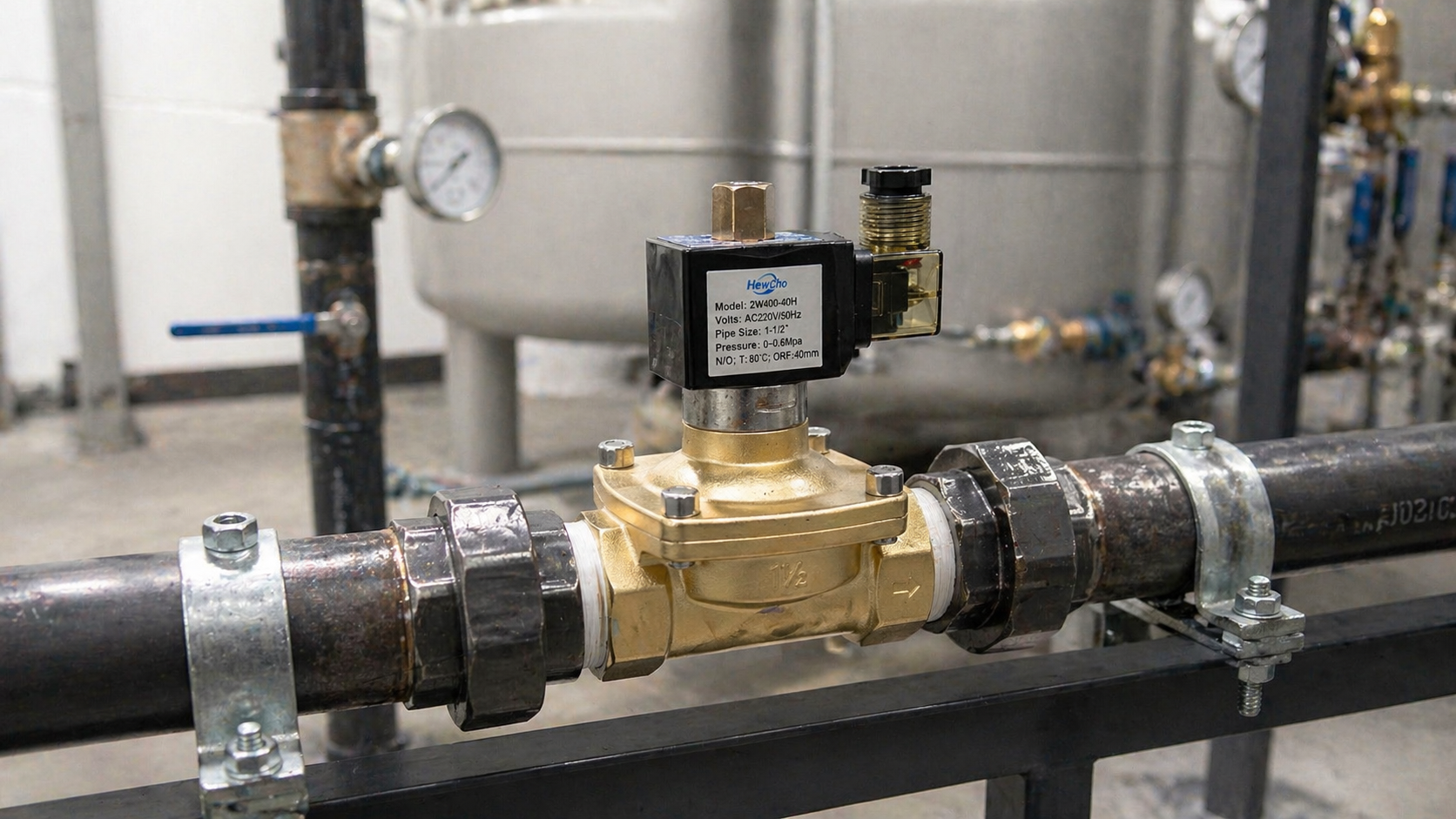
If you are an OEM building water treatment equipment or a distributor supplying the plumbing sector, understanding how to specify 2-way valves for filtration systems is crucial. Here is a technical breakdown of their applications and how to select the right components for RO and water treatment.
1. High-Volume Membrane Flushing
In any Reverse Osmosis system, the semi-permeable membranes are the most expensive components. To prevent them from fouling or scaling with rejected minerals, the system must perform regular high-velocity flushes.
This is where large-diameter 2-way solenoid valves shine.
Typically installed on the concentrate (reject) line, a Normally Closed (N/C) semi-direct acting 2-way valve is programmed to open at specific intervals. When it opens, it bypasses the flow restrictor, allowing a massive surge of water to wash over the membrane and carry the scale down the drain. Because this requires moving a large volume of water instantly, valves with large internal orifices (such as 16mm to 50mm) and high Flow Coefficients ($C_v$) are strictly required to ensure an effective flush.
2. The Pure Water Challenge: Why Material Matters
When sourcing 2-way valves for water treatment, you must split your pipeline into two distinct zones: pre-filtration and post-filtration.
Pre-Filtration (Raw Water):
For the inlet side handling standard tap water or raw well water, forged brass 2-way valves are the most cost-effective and durable choice. They easily handle the incoming pressure and resist basic environmental corrosion.
Post-Filtration (Permeate / RO Water):
Once water passes through an RO membrane, it becomes “hungry.” Because pure RO water has been stripped of its natural minerals, it becomes slightly aggressive and will actively leach ions from whatever metal it touches.
If you use a standard brass valve on the purified water line, the RO water will slowly dissolve the brass, contaminating the pure water with lead or copper trace elements and eventually destroying the valve. For the post-filtration side of your system, you must specify 304 or 316 Stainless Steel 2-way valves. Stainless steel is chemically inert and will not leach into the purified water.
3. Managing High-Pressure Differentials
Commercial RO systems use heavy-duty booster pumps to force water through the microscopic pores of the membranes. This means the 2-way valves on the inlet and high-pressure sides of the system will be subjected to intense pressure—often reaching 8 to 10 Bar (115 to 145 PSI).
Standard direct-acting valves cannot easily open against this much pressure without a massive, energy-draining coil. Therefore, water treatment systems rely heavily on pilot-operated or semi-direct acting 2-way valves. These mechanisms ingeniously use the system’s own high water pressure to assist in lifting the internal diaphragm, allowing for reliable actuation with a highly energy-efficient, low-wattage coil.
4. Failsafe Configurations and Leak Prevention
Water damage is the nightmare scenario for any indoor commercial filtration setup. If a facility loses electrical power, the water treatment system must instantly and automatically shut down to prevent catastrophic flooding.
For this reason, 99% of 2-way valves used in water treatment must be specified as Normally Closed (N/C). Without electrical current, the internal spring firmly holds the diaphragm against the valve seat, utilizing the incoming water pressure to create a bubble-tight seal.
Furthermore, to guarantee this seal remains watertight over millions of cycles, the internal elastomer must be matched to the water temperature. For cold to ambient water filtration, standard NBR seals are excellent. However, if the system involves hot water sanitation cycles, upgrading to EPDM seals is mandatory to prevent the rubber from degrading.
The Bottom Line for OEMs and Distributors
A commercial water treatment system is only as reliable as the fluid control components that dictate its flow. By specifying robust 2-way solenoid valves with the correct body materials for pre- and post-filtration, and ensuring high $C_v$ ratings for membrane flushing, you guarantee your systems will run efficiently, safely, and maintenance-free for years.