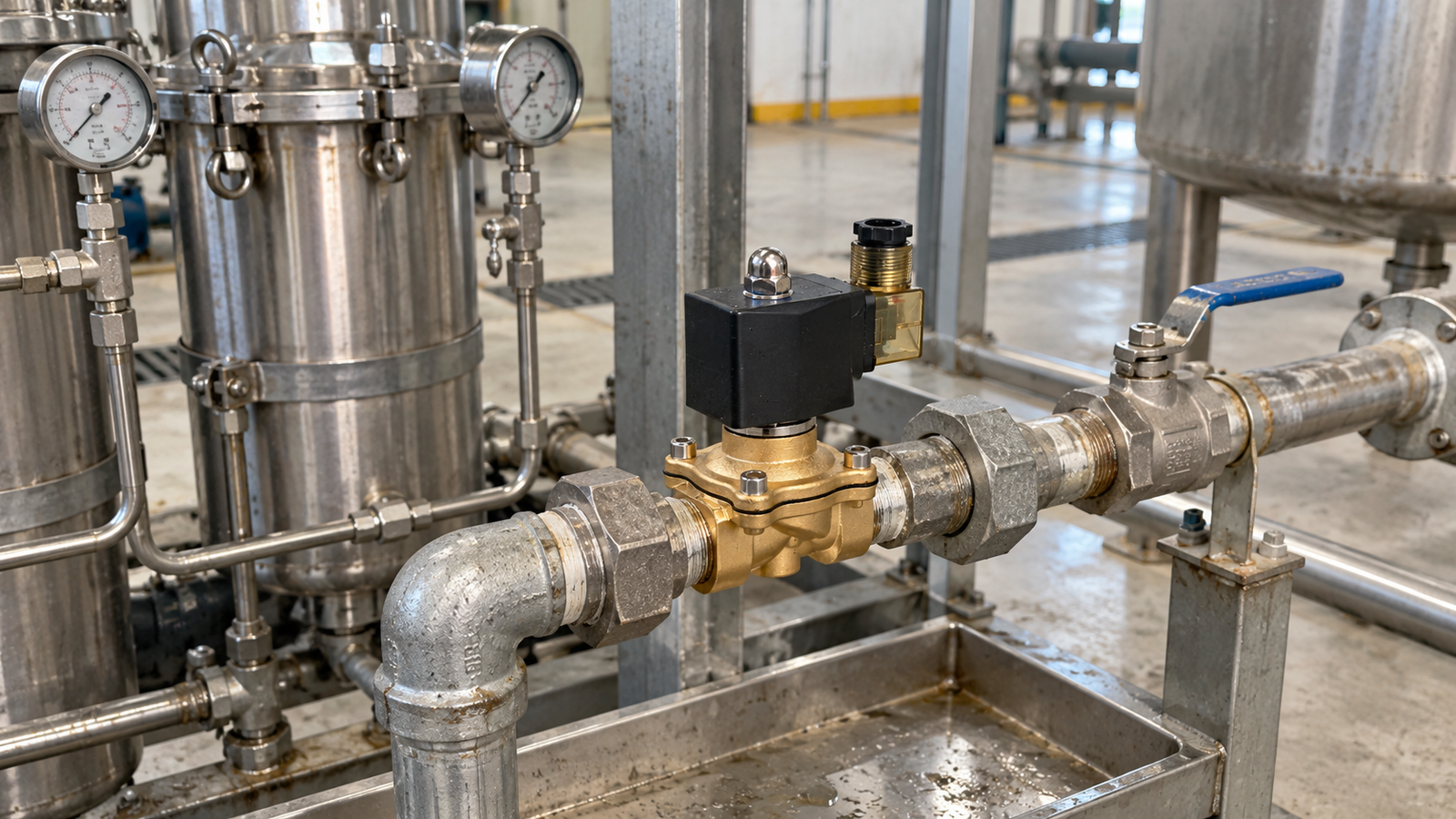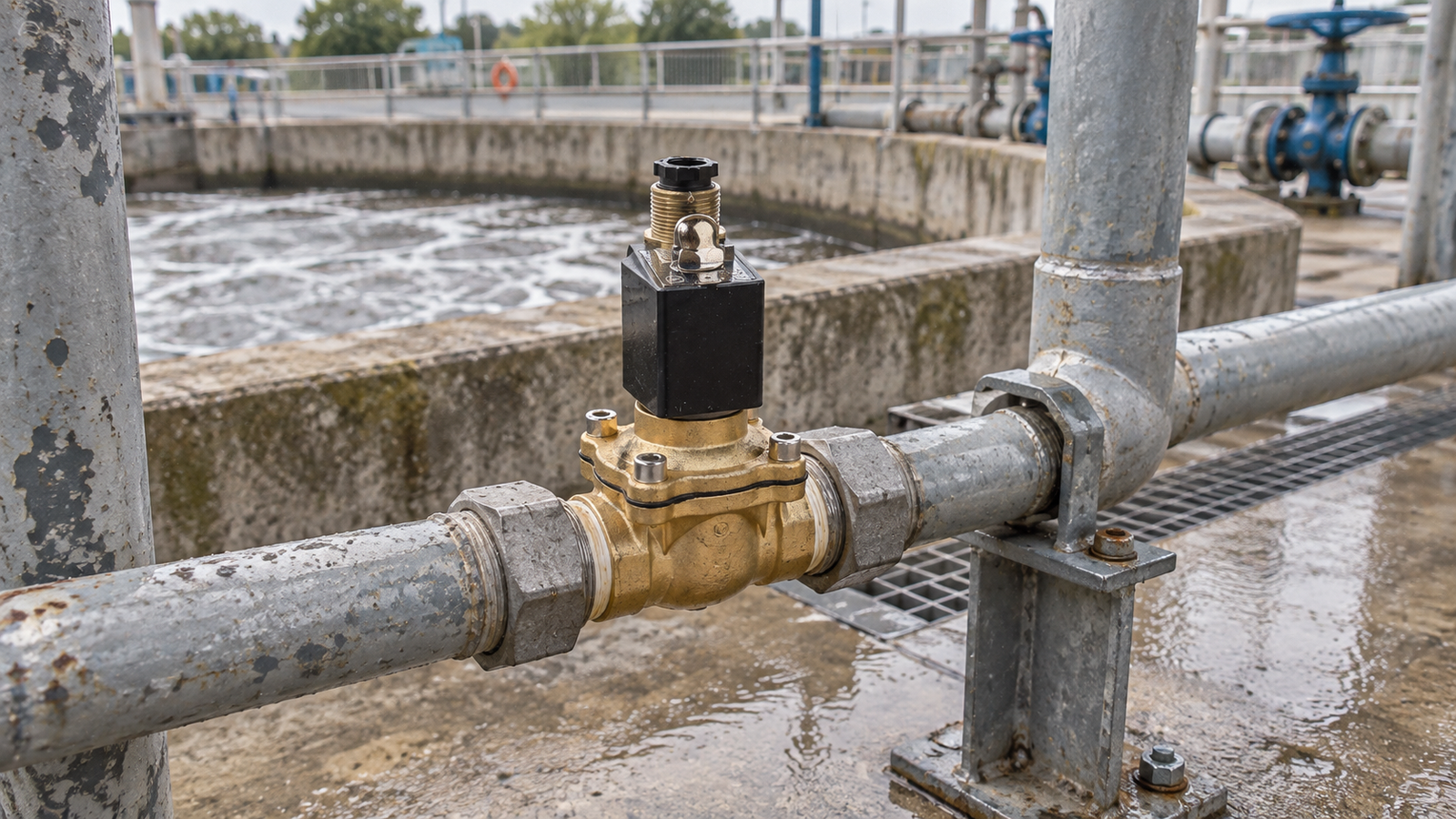
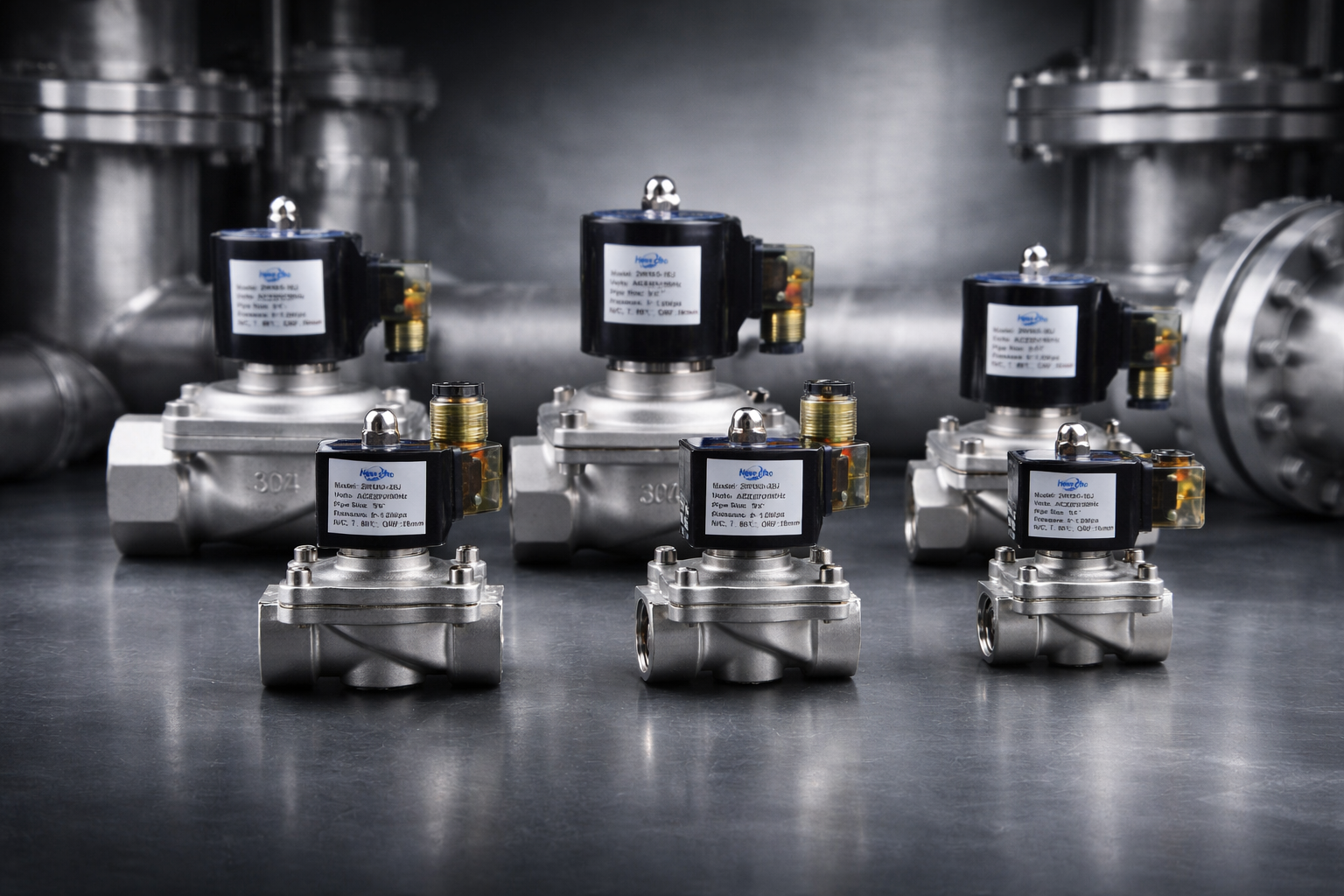
A 2-way solenoid valve is one of the most common valves used in industrial fluid control systems. It is simple, reliable, and suitable for many applications such as water, air, oil, and gas control.
If you are new to solenoid valves, this guide will help you understand what a 2-way solenoid valve is, how it works, and where it is used.
What Is a 2-Way Solenoid Valve?
A 2-way solenoid valve has:
- 2 ports
- 2 positions
The two ports are usually:
- Inlet
- Outlet
The two positions are:
- Open
- Closed
Its main job is very simple:
to allow flow or stop flow.
Because of this, 2-way solenoid valves are widely used in basic ON/OFF control systems.
How Does a 2-Way Solenoid Valve Work?
A 2-way solenoid valve works by using an electric coil to move an internal plunger.
Basic Working Process
- No power applied The valve stays in its default position.
- Power applied The coil creates a magnetic field.
- Plunger moves The internal passage opens or closes.
- Flow is controlled The medium can pass through or is blocked.
This simple design makes the 2-way solenoid valve easy to use and maintain.
Types of 2-Way Solenoid Valves
There are two common types:
Normally Closed (NC)
A normally closed 2-way solenoid valve stays closed when there is no power.
- Power ON → valve opens
- Power OFF → valve closes
This is the most common type.
Normally Open (NO)
A normally open 2-way solenoid valve stays open when there is no power.
- Power ON → valve closes
- Power OFF → valve opens
This type is used when flow needs to continue during power loss.
Common Applications of 2-Way Solenoid Valves
2-way solenoid valves are used in many industries because of their simple structure and reliable operation.
Typical applications include:
- Water treatment systems
- Air compressor systems
- Irrigation equipment
- HVAC systems
- Industrial washing machines
- General fluid shut-off control
If your system only needs basic start/stop flow control, a 2-way solenoid valve is often the best choice.
Advantages of 2-Way Solenoid Valves
A 2-way solenoid valve offers several important benefits:
- Simple design
- Easy installation
- Fast response
- Reliable ON/OFF control
- Low maintenance
- Wide range of materials and voltages
These advantages make it a popular option for industrial automation and fluid control systems.
How to Choose the Right 2-Way Solenoid Valve
Before selecting a valve, check the following:
1. Medium Type
Make sure the valve is suitable for your medium, such as:
- Water
- Air
- Oil
- Gas
- Steam
2. Pressure Range
Check whether the valve is suitable for your system pressure.
3. Temperature
Confirm the working temperature of both the medium and environment.
4. Valve Material
Common body materials include:
- Brass
- Stainless steel
- Plastic
5. Voltage
Choose the correct coil voltage, such as:
- 12V DC
- 24V DC
- 110V AC
- 220V AC
Correct selection helps improve service life and system stability.
2-Way Solenoid Valve vs 3-Way Solenoid Valve
A 2-way solenoid valve is used for simple ON/OFF flow control.
A 3-way solenoid valve is used for switching flow direction or exhausting pressure.
So, if your application only needs to open or close one flow path, a 2-way solenoid valve is usually enough.
Final Thoughts
A 2-way solenoid valve is one of the most practical and widely used valves in industrial systems. It is simple, cost-effective, and ideal for basic fluid control.
Whether you are working with water, air, oil, or gas, choosing the right 2-way solenoid valve can improve efficiency and reduce maintenance problems.
If you are unsure which model is best for your application, it is always a good idea to consult an experienced solenoid valve manufacturer.