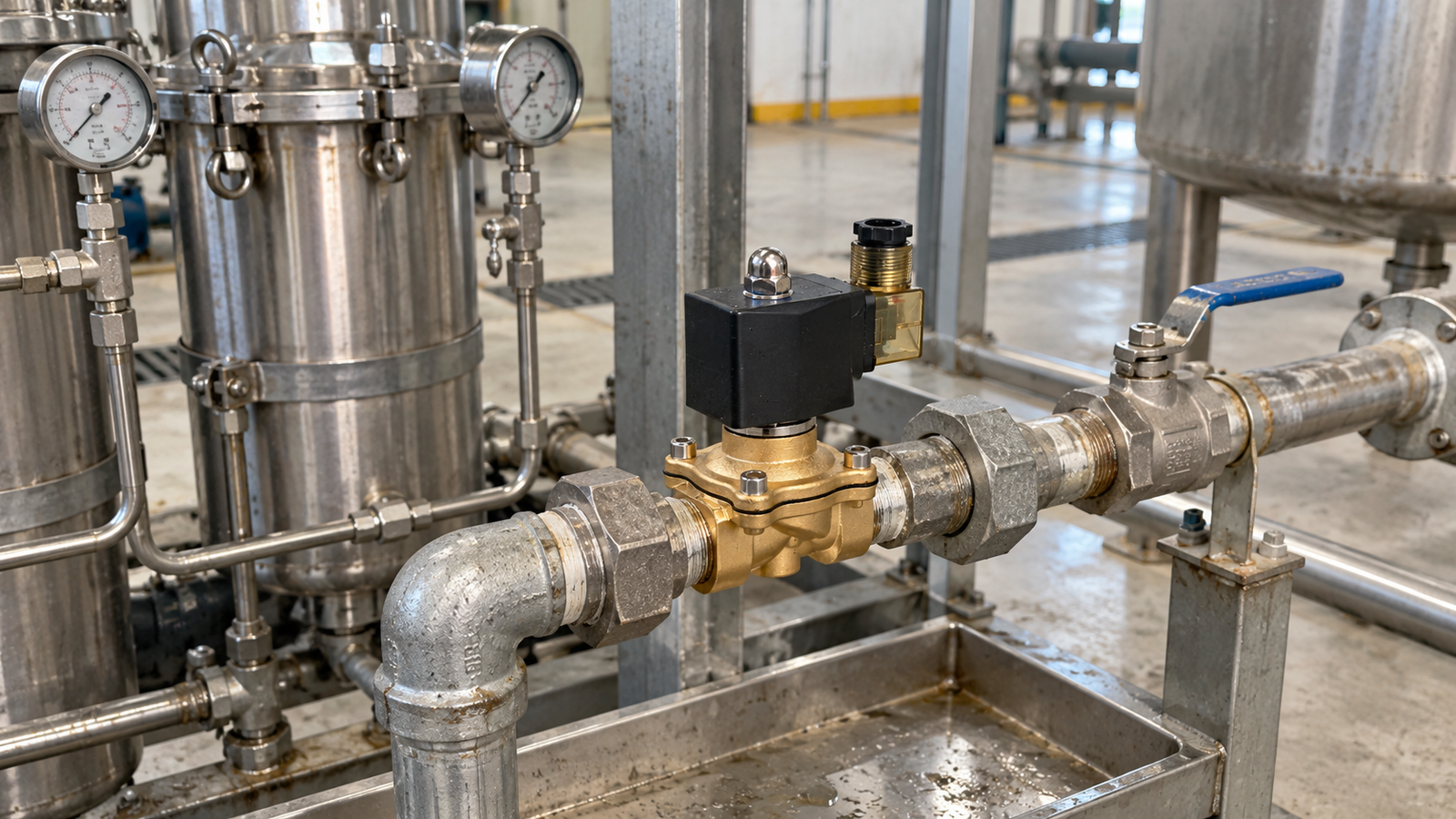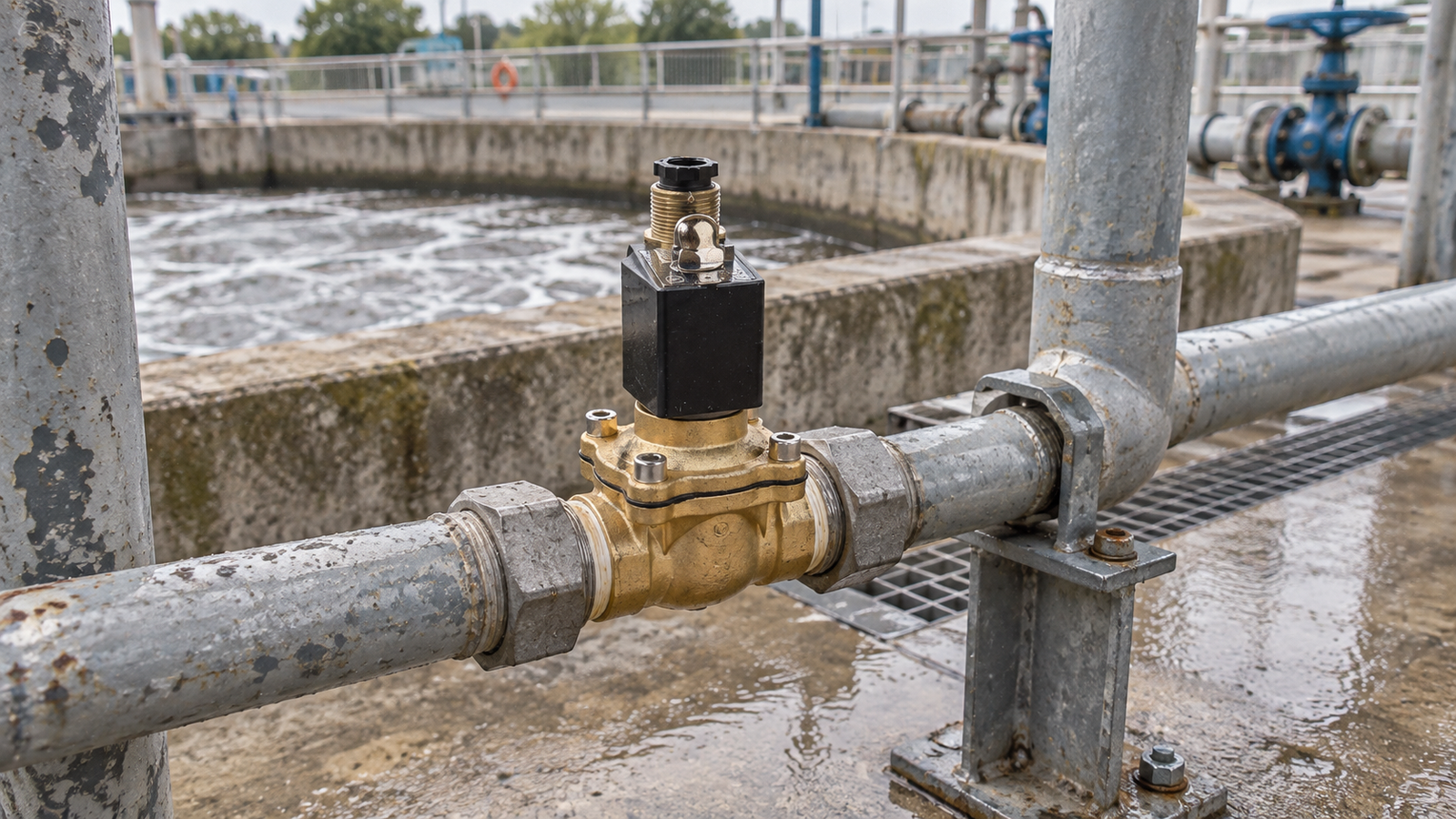
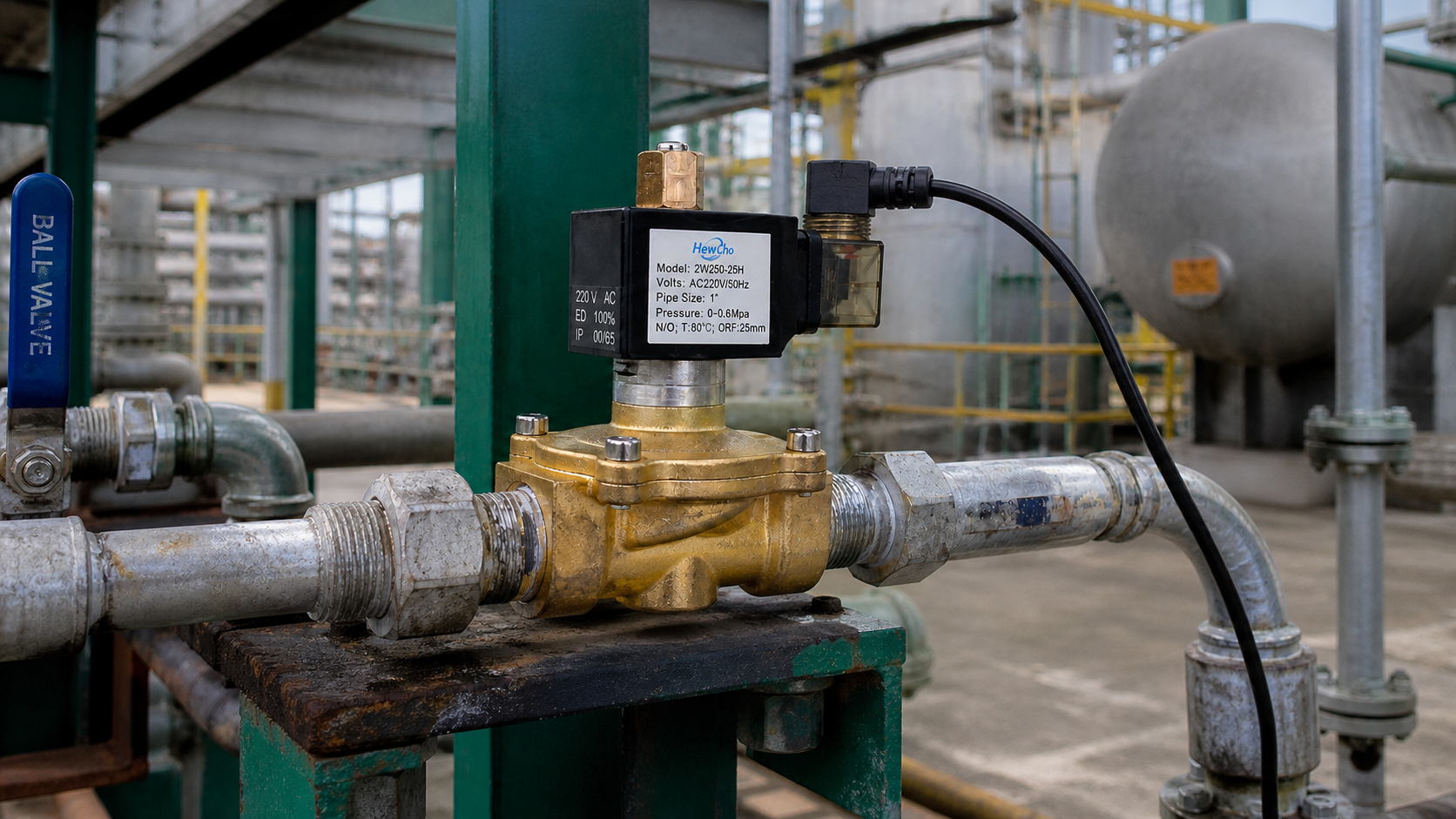
In the world of industrial manufacturing, compressed air is often considered the “fourth utility.” From powering heavy-duty assembly tools to driving precision pneumatic cylinders, a reliable air supply is critical. However, the compression process inevitably creates a highly destructive byproduct: condensate.
As air is compressed, the moisture in the ambient air is squeezed out, forming a mixture of water, compressor oil, and pipe scale. If this condensate is allowed to travel downstream, it will wash away lubricants, rust internal components, and destroy expensive pneumatic machinery.
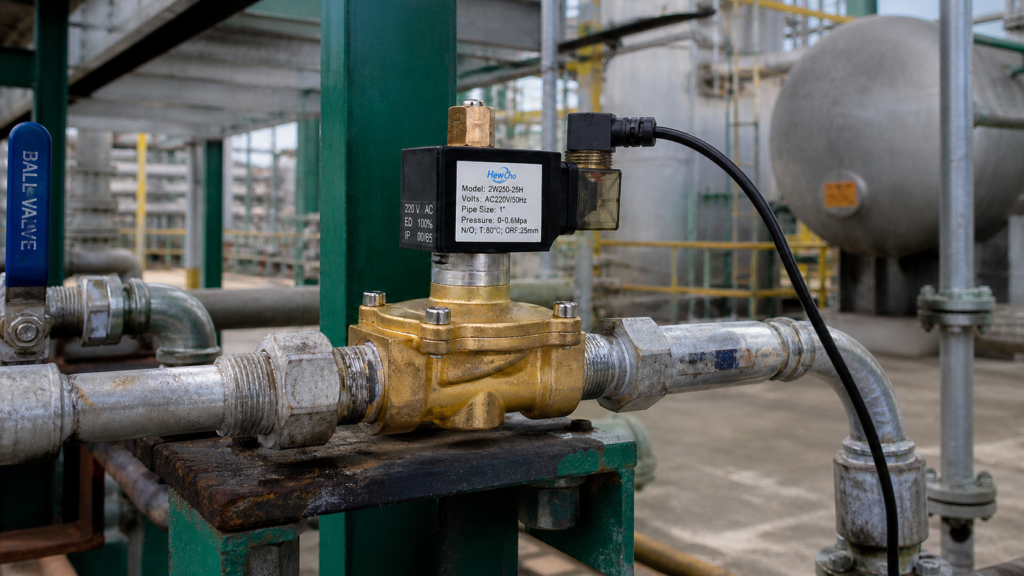
The ultimate line of defense against this moisture is the timed 2-way solenoid auto-drain valve. Here is a technical guide to understanding how these automated valves protect your system, and how to source the right components for your air compressor tanks and drip legs.
The Role of the 2-Way Auto-Drain Valve
Manually draining compressor tanks at the end of every shift is inefficient and prone to human error. An auto-drain valve automates this crucial maintenance task.
The setup is remarkably simple but effective: A Normally Closed (N/C) 2-way solenoid valve is installed at the lowest point of the air receiver tank, water separator, or pipe drip leg. A solid-state electronic timer is attached directly to the valve’s DIN connector.
The engineer programs two parameters on the timer:
- Interval Time: How often the valve should open (e.g., every 45 minutes).
- Discharge Time: How long the valve stays open (e.g., for 3 seconds).
When the interval is reached, the timer sends a brief electrical pulse to the 2-way valve. The valve snaps open, and the high-pressure air forcefully blasts the accumulated condensate out of the tank and into a collection drain.
3 Critical Engineering Specs for Compressor Valves
You cannot use just any standard water valve for a compressor drain. The harsh reality of compressed air condensate demands specific engineering choices. When sourcing 2-way valves for this application, you must evaluate three technical factors:
1. High-Pressure Capability (Direct-Acting Architecture)
Industrial air compressors routinely operate at pressures between 100 PSI (7 Bar) and 175 PSI (12 Bar). The 2-way valve must be capable of opening reliably against this high inlet pressure.
Furthermore, when the valve opens to the atmosphere to drain, it experiences a massive pressure drop. For this reason, direct-acting or semi-direct acting 2-way valves are heavily preferred. They use the coil’s magnetic force to physically lift the seal, ensuring reliable operation without relying on minimum pressure differentials that might fluctuate during the blast.
2. The Trap of NBR Seals: Why You Must Specify Viton (FKM)
This is the most common mistake facility managers make. Standard 2-way valves come with NBR (Buna-N) seals, which are fine for clean air.
However, compressor condensate is not clean air. It is a toxic sludge of water, rust, and highly aggressive synthetic compressor oils. These synthetic lubricants will aggressively attack and swell standard NBR seals, causing the valve to jam open and continuously leak expensive compressed air.
If you are sourcing a 2-way valve for an auto-drain application, you must specify Viton (FKM) seals. Viton offers superior resistance to synthetic oils, acidic condensate, and the high temperatures often found near the compressor discharge head.
3. Integrated Strainers to Prevent Clogging
The condensate sitting at the bottom of a steel tank is full of rust flakes and metal shavings. Because direct-acting 2-way valves often have smaller internal orifices (to handle the high pressure), a single rust flake can easily block the valve from closing, leading to a massive loss of system pressure.
To prevent this, the best practice is to install a Y-Strainer immediately upstream of the 2-way valve. Many premium auto-drain assemblies are now manufactured with a brass Y-strainer integrated directly into the valve body, saving installation time and preventing catastrophic clogs.
The Bottom Line
A dripping air line can cost a manufacturing facility thousands of dollars in ruined products and rusted machinery. By equipping your compressor tanks and air dryers with heavy-duty, timer-controlled 2-way solenoid valves—specifically those armed with Viton seals and high-pressure brass bodies—you guarantee a dry, clean, and reliable pneumatic system.
Next up, how would you like to proceed? We can explore “Energy Efficiency: How DC Latching 2-Way Valves Save Power in Remote Applications,” or focus on “The Difference Between Direct-Acting and Semi-Direct 2-Way Valves in Low-Pressure Systems.”