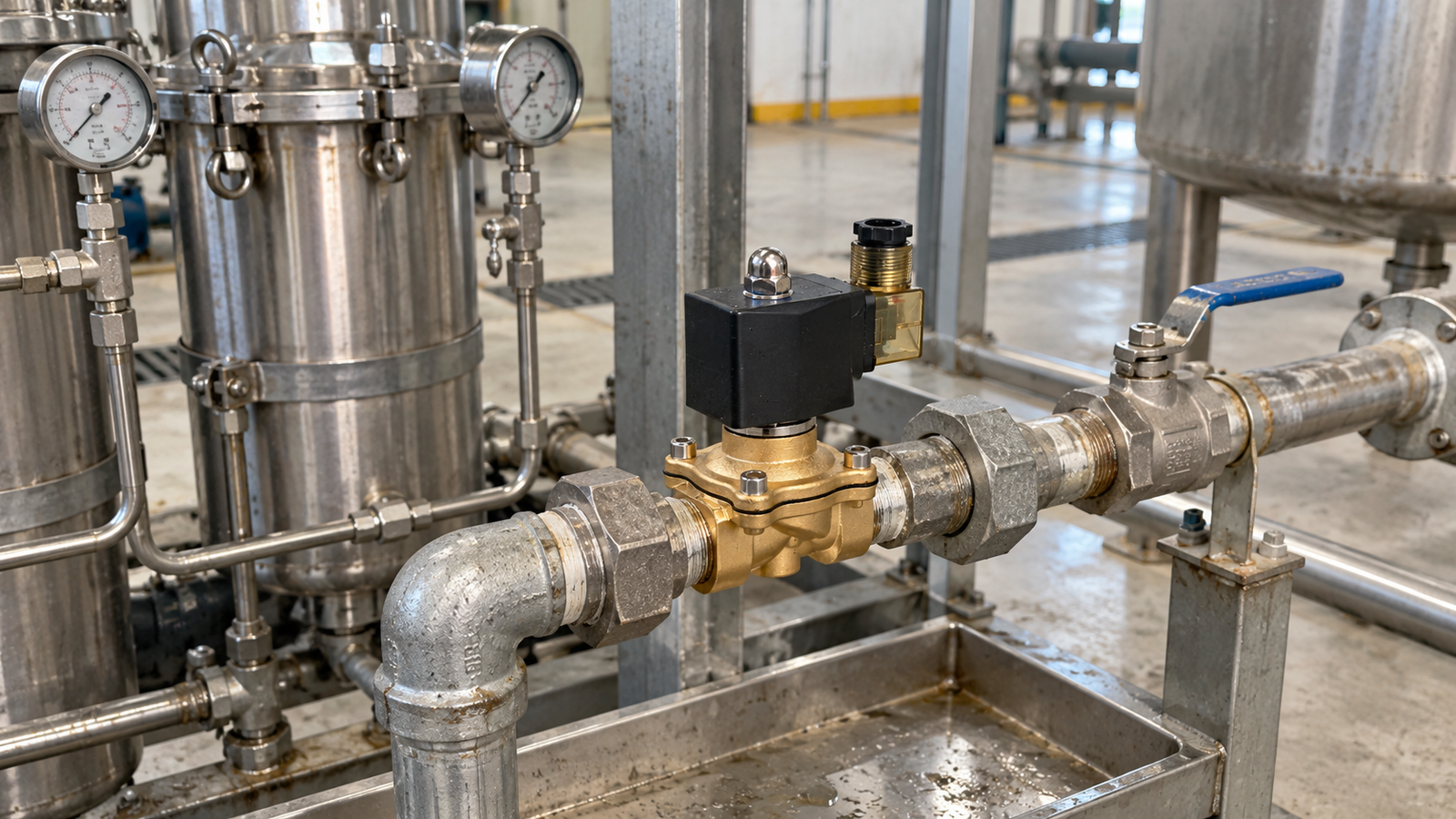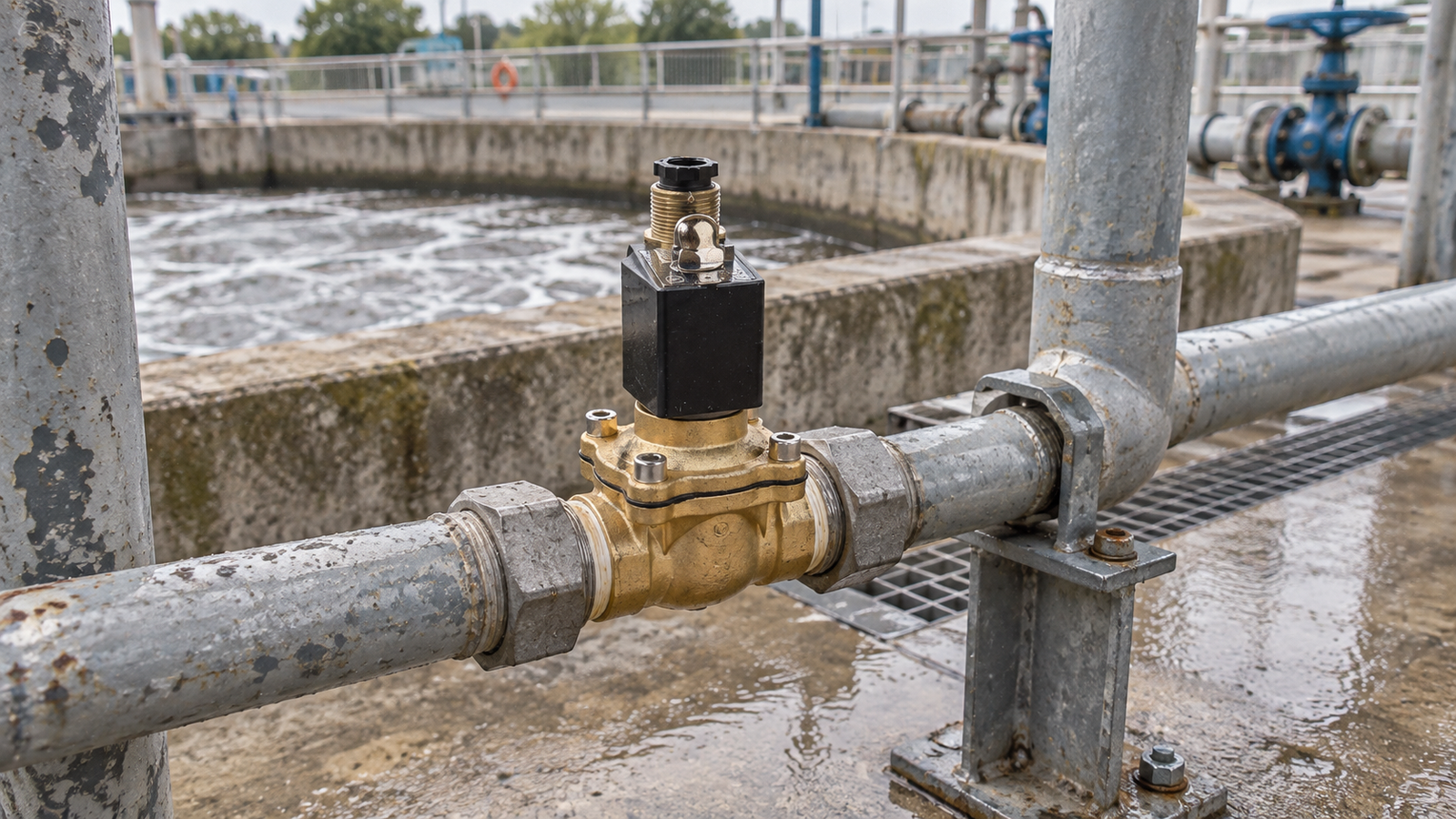
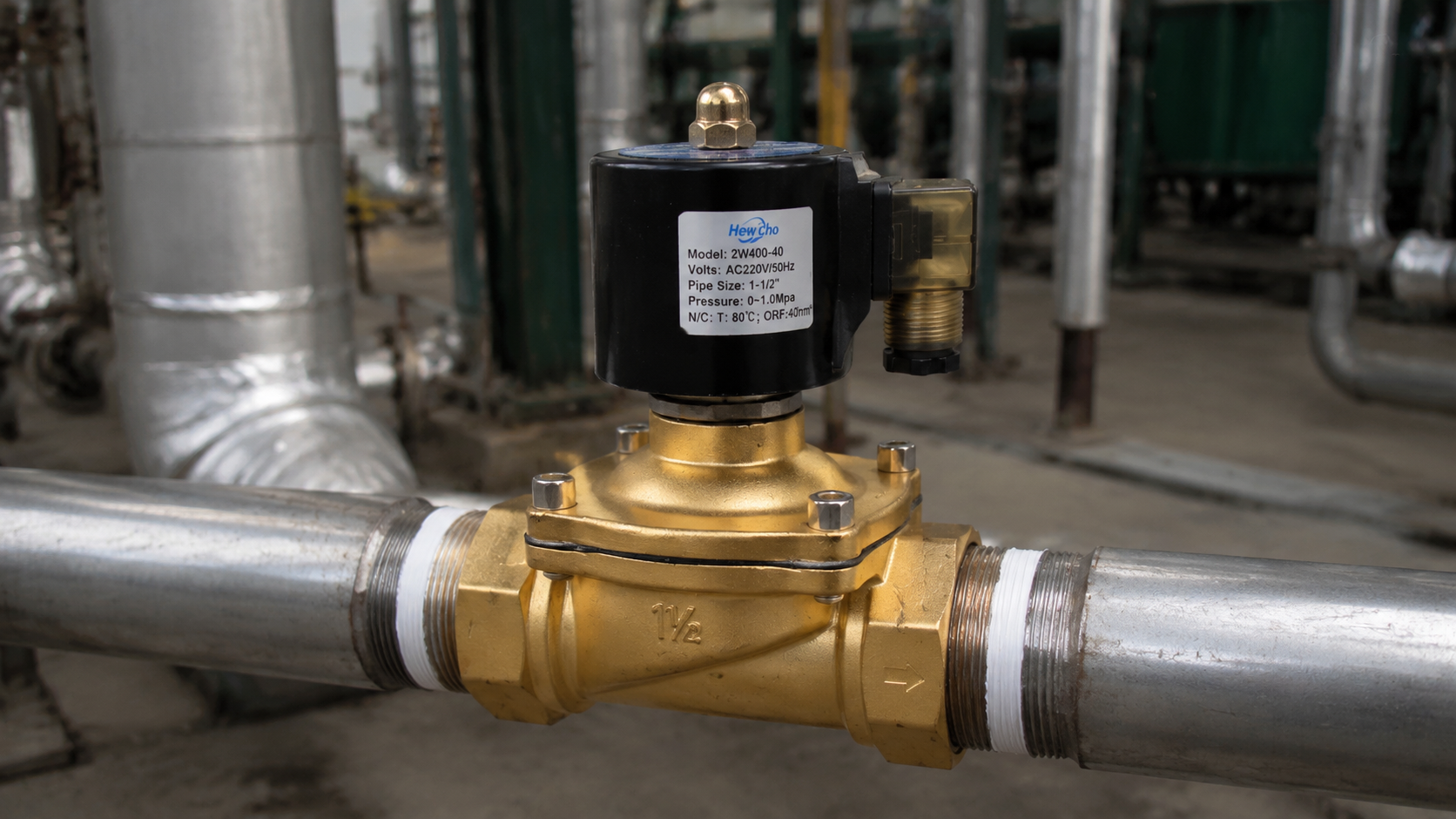
When specifying a 2-way solenoid valve for an industrial pipeline, it is easy to get caught up in external specifications like pipe thread size, brass versus stainless steel, and coil voltage. However, the most critical factor determining whether your valve will successfully open or catastrophically stall is hidden inside the valve body: the actuation mechanism.
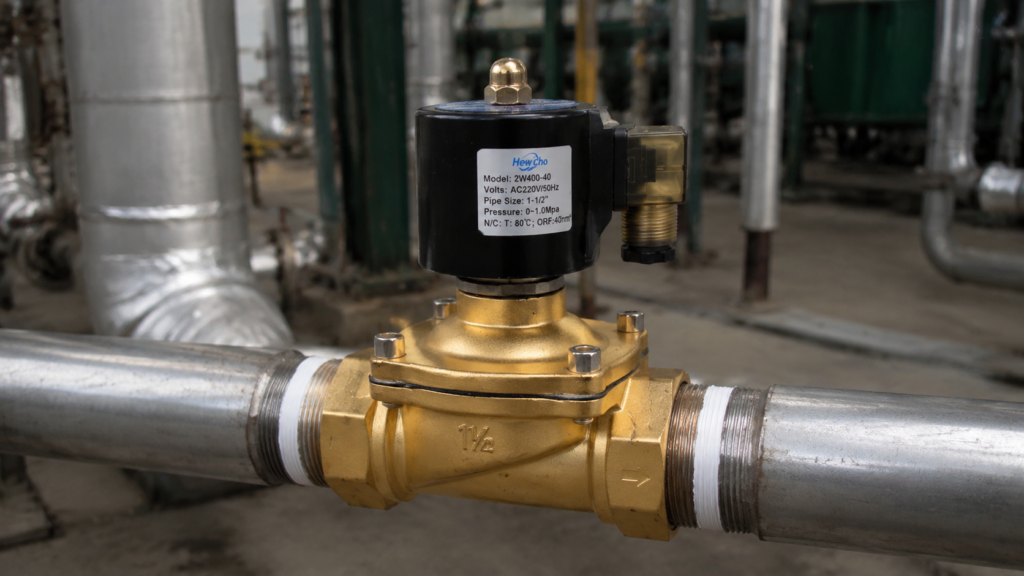
Not all 2-way solenoid valves move fluid the same way. The internal mechanics dictate how the valve interacts with the fluid’s pressure. If you choose the wrong mechanical design for your pipeline’s pressure profile, the valve will simply refuse to operate.
For fluid control engineers, system integrators, and B2B buyers, mastering the three primary actuation mechanisms—Direct-Acting, Pilot-Operated, and Semi-Direct Acting—is mandatory. Here is the definitive technical guide to how they work and where to deploy them.
1. Direct-Acting 2-Way Valves: The Brute Force Approach
The direct-acting solenoid valve is the simplest and most straightforward mechanism in fluid control. It relies entirely on the raw magnetic force of the electrical coil to perform the mechanical work.
- How It Works: The internal plunger (armature) is physically attached to the sealing gasket. When the coil is energized, the magnetic field directly lifts the plunger off the valve seat, opening the orifice. When de-energized, an internal spring pushes the plunger back down to seal the orifice.
- The Engineering Advantage: Because it relies completely on magnetic force, a direct-acting valve does not care what the fluid pressure is doing. It can operate perfectly at 0 Bar (zero pressure), and it is the mandatory choice for vacuum systems where negative pressure exists.
- The Limitation: The power of the magnetic coil is limited. If you have a large internal orifice and high line pressure, the fluid pushes down on the seal with immense force. A standard coil cannot generate enough magnetic lift to overcome that weight. Therefore, direct-acting valves are typically restricted to low-flow (small orifice) or low-pressure applications.
2. Pilot-Operated (Indirect) 2-Way Valves: Working Smarter, Not Harder
When you need to move massive volumes of fluid at high pressures (such as municipal water mains or commercial irrigation), a direct-acting valve would require an electrical coil the size of a car battery. To solve this, engineers created the Pilot-Operated (or Indirect-Acting) valve.
- How It Works: The magnetic coil does not open the main valve seal. Instead, the main orifice is sealed by a large, flexible rubber diaphragm. The coil is positioned over a microscopic secondary hole called the “pilot hole.” When the coil energizes, it opens this tiny pilot hole. This vents the fluid pressure off the top of the main diaphragm. The high-pressure fluid pushing from underneath the diaphragm now easily lifts it up, opening the main valve.
- The Engineering Advantage: It uses the kinetic energy of the pipeline’s own fluid pressure to do the heavy lifting. This allows a tiny, highly energy-efficient coil to control massive flow rates (
$C_v$) and extremely high pressures. - The Limitation (CRITICAL): Pilot-operated valves require a minimum pressure differential to function (usually around 0.3 to 0.5 Bar / 4 to 7 PSI). If the system pressure drops below this threshold (such as in a gravity-fed water tank), the fluid lacks the energy to lift the diaphragm, and the valve will remain locked shut. Additionally, the microscopic pilot hole is easily clogged by dirty fluids.
3. Semi-Direct Acting (Assisted Lift) Valves: The Ultimate Hybrid
What happens if your system experiences massive pressure fluctuations, sometimes dropping to zero and sometimes spiking to high pressure? Evolving from the limitations of the first two designs, the Semi-Direct Acting (also known as Assisted Lift or Forced-Lift) 2-way valve offers the best of both worlds.
- How It Works: This architecture links the magnetic plunger directly to the main flexible diaphragm via a mechanical spring or solid linkage. When energized at zero pressure, the coil physically pulls the diaphragm open (like a direct-acting valve). When the pipeline is at high pressure, the valve utilizes the fluid pressure to assist in lifting the diaphragm (like a pilot-operated valve).
- The Engineering Advantage: Extreme versatility. Semi-direct acting valves—such as the globally recognized 2W or SLP Series—operate flawlessly from 0 Bar all the way up to 10 Bar. You get the high flow capacity of a pilot valve with the zero-pressure reliability of a direct-acting valve.
- The Limitation: Because the internal architecture is slightly more complex, these valves are generally heavier and marginally more expensive to manufacture than standard direct-acting models. However, for distributors and wholesalers, stocking semi-direct acting valves drastically reduces inventory overhead, as one valve type can serve almost any standard application.
The Engineer’s Selection Matrix
To guarantee your system operates flawlessly, use this simple matrix to select your 2-way valve actuation type:
- Is the system gravity-fed or draining a tank (Zero Pressure)? Specify Direct-Acting or Semi-Direct Acting.
- Is the system pulling a vacuum? Exclusively specify Direct-Acting.
- Is the system a massive pipe moving high volumes of high-pressure water? Specify Pilot-Operated (and ensure you have upstream filtration to protect the pilot hole).
- Are you unsure if the pressure will fluctuate? Play it safe and specify Semi-Direct Acting.
By matching the internal mechanics of the 2-way solenoid valve to the precise pressure dynamics of your pipeline, you eliminate the risk of stalled automation and ensure decades of reliable fluid control.