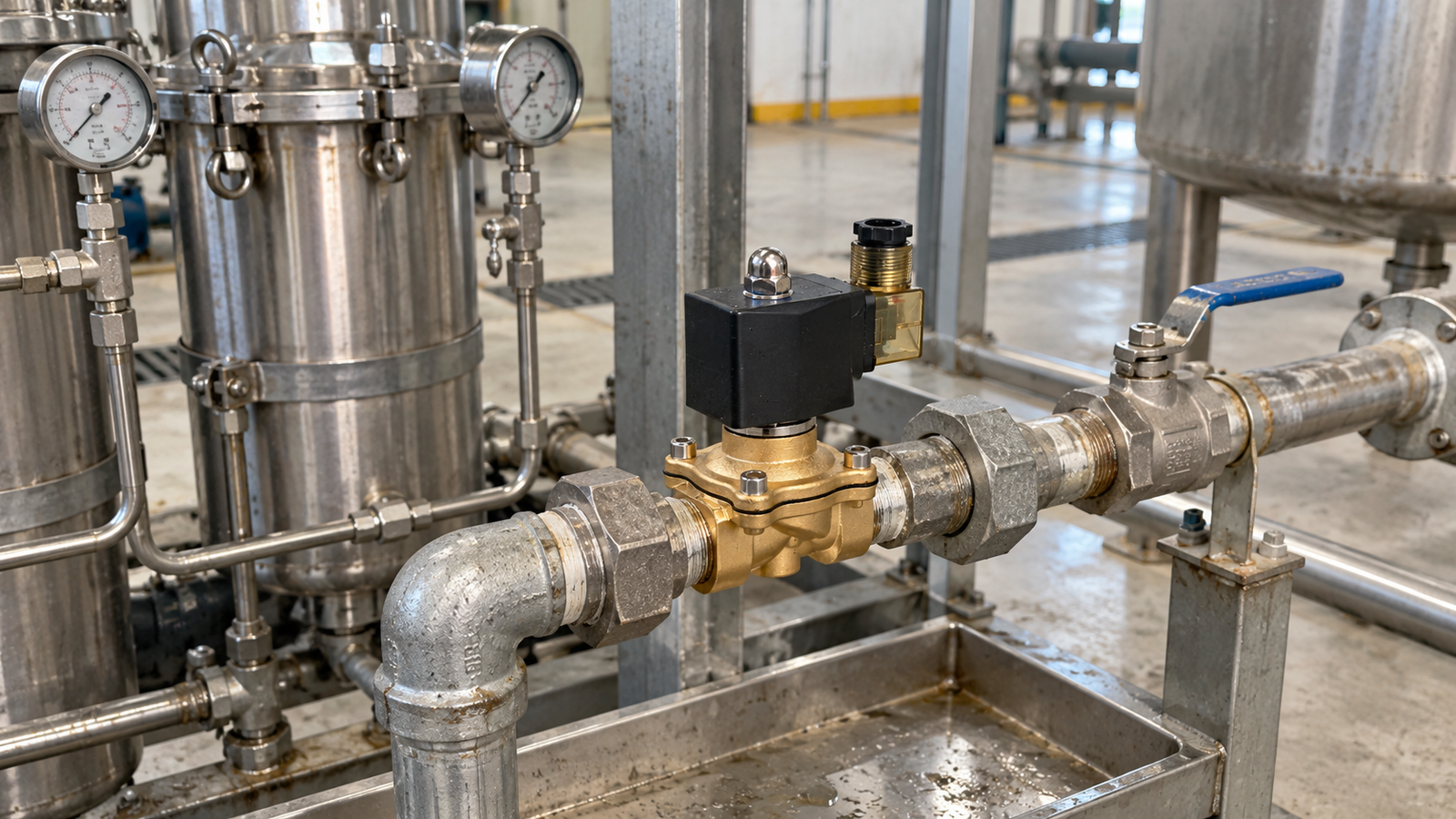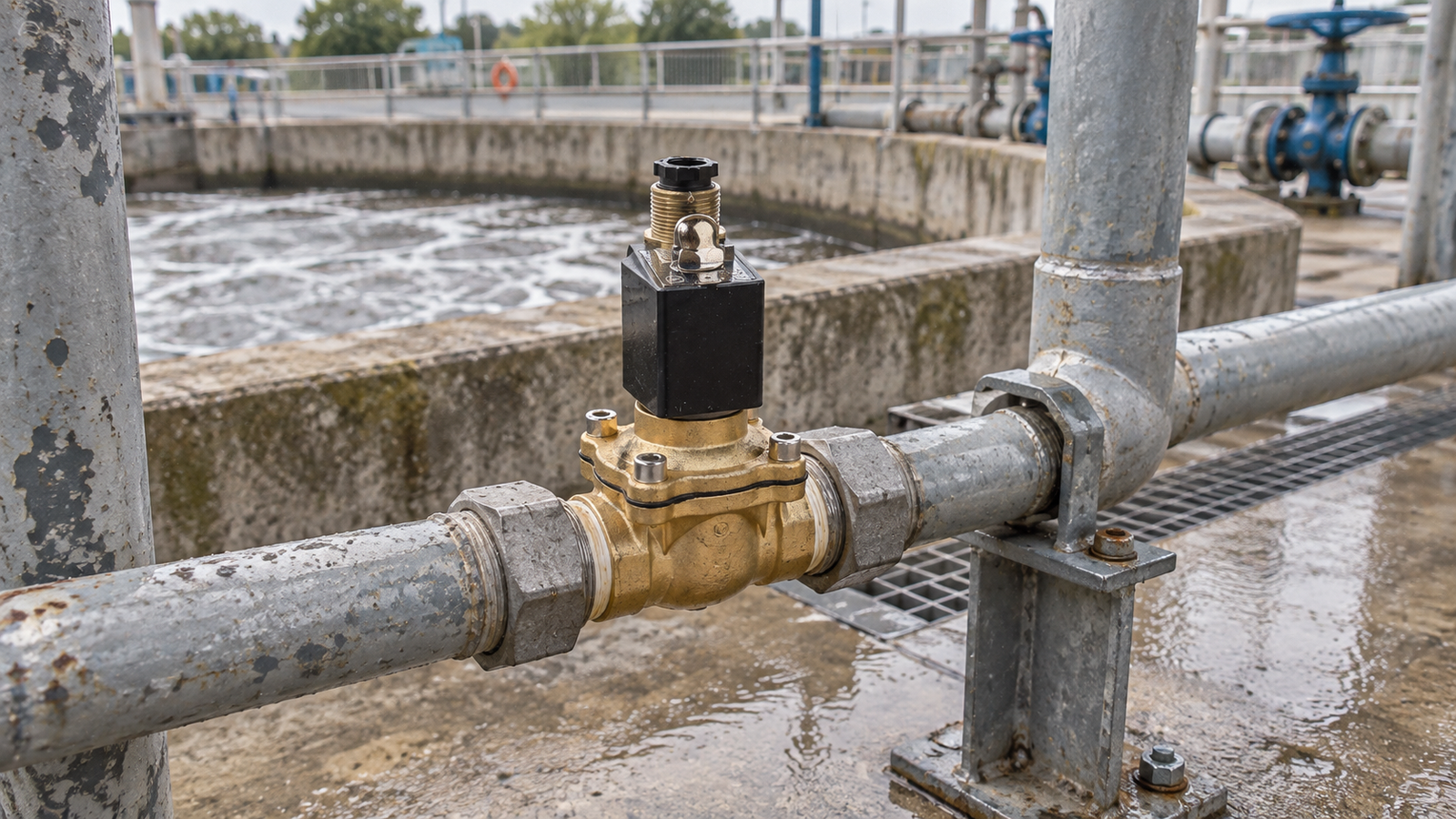
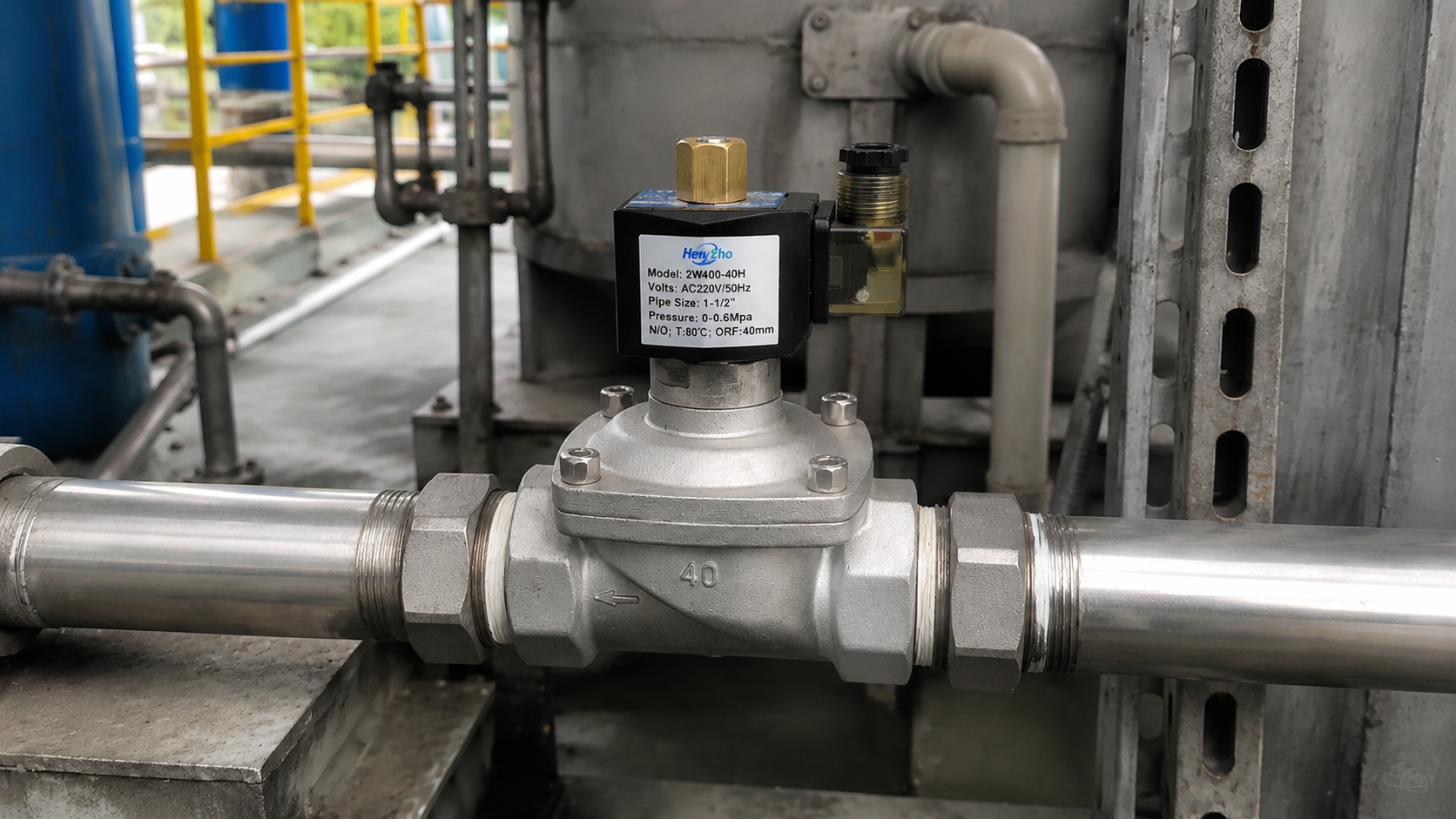
Yesterday, we investigated the thermal dynamics of continuous-duty solenoid coils, analyzing how Joule heating, insulation classes, and vacuum-encapsulated epoxy matrices protect against thermal breakdown. Today, we address a violent, destructive hydraulic phenomenon that threatens the structural integrity of the entire piping network: Water Hammer and Pressure Surge Management in High-Flow 2-Way Solenoid Valves.
In high-speed fluid transfer systems—such as industrial cooling loops, automated filling skids, and irrigation manifolds—a 2-way solenoid valve is often required to shut off high-velocity flow in fractions of a second. While rapid closure is ideal for batch precision, it initiates a severe hydraulic shockwave known as water hammer. If left unmanaged, this pressure spike can rupture pipe fittings, crack valve bodies, and destroy upstream instrumentation. Here is the engineering blueprint for understanding and mitigating water hammer in 2-way solenoid architectures.
1. The Physics of Water Hammer: Joukowsky’s Equation
When a column of moving fluid is forced to stop instantaneously by a rapidly closing valve, the kinetic energy of the moving mass is converted entirely into elastic potential energy, compressing the fluid and expanding the pipe walls.
The magnitude of the resulting pressure spike (\Delta P) is governed by Joukowsky’s Equation:
$$\Delta P = \rho \cdot c \cdot \Delta v$$
Where:
- \rho is the density of the fluid.
- c is the acoustic velocity (speed of sound) of the pressure wave within the specific pipe medium.
- \Delta v is the abrupt change in fluid velocity.
In a rigid steel pipe carrying water at 3\text{ m/s}, a sudden valve closure can generate a transient pressure wave exceeding 30\text{ Bar} (435\text{ PSI}) above the baseline operating pressure. This instantaneous shock front travels back and forth through the pipeline, creating the characteristic banging noise and exerting extreme cyclical fatigue stress on the 2-way valve seat and body flange.
2. Valve Closure Dynamics: Direct vs. Pilot-Operated Shock Profiles
The severity of a water hammer event is heavily dependent on the internal actuation mechanism of the 2-way solenoid valve:
Direct-Acting Valves (The Instantaneous Spike)
In a direct-acting valve, the plunger slams downward against the seat the exact millisecond the electrical current is cut. The closing time is virtually instantaneous (5\text{ ms} to 15\text{ ms}). Because \Delta t is near-zero, Joukowsky’s equation yields the maximum possible pressure spike, making direct-acting valves prone to severe water hammer when deployed on high-velocity liquid lines.
Pilot-Operated Valves (The Built-In Dampening Effect)
Pilot-operated (indirect) valves utilize a flexible diaphragm or piston. When the pilot port closes, fluid must slowly bleed through the top orifice to re-pressurize the chamber above the diaphragm. This introduces a natural mechanical dampening delay, stretching the closure time (\Delta t) out to 50\text{ ms} or 100\text{ ms}. This gradual deceleration of the fluid column significantly flattens the pressure wave curve, drastically reducing the water hammer magnitude.
3. Engineering Mitigations: Eliminating Hydraulic Shock
To protect industrial pipelines from water hammer without sacrificing process speed, engineers deploy specific mechanical and system-level interventions:
Adjustable Closing Speed Controls (Flow Chokes)
Advanced heavy-duty 2-way solenoid valves feature an integrated adjustable needle valve or hydraulic damping screw on the pilot exhaust or bypass circuit. By manually tuning this choke, technicians can precisely control the speed at which the main diaphragm descends, ensuring the fluid column decelerates smoothly.
Inline Surge Suppressors and Accumulators
When fast-acting direct-acting valves cannot be avoided, installing a bladder-type accumulator or spring-loaded surge suppressor immediately upstream of the valve provides an elastic cushion. The shockwave energy compresses the bladder or pushes against the spring rather than hitting the rigid pipe wall, absorbing the transient pressure spike.
Technical Sourcing Specs for Surge-Resistant Systems
When compiling procurement guidelines for high-flow liquid pipelines subject to rapid cycling, mandate these transient-protection specifications:
| Engineering Variable | Sourcing Requirement | Hydraulic Justification |
|---|---|---|
| Valve Actuation Type | Controlled-Closure Pilot-Operated | Naturally dampens fluid deceleration time, reducing Joukowsky shockwave magnitude. |
| Dampening Feature | Adjustable Closing Speed Needle Valve | Allows precise on-site tuning of the stroke closure rate (\Delta t) to eliminate water hammer. |
| Body Metallurgy | Ductile Iron or Forged 316 Stainless Steel | Provides superior tensile elongation and yield strength to absorb cyclical pressure shock fatigue. |
Conclusion
Hydraulic stability requires looking beyond the valve body to consider the entire fluid momentum of the system. In high-flow liquid networks, treating a 2-way solenoid valve as a simple binary switch invites destructive water hammer events that can compromise your entire piping infrastructure. By understanding Joukowsky’s equation, deploying pilot-operated dampening controls, and integrating surge accumulators, you protect your system from violent pressure spikes—ensuring smooth, silent, and structurally secure fluid automation.