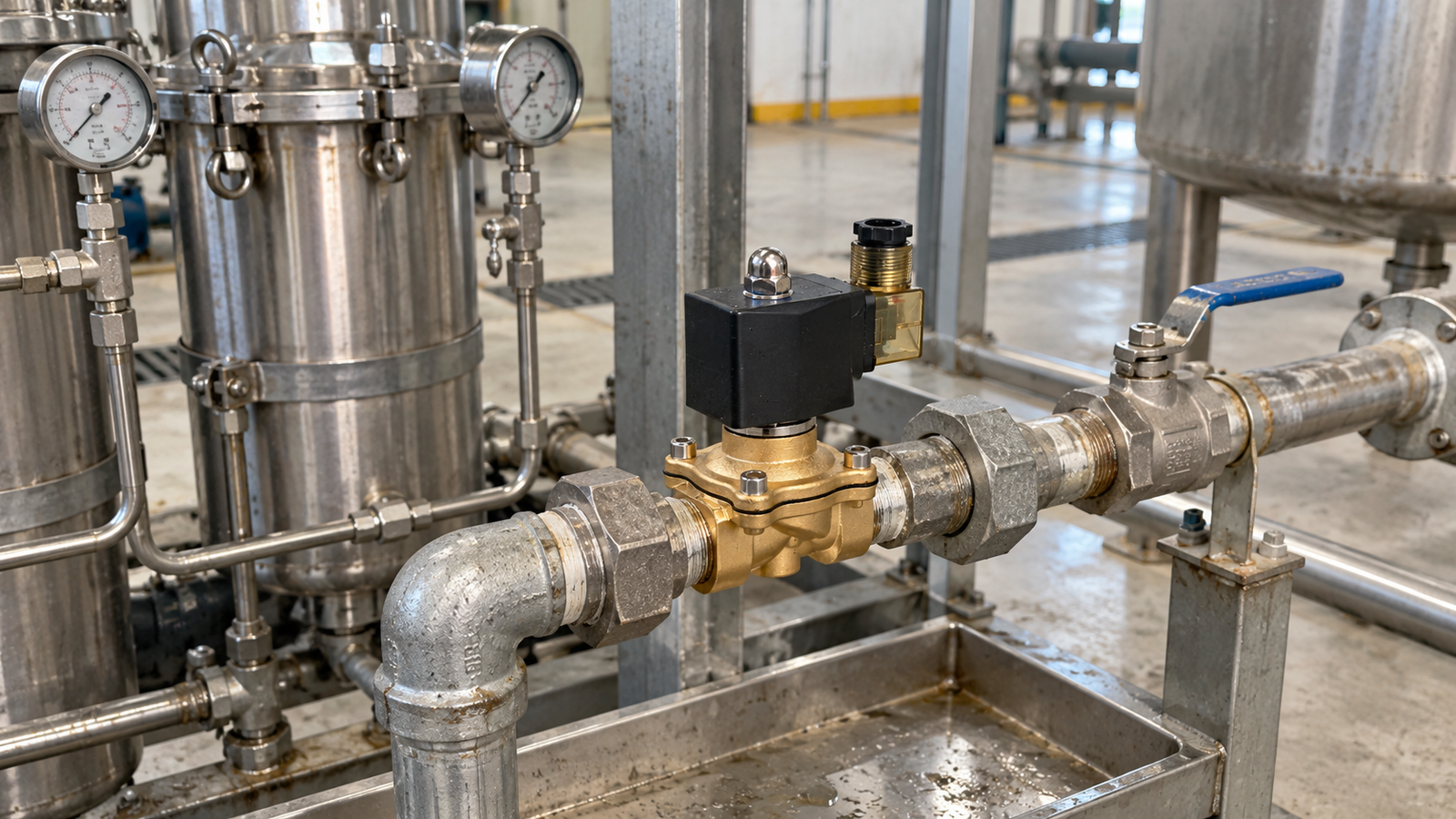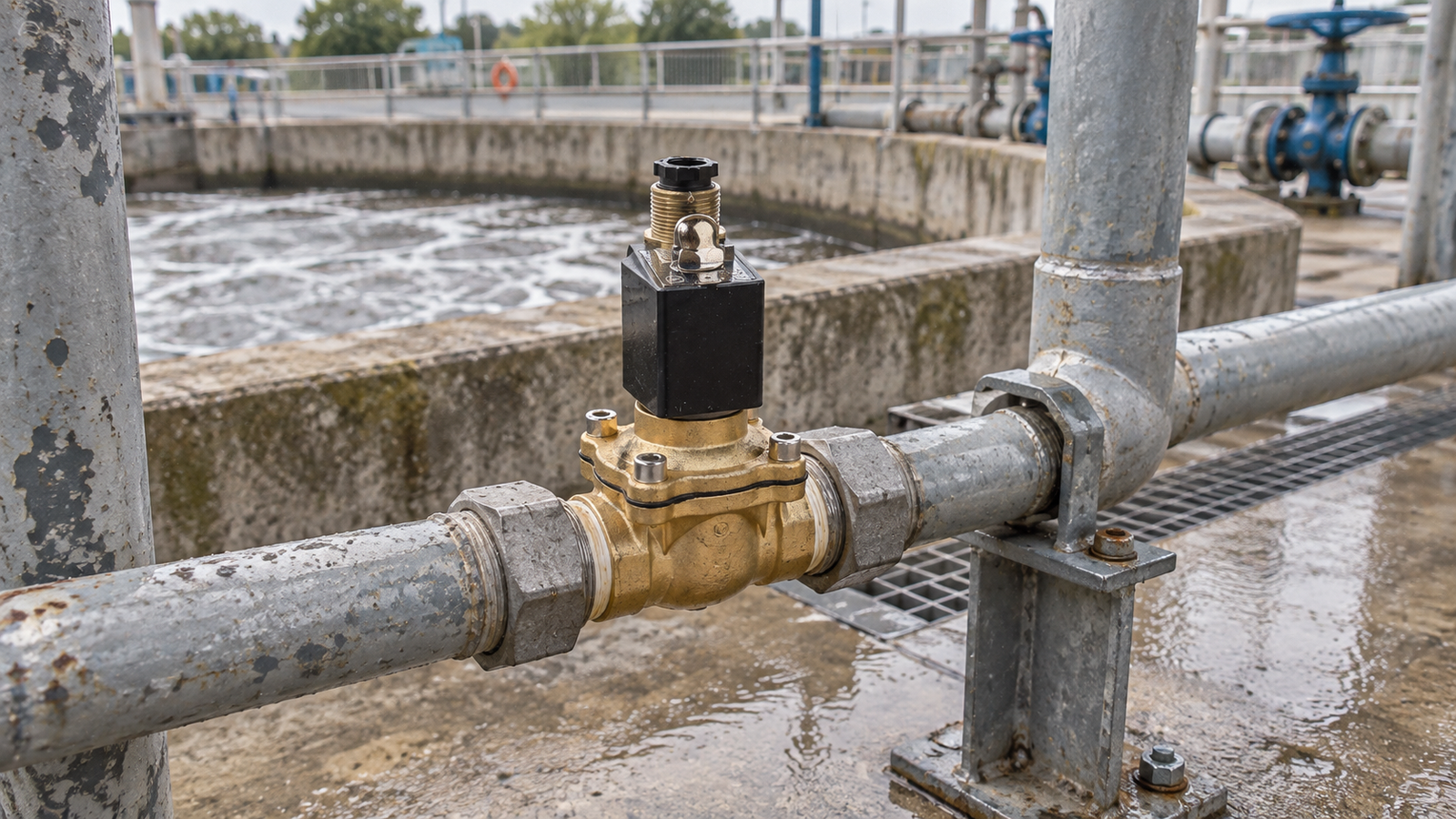

When designing a pipeline or upgrading an industrial automation system, the 2-way solenoid valve is the ultimate gatekeeper for your fluid control. Once you have determined your required flow rate and pressure, the next most critical engineering decision is selecting the valve’s body material.
The two undisputed giants in the fluid control industry are Brass and Stainless Steel. While they may look similar on a schematic, their chemical properties, durability, and cost-effectiveness differ significantly. Choosing the wrong material can lead to rapid corrosion, system leaks, or drastically overspending on your project budget.
Here is a technical guide to understanding the strengths and limitations of both materials, ensuring you select the perfect 2-way valve for your application.

The Industrial Workhorse: Brass 2-Way Valves
Forged brass is the most common and widely utilized material for 2-way solenoid valves globally. It is an alloy of copper and zinc, offering a superb balance of structural integrity and cost-efficiency.
The Advantages of Brass:
- Broad Compatibility: Brass is exceptionally reliable for neutral media. It is the industry standard for municipal water, compressed air, inert gases, and light industrial oils.
- Cost-Effective: Because brass is highly machinable, the manufacturing costs are lower. If your system does not handle harsh chemicals, brass provides the best return on investment.
- Thermal Conductivity: Brass dissipates heat effectively, which is beneficial for keeping the electromagnetic coil at a stable operating temperature during continuous use.
The Limitations of Brass: Brass is highly susceptible to corrosion when exposed to aggressive chemicals. It should never be used with strong acids, highly alkaline solutions, or saltwater. Exposing standard brass to saline environments leads to “dezincification”—a chemical reaction that strips the zinc from the alloy, leaving the valve brittle and porous.
The Heavy-Duty Protector: Stainless Steel 2-Way Valves
When the environment gets aggressive or sanitary standards are non-negotiable, engineers turn to Stainless Steel (typically 304 or 316 grades).
The Advantages of Stainless Steel:
- Extreme Chemical Resistance: The addition of chromium and nickel gives stainless steel its legendary resistance to rust and chemical attack. 316 Stainless Steel, in particular, contains molybdenum, making it highly resistant to chlorides and aggressive solvents.
- Sanitary and Food-Grade: Stainless steel is non-porous and will not leach metallic compounds into the fluid. This makes it the mandatory choice for food and beverage processing, pharmaceutical production, and medical equipment.
- High-Temperature Durability: Stainless steel retains its tensile strength at extreme temperatures much better than brass, making it the preferred material for high-pressure steam applications.
The Limitations of Stainless Steel: The primary drawback is cost. Stainless steel is much harder to machine than brass, resulting in a higher upfront purchase price. Specifying stainless steel for a standard compressed air line is usually an unnecessary over-expenditure.
How to Make the Right Engineering Choice
To determine which 2-way valve material is right for your system, ask yourself these three technical questions:
- What is the exact chemical makeup of my media? (If it is tap water or air, choose Brass. If it is a corrosive acid or food product, choose Stainless Steel).
- What is the external environment? (If the valve is installed near the ocean or in a chemical wash-down area, Stainless Steel will survive the external corrosion that would destroy Brass).
- What is the project budget? (Do not over-engineer. If the application is neutral and indoors, Brass frees up your budget for other critical components).
Conclusion
Both brass and stainless steel 2-way solenoid valves offer exceptional reliability when matched to their intended environments. By carefully evaluating the chemical compatibility of your media and the physical demands of your facility, you can specify the exact valve body required to ensure a leak-proof, long-lasting fluid control system.
Would you like the next article to focus on selecting the correct internal sealing materials (NBR vs. EPDM vs. Viton) for 2-way valves, or a guide on troubleshooting common 2-way valve installation errors?