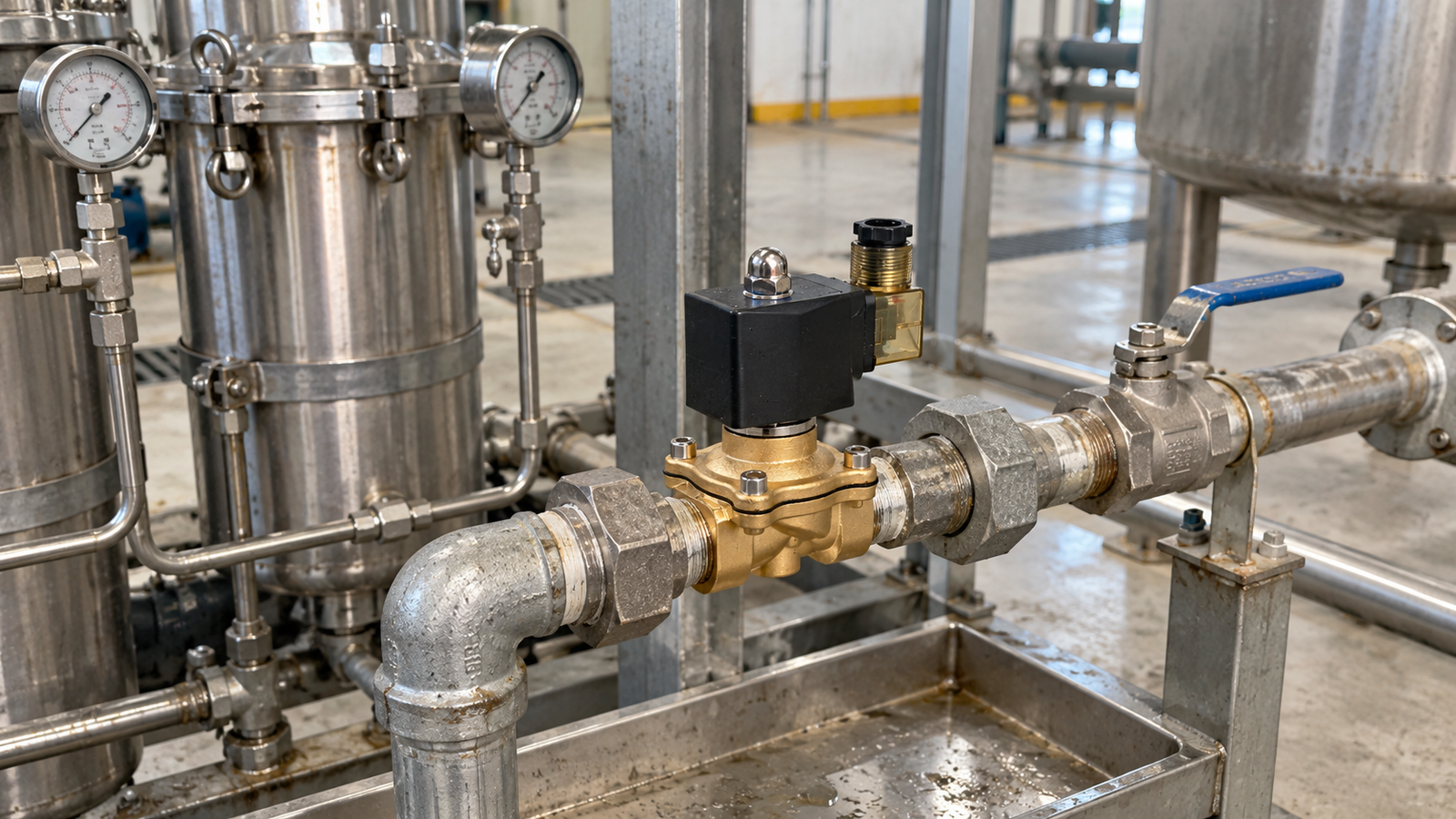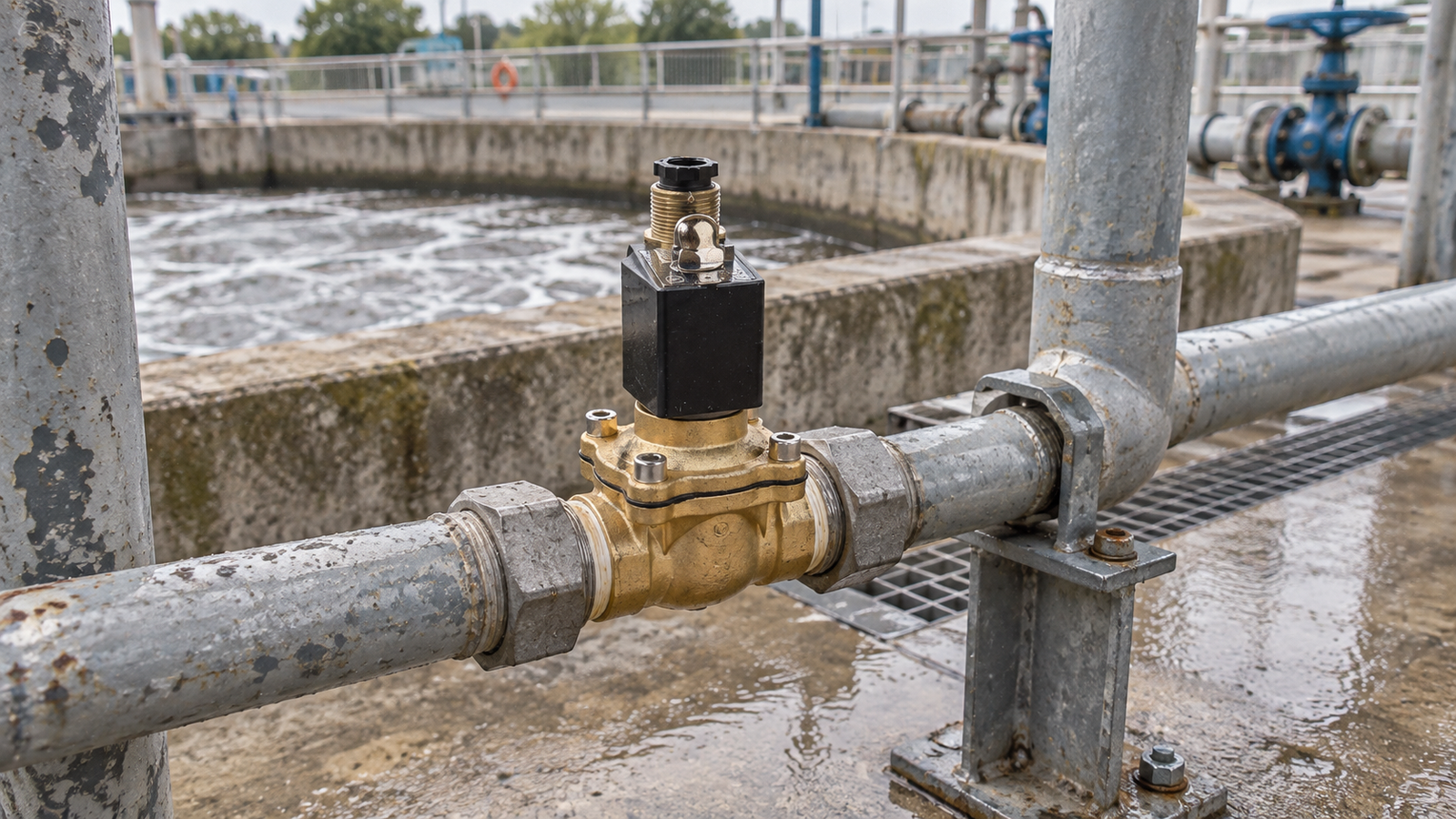
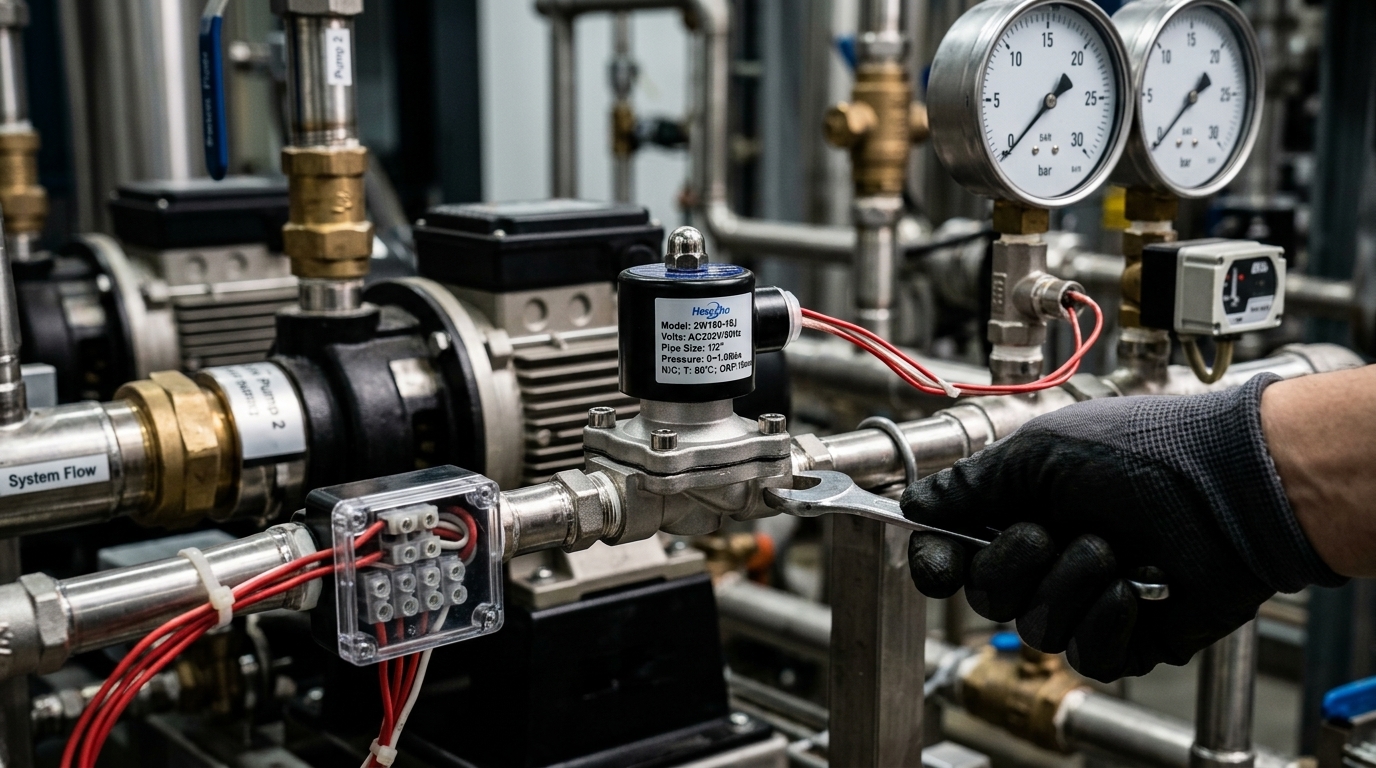
In the complex world of industrial automation, it is easy to get distracted by highly complicated, multi-port directional valves. However, ask any seasoned plant engineer, and they will tell you the truth: the vast majority of the world’s fluid and gas control relies on the simple, unwavering reliability of the 2-Way Solenoid Valve.
Featuring just one inlet and one outlet, the 2-way valve is the ultimate “gatekeeper” of industrial pipelines. Here is why this straightforward component is the most critical asset in your fluid control system, and how to maximize its potential.
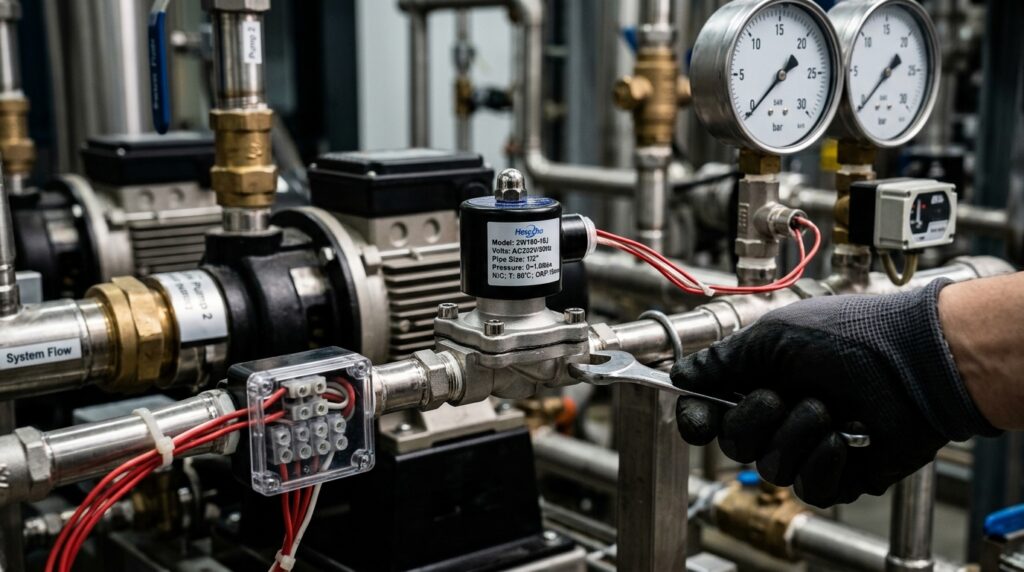
The Power of Simplicity
A 2-way solenoid valve serves one fundamental purpose: to start or stop the flow of a medium.
Because the mechanical goal is so focused, the internal engineering can be perfected for maximum durability. Unlike multi-port valves that require complex internal spools and multiple vulnerable seals, a 2-way valve typically relies on a single, robust plunger and diaphragm mechanism. This simplicity translates directly to fewer mechanical failures, higher pressure tolerances, and a significantly longer cycle life.
Top Industrial Applications for 2-Way Valves
Because they are dedicated to precise on/off control, 2-way solenoid valves are the undisputed standard across several heavy-duty industries:
1. Water Treatment and Distribution
Whether it is municipal water filtration, commercial RO (Reverse Osmosis) systems, or industrial wastewater management, 2-way valves are essential. Large-diameter, pilot-operated 2-way brass valves are specifically designed to handle high volumes of water with minimal pressure drop, making them the standard for main supply lines.
2. Commercial and Agricultural Irrigation
Modern agriculture relies heavily on automated, zoned irrigation. 2-way valves (often in Normally Closed configurations) are installed across miles of piping to ensure water is delivered to specific crop zones only when the central computer sends an electrical signal.
3. Compressed Air and Gas Systems
In manufacturing plants, compressed air is as vital as electricity. 2-way valves are utilized at every stage of the compressor lifecycle—from releasing condensation in auto-drain valves to supplying sudden bursts of air for cleaning, sorting, and ejection machinery.
4. HVAC and Chiller Systems
Industrial cooling requires precise dosing of refrigerants, chilled water, and glycol. 2-way valves provide the exact start/stop control necessary to maintain strict temperature regulations in food processing facilities and data centers.
Highly Customizable for Any Environment
The term “2-way” only describes the number of ports; the rest of the valve is highly customizable to meet your exact engineering requirements. When sourcing a 2-way valve, you can tailor it perfectly to your application:
- Actuation Type: Choose Direct-Acting for zero-pressure gravity systems, or Semi-Direct/Pilot-Operated for high-volume, high-pressure pipelines.
- Failsafe Position: Select Normally Closed (N/C) to stop flow during a power outage, or Normally Open (N/O) for continuous cooling lines that must stay open in emergencies.
- Material Compatibility: Match the valve body (Brass or Stainless Steel) and the internal seals (NBR, EPDM, or Viton) directly to the chemical makeup of your fluid to guarantee a leak-proof lifespan.
The Bottom Line
The 2-Way Solenoid Valve is the workhorse of global industry. By partnering with a manufacturer that specializes in high-quality 2-way fluid control, you ensure that the most critical junctions in your pipeline are protected by components built for absolute reliability.
Need help selecting the exact 2-way valve configuration for your upcoming project? Browse our full catalog of heavy-duty brass and stainless steel valves today.