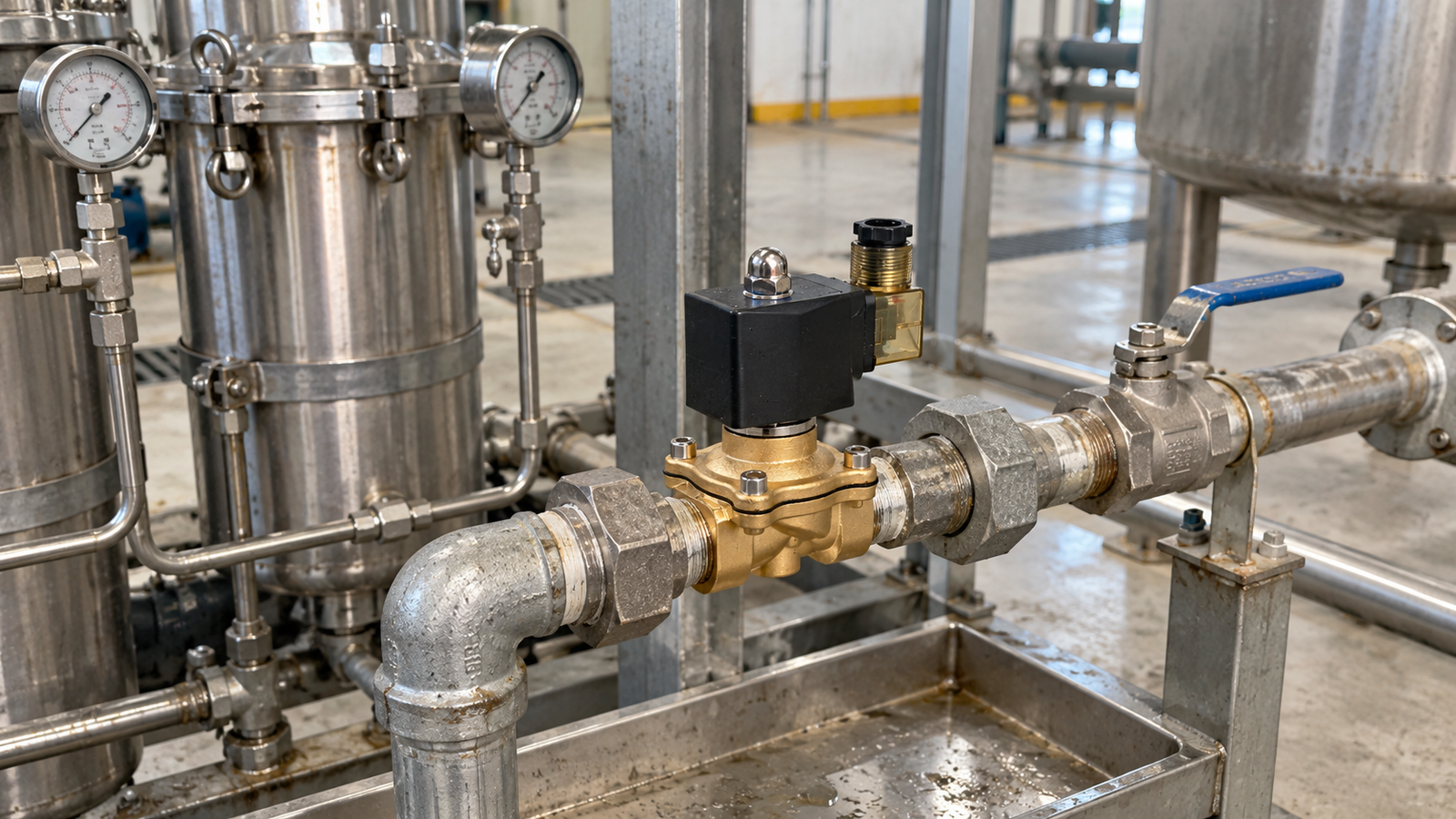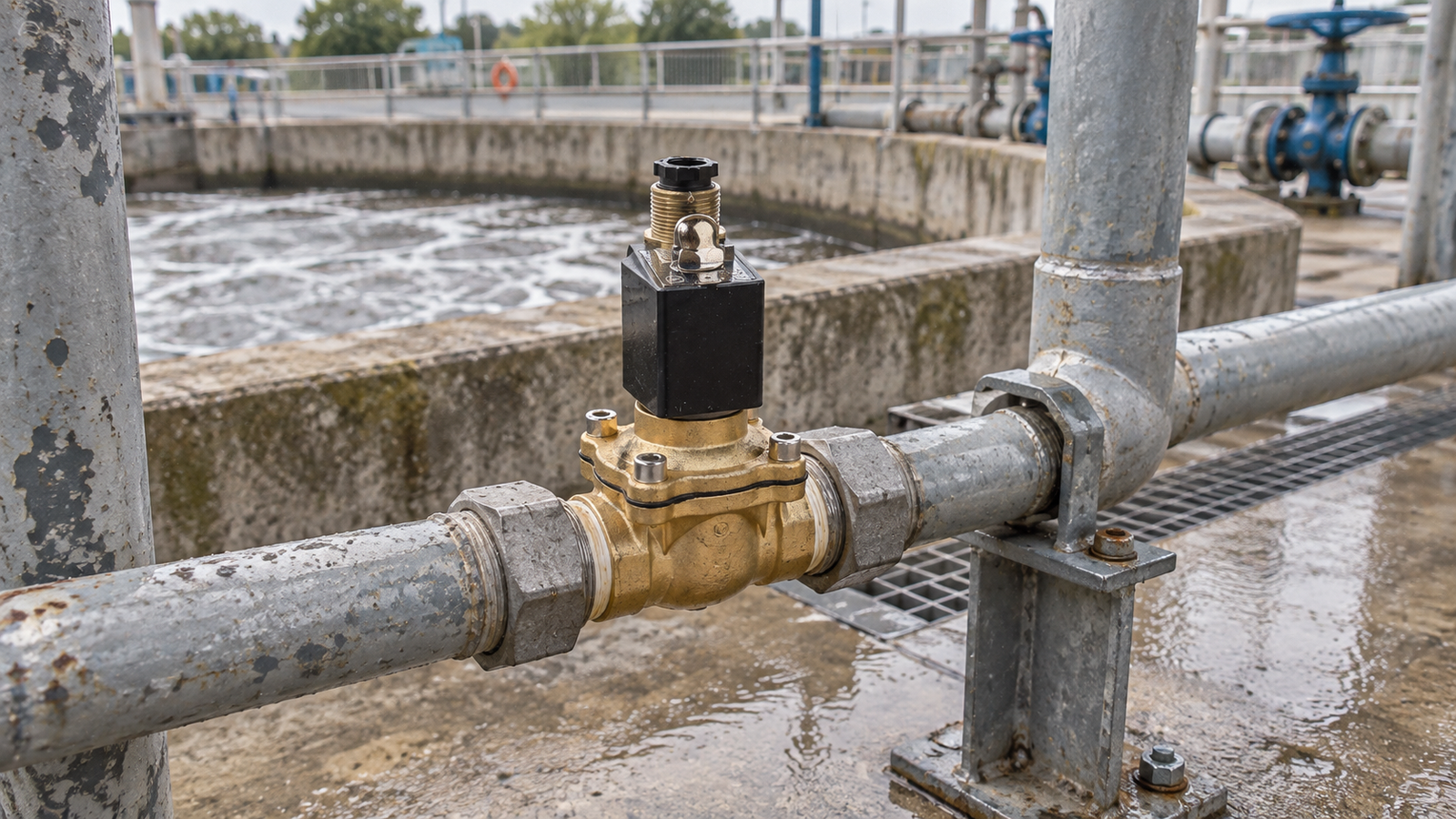
Industrial solenoid valves support many routine process tasks, from controlling air and water to managing gas, steam, liquids and light oils. Their compact form can make them seem straightforward, yet successful application depends on a careful match between the process duty and the valve construction. The catalogue used for this guide shows options in body material, sealing, connections, electrical supply and operating principle. The practical lesson is simple: gather reliable process data first, then apply it consistently through selection, installation and maintenance.
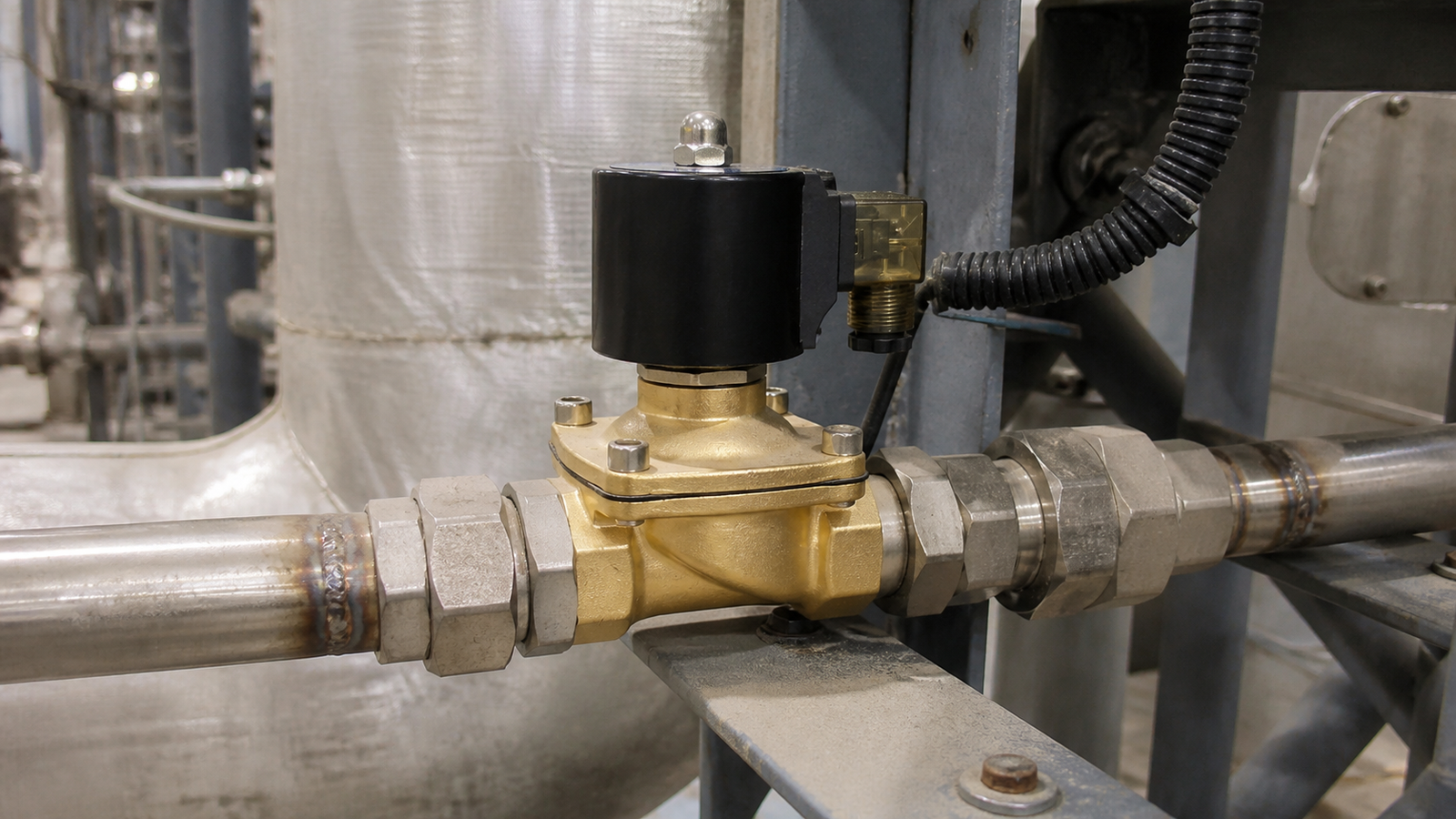
Understand the medium and operating environment
Start by identifying the actual medium and everything that may be present with it. Water, air, gas, steam, liquid and light oil have different flow and material considerations. Record the normal temperature and pressure, the likely maximum conditions, viscosity where relevant, contamination risk and chemical concentration. Include cleaning fluids and upset conditions rather than describing only normal production. These facts influence the selection of body and sealing materials and help prevent a general-purpose description from being used in a demanding duty.
The external environment matters too. Moisture, heat, vibration and corrosion around the equipment can affect the body, electrical connection and future service access. The catalogue presents brass, stainless-steel and plastic body choices, as well as several sealing materials. Use these options as a structured starting point, then confirm compatibility with the complete fluid, temperature and exposure profile. A material decision that overlooks cleaning chemicals or intermittent heat can shorten service life before any external warning is obvious.
Choose the operating principle from pressure behavior
Pressure behavior is often the key selection factor. The catalogue distinguishes direct-acting arrangements from pilot-operated arrangements. Direct action uses electromagnetic force at the seat and can be useful where the valve must operate with zero differential pressure. Pilot operation uses the pressure of the process fluid with an internal pilot function. It can serve larger flow duties, but it requires the process to provide the necessary pressure difference during operation.
Review the full operating cycle, not just the usual line pressure. At start-up, during low production, bypass service or shutdown, inlet and outlet pressure may become similar. A valve that relies on pressure difference may respond differently at those times. Use a simple process drawing and available trend data to examine these cases. Confirm the desired state when electrical power is removed as well. The correct closed or open response should reflect safe isolation, product protection and the behavior of connected equipment.
Plan the connection and flow path
The catalogue includes threaded and flanged connection options across different flow duties. Select the connection type and internal passage with the required flow, permitted pressure drop, piping standard and available installation space in mind. A larger pipe connection does not necessarily identify the correct flow arrangement; the internal flow path and operating conditions still require review together. Confirm flow direction for the selected configuration and make sure pipework will not place excessive mechanical load on the valve body.
Line cleanliness should be addressed before installation. Flush new or modified pipework to remove scale, welding debris, thread compound and loose particles. Debris can block narrow passages or keep a seat from sealing. If solids may appear during normal service, use suitable upstream filtration and include that filtration in the maintenance routine. This protection is especially valuable after construction work or repairs, when contamination is most likely to enter the system.
Connect and commission the electrical side carefully
The catalogue lists alternating-current and direct-current coil options. Verify that the power supply at the mounting location matches the specified voltage and, where relevant, frequency. Inspect terminals, cable entry, strain relief and protective earthing according to site practice. Loose terminals, damaged insulation and poor routing can create intermittent behavior that resembles a mechanical problem. Keep cables away from standing water, sharp edges and excessive heat, and clearly identify the control circuit and isolation point.
Commissioning should test the valve through the same control logic used in normal operation. Check the response at start-up, during ordinary operation and after power is removed. Observe the process pressure at the time of operation and record the result. This establishes a useful baseline for future diagnosis. It also confirms that the process conditions, electrical control and mechanical installation work together rather than being accepted as separate assumptions.
Maintain the valve as part of the process system
Routine inspection does not need to be complicated, but it must be regular. Look for external leakage, corrosion, loose fittings, damaged connectors and signs of overheating. Listen for unusual operating noise and compare the actual response with the control command. Slow movement, unexpected cycling or leakage can result from contamination, unsuitable conditions, worn internal parts or an electrical issue. Investigate the underlying cause rather than repeatedly resetting a controller or replacing parts without evidence.
When service is required, isolate and depressurize the line, then allow hot equipment to cool. Keep ports clean during disassembly and replace sealing elements only with materials verified for the actual duty. After reassembly, carry out controlled leak and function checks before returning the line to operation. Record the condition found, work completed and any changes in the medium or pressure profile. These records help teams identify recurring patterns and improve maintenance timing.
Conclusion
Reliable solenoid valve application comes from treating the component as part of a complete process system. Define the medium and operating envelope, examine pressure behavior, select materials deliberately, protect the flow path and commission the electrical connection carefully. With clear records and consistent maintenance, teams can use catalogue information responsibly and achieve more predictable service from the equipment.