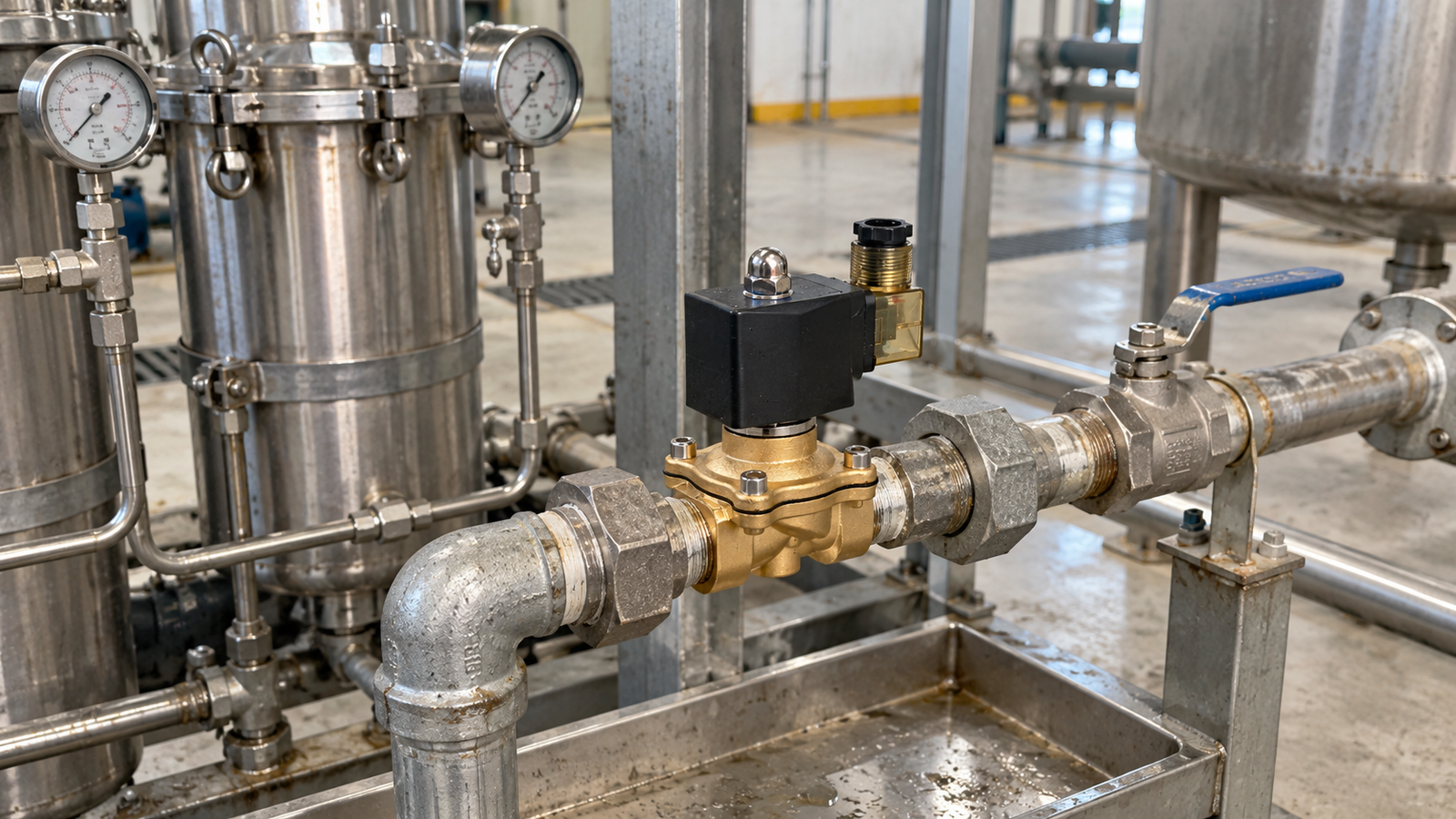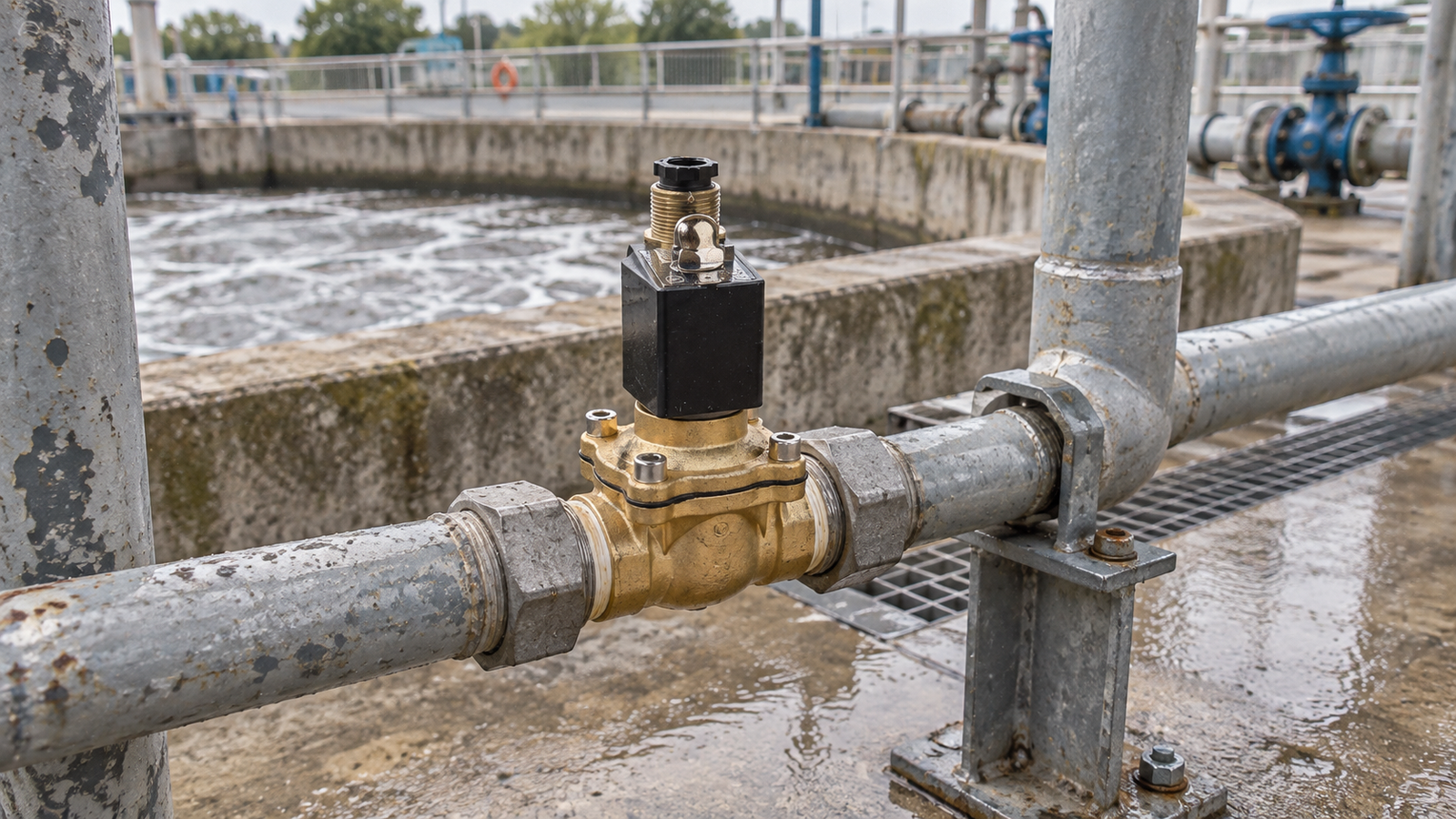
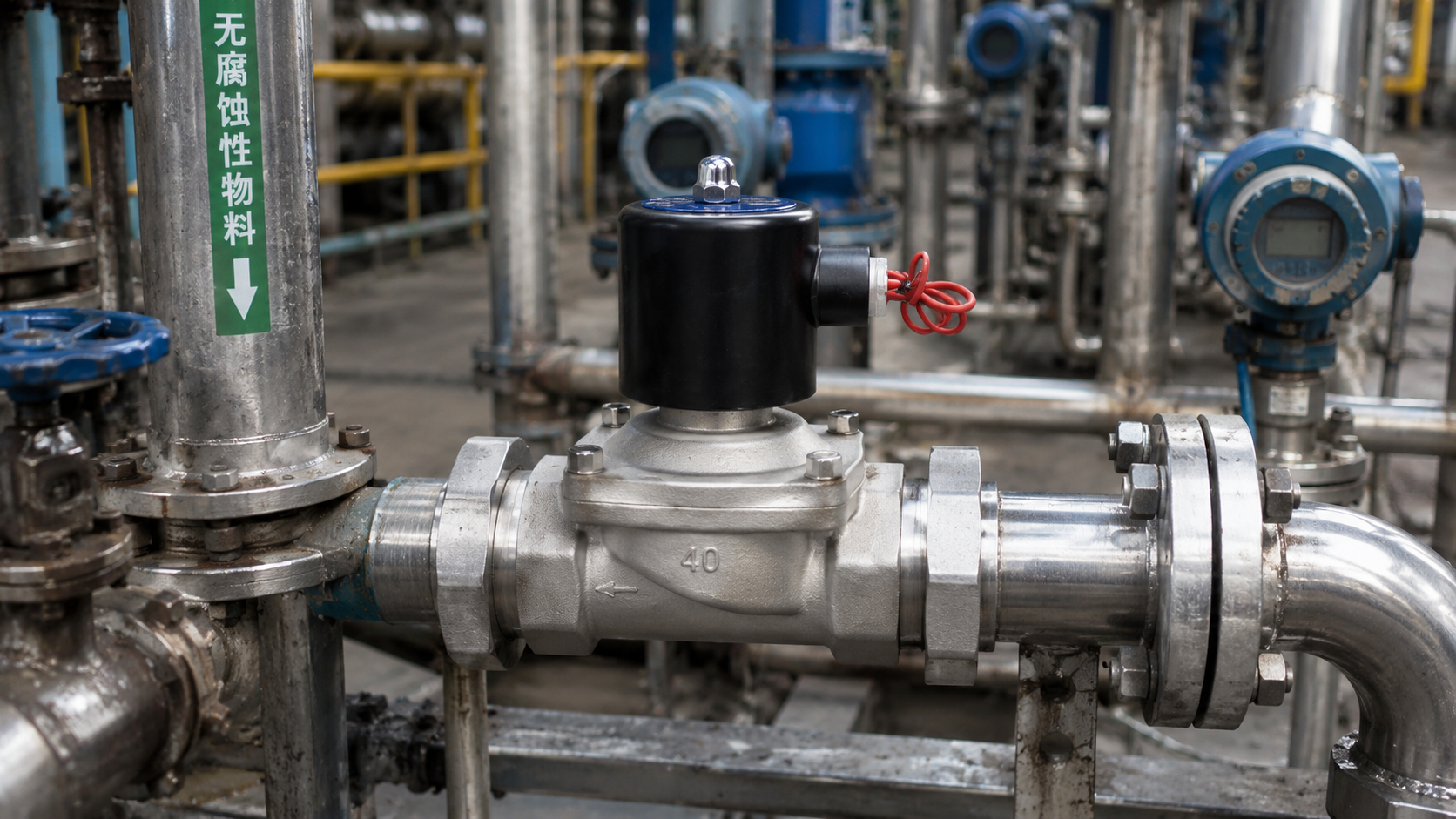
When procurement managers and system engineers source 2-way solenoid valves for large-scale industrial pipelines, they frequently focus heavily on port sizes, voltage requirements, and pressure ratings. However, the foundational decision that dictates the valve’s structural integrity, lifespan, and chemical compatibility happens at the metallurgy stage: selecting the body material.
For standard, non-corrosive industrial fluids, the two most common heavy-duty choices are Forged Brass and Cast Iron (including Ductile Iron).
While both materials are highly capable, substituting one for the other in an unvetted application can lead to rapid valve degradation, pipeline leakage, or premature mechanical failure. Here is the technical engineering breakdown to help you select the correct valve body material for your distribution network or OEM machinery.
1. Manufacturing Integrity: Forged Brass vs. Cast Iron
The primary mechanical difference between these two metals lies in how the valve bodies are physically manufactured.
Forged Brass (The High-Density Choice)
Forged brass 2-way valves are manufactured by heating a solid brass billet and using immense hydraulic pressure to stamp it into a precise mold.
- The Benefit: This forging process compresses the metal matrix, completely eliminating any internal air bubbles, voids, or microscopic cracks.
- The Result: Forged brass bodies boast exceptional structural density, high tensile strength, and superior pressure resistance. They are structurally robust enough to handle the violent hydraulic shockwaves of water hammer without micro-fracturing.
Cast Iron / Ductile Iron (The Molded Choice)
Cast iron valves are manufactured by melting iron ore and pouring the liquid metal into a sand mold.
- The Risk: As the liquid iron cools, microscopic air pockets and impurities can become trapped inside the metal walls, a phenomenon known as porosity. Standard gray cast iron can be relatively brittle because of this.
- The Upgrade: To counter this brittleness, modern industrial valve factories heavily utilize Ductile Iron. By adding magnesium to the molten iron, the carbon structures form smooth nodules rather than sharp flakes. This gives the valve body significantly higher impact resistance and ductility, allowing it to bend slightly under stress rather than snapping.
2. Port Size and Sizing Economics
The physical scale of your pipeline will often dictate the material choice purely from a manufacturing cost perspective.
| Feature | Forged Brass Valves | Cast Iron / Ductile Iron Valves |
|---|---|---|
| Typical Size Range | Small to Medium (1/8\text{“} to 2\text{“} ports) | Large Scale (2\text{“} to 12+\text{“} ports) |
| Connection Type | Threaded (NPT or G-Thread) | Flanged (ANSI or DIN) |
| Cost Efficiency | Highly economical at small scales | Most cost-effective for large-diameter lines |
Brass is an expensive alloy containing high percentages of copper and zinc. While it is highly efficient to forge a compact $1/2\text{-inch}$ 2-way valve out of brass, forging a massive $6\text{-inch}$ main water valve out of solid brass would be prohibitively expensive and incredibly heavy.
Therefore, for massive, high-volume municipal or industrial pipelines, factories switch to cast iron or ductile iron. Iron is far cheaper raw material, and casting allows for the creation of massive, intricate flanged valve bodies that can be easily bolted directly into heavy-duty industrial pipe networks.
3. Chemical Compatibility and Corrosion Resistance
The chemical composition of the fluid flowing through your 2-way valve must align perfectly with the metal body to prevent aggressive internal corrosion.
Brass and Dezincification
Forged brass is inherently highly resistant to atmospheric corrosion and performs flawlessly with clean water, compressed air, light oils, and inert gases. However, brass faces a specific metallurgical threat when exposed to harsh brackish water or highly chlorinated water: dezincification. The chemical compounds in the water leach the zinc out of the alloy, leaving behind a porous, weak copper shell that will eventually weep fluid and structurally collapse.
Iron and Oxidization (Rust)
Raw cast iron has very poor resistance to water-induced corrosion. If raw water passes through an untreated cast iron 2-way valve, it will rapidly develop heavy internal scaling and rust. This rust can flake off, jamming the internal plunger or ruining the rubber diaphragm seals.
The Engineering Fix: To make cast iron 2-way valves viable for water and fluid systems, premium manufacturers coat the inside and outside of the iron body with a thick layer of protective epoxy resin (Fusion Bonded Epoxy or FBE). This creates an impenetrable barrier between the fluid and the iron, preventing rust and ensuring the valve complies with modern drinking water and industrial standards.
4. Temperature and Environment Resilience
Finally, you must audit the environmental conditions where the valve will be installed.
- Extreme Sub-Zero Cold: As discussed in our cold-weather sourcing guides, standard gray cast iron becomes incredibly brittle when subjected to sub-zero temperatures. If a water line freezes inside a cast iron valve, the expanding ice will shatter the body instantly. Forged brass and ductile iron maintain significantly better low-temperature impact resistance.
- High-Temperature Steam: Forged brass handles high-temperature steam remarkably well (when paired with rigid PTFE seals). Cast iron is also highly capable of managing steam, but because steam lines create massive amounts of corrosive condensate, iron valves on steam lines must be strictly rated and coated to prevent rapid internal rusting.
Conclusion
Choosing the right material for your 2-way solenoid valves balances cost, scale, and environment. For compact, high-precision automation lines handling water, air, or oil up to $2\text{ inches}$, Forged Brass delivers the high-density strength and thread reliability required. For large-scale infrastructure, municipal mains, and heavy-volume industrial lines over $2\text{ inches}$, upgrading to epoxy-coated Ductile or Cast Iron provides the flanged connectivity and raw scaling economics needed to keep your facility safely online.