Pneumatic systems are widely used in industrial automation, and one of the key components in these systems is the pneumatic solenoid valve.
If you are working with compressed air systems, understanding how pneumatic solenoid valves work is essential.
In this guide, we explain everything in a simple and practical way.
What Is a Pneumatic Solenoid Valve?
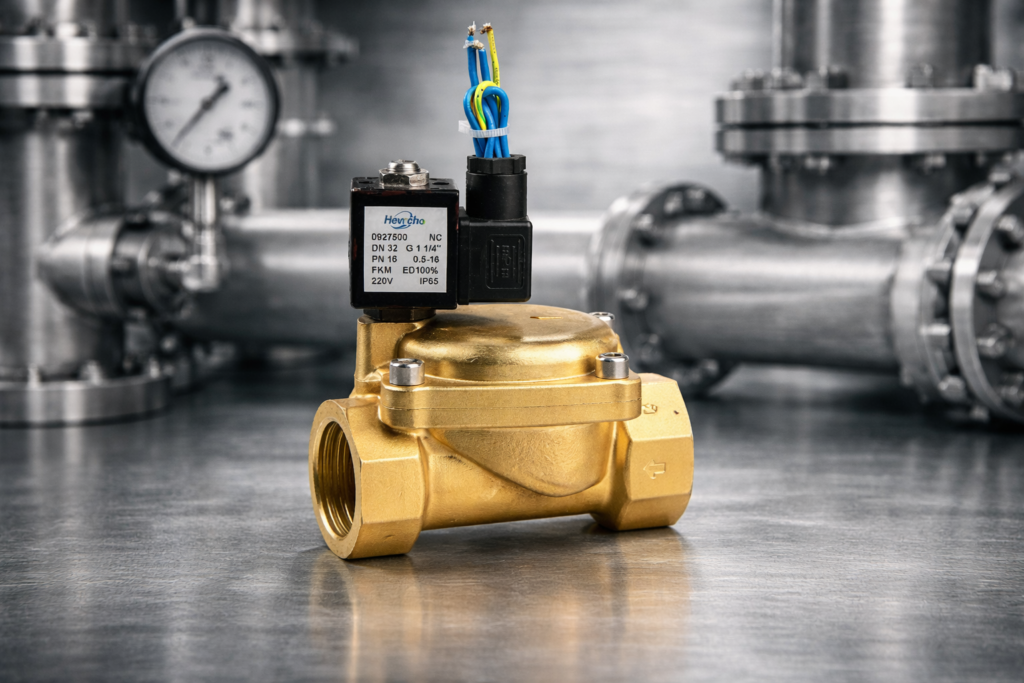
A pneumatic solenoid valve is a valve used to control the flow of compressed air in a system.
It uses an electrical signal to open, close, or switch the airflow path. This allows automatic control of pneumatic devices such as cylinders and actuators.
How Does a Pneumatic Solenoid Valve Work?
The working principle is similar to standard solenoid valves, but it is designed specifically for air systems.
Here’s how it works:
- No Power Applied The valve remains in its default position.
- Power Applied The solenoid coil generates a magnetic field.
- Internal Spool Moves The airflow path changes inside the valve.
- Air Flow Is Controlled The valve directs compressed air to different ports.
This process allows precise control of pneumatic motion.
Common Types of Pneumatic Solenoid Valves
2-Way Valve
- Controls simple ON/OFF airflow
- Used in basic air control systems
3-Way Valve
- Controls air supply and exhaust
- Common in single-acting cylinders
5-Way Valve
- Controls double-acting cylinders
- Widely used in industrial automation
Each type is designed for different control requirements.
Key Components
A pneumatic solenoid valve typically includes:
- Solenoid coil
- Valve body
- Spool (internal moving part)
- Ports for air flow
- Seals and springs
These components work together to control air direction and pressure.
Applications of Pneumatic Solenoid Valves
Pneumatic solenoid valves are used in many industries:
Industrial Automation
Control of cylinders and robotic systems.
Packaging Machines
Air-driven movement and control.
Assembly Lines
Precise positioning and motion control.
Textile Machinery
Automated fabric handling systems.
Food Processing Equipment
Air control in production lines.
They are essential for efficient and automated operations.
Advantages of Pneumatic Solenoid Valves
- Fast switching speed
- Reliable operation
- Long service life
- Easy integration with PLC systems
- Compact and lightweight
These advantages make them ideal for automation systems.
How to Choose the Right Pneumatic Solenoid Valve
Consider the following factors:
✔ Number of ports (2-way, 3-way, 5-way)
✔ Operating pressure
✔ Flow rate
✔ Voltage (24V DC is common)
✔ Mounting type
Selecting the correct valve ensures stable system performance.
Final Thoughts
Pneumatic solenoid valves are essential components in modern industrial automation. They provide fast, reliable, and precise control of compressed air systems.
Understanding their working principle and types helps you choose the right valve for your application.
If you are unsure which pneumatic solenoid valve fits your system, consulting a professional manufacturer can help ensure the best solution.