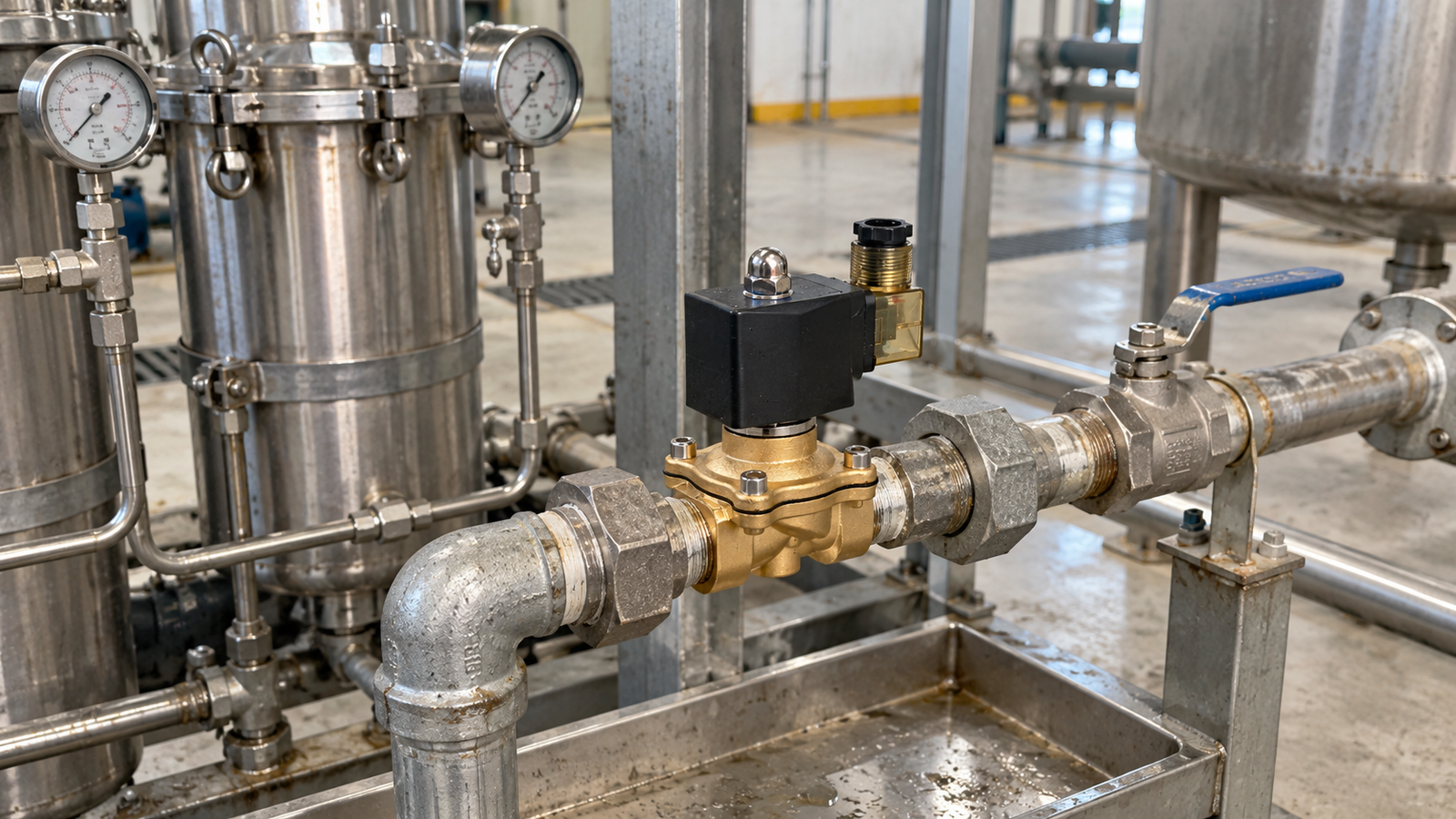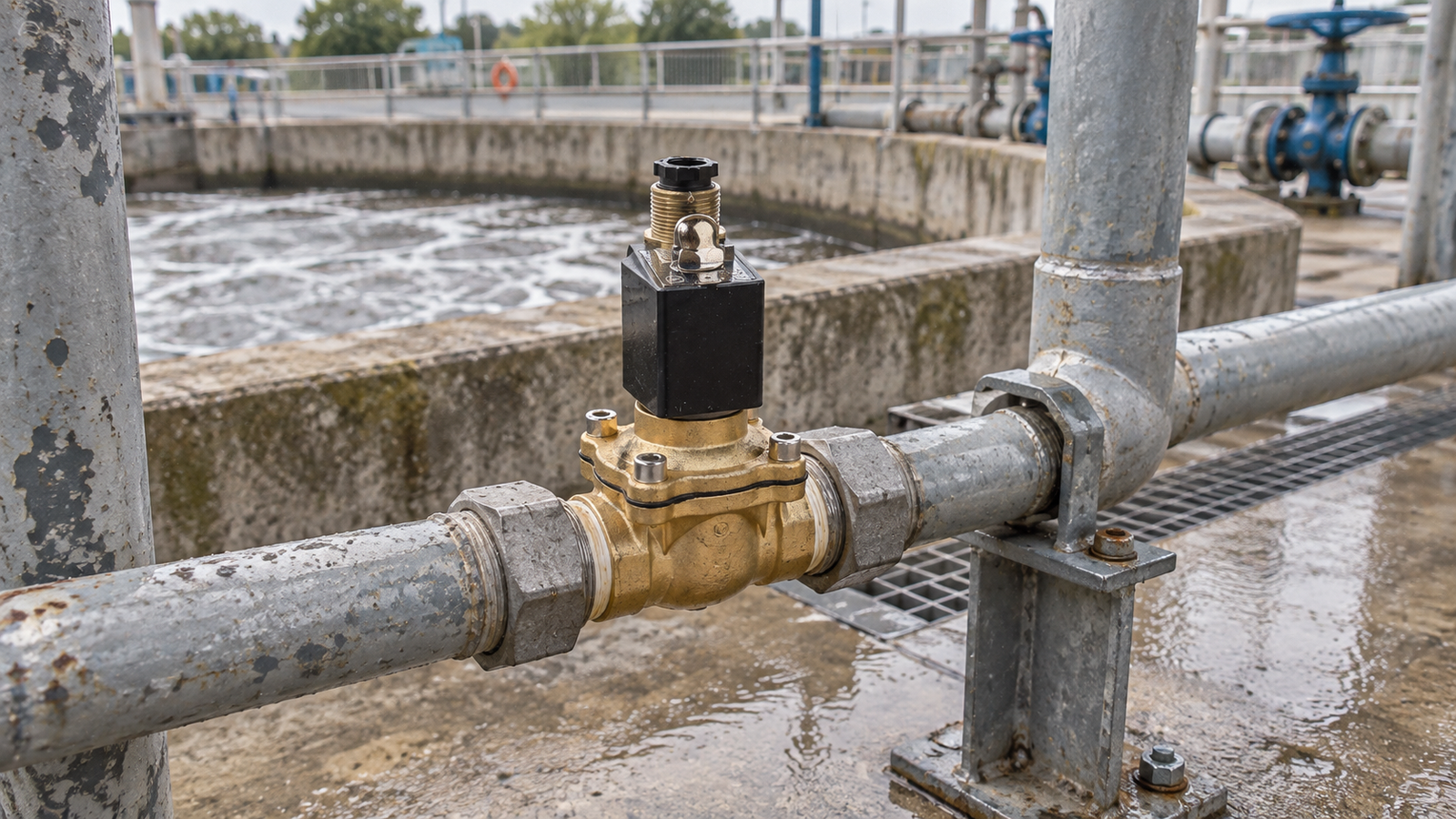
Industrial solenoid valves are small components with a large influence on process reliability. In chemical and process-plant applications, a valve should be specified from the medium, temperature, pressure, connection and sealing requirements—not from size alone. The first half of the Solenoid Valve Catalogue illustrates this approach across direct-acting and pilot-operated 2-way designs.
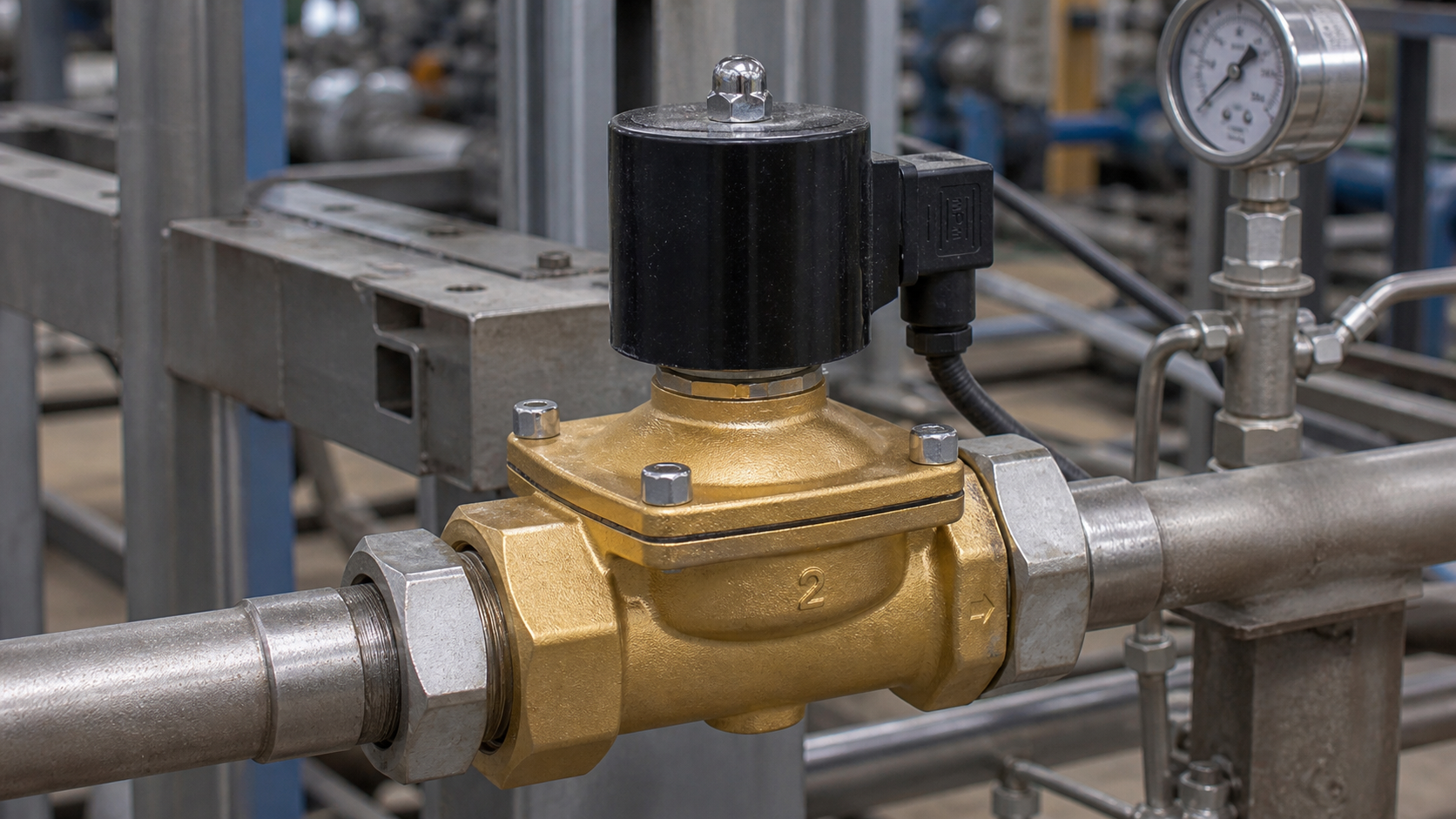
Start with the operating principle
The catalogue separates compact 2W direct-acting valves from pilot-operated designs. Direct-acting 2W compact models are listed for air, gas, water, liquid and oil below 20 cSt, with 2.5–6 mm orifices. Their stated working-pressure range is 0–10 bar for normally closed versions and 0–6 bar for normally open versions. Because a direct-acting valve can operate from zero differential pressure, it is a practical starting point for small-bore duties where that condition matters.
For larger flow passages, the 2W large-diameter series is shown with 16–50 mm orifices. The catalogue also presents pilot-operated 0927/0955 and SLP series. Pilot-operated valves use the pressure of the fluid together with an integral pilot valve, so the required minimum differential pressure must be checked before selection. This distinction is essential when a process can experience low inlet pressure or near-zero pressure differential.
Match materials to the medium
The 2W series is available with brass or stainless-steel bodies and NBR, EPDM or Viton sealing options. The catalogue describes NBR as a general option for air, water, neutral gases and diesel; EPDM for hot water and steam, with a caution against oil-containing media; and Viton for hot water, acids, alkalis, chemical salts, oils and hydrocarbons. These are selection guides, not a substitute for confirming chemical compatibility and concentration for the exact process fluid.
Confirm the full specification
For the compact 2W range, the catalogue lists G or NPT threaded connections and AC220V, AC110V, DC24V and DC12V coil options. It also lists a -5 to 80°C medium-temperature range for the standard compact series. Larger 2W and SLP pilot-operated models have their own stated orifice, temperature and pressure limits, so specifications should always be checked against the exact model rather than transferred from another family.
A practical selection checklist
- Identify the medium and its viscosity, temperature and chemical characteristics.
- Choose normally closed or normally open operation according to the process fail position.
- Verify minimum and maximum pressure, including differential-pressure requirements for pilot-operated valves.
- Select body and seal materials for the service environment.
- Confirm port type, pipe size, coil voltage and protection class for the installation.
Clear application data makes it easier to match an industrial solenoid valve to the right catalogue family and configuration. For unusual pressure, voltage or sealing requirements, state those conditions at the enquiry stage so the final selection can be verified.