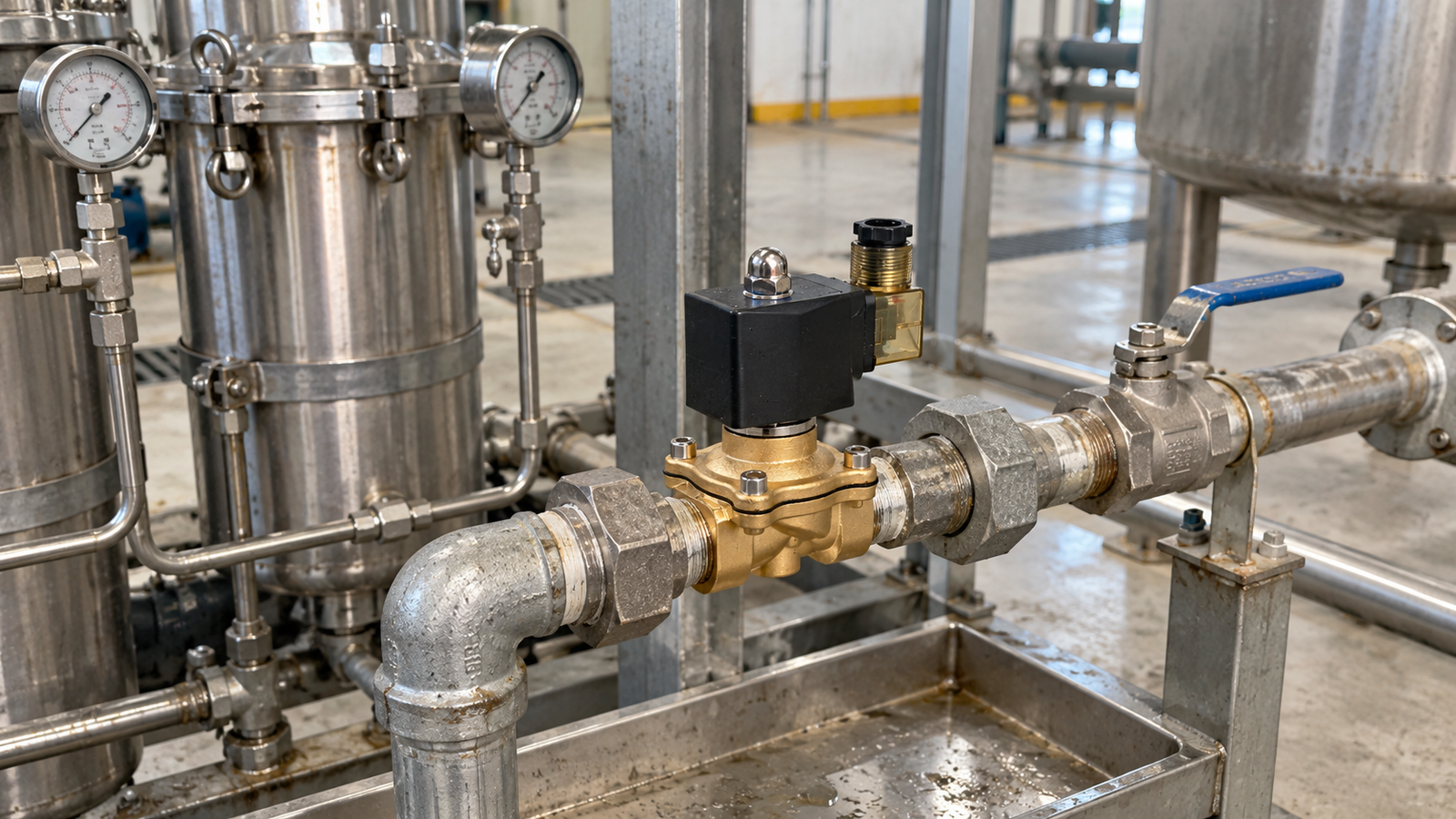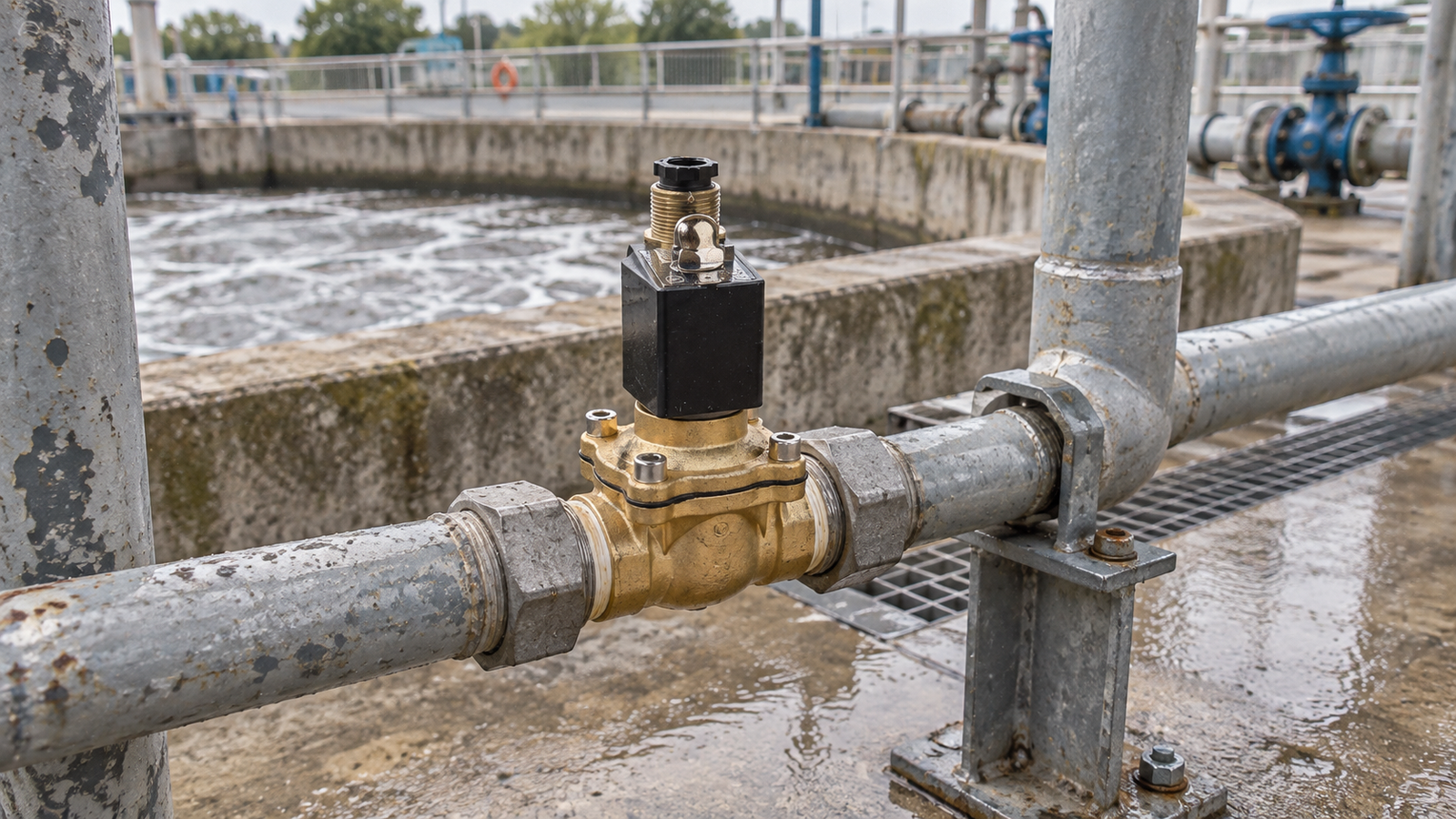
Choosing an industrial solenoid valve is a system decision, not simply a matter of matching a pipe connection. The catalogue used for this guide shows how the same basic function can be delivered through different operating principles, body materials, sealing choices, port sizes and electrical options. A dependable selection starts by defining what the process needs the valve to do, then checking each part of the specification against that duty.
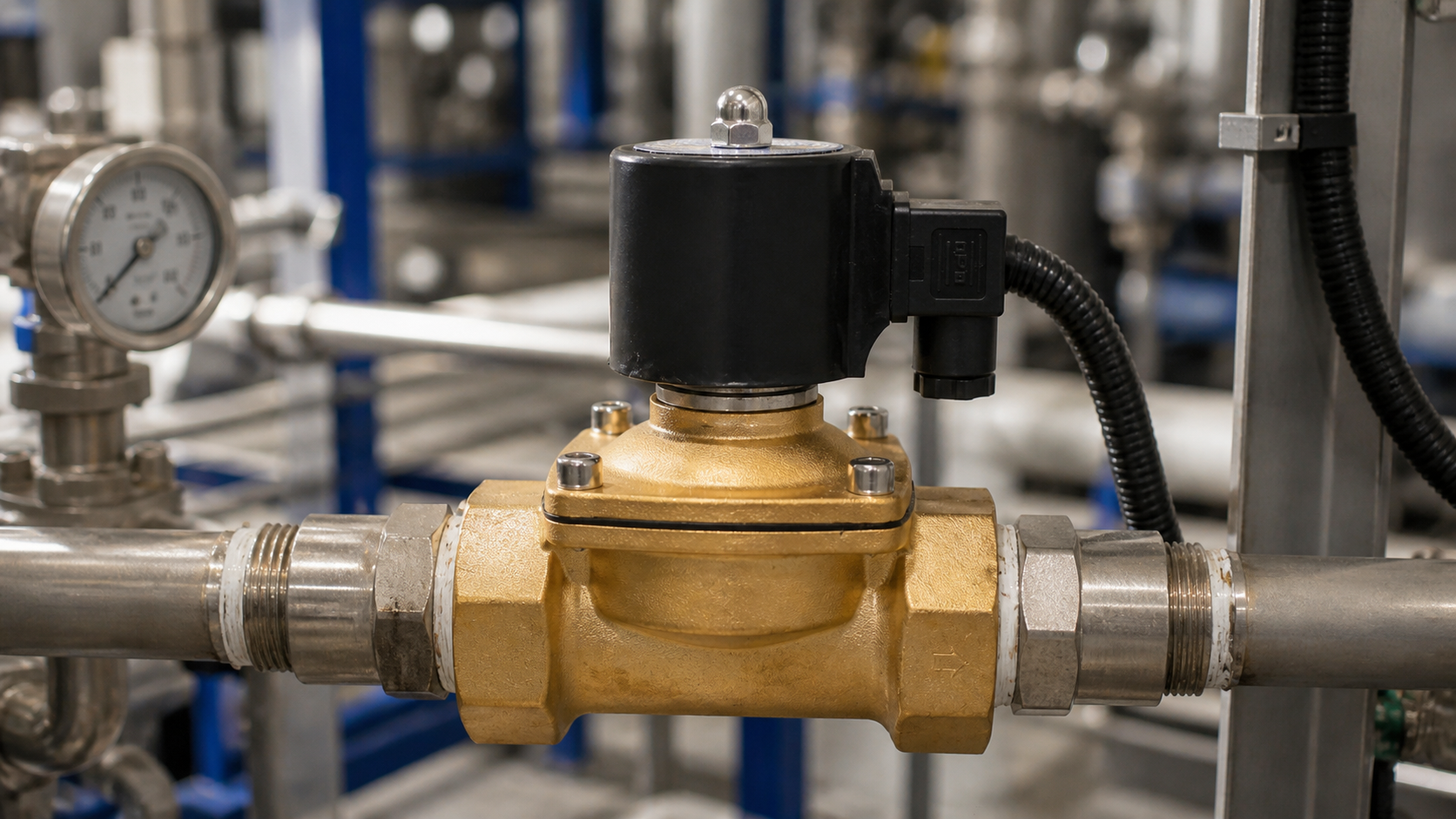
Begin with the process, not the component
The first question is what fluid will pass through the valve. Water, air, gas, steam, light oil and chemically active liquids can demand different body and seal combinations. Viscosity also matters: a fluid that flows freely may suit an arrangement that would be unsuitable for a thicker medium. Record the normal and maximum fluid temperature, expected contaminants, concentration where relevant, and whether the line may remain idle for long periods. These details guide the material decision and help prevent a valve from being selected on a broad description of service alone.
Next, define the required flow and pipe connection. The catalogue includes compact flow paths as well as larger passages, with threaded and flanged connection options. The right choice depends on the required flow rate, permitted pressure drop, available installation space and the piping standard already used on site. A larger connection does not automatically mean a larger valve is correct; the internal flow path and duty conditions still need to be reviewed together.
Choose the operating principle around pressure conditions
Industrial solenoid valves commonly use either direct action or pilot assistance. A direct-acting design uses the electromagnetic force at the valve seat and is useful where operation at zero differential pressure is required. A pilot-operated design uses the pressure of the fluid with an internal pilot function to operate the main valve. It can be suitable for larger flow duties, but it requires the process to provide at least the specified minimum pressure differential.
This distinction should be tested against the whole operating cycle. Ask what happens at start-up, low-load operation, shutdown and any bypass condition. If inlet pressure can fall close to outlet pressure, a pilot-operated valve may not behave as expected even though it works well at normal operating pressure. Likewise, selecting a normally closed or normally open function should follow the required process state during loss of power, maintenance and emergency response. The desired fail position should be agreed with the process owner before a purchase specification is issued.
Match body and seal materials to the medium
The catalogue presents brass, stainless steel and plastic body options for different duties. Material selection should account for chemical compatibility, corrosion exposure, temperature and the surrounding environment. A material that is acceptable for clean water may not be the best choice for a corrosive liquid or a wet external atmosphere. The valve body, internal components and connection method should all be considered as part of the wetted and installed system.
Seal selection deserves the same care. The catalogue identifies common elastomer choices for general fluid service, hot-water and steam duties, and other media, along with a high-temperature fluoropolymer option. It also notes important limitations, such as avoiding a hot-water-and-steam seal choice in oil-containing media. Use the catalogue as the starting point, then confirm the exact fluid, concentration, temperature and duty cycle with the supplier or a qualified materials reference. Chemical names alone are not enough: concentration, impurities and cleaning chemicals can change compatibility.
Verify the electrical and installation details
After the mechanical selection is narrowed down, confirm the electrical supply available at the valve location. The catalogue lists both alternating-current and direct-current coil options. The final voltage, frequency where applicable, connector arrangement and environmental protection should align with the control panel and site wiring practice. Confirm cable routing, access for replacement, and whether the installation needs a plug connection or a hard-wired assembly.
Installation details often decide whether a good valve selection performs well in service. Check flow direction, line cleanliness, available clearance, orientation limits stated for the chosen configuration, and access for inspection. If the process can carry debris, scale or particles, upstream filtration and maintenance planning are important. Where a valve controls steam or hot fluid, allow for safe isolation and heat exposure around the coil and connection. Before commissioning, test the installed valve at the expected operating conditions rather than relying only on a bench check.
Turn the selection into a useful specification
A clear enquiry or purchase specification should state the medium, pressure range, temperature range, flow requirement, required function, connection type, body material, seal requirement, electrical supply and any special installation condition. It should also identify whether the valve must operate at zero differential pressure or whether pilot assistance is acceptable. Providing this information early reduces back-and-forth and helps the supplier check the proposed configuration against the catalogue data.
For recurring duties, keep this information in an accessible engineering record. That record can include the normal operating point, expected deviations, installation drawings, maintenance observations and any changes to the process fluid. It gives maintenance and procurement teams a common basis for reviewing a replacement requirement, while helping them avoid a specification that only reflects one unusual operating event. A short site review before ordering is often more valuable than relying on a previous purchase description.
Conclusion
In short, the strongest solenoid-valve selection is built from verified process facts. Start with the medium and operating cycle, determine the pressure conditions and fail position, select materials deliberately, and finish by checking electrical and installation details. This method produces a specification that is easier to review, install and maintain over the life of the process system.