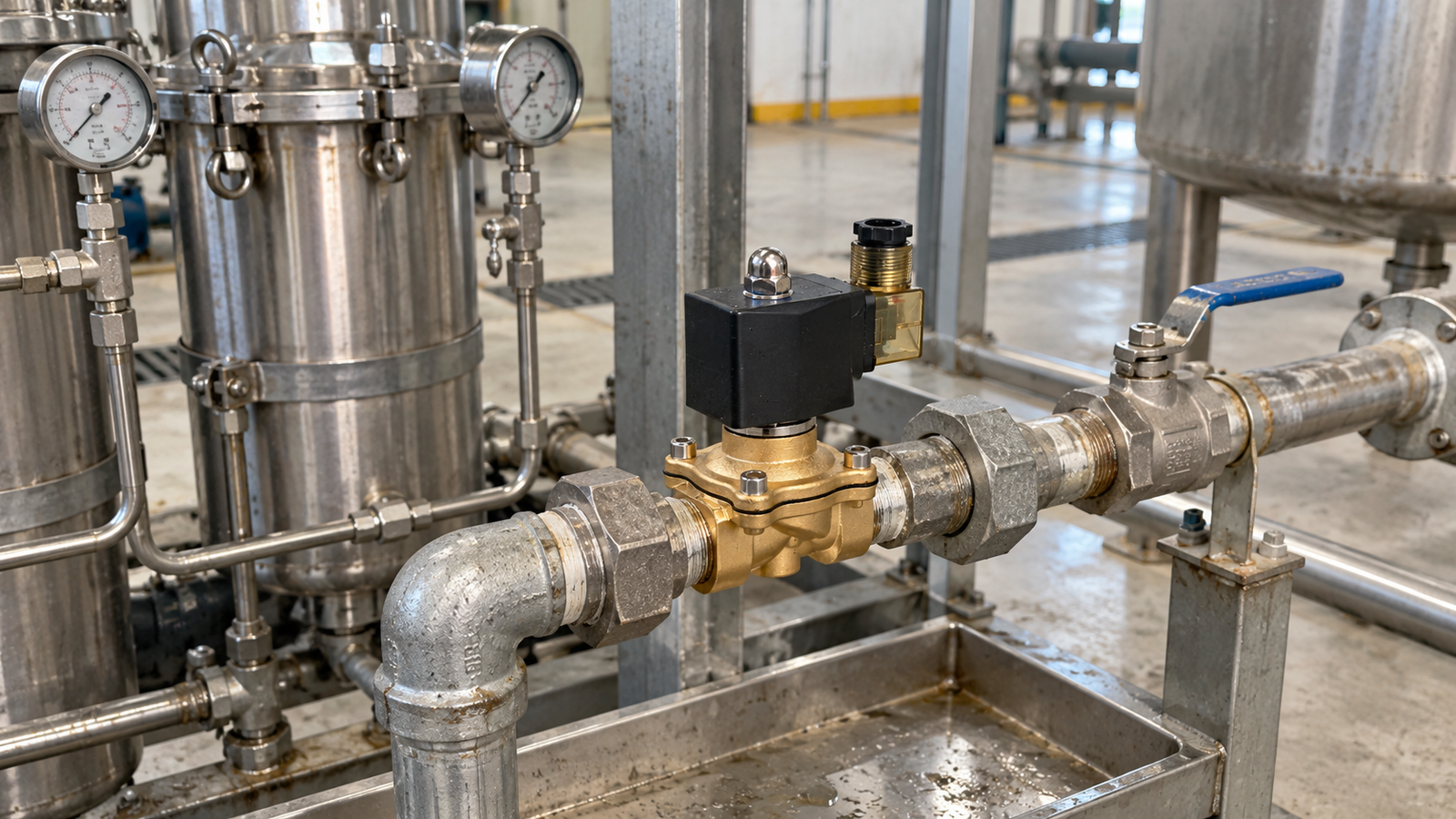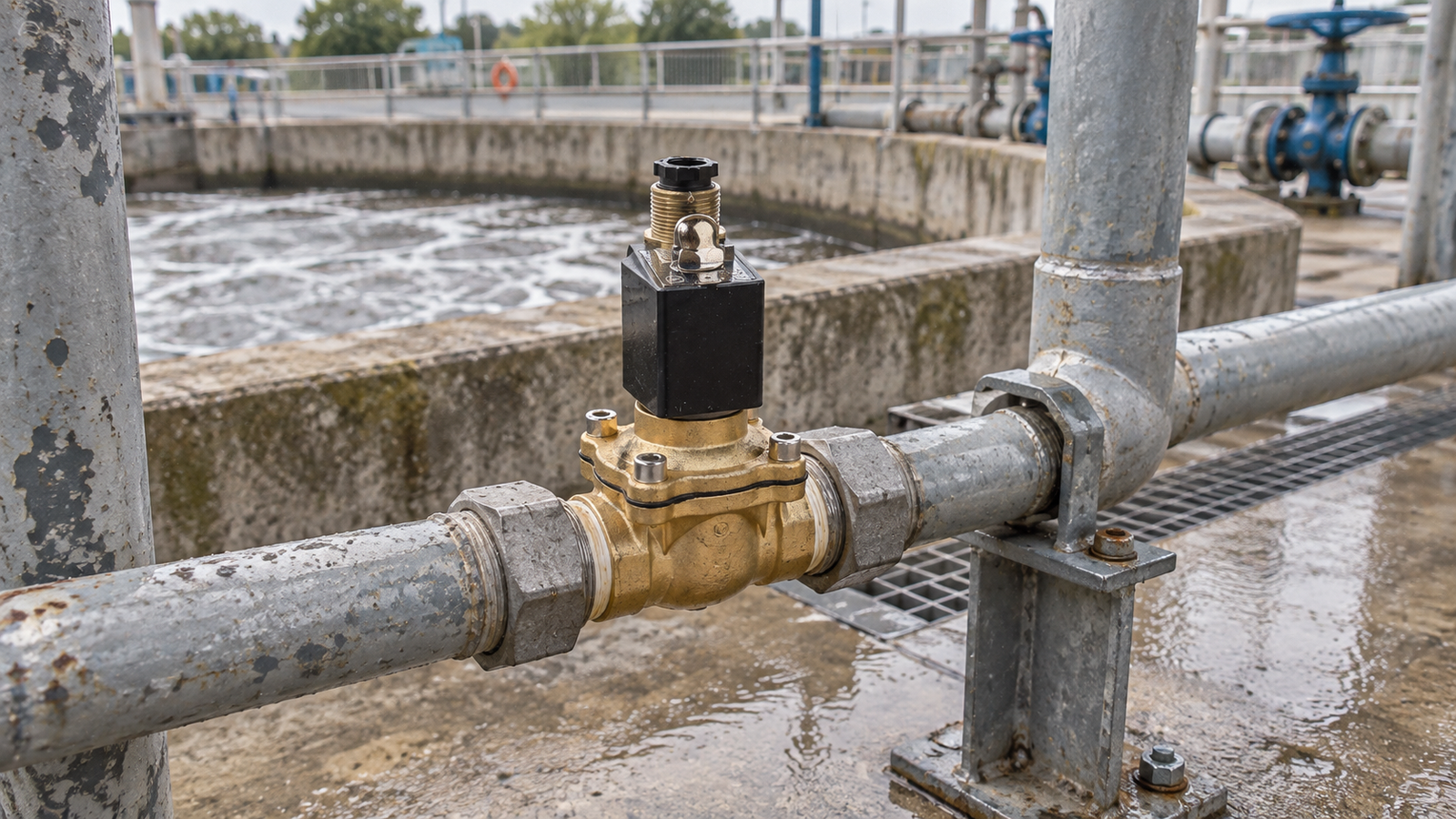
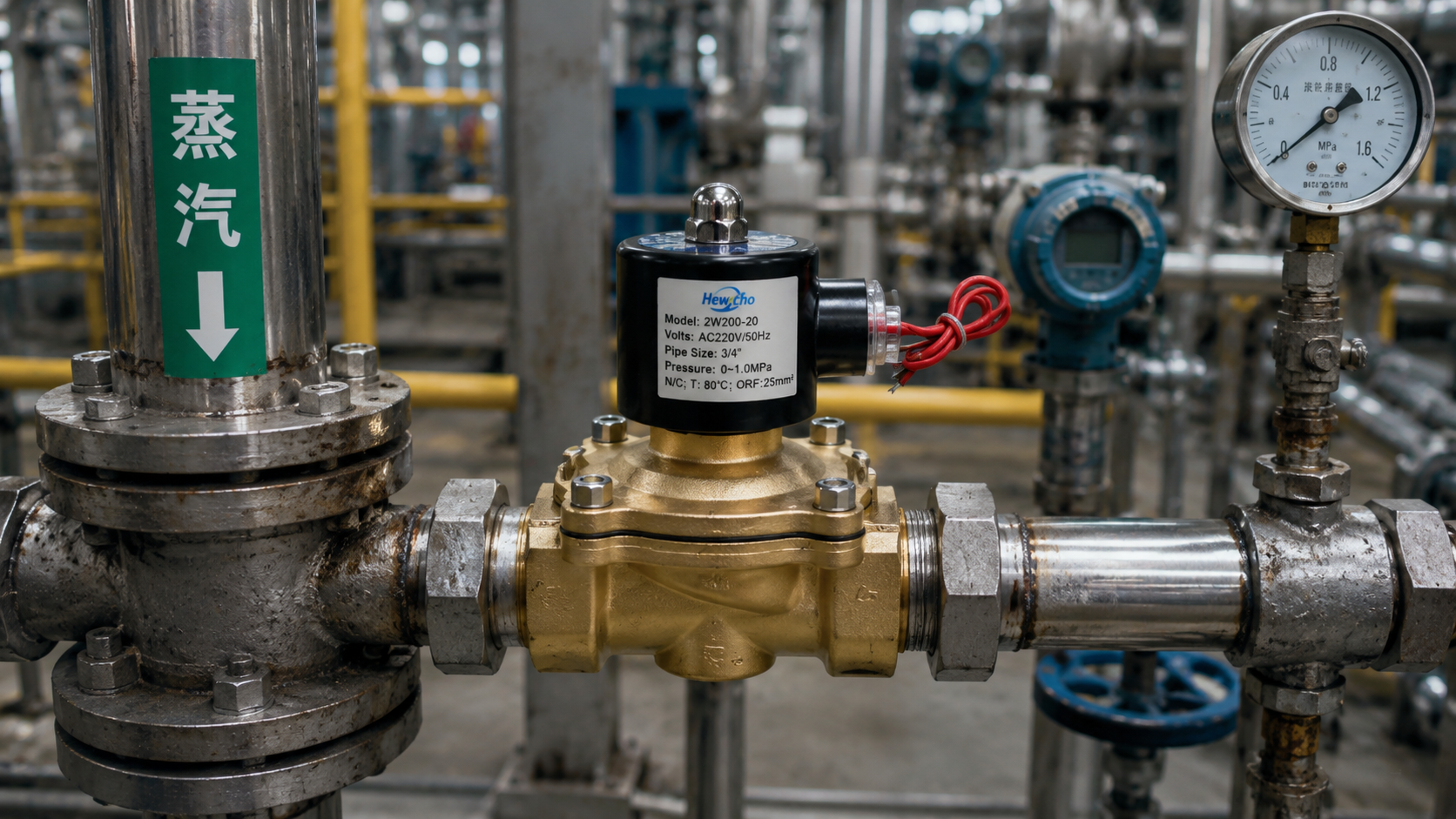
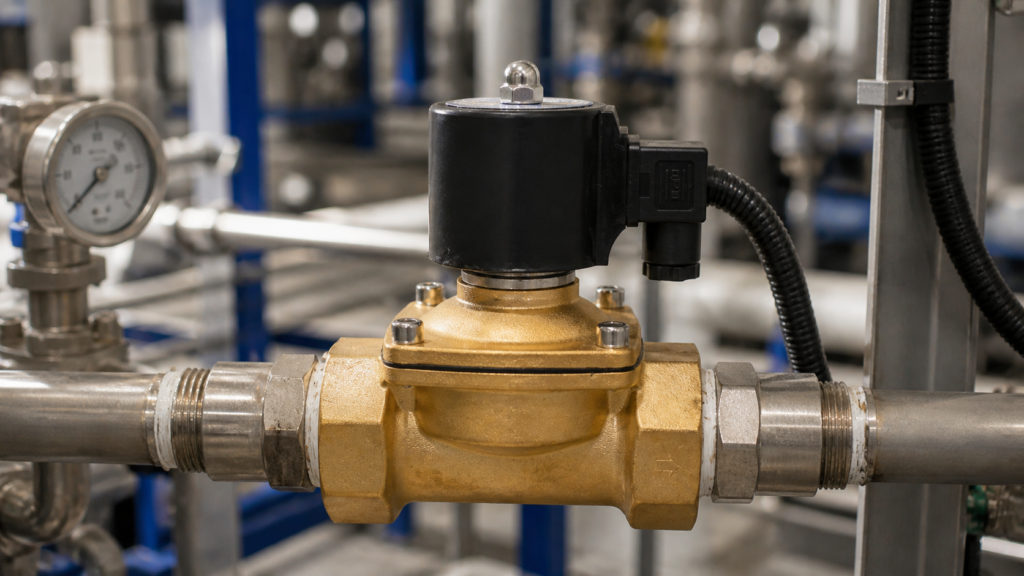
Industrial automation depends on predictable actions. A controller can send a signal, but something physical must still open, close, vent, fill, drain, or divert the medium. Solenoid valves perform this work in many automated systems by converting an electrical command into flow control. When applied correctly, they help machines respond quickly, reduce manual intervention, and support safer process behavior. Their value is strongest when selection, installation, and maintenance are treated as part of the automation design.
Convert Control Signals Into Physical Action
A solenoid valve gives the control system a direct way to manage media flow. In pneumatic circuits, it can control actuator movement. In water or liquid systems, it can start or stop filling, cooling, washing, or drainage. In gas or steam applications, it can help manage process timing where the materials and conditions are suitable. The valve becomes a practical connection between digital logic and physical motion.
For automation engineers, repeatability is the central benefit. If the valve opens and closes at the expected moment, the sequence can be tuned accurately. If the response is inconsistent, the whole process may become difficult to control. This is why reliable actuation matters as much as the controller program.
Define the Safe Default State
One of the most important automation decisions is the valve position during loss of power or control signal. In many systems, stopping flow is the safer state. In other systems, maintaining flow may protect equipment or prevent a process upset. The default position should be chosen based on the risk logic of the machine or plant, not treated as a casual preference.
This decision should be documented clearly. Operators and maintenance teams need to know what will happen during emergency stop, power interruption, controller failure, or manual isolation. A well-understood default state makes the system easier to troubleshoot and safer to operate.
Match Response Time to the Process
Fast switching is useful, but the process still has physical limits. Pipe length, media viscosity, pressure, tank volume, and downstream equipment all influence how quickly the effect of a valve action appears. Automation timing should account for this delay. Opening a valve quickly does not mean a tank fills instantly or an actuator reaches position immediately.
Commissioning should include observation of the actual process response. If a valve controls cleaning liquid, operators should confirm that the spray or flow pattern stabilizes before the next step begins. If a valve controls air, the actuator motion should be checked under load. These practical checks help align software timing with mechanical reality.
Control Media Quality
Automation often increases repetition, and repetition can reveal weaknesses quickly. If the medium contains debris, deposits may build up at the valve and affect response. If water carries scale, sealing performance may decline over time. If compressed air is not properly prepared, moisture and particles can shorten service life. Media quality is therefore a safety and reliability issue, not only a maintenance detail.
Filters, dryers, strainers, and planned cleaning intervals should be considered as part of the automation package. A reliable valve in a dirty system will eventually become unreliable. Protecting the medium path protects the sequence itself.
Integrate Electrical Protection
The electrical side deserves careful attention. Coils must match the available voltage and duty pattern. Long cable runs, poor connectors, moisture, vibration, and heat can all create faults. In automated lines, an intermittent coil problem may appear as a software or sensor issue until the electrical path is checked carefully.
Good design includes stable power, clear wiring, accessible connectors, and suitable environmental protection. Where many valves operate at once, combined electrical load should be reviewed. Where coils remain energized for long periods, heat management should be considered during layout.
Make Maintenance Easy to Perform
Safe automation is easier to maintain when components are reachable. Valves should be located so technicians can inspect coils, connectors, filters, and pipe connections without unnecessary disassembly. Labels should make it clear which valve belongs to which function. Isolation points should support service without creating avoidable risk.
Maintenance records can also improve automation safety. Repeated slow response may indicate contamination. Repeated coil replacement may indicate heat or voltage problems. Repeated leakage may point to seal compatibility. These patterns help the team improve the system instead of treating each fault as unrelated.
Automation Benefits From Practical Details
Solenoid valves help industrial automation become faster, cleaner, and more repeatable, but only when the application is designed around real conditions. Media, pressure, materials, default state, electrical duty, installation access, and maintenance habits all influence the outcome. When these details are handled carefully, the valve becomes a dependable part of the control strategy rather than a small component that quietly limits the whole system.
Support Clear Diagnostics
Automation systems become safer when faults are easy to diagnose. A valve circuit should be labeled clearly in the control cabinet and at the field device. Technicians should be able to connect a symptom on the machine to the correct valve without tracing every cable from the beginning. Clear identification reduces repair time and lowers the risk of disturbing the wrong part of the system.
Diagnostic logic can also help. If the control system knows when a valve should be energized, it can compare that command with sensor feedback, pressure changes, or actuator position. Even simple alarms can guide operators toward the correct area. The valve remains a mechanical component, but its behavior can be made more visible through good automation design.
Plan for Expansion
Many industrial systems change over time. A production line may add stations, increase speed, or change the cleaning cycle. Solenoid valve applications should be reviewed when these changes happen. Higher cycle rates, longer energizing periods, hotter surroundings, or new media can all alter the duty condition. A valve that was properly selected for the original process may need a different arrangement after expansion.