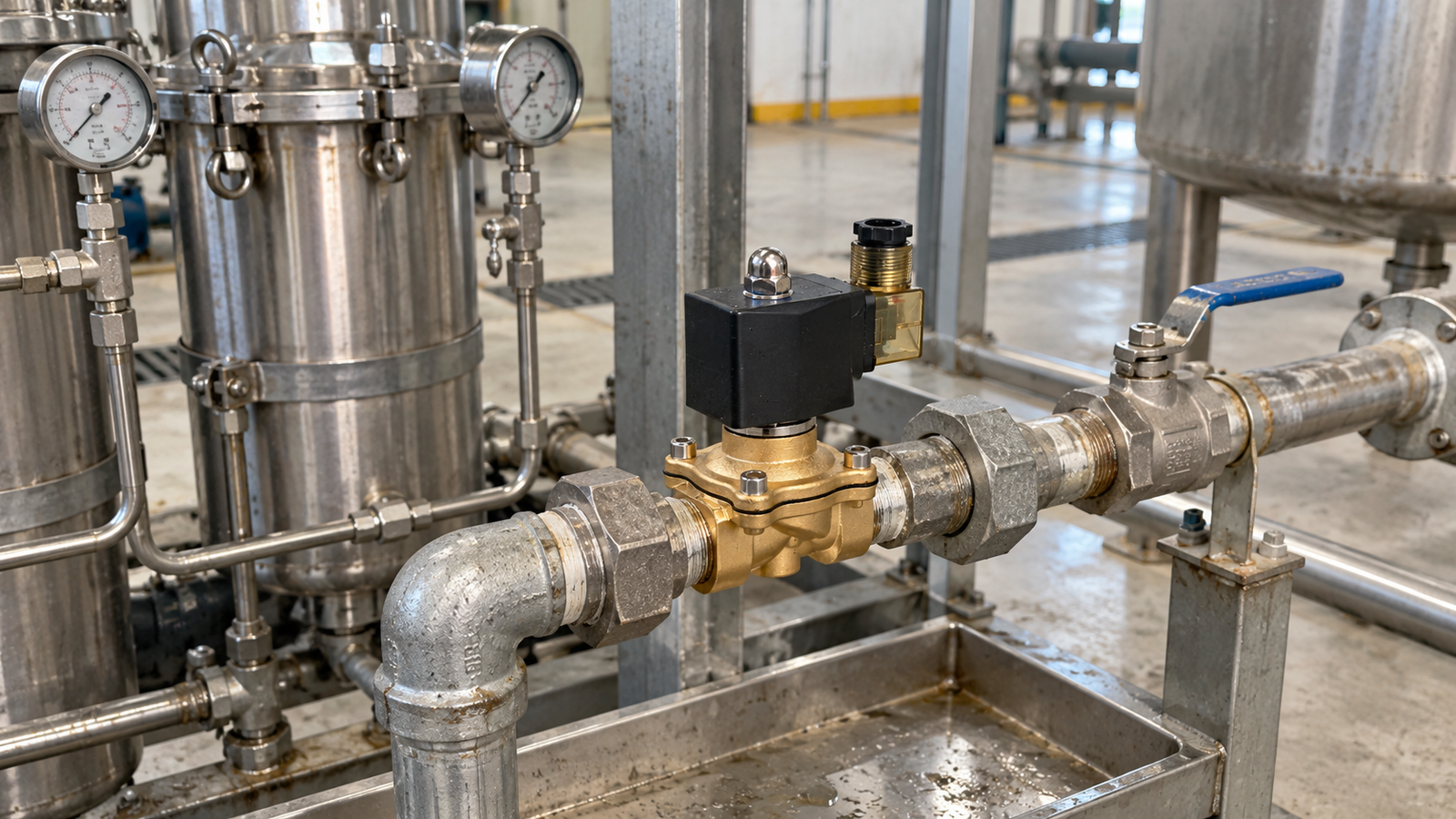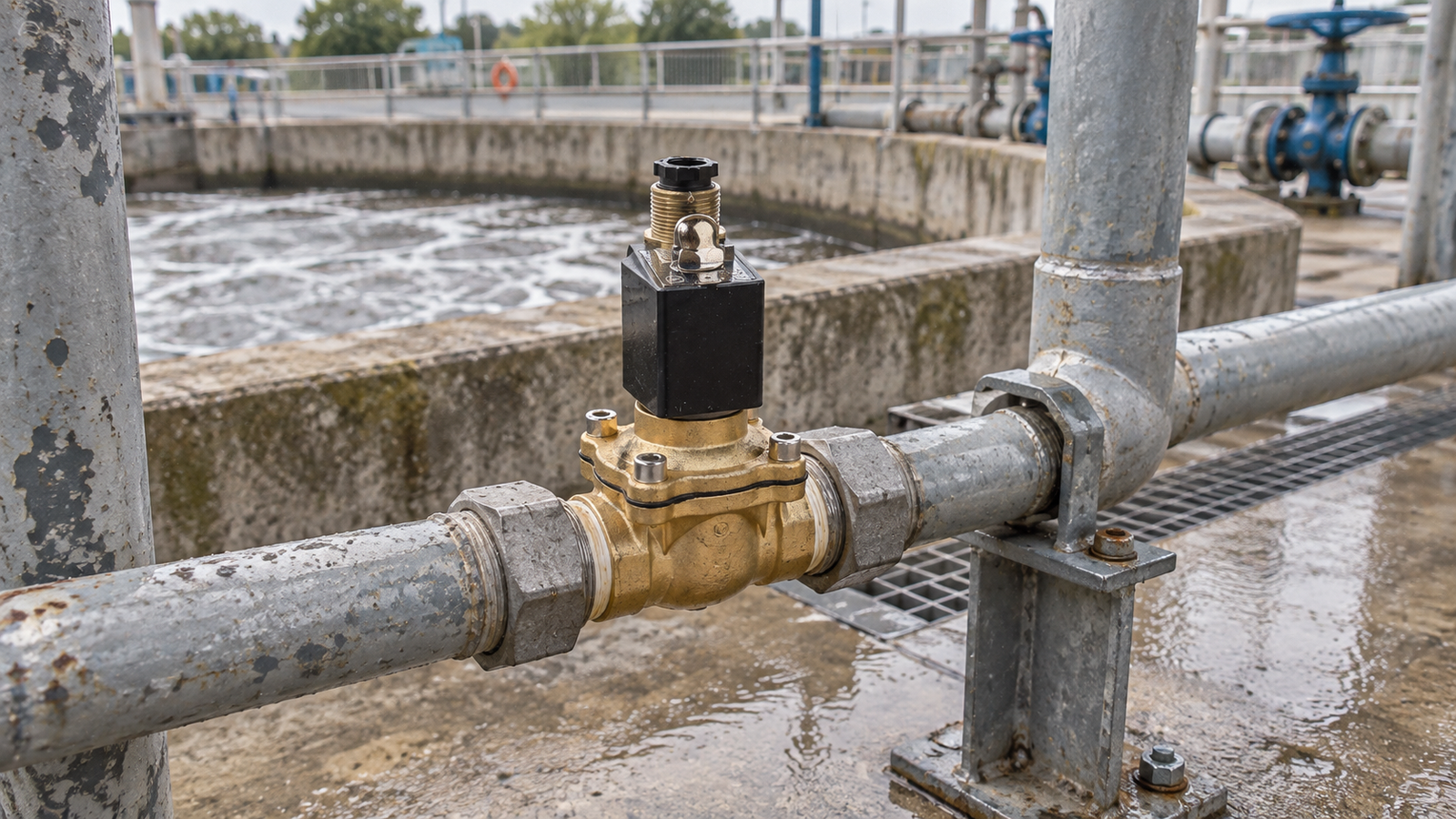
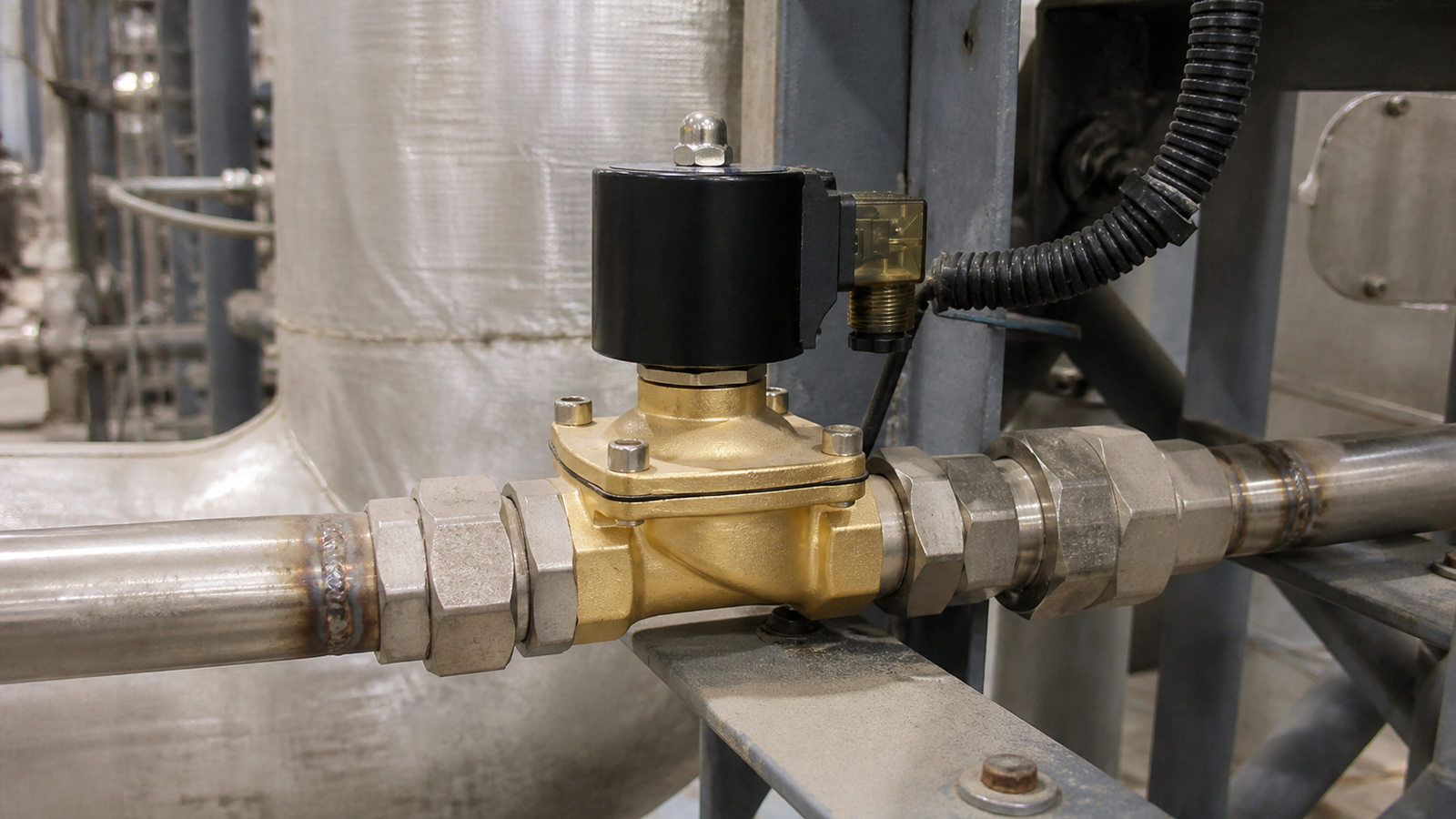
Solenoid valve selection is most successful when it begins with the process instead of the product list. A valve that looks correct on paper can still perform poorly if the medium is dirty, the pressure difference is unstable, the coil is exposed to heat, or the installation leaves no room for service. A structured selection method helps engineering, purchasing, and maintenance teams make decisions that hold up after the equipment is running.
Define the Media Conditions Clearly
The medium determines the first layer of selection. Clean water, compressed air, gas, light oil, steam, and chemical liquids have different effects on valve bodies, seals, springs, and internal passages. Viscosity, cleanliness, temperature, and compatibility should be documented before the valve is chosen. Even a small amount of scale, rust, or pipe debris can affect sealing surfaces and movement over time.
Body material should be matched to both the medium and the surrounding environment. Brass is a practical choice for many general industrial lines. Stainless steel is useful when corrosion resistance and long service life are priorities. Engineering plastics can be effective in selected chemical and water treatment applications where metal compatibility is not ideal. The goal is not to choose the most expensive material, but the material that fits the actual duty.
Understand Pressure and Flow Behavior
Pressure is not just a number from the nameplate. The system may behave differently during startup, pump cycling, tank filling, drainage, or emergency stop. Some valve designs are suitable for low pressure or zero differential pressure applications, while others depend on a pressure difference to open and close correctly. If the pressure profile is uncertain, the selection should be checked against the worst realistic operating condition.
Flow demand should also be considered carefully. Oversizing can create unstable control, higher cost, and unnecessary energy use. Undersizing can cause pressure loss, slow filling, poor actuator response, or overheating in connected equipment. A good selection balances flow capacity with control accuracy and line stability.
Choose the Default Position With Safety in Mind
The normal valve position should reflect the safe state of the process. In many systems, stopping flow when power is removed is the safest choice. In other systems, maintaining flow during a control signal loss may protect equipment or prevent process interruption. This decision should be made together with the process owner, not treated as a simple ordering preference.
It is also worth asking how the valve will behave during maintenance, power interruption, and controller failure. A clear understanding of the default position helps operators respond quickly when something goes wrong and makes the equipment easier to document.
Do Not Treat the Coil as an Afterthought
The coil converts the electrical command into mechanical motion, so its operating environment matters. Voltage type, voltage stability, ambient temperature, duty cycle, and connector protection all affect service life. A coil that works well in a cool test area may age quickly in a hot enclosure or beside steam lines. Electrical selection should include both the control signal and the real installation environment.
For automated lines, coil heat and switching frequency should be reviewed early. Frequent cycling can expose weaknesses in power supply capacity or wiring quality. In damp or outdoor locations, proper connectors and sealing help prevent intermittent faults that appear only after months of operation.
Plan for Installation and Maintenance
Good selection includes service access. Valves should be installed where technicians can inspect the coil, check the connector, clean nearby filters, and remove the valve without dismantling unnecessary pipework. Flow direction markings should remain visible. If the medium carries particles, filtration should be part of the installation plan rather than a repair added later.
Maintenance teams benefit from consistent documentation. Recording the medium, date of installation, symptoms, spare part actions, and cleaning interval creates useful feedback for future selection. Over time, this information turns scattered service experience into practical engineering knowledge.
Selection Is a Process Decision
A solenoid valve is a small component with a large influence on process reliability. The best selection is not simply the lowest-cost item that fits the connection. It is the valve that matches the medium, pressure behavior, default safety state, electrical control, environment, and maintenance plan. When these factors are reviewed together, the result is more stable operation and fewer avoidable interruptions.